Power outages can disrupt everything from phone charging to refrigeration, but the right portable power station can keep essential devices running without fuel, fumes, or complicated installation.
We selected 10 standout models across multiple capacities and price points, so you can match battery size, output, recharge speed, and portability to your home’s backup needs.
Best 10 Portable Power Stations for Home Backup Picks for 2026
Best High-Capacity Home Backup

- 3,584Wh capacity and 3,600W output
- Expandable up to 21kWh per unit
- Wheels and telescoping handle for easier moving
Best For: Extended outages and high-demand household appliances
Best Fast-Charging Midrange Backup

- 1,800W output with 2,700W boost mode
- Full AC charge in about 1 hour
- UPS backup responds in about 20 milliseconds
Best For: Short outages, workstations, and essential appliances
Best Lightweight Emergency Backup

- 1,500W output in a 23.8-pound design
- 1,070Wh LFP battery capacity
- App-controlled fast, quiet, and efficient charging modes
Best For: Portable emergency power for essential devices
Best Smart UPS Backup
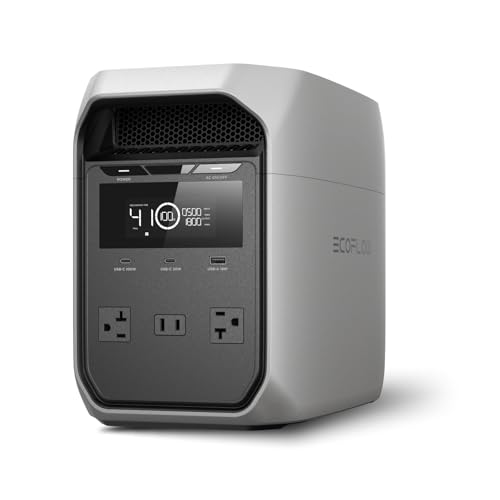
- 1,800W output with 3,600W surge
- Sub-10ms UPS switching for sensitive electronics
- 0–80% AC charge in about 45 minutes
Best For: Fast, app-controlled backup for electronics and essentials
Best High-Capacity Pick

- 2,010Wh LiFePO4 capacity
- 1,500W output with 3,000W peak
- Up to 400W solar input
Best For: Extended home backup and refrigerator runtime
Best Fast-Charging Option

- 1,800W AC output
- 80% charge in about 45 minutes
- 10ms UPS and 30dB silent mode
Best For: Quiet, rapid-recharge home backup
Best Compact Emergency Pick

- 600W output with 1,200W surge
- 1.5-hour AC recharge
- 10ms UPS and pure sine wave output
Best For: Routers, CPAP machines, and essential electronics
Best Overall

- 1,024Wh capacity with 1,800W AC output
- Fast charging and expansion up to 5kWh
- LiFePO4 battery with 4,000 cycles to 80%
Best For: Home emergency backup and expandable power needs
Best Compact Value

- 192Wh capacity with 300W pure sine wave output
- Weighs about 5.73 pounds
- LiFePO4 battery and built-in emergency LED light
Best For: Small devices, lighting, and lightweight backup
Best Lightweight Option

- 292Wh capacity with 300W output
- About 7.5 pounds with an integrated handle
- LiFePO4 battery rated for over 4,000 cycles
Best For: Portable electronics, camping, and small-device backup
Best High-Capacity Home Backup – Jackery HomePower 3600 Plus
For shoppers comparing portable power stations for home backup, the Jackery HomePower 3600 Plus stands out for its 3,584Wh capacity, 3,600W output, and support for 120V and 240V power when used in parallel. Its rolling suitcase-style design also makes this large unit easier to move around the home.
Best For: Households needing substantial outage power for demanding appliances and extended backup periods.
Pros:
- 3,600W output can run pumps, heaters, and dryers.
- Expandable capacity reaches up to 21kWh per unit or 43kWh with multiple units.
- Supports hybrid AC+DC charging from 0–100% in about 2 hours.
- Wheels and a telescoping handle improve portability for a 77.2-pound unit.
Cons:
- At 77.2 pounds, it is considerably heavier than smaller portable stations.
- 240V operation requires parallel use and compatible setup.
- Home plug-and-play use is described with an MTS, which may add setup considerations.
The HomePower 3600 Plus is a strong choice when home backup capacity and appliance support matter more than compact size. Its LFP-based safety design, long cycle rating, multiple charging options, and five-year warranty add confidence for regular emergency preparedness.
Best Fast-Charging Midrange Backup – BLUETTI AC180
The BLUETTI AC180 is a practical option among portable power stations for home backup, combining a 1,152Wh LiFePO4 battery with 1,800W output and a 2,700W peak mode. It can recharge quickly from AC power and switch to battery backup in about 20 milliseconds for essential electronics.
Best For: Users who want a relatively compact emergency backup unit with fast charging and UPS functionality.
Pros:
- Full AC charging takes about 1 hour at 1,440W input.
- 1,800W output handles many household devices, with a 2,700W boost mode.
- 500W solar input can recharge the station in roughly 2.8–3.3 hours.
- UPS response in about 20 milliseconds helps support connected essentials.
Cons:
- The 1,152Wh capacity is more limited for extended whole-home backup.
- Solar panels are needed separately for solar charging.
- At 37.4 pounds, it may still be cumbersome for frequent transport.
The AC180 balances useful output with a manageable footprint and fast replenishment. Its 5-year warranty, LiFePO4 battery, multiple outlets, and UPS mode make it well suited to short outages, workstations, and selected household essentials.
Best Lightweight Emergency Backup – Jackery Explorer 1000 v2
For portable power stations for home backup that are easy to carry, the Jackery Explorer 1000 v2 offers a useful middle ground. It provides 1,070Wh of capacity and 1,500W of AC output in a 23.8-pound body, making it suitable for essential devices during outages as well as travel and camping.
Best For: Individuals and small households prioritizing portability for essential electronics and moderate appliance loads.
Pros:
- 1,500W output and 3,000W surge capacity support several common appliances.
- Lightweight 23.8-pound design includes a foldable handle.
- LFP battery is rated for more than 4,000 cycles and over 10 years of use.
- App control includes emergency charging, quiet overnight charging, and efficiency modes.
Cons:
- Its 1,070Wh capacity is not intended for extended whole-home backup.
- One-hour charging requires enabling emergency charging in the Jackery app.
- Solar charging is compatible only with Jackery solar panels.
The Explorer 1000 v2 is a convenient choice for keeping smaller essentials running without moving a heavy, high-capacity battery. Its USB-C charging, multiple AC outlets, quiet mode, and compact form make it especially flexible for emergency kits and mobile use.
Best Smart UPS Backup – EcoFlow DELTA 3 Classic
The EcoFlow DELTA 3 Classic is a well-rounded pick for portable power stations for home backup, with 1,024Wh of storage, 1,800W output, and a sub-10-millisecond UPS response. It is designed to keep appliances and sensitive electronics powered while offering app-based monitoring and backup controls.
Best For: Home users who want fast charging, UPS protection, and smart control for electronics and essential appliances.
Pros:
- 1,800W output and 3,600W surge capacity support refrigerators, microwaves, and laptops.
- 0–80% AC charging takes about 45 minutes.
- Sub-10ms UPS switching helps prevent interruptions to sensitive equipment.
- 500W solar input can recharge the unit in about 2.5 hours.
Cons:
- The 1,024Wh capacity is better suited to essential loads than extended whole-home operation.
- Solar panels are optional and not included.
- It is not compatible with the DELTA 2 Smart Extra Battery or DELTA 3 Series Smart Extra Battery.
The DELTA 3 Classic is compelling for users who value quick replenishment and seamless backup for electronics. Its LiFePO4 cells, 10-plus-year daily-use rating, app controls, and five-year warranty strengthen its appeal for routine preparedness.
Best High-Capacity Pick – Anker SOLIX S2000
For shoppers comparing portable power stations for home backup, the Anker SOLIX S2000 stands out with a 2,010Wh LiFePO4 battery and 1,500W continuous output. Its compact 35.7-pound design, 10ms switchover, and support for up to 400W of solar input make it suited to extended outages and emergency preparedness.
Best For: Powering essential home appliances, including refrigerators, for longer periods during outages.
Pros:
- Large 2,010Wh capacity with claimed refrigerator runtime of up to 35 hours.
- 1,500W continuous output and 3,000W peak output support many essential appliances.
- LiFePO4 cells are rated for up to 10,000 charge cycles, with a five-year warranty.
- Supports AC, solar, generator, alternator, and car-outlet charging.
Cons:
- At 35.7 pounds, it is heavier than the smaller options in this roundup.
- It does not include a 12V DC port.
- Actual runtime varies with appliance type, usage, and temperature.
The S2000 is the strongest choice here when capacity and long outage runtime matter more than minimizing weight. Its dual-sided outlets and multiple recharge options also help create a practical home backup setup.
Best Fast-Charging Option – BLUETTI Elite 100 V2
The BLUETTI Elite 100 V2 is a well-balanced option among portable power stations for home backup, combining a 1,024Wh capacity with 1,800W AC output. It is especially practical for users who want fast recharge times, quiet operation, app control, and UPS protection for electronics during brief outages.
Best For: Home users who prioritize rapid recharging, quiet overnight operation, and reliable UPS backup.
Pros:
- Reaches 80% charge in roughly 45 minutes with 1,200W AC fast charging.
- 1,800W output and 2,700W Power Lifting handle many everyday appliances.
- 10ms UPS switchover helps keep routers and PCs running during outages.
- Compact 25-pound design includes Wi-Fi and Bluetooth app control.
Cons:
- Its 1,024Wh capacity is about half that of the Anker S2000.
- The fastest vehicle charging requires the separate BLUETTI Charger 1.
- It provides four AC outlets, fewer than the four AC outlets plus USB ports listed for the LIBRIDS unit.
The Elite 100 V2 is a strong middle ground for short outages and everyday emergency use. Its quick charging and 30dB silent mode are particularly useful when the station needs to be ready again quickly or operate indoors overnight.
Best Compact Emergency Pick – LIBRIDS 640Wh Power Station
For a smaller and more affordable-style setup, the LIBRIDS 640Wh power station offers useful emergency features in a compact package. It combines 600W continuous output, 1,200W surge capacity, an integrated 10ms UPS, pure sine wave power, and eight total ports for basic home backup and travel needs.
Best For: Wi-Fi routers, CPAP machines, laptops, and other essential low-to-moderate-power devices.
Pros:
- Full AC charging takes about 1.5 hours.
- Four AC outlets plus USB ports can power up to eight devices.
- Pure sine wave output is designed for sensitive electronics and CPAP devices.
- LiFePO4 battery is rated for more than 4,000 cycles and includes a five-year warranty.
Cons:
- Its 600W running output is not intended for high-demand appliances.
- The 640Wh capacity provides less runtime than the 1,024Wh and 2,010Wh models.
- The unit is labeled for indoor use only and must be kept away from rain, moisture, and precipitation.
The LIBRIDS is a sensible choice when portability and quick readiness matter more than whole-home capacity. Its UPS function and pure sine wave inverter make it especially appealing for keeping communications and medical equipment powered during short interruptions.
Best Overall – EcoFlow DELTA 3
For shoppers comparing portable power stations for home backup, the EcoFlow DELTA 3 stands out with a 1,024Wh capacity, 1,800W AC output, and fast recharge options. It can reach a full charge in about 56 minutes using its stated AC and solar input combination, while its expandable design supports up to 5kWh with compatible EcoFlow batteries.
Best For: Home emergency backup, larger appliances, and users who want expandable capacity.
Pros:
- Fast charging, with up to 80% capacity in about 30 minutes under the stated conditions.
- LiFePO4 battery rated for 4,000 cycles to 80% capacity and a 10-year daily-use lifespan.
- Can power up to 13 appliances simultaneously and includes X-Boost support for select higher-demand resistive appliances.
- IP65-rated battery pack and a five-year warranty.
Cons:
- At 12.5 kg, it is substantially heavier than the smaller backup options in this roundup.
- Extra batteries for the expandable system are sold separately.
The DELTA 3 is the most capable choice here for serious outage preparation, particularly if you may need more runtime later. Its higher capacity and expansion ecosystem come with greater size and likely higher overall cost.
Best Compact Value – DaranEner NEOZ2
The DaranEner NEOZ2 is a compact option for portable power stations for home backup when your priority is keeping smaller essentials running. Its 192Wh LiFePO4 battery provides 300W of pure sine wave output, suitable for devices such as phones, laptops, lights, fans, cameras, and compatible CPAP machines.
Best For: Small electronics, lighting, travel, and lightweight emergency preparedness.
Pros:
- Lightweight 5.73-pound design with a built-in LED light featuring four modes, including SOS.
- Pure sine wave output with two AC outlets, USB-C PD up to 60W, USB-A ports, and a 12V DC output.
- LiFePO4 cells are rated for more than 3,500 cycles, with BMS protection against overcharging, overheating, and short circuits.
- Supports AC, car, and solar charging, with up to 60W solar input.
Cons:
- The 300W output is not intended for high-power appliances such as hair dryers, rice cookers, or mini-fridges.
- Solar panels and car charging cables are not included.
- Its 192Wh capacity offers less runtime than the larger units in this roundup.
The NEOZ2 is easy to carry and well suited to low-power backup tasks, but it is not a whole-home or high-wattage appliance solution. Consider it for communications, lighting, and personal electronics rather than sustained heavy loads.
Best Lightweight Option – Jackery Explorer 300
The Jackery Explorer 300 offers a practical middle ground for portable power stations for home backup, camping, and travel. Its 292Wh capacity and 300W rated output can handle laptops, cameras, drones, and other modest loads, while the integrated handle and approximately 7.5-pound weight make it convenient to move.
Best For: Portable backup for electronics, camping gear, and compatible CPAP use.
Pros:
- Compact design with 292Wh capacity, 300W output, and 600W peak surge capability.
- Provides two AC outlets, a 100W USB-C PD port, two USB-A ports, and a 120W car port.
- LiFePO4 battery is rated for more than 4,000 charge cycles before reaching 70% capacity.
- Can reach about 80% charge in approximately 2.8 hours with a 100W Jackery solar panel.
Cons:
- Its 300W output limits use with high-demand household appliances.
- Solar panels are optional rather than included.
- The listed warranty is shorter than the EcoFlow DELTA 3’s five-year warranty.
The Explorer 300 is a strong choice when portability matters more than large capacity. It can keep personal electronics and selected small devices operating during an outage, but larger home loads require a more powerful station.
How We Picked the Best Portable Power Stations for Home Backup
We compared these models by usable battery capacity, continuous and peak AC output, battery chemistry, charging options, portability, and practical backup features. We also considered whether each unit is better suited to brief emergency charging, overnight essentials, or more demanding loads such as refrigerators, medical equipment, and small appliances.
LiFePO4 batteries are especially valuable for frequent use because they generally offer longer cycle life than traditional lithium-ion batteries. Fast wall charging and solar input can also make a major difference when an outage lasts longer than expected.
Quick Comparison
| Capacity range | Best for | What to expect |
|---|---|---|
| Under 400Wh | Phones, lights, routers, and small electronics | Lightweight and easy to store, but limited runtime |
| 600–1,200Wh | Short outages and essential appliances | A practical balance of runtime, output, and portability |
| 2,000Wh or more | Extended outages and multiple devices | Longer runtime with greater weight and cost |
| 3,000Wh or more | Whole-day essential-load backup | High capacity and output for demanding emergency use |
Key Buying Factors for Portable Power Stations for Home Backup
Battery Capacity and Runtime
Capacity is measured in watt-hours (Wh). Estimate runtime by dividing the station’s watt-hours by your device’s wattage, then account for conversion losses. A 1,000Wh unit will not provide exactly 10 hours at 100W, so leave a reasonable margin.
Output and Surge Performance
Check continuous AC wattage for appliances that run steadily, and peak or surge wattage for devices with motors or compressors. Refrigerators, pumps, and some power tools may need considerably more power when starting.
Recharge Options
Fast AC charging is convenient before an outage, while solar charging can extend use during a prolonged emergency. Confirm solar input limits and whether panels are included or sold separately.
Size, Safety, and Connectivity
Smaller stations are easier to move between rooms, while larger systems may be better kept near a refrigerator or backup area. Look for pass-through charging, low-battery protections, temperature controls, display accuracy, and a useful mobile app if remote monitoring matters.
Who Should Buy Which Portable Power Stations for Home Backup?
- For basic emergency charging: Choose a compact model such as the DaranEner or Jackery Explorer 300 for phones, lights, laptops, and networking equipment.
- For balanced home backup: A 1,000Wh-class station such as the Jackery Explorer 1000 v2, BLUETTI Elite 100 V2, or either EcoFlow Delta 3 model suits many short outages and essential devices.
- For higher-demand appliances: Consider the BLUETTI AC180, Anker SOLIX S2000, or another high-output option when you need more starting power or longer runtime.
- For extended backup: The Jackery HomePower 3600 Plus is the strongest fit here for larger energy reserves and heavier essential loads, provided you have space to store and move it.
Before buying, list the appliances you actually need during an outage and add their running and startup wattages. That simple check will help you choose a station that delivers useful backup power rather than paying for capacity you rarely need.