The best portable power stations make it easier to keep essential devices running when you are away from outlets or dealing with a power outage. This roundup compares 10 models across compact, mid-size, and high-capacity categories.
We considered battery capacity, continuous output, portability, charging speed, battery chemistry, and practical use cases so you can choose a unit that fits your gear and power needs.
Best 10 Portable Power Stations Picks for 2026
Best Compact Power Pick

- 1,500W output and 1,070Wh capacity
- Lightweight 23.8-pound design
- LFP battery with 4,000-cycle rating
Best For: Camping, travel, and compact emergency backup
Best Expandable Station

- 1,800W output with 1,024Wh capacity
- Full charge in as little as 56 minutes
- Expandable up to 5kWh
Best For: Longer-term emergency backup and expandable power
Best High-Capacity Pick

- 2,042Wh capacity and 2,200W output
- 39.5-pound compact 2kWh design
- 20ms UPS switching for backup power
Best For: Extended home backup and demanding outdoor power
Best Fast-Charging Value

- 1,800W output with 1,152Wh capacity
- Full AC charge in about one hour
- 500W solar input and 20ms UPS
Best For: Camping, outages, and fast-recharging home backup
Best for Long-Running Home Backup

- 2,010Wh capacity with 1,500W continuous output
- LiFePO4 battery rated for up to 10,000 cycles
- Supports up to 400W solar input
Best For: Extended home backup and essential appliances
Best for Fast Charging

- Reaches 80% charge in about 45 minutes
- 1,800W output with 2,700W Power Lifting
- 25-pound design with 10ms UPS backup
Best For: Fast-recharging camping and home backup
Best for Lightweight Camping

- Lightweight 7.1-pound design with 292Wh capacity
- Six-device charging with AC, USB, and car ports
- 300W output with 600W peak surge
Best For: Portable power for camping and personal electronics
Maximum-Capacity Backup
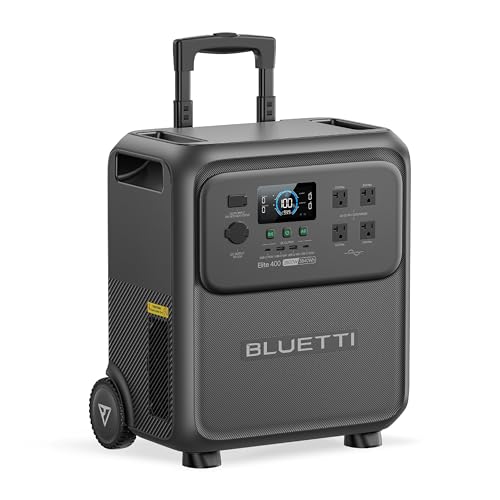
- 3,840Wh battery and 2,600W output
- 80% charge in about 70 minutes
- Wheeled design with UPS backup
Best For: Home backup, RVs, and demanding off-grid power
Compact High-Output Pick

- 288Wh capacity in a 9.5-pound body
- 600W output with 1,500W Power Lifting
- 45-minute 80% wall charge
Best For: Camping, road trips, and lightweight emergency backup
Lightweight Everyday Value
ALLWEI 300W Portable Power Station
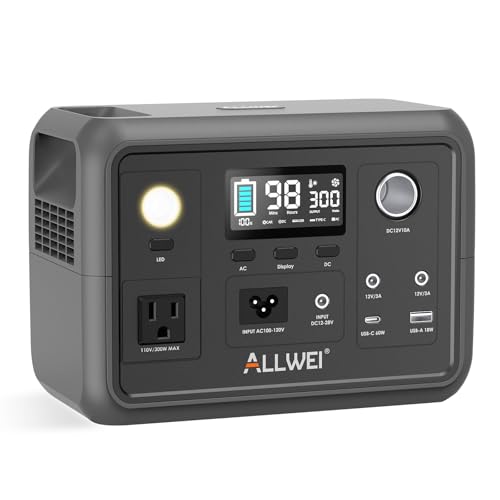
- 256Wh LiFePO4 battery with 300W output
- Weighs just 6.4 pounds
- AC, car, solar, and dual charging support
Best For: Camping, road trips, and small-device backup
Best Compact Power Pick – Jackery Explorer 1000 v2
The Jackery Explorer 1000 v2 is a strong choice among portable power stations for camping, road trips, and emergency backup. Its 1,070Wh capacity, 1,500W output, and 23.8-pound build provide a useful balance of power and portability.
Best For: Campers, travelers, and households seeking a compact emergency power station.
Pros:
- 1,500W output with a 3,000W surge peak for appliances such as refrigerators and electric pots.
- Lightweight 23.8-pound design with a foldable handle.
- LFP battery rated for more than 4,000 cycles and a lifespan exceeding 10 years.
- App controls include emergency fast charging, quiet overnight charging, and efficiency modes.
Cons:
- The one-hour full-charge mode must be enabled in the Jackery App.
- Solar charging is compatible only with Jackery solar panels.
This model stands out when portability matters without giving up household-friendly AC power. Its multiple USB, DC, and pure sine wave AC outputs also make it practical for charging several devices at once.
Best Expandable Station – EcoFlow DELTA 3
The EcoFlow DELTA 3 is one of the more adaptable portable power stations for users who may need additional storage later. It combines a 1,024Wh battery with 1,800W AC output, rapid charging, and expansion support up to 5kWh.
Best For: Emergency-preparedness users who want a system that can grow over time.
Pros:
- Reaches a full charge in 56 minutes with supported AC and solar input.
- Expandable up to 5kWh with compatible EcoFlow battery packs.
- LiFePO4 cells provide 4,000 cycles to 80% capacity and a stated 10-year lifespan.
- Can power up to 13 appliances simultaneously.
Cons:
- Expansion requires purchasing compatible extra batteries separately.
- At 12.5kg, it is less portable than lighter 1,000Wh-class options.
The DELTA 3 is a sensible pick for buyers who value fast recharging and future capacity upgrades. Its IP65 battery-pack protection adds useful resistance to dust, splashes, and oil, though the full system is still best used according to EcoFlow’s operating guidance.
Best High-Capacity Pick – Jackery Explorer 2000 v2
For buyers who need more reserve power, the Jackery Explorer 2000 v2 offers 2,042Wh of capacity and 2,200W AC output in a relatively compact package. This portable power station is designed for home backup, camping, and demanding outdoor use.
Best For: Users who need extended runtime for essential appliances and higher-wattage devices.
Pros:
- Large 2,042Wh capacity with 2,200W AC output.
- Weighs 39.5 pounds, making it lighter than many comparable 2kWh LiFePO4 units.
- Charges to 80% in 66 minutes and fully charges in 102 minutes using emergency mode.
- 20ms UPS switching can help keep essentials running during outages.
Cons:
- The 39.5-pound weight is substantial for frequent carrying.
- Only three AC ports are listed, so a power strip may be useful for larger setups.
The Explorer 2000 v2 makes the most sense when capacity and output take priority over ultralight portability. Its quiet charging mode, LFP battery, and UPS functionality further support use in bedrooms, offices, and emergency-backup situations.
Best Fast-Charging Value – BLUETTI AC180
The BLUETTI AC180 is a versatile option among portable power stations, combining a 1,152Wh LiFePO4 battery with 1,800W output and a broad selection of outlets. It is suited to camping, off-grid use, power outages, and home backup.
Best For: Buyers who want fast charging, strong output, and reliable outage support in one unit.
Pros:
- Charges from zero to full in about one hour with 1,440W AC input.
- 1,800W output can be boosted to 2,700W through the BLUETTI App.
- 500W solar input can recharge the station in about 2.8 to 3.3 hours.
- 20ms UPS response helps support essential devices during outages.
Cons:
- At 37.4 pounds, it is not the lightest option for extended carrying.
- The 2,700W boost mode is app-enabled rather than the standard running output.
The AC180 is a well-rounded choice for users who want quick turnaround between uses and enough output for demanding equipment. Its included AC, car, and solar charging cables also make it ready for varied charging scenarios.
Best for Long-Running Home Backup – High-Capacity Power Station
Among portable power stations, the Anker SOLIX S2000 stands out for extended backup use, pairing a 2,010Wh LiFePO4 battery with 1,500W continuous output and 3,000W peak output. Its compact 35.7-pound design and support for up to 400W of solar input make it practical for outages, camping, and other off-grid needs.
Best For: Home backup users who need long runtime for essentials such as a refrigerator, along with a durable battery and multiple recharging options.
Pros:
- 2,010Wh capacity and 1,500W continuous output can support many essential appliances.
- LiFePO4 battery is rated for up to 10,000 charge cycles and a 15-year lifespan.
- Supports up to 400W solar input and several charging methods, including AC, generator, alternator, and car charging.
- Compact dimensions and a 35.7-pound weight are relatively portable for its capacity.
Cons:
- It does not include a 12V DC port.
- At 35.7 pounds, it is heavier than smaller camping-focused power stations.
The S2000 is a strong fit when capacity and longevity matter more than ultra-light portability. Its 10ms UPS switchover, dual-sided outlets, and high output add flexibility, though actual appliance runtime will vary with the device and conditions.
Best for Fast Charging – Compact 1,024Wh Power Station
The BLUETTI Elite 100 V2 is one of the more versatile portable power stations for users who value quick recharge times and strong output in a compact package. It combines a 1,024Wh LiFePO4 battery with 1,800W rated AC output, 10ms UPS backup, and a one-handed 25-pound design.
Best For: Campers, road trippers, and home users who want rapid AC charging, quiet overnight operation, and dependable backup for electronics.
Pros:
- 1200W TurboBoost AC charging reaches 80% in approximately 45 minutes.
- 1,800W rated output and 2,700W Power Lifting support many everyday appliances.
- 10ms UPS switchover helps keep devices such as Wi-Fi routers and PCs running during outages.
- Compact 25-pound design, silent mode, and Wi-Fi/Bluetooth app control improve everyday usability.
Cons:
- Its 1,024Wh capacity provides less stored energy than larger 2kWh-class models.
- Some vehicle-charging features require the separately referenced BLUETTI Charger 1.
The Elite 100 V2 balances portability, output, and recharge speed particularly well. It is a practical middle-ground choice for users who need more power than a small camping battery but do not want to carry a larger home-backup unit.
Best for Lightweight Camping – Jackery Explorer 300
The Jackery Explorer 300 is a lightweight option among portable power stations, offering 292Wh of capacity in a compact 7.1-pound package. Its 300W rated output, six-device charging setup, and optional solar-panel compatibility make it suited to personal electronics and smaller off-grid loads.
Best For: Hikers, campers, travelers, and anyone who needs portable power for laptops, cameras, drones, CPAP equipment, or other modest loads.
Pros:
- Lightweight 7.1-pound design with an integrated handle is easy to carry.
- Includes two AC outlets, USB-C PD, two USB-A ports, and a 120W car port.
- 300W rated output and 600W peak surge handle common personal electronics.
- LiFePO4 battery is rated for more than 4,000 cycles before reaching 70% capacity.
Cons:
- 292Wh capacity and 300W output are not intended for high-demand appliances.
- Solar panels are optional rather than included.
- The supplied information notes that orders require a physical delivery address, not only a PO Box.
The Explorer 300 is best viewed as a grab-and-go electronics power source rather than a whole-home backup unit. Its low weight, useful port selection, and optional solar charging make it a convenient companion for short trips and outdoor activities.
Maximum-Capacity Backup – BLUETTI Elite 400
For shoppers comparing portable power stations for serious home backup, the BLUETTI Elite 400 prioritizes capacity and output. Its 3,840Wh LiFePO4 battery, 2,600W continuous output, and wheeled trolley design make it better suited to appliances, outages, RV use, and demanding off-grid tasks than lightweight travel models.
Best For: Home emergencies, RVs, off-grid power, and running larger appliances or power tools.
Pros:
- Large 3,840Wh capacity with 2,600W output and up to 3,900W surge power.
- Fast charging reaches 80% in about 70 minutes with AC and solar input.
- Up to 15ms UPS switchover helps keep routers, security cameras, and other essentials running.
- Built-in wheels make the 86-pound unit easier to reposition.
Cons:
- At 86 pounds, it is far less convenient to carry than compact power stations.
- Its large capacity and output may be excessive for basic phone, laptop, or lighting needs.
The Elite 400 is a powerful portable power station for buyers who need extended runtime and appliance-level capability. Choose it when capacity and backup performance matter more than portability.
Compact High-Output Pick – BLUETTI Elite 30 V2
The BLUETTI Elite 30 V2 is a compact option for shoppers who want portable power stations for travel, camping, or short home outages. Weighing about 9.5 pounds, it combines a 288Wh battery with 600W continuous output, 1,500W Power Lifting capability, and multiple charging methods.
Best For: Camping, road trips, CPAP users, laptops, routers, and lightweight emergency backup.
Pros:
- Lightweight design is easy to carry at about 9.5 pounds.
- 600W output and 1,500W Power Lifting mode cover more than basic USB charging.
- Reaches 80% charge in 45 minutes and full charge in about 70 minutes from a wall outlet.
- 10ms UPS switching supports sensitive devices such as laptops, routers, and CPAP machines.
Cons:
- The 288Wh capacity provides less runtime than larger backup-focused models.
- Power Lifting mode does not change the battery’s overall capacity.
This is a well-balanced portable power station for mobile users who value low weight, quick charging, and useful AC output. It is a better fit for personal electronics and smaller devices than extended whole-home backup.
Lightweight Everyday Value – ALLWEI 300W Portable Power Station
The ALLWEI 300W is a practical choice among portable power stations for camping, car travel, and everyday emergency charging. Its 256Wh LiFePO4 battery, 300W pure-sine-wave output, and 6.4-pound build provide a simple way to run small electronics and selected low-wattage devices.
Best For: Camping, road trips, laptops, mini fridges, CPAP machines, and basic outage essentials.
Pros:
- Lightweight 6.4-pound design fits easily in a car or backpack.
- LiFePO4 battery is rated for 3,000 charge-discharge cycles.
- Supports AC, car, solar, and combined AC-plus-solar recharging.
- Includes six output ports and a three-level LED light with SOS mode.
Cons:
- 300W continuous output limits it to smaller appliances and electronics.
- The solar panel is sold separately.
- Its 256Wh capacity is better for short-duration use than extended backup.
The ALLWEI is an accessible portable power station for buyers who want low weight, flexible charging, and dependable small-device support. It makes the most sense for mobile use and short emergencies rather than high-demand appliances.
How We Picked the Best Portable Power Stations
We evaluated these Portable Power Stations by comparing the specifications that matter most in real use: usable battery capacity, continuous AC output, peak surge capability, charging options, battery longevity, size, weight, and outlet selection. We also considered whether each model is better suited to light travel, weekend camping, emergency backup, or powering larger appliances.
Capacity and wattage are not the same. Watt-hours (Wh) indicate how much energy a battery stores, while watts (W) indicate how much power it can deliver at once. A larger battery may run devices longer, but it does not necessarily support high-draw appliances unless its inverter is rated for them.
Quick Comparison
For lightweight personal power, the Jackery Explorer 300, BLUETTI Elite 30 V2, and ALLWEI 300W are the easiest options to carry. The Jackery Explorer 1000 v2, EF ECOFLOW DELTA 3, BLUETTI AC180, and BLUETTI Elite 100 V2 offer a practical balance for camping, remote work, and short outages. For extended backup or demanding equipment, the Jackery Explorer 2000 v2, Anker SOLIX S2000, and BLUETTI Elite 400 provide substantially more stored energy and output.
Key Buying Factors for Portable Power Stations
Capacity and Runtime
Estimate the wattage of the devices you plan to use and multiply it by the number of hours needed. A 60W device running for five hours requires roughly 300Wh before conversion losses, so choosing extra capacity is wise.
Output and Inverter Rating
Check continuous output for appliances such as refrigerators, microwaves, heaters, and power tools. Motors and compressors can draw extra power when starting, making surge capacity important.
Battery Chemistry and Lifespan
LiFePO4 batteries generally offer a longer cycle life and strong thermal stability, while overall longevity also depends on charging habits, storage temperature, and the manufacturer’s battery-management system.
Charging and Port Selection
Look for the charging methods you will actually use, including wall, car, and solar input. USB-C ports, multiple AC outlets, regulated DC outputs, and fast recharge support can make a bigger difference than raw capacity.
Size, Weight, and Noise
Higher-capacity units are heavier and less convenient to move. If portability matters, prioritize a manageable weight and a design with comfortable handles. Check operating-noise specifications if you plan to use the station indoors or near a tent.
Who Should Buy Which Portable Power Stations?
Choose a compact model such as the Jackery Explorer 300, BLUETTI Elite 30 V2, or ALLWEI 300W for phones, cameras, laptops, lights, and small electronics.
Choose a mid-size station such as the Jackery Explorer 1000 v2, DELTA 3, BLUETTI AC180, or Elite 100 V2 for weekend camping, remote work, CPAP use, and short emergency outages.
Choose a high-capacity model such as the Jackery Explorer 2000 v2, Anker SOLIX S2000, or BLUETTI Elite 400 when longer runtime, refrigerator support, power tools, or broader home backup is the priority.
Before buying, confirm the station’s output and charging limits against your specific appliances. For essential home backup, also consider a transfer switch or professionally installed connection rather than plugging high-demand household circuits directly into a portable unit.