Reliable electricity can keep tools, chargers, lights, and communication equipment running when a job site lacks dependable utility power. The right portable power station should match your equipment’s wattage, runtime needs, and working conditions.
This roundup compares 10 models ranging from compact 1,000Wh-class units to higher-capacity systems built for demanding equipment and longer workdays. Use the guide below to narrow your choice by power output, battery chemistry, charging speed, portability, and expansion potential.
Best 10 Portable Power Stations for Job Sites Picks for 2026
Best High-Output Pick

- 2,048Wh capacity with 2,400W output
- Up to 3,400W X-Boost power
- 0–80% charging in about 1.13 hours
Best For: High-demand job-site tools and backup power
Best Large-Capacity Pick

- 3,584Wh capacity and 3,600W output
- Expandable capacity up to 21kWh per unit
- Wheels and telescoping handle for transport
Best For: Extended runtime and demanding equipment
Best Lightweight Power Pick
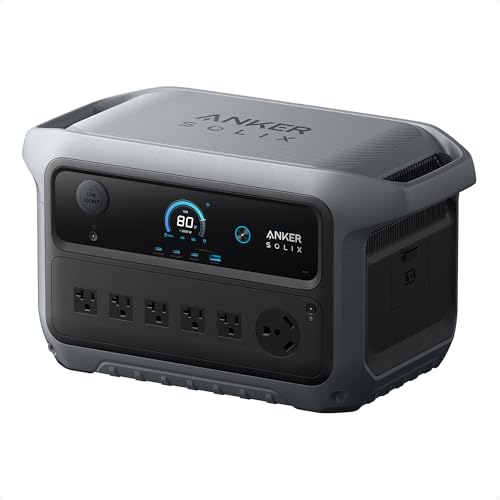
- 41.7-pound compact design
- 2,400W output with 4,000W peak
- Full recharge in 58 minutes
Best For: Mobile crews and compact work setups
Best Compact 2kWh Pick

- 39.5-pound compact design
- 2,042Wh capacity with 2,200W output
- Three AC ports and quiet charging below 30dB
Best For: Smaller job sites and quiet indoor work areas
Compact Long-Runtime Pick

- 2,010Wh capacity and 1,500W continuous output
- LiFePO4 battery rated for up to 10,000 cycles
- 35.7-pound design with 400W solar input
Best For: Portable, long-duration power for essential job-site equipment
Heavy-Duty Output Pick
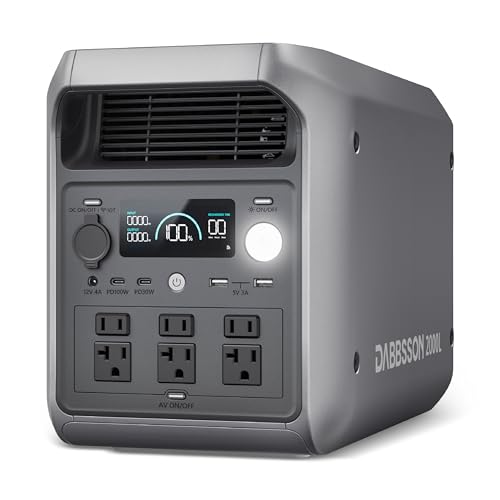
- 2,200W continuous output and 3,300W Power Boost
- Six AC outlets for simultaneous device use
- One-hour AC recharge and up to 800W solar input
Best For: Higher-demand tools and multiple devices on active job sites
Fast-Charging Expandable Pick

- 1,800W AC output from a 1,024Wh battery
- Full charge in a claimed 56 minutes
- Expandable up to 5kWh with compatible batteries
Best For: Crews needing rapid recharging and scalable capacity
Balanced Job-Site Backup

- 1,191Wh capacity with 1,200W pure-sine AC output
- LiFePO4 battery rated for 3,000 charge cycles
- 14 outputs plus AC, solar, and car charging
Best For: Versatile backup for light-duty tools, electronics, and remote work
High-Output Professional Pick

- 2,000W continuous output and 4,500W surge
- 0–80% AC charging in 36 minutes
- Expandable from 1,024Wh to 5,120Wh
Best For: Professional crews and demanding mobile equipment
Lightweight Compact Option

- 23.1-pound design with foldable handle
- 960Wh capacity and 1,000W continuous output
- Fast charging with AC, car, and solar options
Best For: Mobile crews charging electronics and moderate loads
Best High-Output Pick – EF ECOFLOW DELTA 3 Max
For demanding portable power stations for job sites, the EF ECOFLOW DELTA 3 Max combines a 2,048Wh LiFePO4 battery with 2,400W output and up to 3,400W in X-Boost mode. Its fast recharge and app controls make it practical for mobile work, backup power, and equipment that needs substantial wattage.
Best For: Job sites and workshops that need high output, fast charging, and portable backup power.
Pros:
- Charges from 0–80% in about 1.13 hours with X-Stream technology.
- 3400W X-Boost mode can handle many high-demand appliances and power tools.
- LiFePO4 battery, 10ms transfer time, app control, and a five-year warranty.
Cons:
- Solar panels are optional rather than included.
- Its 19.44-inch height and substantial capacity may be more than needed for light-duty tasks.
The DELTA 3 Max is a strong choice when job-site equipment demands more than a compact power bank can provide. Choose it for its blend of high surge capability, rapid charging, and long-term battery design.
Best Large-Capacity Pick – Jackery HomePower 3600 Plus
The Jackery HomePower 3600 Plus is one of the most capable portable power stations for job sites when extended runtime matters. With 3,584Wh of capacity, 3,600W output, and a rolling luggage-style design, it is suited to larger equipment and longer work sessions.
Best For: Larger job sites, pumps, heaters, dryers, and users who prioritize capacity and easy rolling transport.
Pros:
- 3,600W output can run demanding equipment, with 7,200W available in parallel.
- Large 3,584Wh capacity is expandable to 21kWh per unit.
- Supports AC, hybrid AC+DC, solar, and gas-generator charging.
- Wheels and a telescoping handle improve transport despite the 77.2-pound weight.
Cons:
- At 77.2 pounds, it is less convenient to lift than smaller stations.
- Only two outlets are listed in the supplied specifications.
This Jackery is best viewed as a mobile, high-capacity power hub rather than a grab-and-go unit. Its rolling design helps offset the weight, while expandable storage and dual-voltage parallel operation add flexibility for serious backup needs.
Best Lightweight Power Pick – Anker SOLIX C2000 Gen 2
For portable power stations for job sites that need to move easily between locations, the Anker SOLIX C2000 Gen 2 keeps weight and size down without giving up useful output. It provides 2,048Wh, 2,400W rated power, and a 4,000W peak for tools and appliances with higher startup demands.
Best For: Mobile crews, service vehicles, and compact job setups that need strong power without a bulky enclosure.
Pros:
- At 41.7 pounds, it is notably portable for a 2kWh-class station.
- 4,000W peak output helps accommodate startup surges.
- Recharges fully in 58 minutes and supports six charging methods.
- Optional expansion increases capacity to 4kWh.
Cons:
- The listed specifications show one total power outlet, which may limit simultaneous connections.
- Expansion battery is an additional purchase.
The C2000 Gen 2 is a practical middle ground for crews that carry their power source frequently. Its compact build, rapid recharge, and alternator-charging option are especially useful when access to a wall outlet is limited.
Best Compact 2kWh Pick – Jackery Explorer 2000 v2
The Jackery Explorer 2000 v2 offers a compact option among portable power stations for job sites, with 2,042Wh capacity, 2,200W output, and three AC ports. Its 39.5-pound weight and quiet charging mode make it convenient for indoor work areas, mobile businesses, and smaller equipment setups.
Best For: Small job sites and contractors who want a relatively light station with multiple AC ports and quiet operation.
Pros:
- 39.5-pound design is compact for a 2kWh LiFePO4 power station.
- Three AC ports provide a combined 2,200W output.
- Charges to 80% in 66 minutes and supports solar charging.
- Silent Charging mode operates below 30dB, and 20ms switching supports backup use.
Cons:
- Its 2,200W output is lower than the higher-output models in this roundup.
- Solar charging can take as few as six hours with 400W panels.
This Explorer 2000 v2 suits users who value portability and low noise over maximum output. It is a sensible choice for lighter tools, electronics, and backup tasks where three AC ports are more useful than extreme surge capacity.
Compact Long-Runtime Pick – Anker SOLIX S2000
The Anker SOLIX S2000 is a compact option among portable power stations for job sites, pairing a 2,010Wh LiFePO4 battery with 1,500W of continuous output. Its 35.7-pound design is relatively easy to move, while the 6W idle draw and claimed 10% efficiency improvement can help stretch runtime during extended workdays or outages.
Best For: Crews that need a relatively lightweight, long-runtime station for essential tools, appliances, and backup power.
Pros:
- 2,010Wh capacity with 1,500W continuous and 3,000W peak output.
- LiFePO4 battery rated for up to 10,000 charge cycles and a 15-year lifespan.
- Supports up to 400W solar input and multiple recharge methods.
- Compact 35.7-pound body with eight power outlets and under-10ms switchover.
Cons:
- No 12V DC port.
- Solar input is limited to 400W.
The S2000 emphasizes portability and efficiency without dropping below the power level needed for many everyday job-site devices. Confirm the startup and running requirements of heavier tools before relying on it as a primary source.
Heavy-Duty Output Pick – DABBSSON 2000L
The DABBSSON 2000L stands out among portable power stations for job sites with 2,048Wh of capacity, 2,200W of continuous AC output, and a 3,300W Power Boost mode. Six AC outlets let teams run several devices at once, while the one-hour AC recharge and optional solar input help reduce downtime between tasks.
Best For: Job sites needing higher continuous output for power tools, appliances, and multiple connected devices.
Pros:
- 2,200W continuous output with up to 3,300W Power Boost.
- Six AC outlets and a full port set for powering multiple devices.
- Recharges in about one hour from AC and accepts up to 800W solar input.
- Semi-solid LiFePO4 battery supports 4,000-plus deep cycles to 80% capacity.
Cons:
- At 41 pounds, it is heavier than the Anker and EcoFlow options here.
- Solar panels are optional rather than included.
With its stronger output rating and broad recharge options, the 2000L is well suited to demanding work areas. Its 41-pound weight is still manageable, but crews should plan for two-handed carrying when moving it frequently.
Fast-Charging Expandable Pick – EcoFlow DELTA 3
The EcoFlow DELTA 3 is a flexible choice among portable power stations for job sites when fast turnaround and future expansion matter. Its 1,024Wh battery delivers 1,800W of AC output, reaches a full charge in a claimed 56 minutes with AC and solar input, and can expand to 5kWh with compatible EcoFlow batteries.
Best For: Mobile crews that value fast recharging, many ports, and the option to expand capacity later.
Pros:
- 1,800W output with X-Boost support for resistive loads over 2,600W.
- Full charge in 56 minutes using up to 1,500W AC and 500W solar input.
- Expandable from 1kWh to as much as 5kWh with compatible EcoFlow batteries.
- IP65 battery pack is designed to resist splashes, dust, and oil.
Cons:
- Its 1,024Wh built-in capacity is lower than the Anker and DABBSSON units.
- Expansion batteries are separate purchases.
The DELTA 3 favors flexibility over maximum built-in capacity. It makes the most sense for teams that can recharge during breaks or plan to add an EcoFlow battery for longer work sessions.
Balanced Job-Site Backup – UDPOWER S1200
For portable power stations for job sites, the UDPOWER S1200 offers a practical balance of capacity, outlets, and battery longevity. Its 1,191Wh LiFePO4 battery and 1,200W pure-sine-wave output can support compatible tools, electronics, and smaller appliances, provided the combined AC load stays within its limit.
Best For: Crews needing versatile battery backup for electronics, light-duty equipment, remote work, camping, or emergency use.
Pros:
- LiFePO4 battery rated to retain at least 80% capacity after 3,000 charge cycles.
- Offers 14 outputs, including five AC outlets, USB-A, USB-C, DC, and a car outlet.
- Supports up to 800W AC input, 400W solar input, or 12V car charging.
- UPS mode switches to battery power within 10 milliseconds for compatible devices.
Cons:
- The 1,200W continuous output limits compatibility with higher-draw job-site tools.
- At 25.8 pounds, it is portable but not especially lightweight for frequent repositioning.
The S1200 is a well-rounded choice when outlet variety and long-term battery use matter more than maximum power. Check each tool’s starting and running wattage before bringing it to a job site.
High-Output Professional Pick – OUPES Mega 1
Among portable power stations for job sites, the OUPES Mega 1 stands out for its 2,000W continuous output and 4,500W surge rating. It is designed for demanding mobile work, with fast recharging, UPS protection, app control, and optional expansion for substantially more capacity.
Best For: Professional crews, mobile offices, production teams, and demanding equipment that needs higher continuous output.
Pros:
- Provides 2,000W continuous pure-sine output with 4,500W surge capacity.
- Reaches 80% charge in 36 minutes from AC, or 26 minutes using combined AC and solar input.
- Can expand from 1,024Wh to 5,120Wh with up to two B2 extra batteries.
- LiFePO4 cells are rated for 3,500+ cycles, with UPS transfer in under 20 milliseconds.
Cons:
- The supplied notes do not specify the unit’s weight or dimensions, making transport planning harder.
- Expansion batteries are required for the larger capacities and add to the overall system cost and bulk.
The Mega 1 is the strongest option here for higher-demand job-site equipment and scalable power needs. Its expansion system is especially useful when a single 1,024Wh battery will not cover a full workday.
Lightweight Compact Option – CUBUS 1000 PLUS
If portability is a priority, this CUBUS 1000 PLUS is a useful contender among portable power stations for job sites. Its 23.1-pound frame, foldable handle, 960Wh capacity, and 1,000W AC output make it easier to carry between work areas while still supporting many electronics and lighter-duty devices.
Best For: Mobile crews that value lower carrying weight, compact storage, and fast charging for electronics or moderate loads.
Pros:
- Weighs approximately 23.1 pounds and includes a foldable handle.
- Provides 960Wh capacity, 1,000W continuous output, and 2,000W surge capability.
- Includes four pure-sine AC outlets, USB-C, USB-A, XT60, and a built-in LED flashlight.
- LiFePO4 battery is rated for 3,500+ cycles and over 70% capacity retention.
Cons:
- Do not use it with tools or appliances rated above 1,000W.
- Solar panels are not included.
- The fastest charging claims depend on combined inputs and ideal laboratory conditions.
The CUBUS 1000 PLUS is a sensible choice when carrying convenience matters more than maximum output. Its 1,000W load ceiling makes it better suited to charging electronics and running moderate equipment than powering high-draw tools.
How We Picked the Best Portable Power Stations for Job Sites
We evaluated these units by the specifications that matter most on active work sites: continuous AC output, surge capacity, usable battery capacity, charging speed, battery chemistry, portability, outlet selection, and solar compatibility. We also considered whether a model is better suited to light-duty tools and electronics or to higher-demand equipment such as saws, grinders, pumps, and compressors.
LiFePO4 batteries generally offer a long cycle life and strong safety profile, while fast AC charging can make a major difference between shifts. Because advertised capacity and output do not guarantee identical real-world runtime, treat the listed figures as comparison points rather than exact run-time promises.
Quick Comparison
The 1,000Wh-class options are typically easier to carry and can handle lights, laptops, battery chargers, small fans, and selected tools. The 2,000Wh models provide a stronger balance for a full day of mixed loads, while the 3,000Wh-plus Jackery HomePower 3600 Plus is better suited to extended operation or heavier combined demand.
For tool compatibility, prioritize continuous output before surge output. A high surge rating can help with motor startup, but it does not mean the station can continuously run equipment above its rated wattage. Also check the number and type of AC outlets, USB ports, and 12V connections you need at the same time.
Key Buying Factors for Portable Power Stations for Job Sites
Capacity and Runtime
Capacity is measured in watt-hours. Estimate runtime by dividing the station’s watt-hours by the device’s watts, then allow for conversion losses. A 2,000Wh station may run a 500W load for roughly three to four hours in practical use, depending on efficiency and battery reserve.
Output and Startup Demand
List the highest-wattage tools you expect to use and check both their running and startup requirements. Stations rated around 1,200W are suitable for lighter equipment, while 1,800W to 2,400W models offer more flexibility. Choose a higher-output unit if you regularly operate demanding tools or multiple devices together.
Charging and Job-Site Durability
Fast wall charging reduces downtime, and solar input can extend operation where grid power is unavailable. Look for clear display information, protected ports, stable handles, and a design you can realistically move across the site. Keep the unit dry, ventilated, and away from excessive dust or impact unless it is specifically rated for those conditions.
Who Should Buy Which Portable Power Stations for Job Sites?
Choose a compact 1,000Wh-class model if portability, lighting, electronics, and occasional tool charging are your priorities. Select a 2,000Wh-class station for general contractors, remodelers, and crews running several chargers or moderate-power tools throughout the day. A higher-capacity 3,000Wh-plus model makes sense when runtime matters more than weight or when several people need power simultaneously.
If you frequently use tools with powerful motors, favor a model with ample continuous output and verified surge capability rather than choosing solely by battery size. For remote projects, prioritize fast solar charging, durable construction, and a battery chemistry designed for frequent cycling. Before buying, confirm local electrical requirements, tool startup loads, warranty coverage, and the station’s weight against your transport routine.