When the power goes out, the right portable power station can keep phones, lights, networking equipment, medical devices, and essential appliances running without fuel or complicated setup.
We selected 10 options across several capacity and output classes so you can match your backup power system to your runtime needs, available storage space, and budget.
Best 10 Portable Power Stations for Power Outages Picks for 2026
Best High-Capacity Pick

- 2,042Wh capacity and 2,200W AC output
- 20ms UPS switching for outage backup
- Quiet, fast AC and solar charging options
Best For: Home backup users needing substantial capacity and appliance support
Best Long-Running Option

- 2,010Wh capacity with efficient 6W idle draw
- Up to 35 hours of stated refrigerator runtime
- LFP battery rated for 10,000 charge cycles
Best For: Extended refrigerator and essential-appliance backup
Best Lightweight Backup

- 23.8-pound design with 1,070Wh capacity
- 1,500W output and 3,000W surge rating
- Multiple ports plus app-controlled charging modes
Best For: Portable emergency backup for selected essentials
Best Fast-Charging Midrange Pick

- 1,800W output with 2,700W peak mode
- 0–80% charging in 45 minutes
- 20ms UPS switching and 500W solar input
Best For: Fast-recharging home, outdoor, and outage backup
Smart UPS Protection
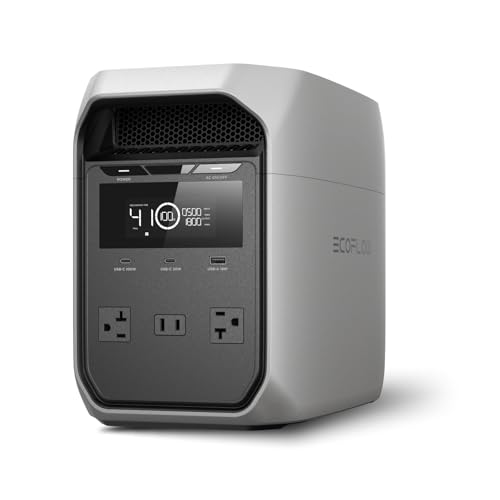
- 1,024Wh capacity with 1,800W AC output
- Under-10ms UPS switching for sensitive electronics
- 80% recharge in about 45 minutes
Best For: Computers, home backup, and appliances
Lightweight Personal Backup

- 292Wh capacity with 300W rated output
- About 7.5 pounds with an integrated handle
- AC, USB-C, USB-A, and car-port connections
Best For: Personal electronics, camping, and short outages
High-Output Emergency Pick

- 288Wh capacity with 600W continuous output
- 1,500W Power Lifting and 10ms UPS
- 0-80% wall charging in about 45 minutes
Best For: CPAP, laptops, routers, and higher-demand emergency devices
Best High-Capacity Pick – Jackery Explorer 2000 v2
For shoppers comparing portable power stations for power outages, the Jackery Explorer 2000 v2 stands out with 2,042Wh of capacity and 2,200W of AC output. Its fast charging, quiet operation, and 20ms UPS switching make it suited to both emergency backup and regular outdoor use.
Best For: Home backup users who need substantial capacity, strong appliance support, and dependable UPS switching.
Pros:
- Large 2,042Wh capacity with 2,200W output across three AC ports
- 20ms seamless switching and UL1778 test certification for UPS use
- Relatively portable for its class at 39.5 pounds
- Fast AC charging, optional solar charging, and a quiet 30dB charging mode
Cons:
- Heavier than smaller, lower-capacity power stations
- Solar charging requires compatible 400W panels for the stated charging time
The Explorer 2000 v2 is a strong choice when outage readiness and runtime matter more than minimizing size or weight. Its LiFePO4 battery, compact design, and quiet charging add practical value for longer-term ownership.
Best Long-Running Option – Anker SOLIX S2000
The Anker SOLIX S2000 is a practical option among portable power stations for power outages, pairing a 2,010Wh LiFePO4 battery with low idle power draw. Its efficient design is rated to keep a refrigerator powered for up to 35 hours, while 400W solar input supports off-grid recharging.
Best For: Households prioritizing extended runtime for refrigerators and other essential appliances.
Pros:
- 2,010Wh battery with 1,500W continuous and 3,000W peak output
- Low 6W idle draw and claimed refrigerator runtime of up to 35 hours
- Compact 35.7-pound design with a 15-year, 10,000-cycle LFP rating
- Supports AC, solar, generator, alternator, and car charging
Cons:
- No 12V DC port
- Lower continuous output than some similarly sized power stations
The S2000 emphasizes efficiency and longevity rather than maximum AC wattage. It is especially appealing for outage planning where keeping a refrigerator or other essential load running for as long as possible is the main goal.
Best Lightweight Backup – Jackery Explorer 1000 v2
For portable power stations for power outages that are easier to move, the Jackery Explorer 1000 v2 offers 1,070Wh of capacity and 1,500W of AC output in a 23.8-pound body. It also includes multiple charging ports, app controls, and an emergency mode capable of a one-hour full charge.
Best For: Users who want a versatile emergency unit that is easier to carry between rooms, vehicles, and campsites.
Pros:
- Lightweight 23.8-pound design with a foldable handle
- 1,500W output with a 3,000W surge rating
- Seven outlets, including USB-C, USB-A, DC car, and three AC ports
- LFP battery rated to retain over 70% capacity after 4,000 cycles
Cons:
- Smaller 1,070Wh capacity than the 2kWh models in this roundup
- One-hour emergency charging must be enabled in the Jackery app
- Solar charging is compatible only with Jackery solar panels
The Explorer 1000 v2 balances portability and capability well. It is a sensible pick for powering selected essentials during an outage, but users planning extended whole-home backup may prefer a higher-capacity model.
Best Fast-Charging Midrange Pick – BLUETTI AC180
The BLUETTI AC180 is a versatile choice among portable power stations for power outages, combining a 1,152Wh LiFePO4 battery with 1,800W output. It can charge from 0% to 80% in 45 minutes and provides 20ms UPS switching for essential devices.
Best For: Buyers who want strong output, rapid recharge times, and a midrange unit for home backup or off-grid use.
Pros:
- 1,800W output with a 2,700W peak mode for higher-demand devices
- 0–80% charging in 45 minutes and full AC charging in about one hour
- 500W solar input supports stated solar charging in 2.8–3.3 hours
- 20ms UPS switching and eight outlets for flexible backup use
Cons:
- 37.4-pound weight makes it less portable than compact 1kWh units
- Its 1,152Wh capacity provides less stored energy than the 2kWh options
The AC180 is a well-rounded middle ground: faster to replenish than many larger units while still offering substantial output for appliances and electronics. Its five-year warranty and included AC, car, and solar cables further support emergency preparedness.
Fast-Charging Home Backup – Anker SOLIX C1000
For shoppers comparing portable power stations for power outages, the Anker SOLIX C1000 stands out with a 1,056Wh LiFePO4 battery, 1,800W output, and 2,400W peak capacity. Its fast AC recharge, app controls, and optional solar input make it a versatile choice for home backup, camping, or RV use.
Best For: Home power outages, RVs, camping, and users who want fast recharging.
Pros:
- Reaches 80% charge in about 43 minutes and fully charges in under an hour with UltraFast AC charging.
- LiFePO4 battery is rated for 3,000 cycles over a 10-year lifespan.
- Provides 1,800W of running power, 2,400W peak output, and 11 ports.
- Supports up to 600W solar input and includes a car charging cable.
Cons:
- UltraFast charging requires the Anker app and a smartphone.
- At 27.6 pounds, it is less convenient to carry than compact power stations.
- Solar panels are not listed among the included components.
The SOLIX C1000 is a strong middle-ground option when you need substantial emergency capacity without moving up to a much larger unit. Its five-year warranty and combination of AC, car, and solar charging add flexibility.
Smart UPS Protection – EcoFlow DELTA 3 Classic
The EcoFlow DELTA 3 Classic is designed for portable power stations for power outages, especially when keeping sensitive electronics online matters. It combines a 1,024Wh battery with 1,800W output, fast AC charging, app controls, and a sub-10ms UPS function for rapid backup switching.
Best For: Home backup, computers and servers, appliances, and users who want UPS protection.
Pros:
- Supplies 1,800W continuously with 3,600W surge capacity and X-Boost support.
- Switches to battery power in under 10ms to help prevent interruptions and data loss.
- Reaches 80% charge in about 45 minutes using X-Stream AC charging.
- LiFePO4 cells are rated for more than 10 years of daily use.
Cons:
- Solar panels are optional rather than included.
- It has six outlets, fewer than some similarly sized models.
- It is not compatible with the DELTA 2 Smart Extra Battery or Delta 3 Series Smart Extra Battery.
Choose the DELTA 3 Classic if automatic backup switching is a priority. Its fast recharge and smart controls are useful during outages, while the 26.7-pound size keeps it reasonably portable for outdoor or temporary use.
Lightweight Personal Backup – Jackery Explorer 300
For smaller backup needs, the Jackery Explorer 300 is a lightweight option among portable power stations for power outages. Its 292Wh capacity and 300W output can keep laptops, cameras, drones, and other personal electronics running, while the integrated handle makes it easy to carry.
Best For: Portable electronics, camping, travel, CPAP use, and short-duration backup.
Pros:
- Weighs about 7.5 pounds and has an integrated carrying handle.
- Offers two AC outlets, USB-C, two USB-A ports, and a 120W car port.
- LiFePO4 battery is rated for more than 4,000 cycles before reaching 70% capacity.
- Can reach 80% charge in about 2.8 hours with a 100W Jackery solar panel.
Cons:
- Its 292Wh capacity and 300W output are not intended for large appliances.
- Solar panels are optional.
- The supplied information specifies a three-year plus two-year warranty rather than a simple five-year warranty.
The Explorer 300 is best viewed as a grab-and-go electronics backup rather than a whole-home outage solution. Its low weight, useful port selection, and long cycle rating make it practical for short outages and off-grid trips.
Quiet Compact Backup – EcoFlow RIVER 3
For shoppers comparing portable power stations for power outages, the EcoFlow RIVER 3 is a compact option focused on quiet operation, quick recharging, and automatic backup switching. Its 245Wh battery and 300W output suit essential electronics and smaller appliances rather than high-demand devices.
Best For: Quiet home backup, routers, communications equipment, small appliances, camping, and users who value fast AC charging.
Pros:
- Charges from 0% to 100% in about one hour using AC power.
- Under-20ms UPS switching can keep connected equipment running during an outage.
- Lightweight 7.8-pound design with a built-in handle and under-30 dB operation.
- LiFePO4 battery is rated for 3,000-plus cycles, with multiple built-in safety protections.
Cons:
- 245Wh capacity and 300W continuous output limit runtime and appliance compatibility.
- Solar charging requires suitable solar input and takes longer than AC charging.
The RIVER 3 is a strong fit when portability, low noise, and rapid recharge matter more than maximum capacity. It is particularly practical for keeping networking, security, and communication devices supported through brief interruptions.
High-Output Emergency Pick – BLUETTI Elite 30 V2
The BLUETTI Elite 30 V2 stands out among portable power stations for power outages with 600W continuous output, a 1,500W Power Lifting mode, and a fast UPS response. Its 288Wh capacity provides useful emergency power while remaining portable at roughly 9.5 pounds.
Best For: Blackout backup for CPAP machines, laptops, routers, small appliances, camping, and road trips where higher output is useful.
Pros:
- 600W continuous output and up to 1,500W in Power Lifting mode.
- 10ms UPS switching helps protect connected electronics during sudden outages.
- Fast wall charging reaches 80% in about 45 minutes and 100% in about 70 minutes.
- Supports AC, solar, car, and other charging methods, with eight modes listed.
Cons:
- 288Wh capacity may provide limited runtime for larger appliances.
- At 9.5 pounds, it is heavier than some compact alternatives.
The Elite 30 V2 is a versatile choice for users who need more output than a basic mini power station can provide. Its fast charging and UPS feature are especially useful for short, unexpected blackouts and sensitive equipment.
Lightweight Value Backup – ALLWEI 300W Power Station
The ALLWEI 300W is a lightweight choice for shoppers seeking portable power stations for power outages, camping, and road trips. Its 256Wh LiFePO4 battery, pure-sine-wave output, and six-device charging support cover common electronics and select small appliances.
Best For: Budget-conscious emergency kits, laptops, phones, CPAP machines, camping gear, and car-based backup.
Pros:
- 300W continuous output with a 600W peak and pure sine wave.
- Light 6.4-pound design is easy to carry or store in a vehicle.
- Six output ports include USB-C PD, USB-A, DC ports, a car port, and an AC outlet.
- Supports AC, car, solar, and AC-plus-solar recharging, with an integrated MPPT controller.
Cons:
- One AC outlet limits simultaneous AC appliance use.
- Solar panels are sold separately.
- Its 256Wh capacity is better suited to essentials than extended whole-home backup.
The ALLWEI offers a practical mix of low weight, flexible charging, and everyday connectivity. It makes sense for short outages and portable use, provided your power needs stay within its 300W output and modest battery capacity.
How We Picked the Best Portable Power Stations for Power Outages
We focused on battery capacity, continuous AC output, surge capability, portability, charging flexibility, and battery chemistry. The lineup includes compact models for communications and lighting, midrange units for refrigerators and electronics, and larger systems designed for longer outages. We also considered practical features such as fast wall charging, solar input, car charging, display quality, outlet selection, and LiFePO4 battery longevity.
Capacity is listed in watt-hours (Wh), while output is measured in watts (W). Actual runtime will be lower than the stated capacity because of inverter and conversion losses. For a closer estimate, multiply a device’s watt draw by the number of hours you need it running, then choose additional capacity for headroom.
Quick Comparison
| Use Case | Recommended Capacity | Typical Loads | What to Prioritize |
|---|---|---|---|
| Emergency essentials | 200–400Wh | Phones, lights, routers | Low weight and USB charging |
| Short home backup | 800–1,100Wh | Freezers, laptops, TVs, small appliances | Pure-sine AC output and fast charging |
| Extended outage backup | 1,150–2,100Wh | Refrigerators, electronics, multiple devices | High capacity, strong inverter, solar support |
Key Buying Factors for Portable Power Stations for Power Outages
Capacity and Runtime
Estimate the loads you must keep operating rather than choosing by battery size alone. A router, lamp, and phone charger may need only a few hundred watt-hours per day, while a refrigerator or CPAP machine can require substantially more depending on cycling and settings.
Output and Surge Handling
Check continuous wattage for the appliances you plan to use and peak or surge wattage for motors and compressors. A station may run electronics easily but struggle with a refrigerator, pump, heater, kettle, or microwave if its inverter is undersized.
Battery Chemistry and Recharge Options
LiFePO4 batteries generally offer long cycle life and good stability. Fast AC charging is valuable when outages are brief, while solar and car charging can extend operation during prolonged emergencies. Verify solar input limits and connector compatibility before buying panels.
Portability and Safety
Large-capacity units provide more runtime but are heavier. Look for sturdy handles, clear displays, overload protection, temperature monitoring, and a reputable warranty. Never use a power station indoors with a fuel-powered generator, and follow the manufacturer’s ventilation and charging instructions.
Who Should Buy Which Portable Power Stations for Power Outages?
Choose a compact 245–300Wh model for phone charging, lighting, cameras, routers, and occasional laptop use. A 1,000–1,150Wh station is a versatile choice for most households that need several hours of essential backup power without excessive bulk. Choose a 2,000Wh-class model if you want longer runtime, more simultaneous devices, or greater flexibility for refrigerator and home-office loads. Before purchasing, list your essential devices, note their wattage, and confirm that the station’s continuous and surge ratings exceed those demands.