Reliable electricity is not always available when you need it. Whether you are preparing for outages, heading to a campsite, or working away from the grid, the right portable power station can keep essential devices running without fuel or excessive noise.
We selected 10 off-grid portable power stations across compact, mid-size, and higher-capacity categories. Use the guide below to compare battery chemistry, output, solar charging, portability, and the features that matter most for your setup.
Best 10 Off-Grid Portable Power Stations Picks for 2026
Built-In Solar Pick
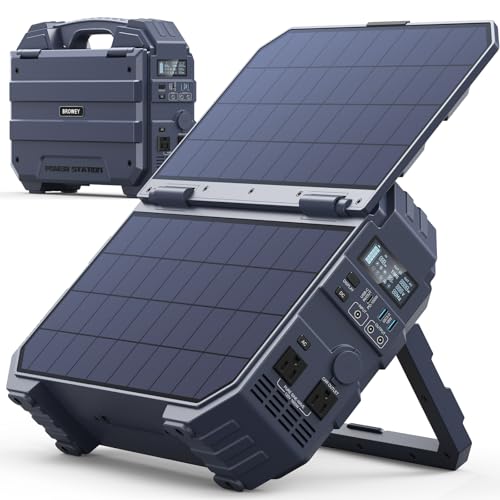
- Built-in 40W solar panel and MPPT controller
- 1,024Wh capacity with 1,600W output
- LiFePO4 battery with 3,000+ cycle rating
Best For: Off-grid backup, RV trips, and camping
Fast-Charging Choice

- 1,500W output and 1,070Wh capacity
- Includes a 200W solar panel
- App-controlled one-hour emergency charging
Best For: Portable camping, road trips, and emergency power
High-Output Solar Pick

- 1,800W output with 1,024Wh capacity
- Reaches 80% charge in 45 minutes via AC
- Includes a 220W bifacial solar panel
Best For: Off-grid living, home backup, and sensitive electronics
Best Lightweight Pick

- 292Wh capacity with 300W rated output
- 7.5-pound portable design
- LiFePO4 battery and solar charging support
Best For: Hikers, campers, and travelers needing lightweight power for electronics
Long-Life Choice
DaranEner NEOZ2 LiFePO4 Power Station

- 192Wh LiFePO4 battery rated for 3,500+ cycles
- 300W pure sine wave output with 600W surge
- 60W USB-C PD and MPPT solar charging
Best For: Frequent outdoor use and sensitive electronics
Built-In Solar Pick – BROWEY S1600
The BROWEY S1600 is a versatile choice for off-grid portable power stations, combining a 1,024Wh LiFePO4 battery with a built-in 40W solar panel. Its 1,600W pure sine wave output suits emergency backup, camping, RV use, and larger appliances such as refrigerators or CPAP machines.
Best For: Off-grid users who want built-in solar charging and substantial appliance support.
Pros:
- Built-in 40W solar panel with MPPT controller
- 1,600W output with 3,200W peak capacity
- LiFePO4 battery rated for 3,000+ cycles to 80% capacity
- Includes multiple cables, adapters, and a three-year warranty
Cons:
- At 12 kg, it is heavier than compact power stations
- Built-in solar charging is limited to 40W unless additional panels are connected
The BROWEY stands out for its integrated panel and high output, making it practical when portability and solar readiness matter more than minimal weight.
Fast-Charging Choice – Jackery Explorer 1000 v2
The Jackery Explorer 1000 v2 pairs a 1,070Wh capacity with a 1,500W AC output in a relatively light 23.8-pound design. For off-grid portable power stations, its included 200W solar panel, app controls, and selectable charging modes offer useful flexibility for camping, road trips, and emergencies.
Best For: Campers and emergency users who prioritize portability, app control, and rapid recharging.
Pros:
- 1,500W output with 3,000W surge peak
- Included 200W solar panel can recharge to 80% in six hours
- LFP battery rated for more than 4,000 cycles
- App supports emergency, quiet, and energy-efficiency charging modes
Cons:
- One-hour full charging requires enabling emergency charging in the app
- Solar charging is slower than AC charging
This Jackery is a well-rounded option for buyers who want a manageable size, strong output, and smart charging controls in one solar-generator package.
Compact Adventure Pick – VTOMAN FlashSpeed 300
The VTOMAN FlashSpeed 300 is a lightweight option among off-grid portable power stations, delivering 300W of output from a 230Wh LiFePO4 battery. Its 100W USB-C input, seven outlets, and built-in emergency light make it suited to personal electronics and smaller camping loads.
Best For: Lightweight camping, device charging, drones, lights, and other modest power needs.
Pros:
- Compact 7.4-pound design
- 100W USB-C PD input recharges the unit to 80% in about two hours
- Seven outlets can power multiple devices simultaneously
- Built-in LED offers steady, strobe, and SOS modes
Cons:
- 300W output and 230Wh capacity are not intended for large appliances
- Solar charging requires a compatible solar panel sold separately
The FlashSpeed 300 is best viewed as a grab-and-go power bank with AC capability rather than a whole-home backup unit, but its low weight and versatile ports are useful outdoors.
High-Output Solar Pick – EcoFlow DELTA 3 Classic
The EcoFlow DELTA 3 Classic combines a 1,024Wh battery with 1,800W output and an included 220W bifacial solar panel. It is a strong fit among off-grid portable power stations for users who need rapid charging, appliance support, and UPS protection for sensitive electronics.
Best For: Off-grid living, home backup, and users running appliances or sensitive electronics.
Pros:
- 1,800W output with 3,600W surge capacity
- AC charging reaches 80% in 45 minutes
- Included 220W bifacial panel supports solar recharging
- Under-10ms UPS helps protect computers, servers, and medical devices
Cons:
- The power station and solar panel may arrive separately
- Its 15.7-inch length and higher output make it less compact than smaller units
With fast AC charging, solar capability, and UPS functionality, the DELTA 3 Classic is the most appliance- and electronics-oriented choice in this group.
Best Lightweight Pick – Jackery Explorer 300
For shoppers comparing off-grid portable power stations, the Jackery Explorer 300 stands out for its compact 292Wh capacity and 7.5-pound carry weight. It offers 300W of rated output, multiple charging ports, and solar compatibility for camping, travel, hunting, and emergency use.
Best For: Hikers, campers, and travelers who prioritize portability, dependable device charging, and long battery life.
Pros:
- Lightweight design with an integrated handle for easier carrying.
- Six-device charging through AC, USB-C, USB-A, and car-port connections.
- LiFePO4 battery rated for more than 4,000 cycles before reaching 70% capacity.
- Can reach 80% charge in approximately 2.8 hours with a compatible 100W solar panel.
Cons:
- Its 300W rated output is intended for smaller electronics rather than high-demand appliances.
- Solar panels are optional and not included.
- Orders require a physical delivery address rather than only a PO Box.
The Explorer 300 is a practical choice when low weight matters as much as usable power. Its durable LiFePO4 battery and solar-ready design make it well suited to lightweight off-grid setups, while the modest output keeps it focused on electronics and smaller loads.
Best High-Capacity Value – EBL 1000W Solar Generator
The EBL 1000W Solar Generator is a strong option among off-grid portable power stations when you need more capacity for camping, RV trips, job sites, or home backup. Its 999Wh battery and 1,000W continuous output support small appliances, tools, and electronics, with a broad selection of built-in ports.
Best For: RV users, campers, and households seeking higher-capacity backup power with flexible charging and connectivity.
Pros:
- 999Wh capacity and 1,000W continuous output for a wider range of devices.
- Multiple outputs include AC, DC, USB-A, USB-C, car, and 10W wireless charging.
- Supports solar, AC, and car charging, with pass-through charging for added convenience.
- Built-in BMS protections, automatic cooling, LCD monitoring, and an SOS light.
Cons:
- At approximately 17.86 pounds in the product description, it is less convenient to carry than smaller stations.
- AC charging takes approximately 7–8 hours, while car charging takes 9–11 hours.
- The 1,000W output may not be suitable for appliances exceeding that rating.
Choose the EBL when capacity and outlet variety are more important than minimizing weight. Its pass-through charging, wireless pad, and multiple safety features add everyday convenience, while solar input supports longer off-grid stays.
Best Compact 600W Option – DARAN 288Wh LiFePO4 Power Station
The DARAN 288Wh power station balances a lightweight 8.86-pound design with 600W of pure sine wave AC output. For buyers evaluating off-grid portable power stations, it offers a useful middle ground for CPAP machines, laptops, cameras, small appliances, and group camping, with fast AC charging and solar compatibility.
Best For: Campers and emergency users who need more output than a basic compact station while keeping the unit easy to transport.
Pros:
- 600W continuous output with a 1,200W surge rating for compatible higher-startup-load devices.
- Lightweight, shock-resistant design with a reinforced handle.
- Charges up to 80% in about two hours through AC power.
- LiFePO4 battery, silent operation, BMS protection, and a three-mode rear LED light.
Cons:
- Its 288Wh capacity limits runtime for larger appliances and sustained high-wattage loads.
- Solar panel, solar charging cable, and car charging cable are not included.
- Includes a one-year customer service period, shorter than some competing coverage options.
The DARAN is a sensible compact pick for users who want 600W output without moving up to a much heavier power station. Its fast AC charging and CPAP-friendly pure sine wave output are useful advantages, but buyers should match connected devices to the 600W limit and plan separately for solar accessories.
Best with Extra Features – Flashfish 200W Portable Power Station
For shoppers comparing off-grid portable power stations, the Flashfish E200 is a compact option for charging smaller electronics, lights, fans, cameras, and similar essentials. Its 151Wh battery, 200W AC output, and 4.1-pound design make it particularly convenient for camping, travel, and short-term backup use.
Best For: Lightweight camping kits, road trips, phones, laptops, lights, and other modest power needs.
Pros:
- Lightweight 4.1-pound body with a soft carry handle.
- Six total outlets, including AC, DC, and USB connections.
- Rechargeable from wall power, a car charger, or a compatible 60W solar panel.
- LCD display and separate AC/DC controls simplify operation.
Cons:
- The 151Wh capacity and 200W output limit runtime and appliance compatibility.
- The solar panel is sold separately.
- Not intended for higher-power appliances above its rated output.
The Flashfish is best viewed as a grab-and-go battery pack rather than a large home backup system. Its low weight and flexible charging options are useful off-grid, but the relatively small capacity favors essential devices and shorter outings.
Capacity Upgrade – GRECELL EB300 330W Solar Generator
The GRECELL EB300 stands out among off-grid portable power stations for combining a 288.6Wh capacity with a 330W output. It offers a broad selection of ports, including USB-C, wireless charging, a car-style outlet, and a pure sine wave AC outlet for compatible camping and emergency devices.
Best For: Campers and families who need more capacity for laptops, lights, fans, CPAP machines, projectors, or other devices rated below 330W.
Pros:
- Higher 288.6Wh capacity and 330W output than many compact units.
- Includes AC, USB-A, USB-C, DC, cigarette-lighter, and wireless charging options.
- Supports wall, car, and 60–120W solar charging.
- Built-in LED flashlight includes high, strobe, and SOS modes.
Cons:
- At about 7.94 pounds, it is heavier than the smallest portable stations.
- Devices exceeding 330W are outside its stated output range.
- Solar charging time depends on sunlight conditions.
With its larger battery and versatile port layout, the EB300 is a practical middle-ground choice for outdoor trips and short home emergencies. It provides more flexibility than a basic power bank while remaining portable enough for transport.
Long-Life Choice – DaranEner NEOZ2 LiFePO4 Power Station
The DaranEner NEOZ2 is a strong candidate for off-grid portable power stations when battery longevity and stable AC power matter. Its 192Wh LiFePO4 battery, 300W pure sine wave output, 600W surge rating, and 5.7-pound build suit portable camping, travel, and emergency backup for compatible electronics.
Best For: Users seeking a durable compact station for laptops, CPAP machines, lights, fans, cameras, and sensitive electronics under 300W.
Pros:
- LiFePO4 battery is rated for more than 3,500 cycles.
- Two 300W pure sine wave AC outlets support sensitive electronics.
- USB-C PD provides up to 60W charging, alongside USB-A and 12V DC output.
- Built-in MPPT controller supports solar input up to 60W DC.
Cons:
- Solar panels and car charging cables are not included.
- The 192Wh capacity is smaller than the GRECELL option in this roundup.
- It is not suitable for high-power appliances such as hair dryers, rice cookers, or mini-fridges exceeding its limits.
The NEOZ2 prioritizes battery durability and clean, reliable output over maximum capacity. It is a sensible long-term companion for essential electronics, especially when repeated use and solar-assisted charging are more important than running large appliances.
How We Picked These Off-Grid Portable Power Stations
We focused on practical specifications rather than headline wattage alone. The selection includes compact units for phones and small electronics, mid-range models for camping and travel, and larger systems suited to emergency backup or higher-demand appliances. We considered usable battery capacity, continuous and peak AC output, LiFePO4 battery availability, solar-input support, charging flexibility, portability, and the number and type of ports.
Because real-world needs vary, no single model is best for everyone. A 192Wh or 230Wh station can be easier to carry, while a roughly 1,000Wh unit offers much longer runtime and more appliance flexibility.
Quick Comparison
| Category | What to Look For | Best Use |
|---|---|---|
| Compact | About 190–330Wh and 200–330W output | Phones, lights, cameras, laptops, and short trips |
| Mid-size | About 500–1,000Wh and 600–1,000W output | Camping, mobile work, and outage essentials |
| High-capacity | About 1,000Wh or more with strong surge capacity | Longer backup periods and larger appliances |
Key Buying Factors for Off-Grid Portable Power Stations
Battery Capacity and Chemistry
Capacity is measured in watt-hours (Wh). To estimate runtime, divide the station’s capacity by the device’s watt draw, then allow for conversion losses. LiFePO4 batteries generally offer longer cycle life and strong safety characteristics, though they can add weight or cost.
Output and Surge Capacity
Check continuous AC wattage for the devices you plan to run. Motors, compressors, and heating elements may require a brief startup surge, so peak wattage matters for refrigerators, pumps, and similar equipment. Never assume a high peak rating means the unit can sustain that load.
Solar Charging and Portability
Solar input determines how quickly the battery can be replenished off-grid. Confirm panel compatibility, maximum solar wattage, connector requirements, and whether the advertised charging time assumes ideal sunlight. Also weigh the station, check its handle design, and consider whether you can comfortably transport both the unit and its panels.
Ports, Safety, and Controls
USB-C Power Delivery is useful for modern laptops and phones, while multiple AC, USB-A, and DC outputs help avoid adapters. Look for clear displays, low-battery warnings, thermal protection, overload protection, and a pure sine-wave inverter when powering sensitive electronics.
Who Should Buy Which Off-Grid Portable Power Stations?
Choose a compact station such as the VTOMAN, Jackery Explorer 300, GRECELL, FF FlashFish, DARAN, or DaranEner options if portability is your priority and you mainly need to charge personal electronics, lights, or small accessories. They are practical for day trips, emergency communication, and lightweight camping.
Move up to the Jackery Solar Generator 1000 v2, EF ECOFLOW DELTA 3 Classic, EBL 1000W, or BROWEY 1600W when you need more runtime, stronger AC output, or support for several devices at once. These are better suited to extended camps, remote work, and keeping essential home equipment operating during short outages.
Before buying, list every device you expect to power, record its wattage, estimate how many hours it must run, and add a safety margin. That simple calculation will usually narrow the field faster than comparing capacity or peak output in isolation.