The right VR headset can make a racing simulator feel dramatically more immersive, but the best choice depends on your platform, graphics hardware, comfort needs, and budget. High-end PC headsets prioritize sharp visuals and a wide field of view, while console, standalone, and smartphone models offer simpler setups.
We selected these ten options to cover competitive sim racing, console play, casual driving games, and low-cost VR experimentation. Use the guide below to compare tracking, compatibility, display quality, and practical ownership considerations before you buy.
Best 10 Virtual Reality Headsets for Racing Games Picks for 2026
Premium Sim Racing Pick

- 3840x3840 resolution per eye and 50 PPD clarity
- Ultrawide 140° field of view
- Eye tracking and Mini-LED local dimming
Best For: Dedicated PC sim racers seeking maximum visual detail
PS5 Racing Experience
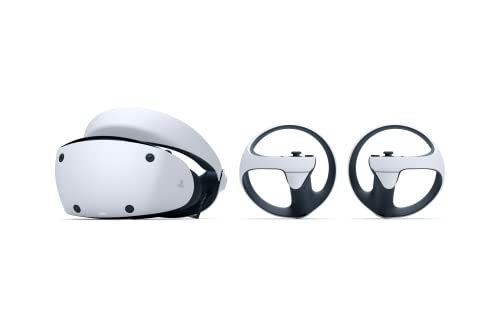
- 4K HDR visuals at 2000x2040 per eye
- Eye tracking, headset feedback, and 3D Audio
- 110° field of view for PlayStation 5
Best For: PS5 owners seeking immersive console VR racing
Wireless Standalone Choice

- Wireless standalone VR with inside-out tracking
- 256GB storage and Snapdragon XR2 Gen 2 processor
- Color passthrough and up to 120Hz refresh rate
Best For: Beginners wanting convenient wire-free VR gaming
Budget Gran Turismo Bundle
Renewed PlayStation VR + Gran Turismo Sport

- Includes Gran Turismo Sport and PlayStation Camera
- Complete PS4 plug-and-play accessory bundle
- OLED display with up to 120Hz refresh rate
Best For: PS4 owners seeking an all-in-one Gran Turismo VR setup
Versatile Standalone Pick
Oculus Quest 2 128GB VR Headset
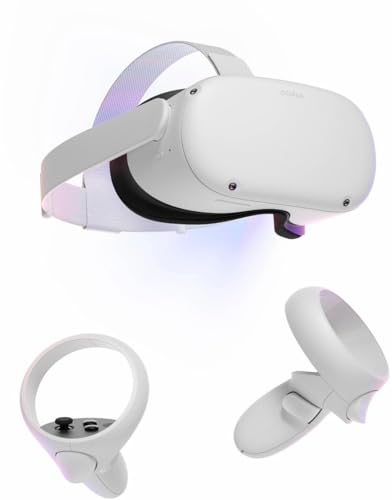
- 1832 x 1920 resolution per eye and 90Hz refresh rate
- Works as standalone or PC VR headset
- Includes Touch controllers and comfort accessories
Best For: Flexible VR gaming with optional PC connectivity
Budget Smartphone Starter
DESTEK V5 Smartphone VR Headset
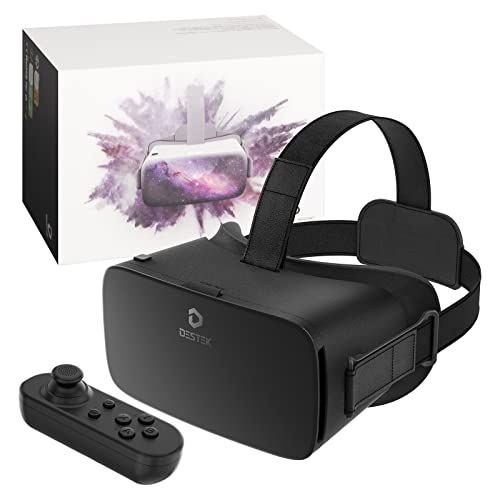
- Fits smartphones from 5.5 to 7.2 inches
- Includes Bluetooth controller and touch buttons
- Offers a 110-degree field of view
Best For: Casual phone-based VR and family entertainment
Newer Standalone Upgrade
Meta Quest 3S 256GB VR Headset

- 256GB storage with 8GB of RAM
- Snapdragon XR2 Gen 2 processor
- Wireless play with full-color passthrough
Best For: Newer standalone VR gaming and mixed reality
Phone Racing Starter
TECKNET VR Headset with Controller
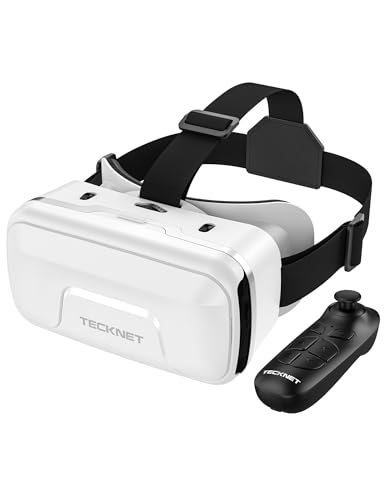
- 90°–110° field of view with adjustable lenses
- Bluetooth controller included
- Fits 4.7–7.2-inch smartphones
Best For: Casual smartphone VR gaming and viewing
Mobile VR Sampler

- FD and OD viewing adjustments
- Compatible with 5.0–7.0-inch phones
- Controller handles basic media functions
Best For: Trying smartphone VR games and 3D movies
Premium Sim Racing Pick – Pimax Crystal Super
For PC racers seeking maximum visual clarity, the Pimax Crystal Super is a standout among virtual reality headsets for racing games. Its 3840×3840-per-eye resolution, 50 PPD optics, and ultrawide 140° field of view are designed to make cockpit details and peripheral awareness easier to see.
Best For: Dedicated PC sim racers and enthusiasts with hardware capable of driving its high-resolution display.
Pros:
- Extremely sharp 3840×3840-per-eye resolution with 50 PPD optics
- 140° field of view helps expand peripheral awareness
- QLED and Mini-LED display combines high brightness with local dimming
- Eye tracking, inside-out tracking, and up to 90Hz refresh rate
Cons:
- Wired DisplayPort and USB connection limits freedom of movement
- Designed for Windows PC rather than console gaming
- Its advanced display may demand substantial PC graphics performance
The Crystal Super prioritizes image quality, visibility, and long-session comfort through balanced weight distribution and replaceable facial interfaces. It is a premium choice for racers who value cockpit detail and a wide field of view over simplicity or portability.
PS5 Racing Experience – PlayStation VR2
The PlayStation VR2 is a strong console option among virtual reality headsets for racing games, pairing 4K HDR visuals with a 110° field of view. Its eye tracking, headset feedback, 3D Audio, and Sense controller features add immersion to compatible PlayStation 5 games.
Best For: PlayStation 5 owners who want a feature-rich wired VR headset for console gaming.
Pros:
- 4K HDR visuals with 2000×2040 resolution per eye
- Eye tracking and headset feedback enhance immersion
- 3D Audio and intuitive Sense controls support engaging gameplay
- 110° field of view provides a broad virtual view
Cons:
- Compatible with PlayStation 5 rather than PC or standalone platforms
- Wired HDMI connection may restrict movement
- Racing-game compatibility depends on individual PS5 titles
PSVR2 makes the most sense for racers already invested in the PlayStation 5 ecosystem. It offers modern display and sensory features in a console-focused package, though it is not the flexible choice for users who want cross-platform or wireless play.
Wireless Standalone Choice – Meta Quest 3S 256GB
The Meta Quest 3S is a convenient standalone option among virtual reality headsets for racing games. It runs without wires, uses inside-out tracking, and includes 256GB of storage, while its Snapdragon XR2 Gen 2 processor supports responsive standalone gaming.
Best For: Beginners and casual players who want wireless VR without requiring a gaming PC or console.
Pros:
- Standalone design eliminates the need for a wired PC connection
- 256GB storage provides room for games and applications
- Up to 120Hz refresh rate and Snapdragon XR2 Gen 2 processing
- Color passthrough and inside-out tracking support mixed-reality use
Cons:
- Typical battery life is about 2.5 hours
- LCD display offers lower stated resolution per eye than premium PC headsets
- Racing-game selection and performance depend on the Meta Quest platform
Quest 3S is the practical pick when convenience matters more than maximum simulator fidelity. Its wireless, self-contained design makes it easy to start playing, although serious PC sim racers may prefer a headset with higher-resolution optics and a direct PC connection.
Budget Gran Turismo Bundle – Renewed PlayStation VR + Gran Turismo Sport
This renewed Sony PlayStation VR bundle is a focused entry point for Gran Turismo Sport fans using a PlayStation 4. Among virtual reality headsets for racing games, it stands out by including the headset, camera, processor unit, cables, headphones, and Gran Turismo Sport for a plug-and-play setup.
Best For: PS4 owners who want an included Gran Turismo Sport bundle at a potentially lower entry cost.
Pros:
- Includes Gran Turismo Sport and the PlayStation Camera
- Complete bundle includes processor unit, cables, headphones, and power accessories
- OLED 1920×1080 display supports refresh rates up to 120Hz
- 3D Audio helps position sounds around the player
Cons:
- Designed for PlayStation 4 rather than newer PS5 VR hardware
- Lower display resolution than newer VR headsets
- Renewed product includes a 90-day limited warranty
This bundle is most appealing when the goal is specifically to experience Gran Turismo Sport on PS4 with minimal extra shopping. Its older display and platform limit its long-term flexibility, but the included accessories make it a straightforward racing-focused package.
Versatile Standalone Pick – Oculus Quest 2 128GB VR Headset
The Oculus Quest 2 is a practical option for shoppers comparing virtual reality headsets for racing games and other immersive titles. Its standalone operation avoids a required PC setup, while PC VR compatibility gives experienced users another way to play. The 1832 x 1920-per-eye display, 90Hz refresh rate, and 110-degree field of view support a detailed, responsive-feeling experience.
Best For: Gamers who want a flexible standalone headset with optional PC VR support.
Pros:
- 128GB of storage for games and media.
- Supports standalone and PC VR play.
- Includes two Touch controllers, a glasses spacer, silicone cover, and adjustable knuckle straps.
- High-resolution display with a 90Hz refresh rate.
Cons:
- The package is based on the older Quest 2 platform rather than a newer Meta headset.
- Racing setups may still require separate accessories such as a compatible wheel or seat.
Choose this model if you value broad compatibility and included comfort accessories more than having the newest available hardware. The storage and PC VR support also make it a reasonable entry point for varied VR gaming.
Budget Smartphone Starter – DESTEK V5 Smartphone VR Headset
The DESTEK V5 offers an inexpensive way to sample virtual reality headsets for racing games by using a compatible smartphone instead of built-in display hardware. It fits phones from 5.5 to 7.2 inches and includes a controller, but Android provides the broader interactive feature set. iOS use is limited mainly to YouTube and music controls.
Best For: Casual users and families seeking phone-based VR at a low entry cost.
Pros:
- Compatible with iPhone, Samsung, and other phones from 5.5 to 7.2 inches.
- Includes a Bluetooth controller and headset touch buttons.
- 110-degree field of view and anti-blue-light lenses.
- Includes access to 50,000-plus VR movies without a subscription.
Cons:
- Requires a compatible smartphone to provide the display and processing.
- Full interactive controller functions require Android; iOS support is limited.
- Phone-based VR is less purpose-built for demanding racing-game experiences than standalone headsets.
This headset makes sense for occasional VR viewing and simple games, particularly for Android users. It is less suitable for shoppers who want dedicated hardware, advanced graphics, or a deeply integrated racing setup.
Newer Standalone Upgrade – Meta Quest 3S 256GB VR Headset
The Meta Quest 3S is a strong choice for shoppers comparing virtual reality headsets for racing games when they want newer standalone hardware and generous storage. Its Snapdragon XR2 Gen 2 processor, 8GB of RAM, and wireless design are built for smooth standalone play, while dual RGB cameras add full-color passthrough for mixed-reality features.
Best For: Players who want a newer wireless headset with 256GB of storage and improved processing power.
Pros:
- 256GB storage and 8GB of RAM.
- Snapdragon XR2 Gen 2 processor provides twice the graphical processing power of the prior generation, according to the supplied listing.
- Wireless standalone design with dual RGB cameras for full-color passthrough.
- Includes Touch Plus controllers, a charging cable, power adapter, and a three-month Meta Horizon+ trial.
Cons:
- Advertised battery life is 2-plus hours, so longer sessions require recharging.
- The 60Hz display specification may be less appealing to buyers prioritizing the highest refresh rate.
- It is designed for standalone VR and does not list PC VR compatibility in the supplied details.
For buyers prioritizing current standalone performance, storage, and wireless convenience, the Quest 3S is the most capable option in this group. Its short stated battery life is the main practical limitation for extended racing sessions.
Phone Racing Starter – TECKNET VR Headset with Controller
If you are exploring virtual reality headsets for racing games without buying a dedicated console headset, the TECKNET model offers a smartphone-based starting point. Its 90°–110° field of view, adjustable lenses, and included Bluetooth controller can make compatible mobile racing content more engaging, though your phone and app will determine the actual experience.
Best For: Smartphone users who want an adjustable, lightweight VR viewer for casual games, videos, and virtual tours.
Pros:
- Supports smartphones from 4.7 to 7.2 inches, including many iPhone, Samsung, Google Pixel, and Android models.
- Includes a Bluetooth controller for interaction with compatible games and apps.
- Adjustable pupil distance and focal length, plus blue-light-protection lenses.
- Lightweight 268g design with an adjustable headband, soft nose rest, and foam mask.
Cons:
- Requires a compatible smartphone and mobile VR content; it is not a standalone headset.
- Racing-game compatibility and controls will vary by app and phone.
- The supplied information does not identify a dedicated racing mode or tracking system.
This is a practical entry-level option for phone-based VR rather than a purpose-built racing simulator. Its comfort adjustments and broad phone compatibility are useful for sampling compatible racing games, but serious sim racers may want hardware with dedicated motion tracking and steering controls.
Mobile VR Sampler – 3D VR Headset with Controller
For shoppers comparing virtual reality headsets for racing games on a phone, this 3D headset focuses on basic immersion and simple controls. FD and OD adjustments help align the display, while the included phone-connected controller provides functions such as play, pause, and volume control for compatible content.
Best For: Adults and families who want an inexpensive way to sample smartphone VR games and 3D movies.
Pros:
- Compatible with 5.0–7.0-inch smartphones, including numerous iPhone and Samsung models.
- Offers field-of-view, focal-distance, and unilateral myopic-alignment adjustments.
- Includes a controller for basic media and compatible game interaction.
- Adjustable head strap and soft nose piece are designed to reduce wearing pressure.
Cons:
- It depends on a smartphone and compatible app rather than operating independently.
- The controller functions described are basic, so it may not suit advanced racing controls.
- The supplied notes do not specify a dedicated racing-game platform or head tracking.
This headset is best viewed as a low-commitment introduction to mobile VR. The lens adjustments can help with viewing alignment, but buyers seeking a more convincing racing setup should verify that their preferred phone game supports the included controller and VR format.
Adjustable Phone Viewer – Haptique VR Headset with Remote
Among virtual reality headsets for racing games, this Haptique model is a straightforward phone-based viewer with an included remote. Its 120-degree listed field of view and adjustable high-transmittance lenses may help create a broader, clearer view in compatible mobile racing games, while the phone and app supply the actual VR experience.
Best For: Smartphone owners who prioritize adjustable optics and simple remote control for casual VR entertainment.
Pros:
- Supports 5.0–7.0-inch iPhone and Android smartphones.
- Includes a controller compatible with Android and iOS systems.
- High-transmittance aspheric resin lenses are designed to reduce distortion.
- Top-mounted adjustment lets users reposition the lenses for viewing comfort.
Cons:
- Requires a compatible smartphone and does not function as a standalone VR system.
- The remote may offer less control than dedicated racing wheels or gamepads.
- The notes do not confirm specific racing-game compatibility or positional tracking.
This is a simple choice for experimenting with mobile VR racing content, especially if lens adjustment and a wider listed view appeal to you. Before buying, confirm that your phone fits the 5.0–7.0-inch range and that your preferred racing app supports the headset and remote.
How We Picked the Best Virtual Reality Headsets for Racing Games
We focused on the features that most affect driving immersion and usability: platform compatibility, visual clarity, field of view, tracking, comfort, setup requirements, and overall value. The selection spans high-end PC simulation hardware, PlayStation VR systems, standalone Meta Quest headsets, older renewed models, and smartphone viewers.
Not every headset is equally suitable for serious sim racing. Phone-based viewers generally support simple mobile experiences rather than demanding racing simulators, while PC and console headsets can provide better tracking, performance, and game support when paired with compatible hardware.
Quick Comparison
- Best for high-end PC simulation: Pimax Crystal Super, provided your computer can drive its demanding resolution.
- Best for PlayStation racing: PlayStation VR2, especially with compatible PS5 racing titles.
- Best standalone value: Meta Quest 3S, with no gaming PC or console required for supported games.
- Best renewed console option: The original PlayStation VR and Gran Turismo bundle, subject to condition and included accessories.
- Best for basic mobile VR: DESTEK, TECKNET, and similar smartphone headsets.
Key Buying Factors for Virtual Reality Headsets for Racing Games
Platform and Game Compatibility
Start with the games and hardware you already own. PC headsets typically connect through gaming computers and may require DisplayPort, USB, tracking software, and a powerful graphics card. PlayStation VR2 requires a PS5 for its primary console experience. Quest models run supported games independently, though they can also connect to a PC for PC VR titles.
Resolution, Lenses, and Field of View
Clear text, distant braking markers, and dashboard details matter in racing games. Higher resolution and better lenses can improve clarity, but they may increase system requirements. A wider field of view can make cornering feel more natural, although comfort and lens quality remain equally important.
Tracking, Comfort, and Accessories
Inside-out tracking is convenient and avoids external sensors, while eye tracking and advanced optics can enhance premium systems. Look for adjustable head straps, manageable weight, a suitable facial interface, and enough room for glasses if needed. A steering wheel, pedals, and a stable seat often improve immersion more than a headset upgrade alone.
Performance and Practical Costs
Check whether the headset includes controllers, cables, power accessories, or required adapters. Also account for a capable PC, a PS5, replacement parts, game costs, and possible comfort upgrades. For used or renewed products, verify warranty coverage, lens condition, battery health, and included components.
Who Should Buy Which Virtual Reality Headsets for Racing Games?
Choose a premium PC headset if you already have a powerful gaming computer and want maximum visual detail for serious simulator use. Choose PlayStation VR2 if you race primarily on PS5 and want a straightforward console setup. Choose Meta Quest 3S if you want an accessible standalone headset that can also support PC VR.
Consider a renewed older headset when price matters and you are comfortable checking condition and accessory compatibility. Choose a smartphone viewer only for inexpensive, casual VR videos and simple mobile experiences; these models are not a substitute for a dedicated simulator headset.