Competitive VR gaming demands more than an immersive display. Fast tracking, responsive controls, a comfortable fit, and a stable connection can make the difference between reacting instantly and losing focus.
We compared 10 virtual reality headsets across standalone play, PC VR, PlayStation VR2 gaming, display quality, tracking, comfort, and upgrade value to help you choose the right setup for your games and budget.
Best 10 Virtual Reality Headsets for Competitive Gaming Picks for 2026
Best Overall

- Standalone wireless play with Snapdragon XR2 Gen 2
- Sharp 2064 × 2208 resolution per eye and 120Hz refresh
- 512GB storage plus Touch Plus controllers
Best For: High-capacity standalone competitive gaming
Best for PS5 Gamers
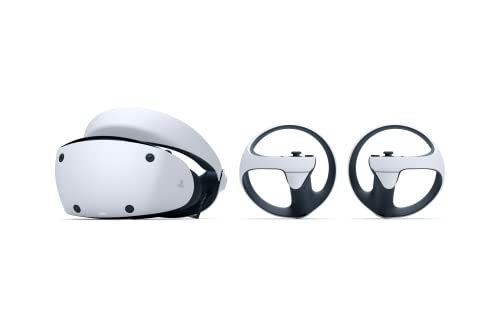
- Console VR platform built for PlayStation 5
- 4K HDR visuals with 2000 × 2040 per eye
- Eye tracking, haptics, adaptive triggers, and 3D Audio
Best For: Competitive PS5 players seeking immersive controls
Best Value Standalone

- Wire-free standalone headset with XR2 Gen 2 processing
- 8GB RAM and dual RGB passthrough cameras
- Includes Touch Plus controllers and 128GB storage
Best For: New VR players seeking an affordable standalone setup
Best for PC VR Libraries

- PC-powered access to hundreds of VR games
- Oculus Insight room-scale tracking without external sensors
- Halo headband and updated Touch controllers
Best For: Windows PC gamers building a wired VR setup
Balanced Mixed-Reality Pick

- 3840x2160 high-resolution display
- Eye, hand, and passthrough tracking
- Adjustable 545 g comfort-focused design
Best For: Mixed-reality gaming and everyday entertainment
Ultra-Wide Sim Racing Specialist

- 3840x3840 resolution per eye
- 140° field of view with 50 PPD clarity
- Up to 90Hz wired PC VR performance
Best For: Flight and racing simulators
Flexible PC VR Performer
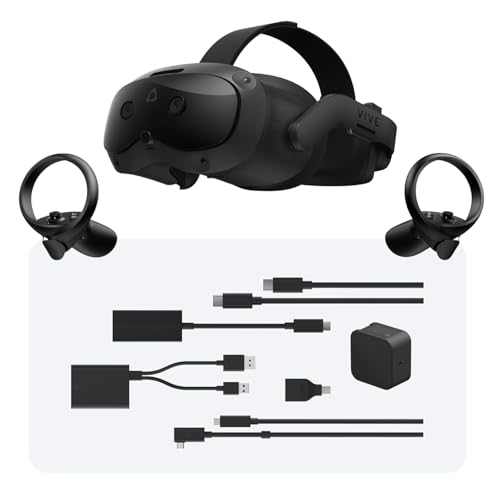
- DisplayPort mode for lossless PC VR
- 2448x2448 per-eye display at 90Hz
- Hot-swappable battery and auto-IPD
Best For: Standalone and PC VR gaming flexibility
Best PC Sim Clarity
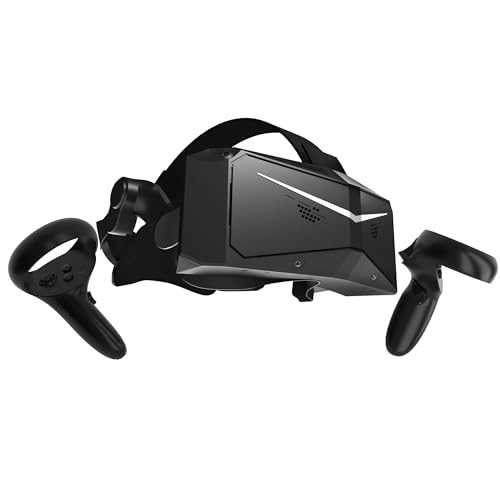
- 2880 x 2880 resolution per eye
- QLED display with local dimming and HDR
- Up to 120Hz refresh rate with SteamVR support
Best For: PC gamers and simulation enthusiasts prioritizing visual clarity
Best Wireless Entry Point

- Standalone wireless operation
- 90Hz display with fast processor
- Touch controllers and hand tracking included
Best For: Players seeking easy, portable VR without a PC
Best Standalone Storage

- 256GB built-in storage
- Standalone wireless VR with no PC required
- 90Hz display and Touch controllers
Best For: Standalone users wanting extra room for games and media
Best Overall – Meta Quest 3 512GB
For shoppers seeking virtual reality headsets for competitive gaming, the Meta Quest 3 combines standalone convenience with a 120Hz display refresh rate, improved resolution, and Snapdragon XR2 Gen 2 processing. Its 512GB storage also leaves room for a sizable game library.
Best For: Players who want a high-capacity, wire-free headset with strong standalone performance.
Pros:
- 512GB storage and 8GB of RAM support a broad game library.
- 120Hz refresh rate and 2064 × 2208 resolution per eye support sharp, fluid visuals.
- Wireless standalone design includes Touch Plus controllers and full-color passthrough.
- Includes a three-month Meta Horizon+ trial and Gorilla Tag bundle extras.
Cons:
- Battery life is listed at about 2.2 hours.
- Competitive players may need to manage charging during longer sessions.
The Quest 3 is the most capable all-around option in this group for gamers who prioritize storage, visual clarity, and freedom from a PC cable.
Best for PS5 Gamers – PlayStation VR2
The PlayStation VR2 is a console-focused choice among virtual reality headsets for competitive gaming. It connects to PlayStation hardware and pairs 4K HDR visuals with eye tracking, headset feedback, 3D Audio, and responsive Sense controls.
Best For: PlayStation 5 owners who want immersive console VR with advanced control feedback.
Pros:
- 2000 × 2040 resolution per eye and 110-degree field of view deliver detailed visuals.
- Eye tracking, headset feedback, and 3D Audio add responsive immersion.
- Sense controllers provide haptic feedback, adaptive triggers, and finger touch detection.
- Designed specifically for PlayStation 5 gaming.
Cons:
- Requires PlayStation hardware and is not a standalone headset.
- Uses a wired HDMI connection rather than a wireless setup.
Choose PSVR2 when you already play on PS5 and value console integration and tactile feedback more than standalone portability.
Best Value Standalone – Meta Quest 3S 128GB
The Meta Quest 3S offers an accessible entry point for virtual reality headsets for competitive gaming, with standalone operation, Snapdragon XR2 Gen 2 graphics, and 8GB of RAM. Its 128GB capacity keeps the headset compact and focused on essential gaming.
Best For: New VR players who want wire-free gaming and modern processing at a lower storage tier.
Pros:
- Standalone design avoids the need for a gaming PC or console.
- Snapdragon XR2 Gen 2 platform supports next-generation graphics and load times.
- Dual RGB cameras enable full-color passthrough and mixed-reality experiences.
- Includes Touch Plus controllers, a glasses spacer, and a three-month Meta Horizon+ trial.
Cons:
- 128GB storage is more limited than the Quest 3’s 512GB.
- Listed display refresh rate is 60Hz, which may be less appealing for highly refresh-rate-focused players.
- Battery life is listed at about 2.5 hours.
The Quest 3S makes sense for buyers entering standalone VR who want current-generation processing and mixed reality without paying for maximum storage.
Best for PC VR Libraries – Oculus Rift S PC VR Headset
The Oculus Rift S remains a PC-powered option for virtual reality headsets for competitive gaming. It offers access to a broad Oculus library, inside-out Oculus Insight tracking, and a fit-focused Halo headband for players who prefer computer-based VR.
Best For: PC gamers with a compatible Windows computer who want room-scale tracking without external sensors.
Pros:
- Access to hundreds of games and Oculus exclusives.
- Oculus Insight provides room-scale tracking without external sensors.
- Updated Touch controllers translate gestures into VR with intuitive precision.
- Halo headband and fit wheel help keep the headset secure during movement.
Cons:
- Requires a Windows PC and USB 3.0 connection.
- Its 2560 × 1440 resolution is lower than the newer headsets in this roundup.
- Listed connectivity and platform details indicate a wired PC VR setup.
Rift S is best suited to PC owners who value library access and sensor-free room-scale tracking, but it is less flexible than the standalone alternatives here.
Balanced Mixed-Reality Pick – Galaxy XR
For shoppers comparing virtual reality headsets for competitive gaming, the Galaxy XR emphasizes sharp visuals, responsive tracking, and a flexible mixed-reality experience. Its 109-degree field of view, eye and hand tracking, and Android XR platform make it a versatile option for gaming beyond a traditional PC-only setup.
Best For: Gamers who want a lightweight mixed-reality headset for gaming, entertainment, and virtual collaboration.
Pros:
- High-resolution 3840×2160 display with vibrant visuals.
- Eye tracking, hand tracking, and passthrough video support intuitive interaction.
- Adjustable comfort fit, soft facial cushion, and lightweight 545 g design.
- Spatial audio enhances in-game environmental sound.
Cons:
- Approximately 2-hour average battery life may limit longer sessions.
- Wi-Fi connectivity and Android XR focus may be less suitable for dedicated wired PC VR setups.
The Galaxy XR is a well-rounded choice when mixed reality, comfort, and broad everyday use matter as much as gaming. Competitive players should weigh its wireless design against the shorter listed battery life.
Ultra-Wide Sim Racing Specialist – Pimax Crystal Super
Among virtual reality headsets for competitive gaming, the Pimax Crystal Super stands out for simulator-focused visual clarity and peripheral awareness. Its 3840×3840-per-eye QLED display, 50 pixels per degree, 140-degree field of view, and up-to-90Hz refresh rate are designed for detailed, fast-moving PC VR play.
Best For: PC gamers and sim racers who prioritize wide peripheral vision, high visual detail, and wired performance.
Pros:
- 3840×3840 resolution per eye and 50 PPD support exceptionally sharp imagery.
- 140-degree field of view can improve situational awareness in racing and flight simulators.
- Up-to-90Hz refresh rate supports smooth gameplay.
- Adjustable IPD, eye tracking, and inside-out tracking add setup flexibility.
Cons:
- Requires a Windows PC and wired DisplayPort/USB connection.
- Its simulator-oriented design may be more specialized than needed for casual VR gaming.
The Crystal Super is the strongest fit here for players who want an expansive, highly detailed PC VR view. Its wired PC requirement makes it less convenient than standalone alternatives, but potentially better suited to a dedicated sim rig.
Flexible PC VR Performer – HTC VIVE Focus Vision
HTC Vive Focus Vision Wired Bundle — XR Headset with DisplayPort PC VR Streaming Kit
Check Price On AmazonThe HTC VIVE Focus Vision is a flexible contender among virtual reality headsets for competitive gaming, combining standalone functionality with a DisplayPort PC VR mode. Its 2448×2448-per-eye display, 90Hz refresh rate, eye and hand tracking, and low-latency wired option give players several ways to approach immersive gaming.
Best For: Gamers who want standalone and PC VR support, precise tracking, and a headset designed for longer sessions.
Pros:
- DisplayPort mode provides lossless, high-fidelity PC VR visuals.
- 2448×2448-per-eye resolution, up to 120-degree field of view, and 90Hz refresh rate.
- Auto-IPD adjustment, hand tracking, eye tracking, and depth sensing support comfortable interaction.
- Hot-swappable battery design helps extend play sessions.
Cons:
- DisplayPort PC VR play requires a compatible Windows setup and wired connection.
- Its feature-rich tracking and mixed-reality system may be more than casual players need.
- The supplied specifications list 128 GB of storage, which may be limiting for a large standalone library.
The VIVE Focus Vision is a strong middle ground for players who want the convenience of standalone VR without giving up a high-fidelity PC mode. Its battery-swapping system and adjustable fit are especially useful for extended gaming sessions.
Best PC Sim Clarity – Pimax Crystal Light
For players shopping for virtual reality headsets for competitive gaming on PC, the Pimax Crystal Light emphasizes sharp visuals, responsive motion, and SteamVR compatibility. Its high-resolution QLED display and up-to-120Hz refresh rate make it particularly suited to detail-heavy simulations and fast-moving PC VR play.
Best For: PC gamers and simulation enthusiasts who prioritize visual clarity and high-refresh-rate performance.
Pros:
- 2880 x 2880 resolution per eye delivers highly detailed imagery.
- QLED, local dimming, and HDR support aim to provide vivid colors and strong contrast.
- Glass aspheric lenses offer edge-to-edge clarity with reduced distortion.
- Inside-out tracking and SteamVR compatibility support a flexible PC setup.
Cons:
- At approximately 815 grams, it is heavier than the supplied Quest 2 options.
- It is a Windows PC VR headset rather than a standalone wireless system.
- The supplied connectivity details list HDMI, so setup may require checking your PC connections.
The Crystal Light is the most performance-focused option here for PC users who value resolution, contrast, and low-latency gameplay. Its weight and PC-only design make it less convenient for casual or portable VR use.
Best Wireless Entry Point – Meta Quest 2 128GB
The 128GB Meta Quest 2 is a practical starting point for shoppers comparing virtual reality headsets for competitive gaming without wanting a dedicated PC. It combines wireless standalone play, Touch controllers, hand tracking, and a 90Hz display in a portable all-in-one design.
Best For: Players who want accessible wireless VR gaming, multiplayer experiences, and easy setup without a PC.
Pros:
- Standalone design needs no PC or console for compatible experiences.
- 90Hz display, fast processor, and immersive graphics support smooth gameplay.
- Includes Touch controllers, hand tracking, and 3D positional audio.
- Supports gaming, fitness, social/multiplayer, and entertainment content.
Cons:
- Its 128GB storage is more limited than the 256GB Quest 2 option.
- 1832 x 1920 resolution per eye and a 90Hz refresh rate are less ambitious than the Pimax specification.
- Standalone play depends on the built-in battery and Wi-Fi connectivity.
The Quest 2 128GB offers the simplest route into wireless VR, especially for players who value portability and a broad content library. Competitive PC-focused users may prefer a higher-resolution headset, while casual and social players will appreciate the self-contained setup.
Best Standalone Storage – Meta Quest 2 256GB
For buyers considering virtual reality headsets for competitive gaming and other VR activities, the 256GB Meta Quest 2 provides the same approachable standalone format as the smaller-capacity model while offering more storage. Its wireless design, 90Hz display, positional audio, and included Touch controllers suit gaming, multiplayer, and entertainment.
Best For: Standalone VR users who want more built-in storage for games, social experiences, and entertainment.
Pros:
- 256GB capacity provides more room than the 128GB Quest 2 configuration.
- Wireless, all-in-one operation requires no PC or console.
- 90Hz display and fast processor support smooth action.
- Includes 3D positional audio, hand tracking, haptic feedback, and two Touch controllers.
Cons:
- Its 1832 x 1920 resolution per eye is below the Pimax Crystal Light’s supplied specification.
- The standalone battery-powered design requires charging for untethered play.
- It remains limited to a 90Hz refresh rate.
The 256GB model is the stronger Quest 2 choice when storage matters, giving standalone players more capacity without adding PC hardware. It is convenient and versatile, though competitive players seeking maximum display detail or refresh rate may want a dedicated PC VR headset.
How We Picked the Best Virtual Reality Headsets for Competitive Gaming
We focused on the features that matter most during fast, repeated play: tracking consistency, motion responsiveness, display clarity, field of view, controller performance, comfort, and connection reliability. We also considered whether each headset works independently or requires a gaming PC, console, wired link, or additional accessories.
Because competitive gaming includes different styles, the list covers accessible standalone headsets, console-based VR, older budget options, and high-end PC systems suited to simulators and demanding titles. Storage capacity, software support, setup requirements, and long-session usability also influenced the overall value.
Quick Comparison
- Best standalone flexibility: Meta Quest 3 offers wireless play, PC VR support, and strong mixed-reality capabilities.
- Best console option: PlayStation VR2 is designed for PlayStation 5 owners who want OLED visuals and console-based VR.
- Best budget entry: Meta Quest 3S and Quest 2 provide accessible all-in-one VR at lower prices.
- Best for simulation detail: Pimax Crystal Super and Crystal Light emphasize high resolution and wide viewing angles.
- Best wired PC upgrade: HTC Vive Focus Vision supports PC VR streaming with a DisplayPort connection.
Key Buying Factors for Virtual Reality Headsets for Competitive Gaming
Tracking and Latency
Look for reliable inside-out or external tracking with minimal drift. Wireless convenience is valuable, but a wired PC connection can reduce compression and connection variables when every movement matters.
Display Clarity and Field of View
Higher resolution can make distant targets, cockpit instruments, and menus easier to read. A wider field of view may improve awareness, although it can increase rendering demands on your PC.
Comfort and Fit
A headset that shifts during quick turns can undermine accurate aiming. Check weight distribution, facial interface adjustability, lens adjustment, ventilation, and whether the headset remains comfortable during long sessions.
Platform and Performance Requirements
Standalone headsets are simpler to set up, while PC VR models can deliver better graphics when paired with a powerful computer. Confirm your GPU, available ports, play area, console compatibility, and required software before buying.
Who Should Buy Which Virtual Reality Headsets for Competitive Gaming?
Choose Meta Quest 3 if you want the best balance of wireless convenience, PC VR compatibility, modern tracking, and mixed-reality features. Choose Quest 3S for a lower-cost entry into current Quest software.
Choose PlayStation VR2 if you already own a PS5 and prefer a console-focused experience. Choose Quest 2 only when its lower price outweighs its older hardware and reduced long-term headroom.
Choose Pimax Crystal Super or Crystal Light if sharp visuals and simulation performance are more important than portability. Choose HTC Vive Focus Vision if you want a premium headset with a strong wired PC VR path. The Oculus Rift S is best considered as an inexpensive used-market option, provided its age and compatibility limitations fit your setup.