Checking blood pressure at home should be simple, comfortable, and easy to understand. The best senior-friendly blood pressure monitors combine readable displays, straightforward controls, dependable upper-arm cuffs, and helpful features such as voice announcements or smartphone tracking.
This roundup compares 10 options for different needs, including low-vision users, frequent home monitoring, rechargeable designs, wide-range cuffs, and connected health tracking. Use the guide below to narrow the choices by accuracy features, ease of use, comfort, and budget.
Best 10 Senior-Friendly Blood Pressure Monitors Picks for 2026
Best Overall
- Reads blood pressure and pulse aloud
- Three-user memory with 240 total readings
- Large backlit display and included batteries
Best For: Seniors and users with low vision who want spoken results
Best Wrist Option

- Voice broadcast with adjustable volume
- Two-user memory stores 240 readings
- Rechargeable and includes a carrying case
Best For: Portable wrist-based monitoring with spoken feedback
Best for App Tracking
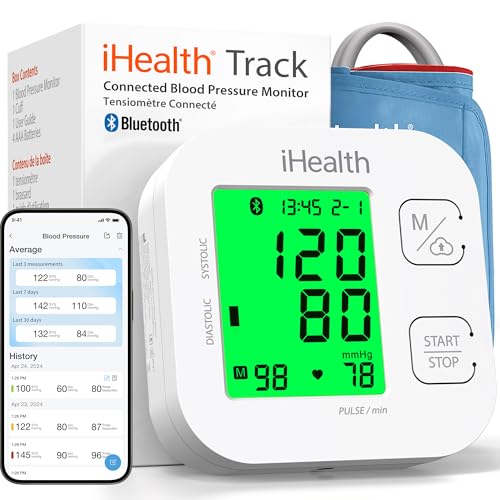
- Large multicolor display with two-button operation
- Stores readings on-device or in the smartphone app
- Wide-range upper-arm cuff included
Best For: Phone-connected tracking with a simple, readable monitor
Best No-Wrap Design

- One-touch, no-wrap upper-arm design
- Voice broadcast and three-color LCD
- Two users with 90 readings each
Best For: Users who want simple measurements without wrapping a fabric cuff
Connected Tracking Choice

- Wide-range 9–17-inch cuff
- Irregular heartbeat and hypertension indicators
- Bluetooth app tracking with Apple Health and Google Fit
Best For: Seniors and caregivers who want simple readings plus optional digital tracking
Large-Display Value Pick

- Large color screen for easier viewing
- One-touch operation with results in about 40 seconds
- Adjustable large cuff for home use
Best For: Seniors prioritizing readable results and uncomplicated operation
Simple Accuracy-Focused Pick

- One-touch upper-arm operation
- Irregular heartbeat detection
- Body movement alerts and 9–17-inch cuff
Best For: Users wanting a simple OMRON monitor with measurement guidance
Simple Choice
Oklar One-Button Upper Arm Monitor

- One-button operation and large backlit LED display
- 240 readings shared across two users
- Battery or Type-C power; 8.7–15.7-inch cuff
Best For: Seniors who want simple, readable readings without app connectivity
Connected Pick

- Wireless cuff with automatic upper-arm measurement
- Bluetooth syncing with major health apps
- 240 memory sets for two users
Best For: Seniors who want app-based blood pressure tracking
Voice-Guided Pick
Guaever Rechargeable Large-Screen Monitor
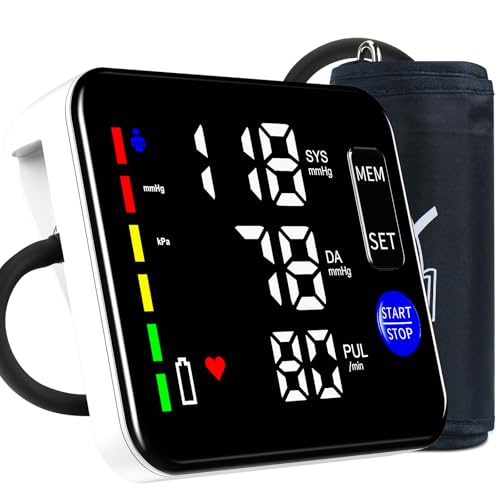
- Large LED display with optional voice guidance
- Rechargeable battery supports up to 150 uses
- 240 records for two users and heartbeat alert
Best For: Seniors who prefer spoken results and rechargeable power
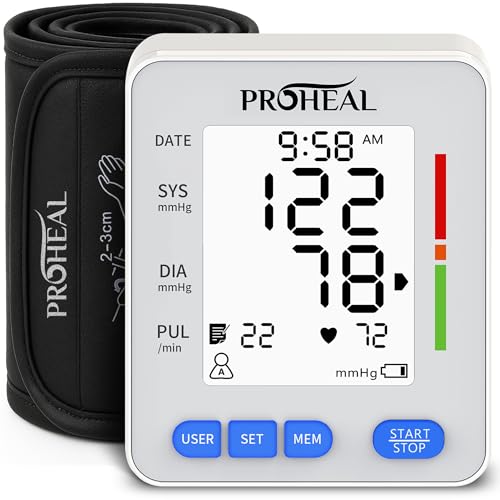
Best Overall – Talking Upper-Arm Monitor
For shoppers comparing senior-friendly blood pressure monitors, this upper-arm model stands out for combining spoken readings, a large backlit display, and straightforward at-home tracking. It announces systolic, diastolic, and pulse results aloud, while adjustable volume also allows silent use.
Best For: Seniors, people with low vision, and households tracking readings for multiple users.
Pros:
- Voice guidance reads measurements aloud and can be turned off.
- Large backlit digits and color indicators make results easier to see.
- Stores 240 readings across three user profiles.
- Includes batteries, USB-C cable, cuff, and carrying bag.
Cons:
- The 8–16-inch cuff range may not suit every arm size.
- It is an upper-arm device rather than a compact wrist monitor.
This is a well-rounded choice when accessibility is the priority. Spoken feedback, visual cues, multi-user memory, and included power options make it practical for daily home use or travel.
Best Wrist Option – Rechargeable Voice Monitor
This wrist monitor is a convenient pick among senior-friendly blood pressure monitors for users who want portability and simple controls. Its voice broadcast, large backlit LED display, rechargeable battery, and automatic operation support quick measurements at home or while traveling.
Best For: Seniors who prefer a lightweight wrist device with spoken results and rechargeable power.
Pros:
- Voice broadcast volume is adjustable and can be disabled.
- Stores up to 240 readings for two users.
- Rechargeable design avoids routine battery replacement.
- Includes a storage case and adjustable wrist cuff.
Cons:
- The cuff fits wrists from 4.92 to 8.46 inches, not upper arms.
- The charging adapter is not included.
Choose this model when compact size and easy carrying matter more than an upper-arm format. The voice feature and bright display improve accessibility, while the two-user memory supports shared use.
Best for App Tracking – iHealth Track Smart Monitor
The iHealth Track is a practical choice for shoppers seeking senior-friendly blood pressure monitors with optional smartphone tracking. Its two-button operation, oversized multicolor display, wide-range upper-arm cuff, and app compatibility balance simple use with more detailed record keeping.
Best For: Seniors or caregivers who want large on-device readings and the option to review history on a phone.
Pros:
- Large multicolor backlit display makes results easier to read.
- Two-button operation keeps measurement setup simple.
- Tracks 99 readings on the monitor and unlimited readings in the app.
- Wide-range cuff fits upper arms from 8.7 to 16.5 inches.
Cons:
- App features require a compatible iOS or Android smartphone.
- It does not provide spoken readings.
This model suits users who are comfortable with optional smartphone features but still want a clear standalone display. The included batteries, wide-range cuff, and heart-rhythm alert add useful everyday functionality.
Best No-Wrap Design – Sinocare Voice Monitor
For users who find traditional cuffs inconvenient, this Sinocare model offers a no-wrap upper-arm design. It uses one-touch operation, voice broadcast, a large three-color LCD, and separate memory for two users, making it a distinctive option among senior-friendly blood pressure monitors.
Best For: Seniors who want a quick, one-button measurement without wrapping a fabric cuff around the arm.
Pros:
- No-wrap design simplifies positioning and measurement.
- Voice broadcast announces results aloud.
- Large LCD and three-color backlight provide visual guidance.
- Stores 90 readings per user and calculates the last three-reading average.
Cons:
- Its 11–16.5-inch arm range may not fit smaller arms.
- Batteries are not included.
- The larger housing may be less convenient for travel.
This is worth considering when cuff wrapping is a major barrier to consistent monitoring. Its one-touch format and voice guidance emphasize accessibility, while dual-user memory supports shared household use.
Connected Tracking Choice – OMRON Bronze
For shoppers comparing senior-friendly blood pressure monitors, the OMRON Bronze combines a wide-range upper-arm cuff with an LCD display, irregular heartbeat detection, and Bluetooth tracking. Its one-button home-use design is supported by storage for 14 readings and app connectivity for longer-term monitoring.
Best For: Seniors and caregivers who want straightforward readings with optional smartphone-based tracking.
Pros:
- Wide-range D-ring cuff fits arms from 9 to 17 inches.
- Irregular Heart Beat Detection and a Hypertension Indicator provide additional reading information.
- Bluetooth connects to the OMRON connect app, with Apple Health and Google Fit compatibility.
- Includes a storage case and four AA batteries.
Cons:
- Stores only up to 14 readings on the monitor itself.
- App features require using a compatible smartphone.
The Bronze is a strong fit when easy upper-arm measurement matters, but its main advantage is the option to move beyond the monitor’s built-in memory with connected tracking.
Large-Display Value Pick – Acenis AOJ-30F
The Acenis AOJ-30F is one of the more senior-friendly blood pressure monitors for users who prioritize visibility. It pairs a large color screen with one-touch operation, an adjustable cuff, and readings delivered in about 40 seconds for convenient home use.
Best For: Seniors who want a large, easy-to-read display and simple controls.
Pros:
- Large color screen is designed to help users with poor eyesight.
- One-touch operation keeps the measuring process simple.
- Adjustable large cuff is intended to fit a range of users comfortably.
- Battery-powered design is suitable for home monitoring.
Cons:
- The supplied notes do not specify irregular heartbeat detection or app connectivity.
- The included cuff’s exact measurement range is not provided.
This model emphasizes accessibility rather than connected features. Its large color display and single-button operation make it a practical choice for uncomplicated at-home checks.
Simple Accuracy-Focused Pick – OMRON Iron
For seniors seeking senior-friendly blood pressure monitors without app setup, the OMRON Iron offers one-touch operation and a wide-range upper-arm cuff. Its irregular heartbeat detection and body movement alerts add useful guidance during routine home measurements.
Best For: Users who want a straightforward OMRON monitor with reading-quality alerts.
Pros:
- One-button operation supports quick, uncomplicated measurements.
- Wide-range D-ring cuff fits arms from 9 to 17 inches.
- Irregular Heart Beat Detection can identify heartbeat irregularities during measurements.
- Body Movement Detection alerts may help improve reading accuracy.
Cons:
- The supplied notes do not mention app connectivity or extended onboard memory.
- The package does not list a storage case or batteries among the included components.
The Iron is a sensible choice for users who value a familiar brand and uncomplicated operation. Its movement alerts and irregular-heartbeat feature provide added feedback without requiring smartphone connectivity.
Simple Choice – Oklar One-Button Upper Arm Monitor
For shoppers seeking senior-friendly blood pressure monitors, the Oklar emphasizes straightforward operation and readable results. Its one-button design, large backlit LED display, and upper-arm cuff make routine measurements simple at home.
Best For: Seniors and households wanting an uncomplicated monitor with shared reading storage.
Pros:
- One-button operation helps simplify measurements.
- Large backlit LED display is easy to read.
- Stores up to 240 readings for two users.
- Works with three AA batteries or the included Type-C cable.
Cons:
- The Type-C connection supplies power but does not recharge the monitor.
- The 8.7–15.7-inch cuff may not fit arms outside that range.
The Oklar is a practical pick when ease of use and readable feedback matter more than app connectivity. Its compact design and dual power options also support home or travel use.
Connected Pick – Beurer BM81 easyLock Monitor
The Beurer BM81 is a senior-friendly blood pressure monitor for users who want a streamlined cuff and optional digital tracking. Its wireless easyLock cuff, automatic inflation measurement, and color-coded risk indicator are designed to make monitoring more convenient.
Best For: Adults and seniors who want Bluetooth transfers and compatibility with health-tracking apps.
Pros:
- Wireless easyLock cuff eliminates extra tubes and cables.
- Bluetooth can transfer readings to the Beurer app, Apple Health, Samsung Health, and Health Connect.
- Stores 240 memory sets for two users.
- Provides cuff-position control and irregular-heartbeat detection.
Cons:
- App syncing requires Bluetooth setup and a compatible device.
- The 9.4–15.7-inch cuff range may not suit every arm size.
The BM81 stands out for combining a less-cluttered cuff design with connected record keeping. It is a stronger fit for seniors comfortable using a smartphone, while the on-device risk indicator still offers quick visual feedback.
Voice-Guided Pick – Guaever Rechargeable Large-Screen Monitor
This Guaever model is among the more accessibility-focused senior-friendly blood pressure monitors, pairing a large LED screen with full voice guidance. Its one-touch operation, rechargeable battery, and two-user memory are useful for regular home measurements.
Best For: Seniors who benefit from spoken results, high-visibility digits, and rechargeable operation.
Pros:
- Large LED screen and voice prompts make results easier to see and hear.
- One-touch measurement is simple to operate.
- Built-in battery lasts up to 150 uses per charge.
- Stores 240 records for two users and includes an irregular-heartbeat alert.
Cons:
- Voice guidance may be unnecessary for users who prefer silent operation, although it can be turned off.
- The 8.7–16.5-inch cuff range may not fit arms outside those limits.
With visual and audible guidance in one device, this monitor is especially practical for users with limited vision or who appreciate spoken instructions. The rechargeable design also avoids routine battery replacement.
How We Picked These Senior-Friendly Blood Pressure Monitors
We focused on features that make routine monitoring easier for older adults: clear screen design, simple one-button operation, cuff comfort, useful memory capacity, readable results, and accessibility features such as voice broadcast. We also considered whether a monitor uses an upper-arm or wrist cuff, supports multiple users, offers Bluetooth connectivity, or includes rechargeable power.
For most people, an upper-arm model is the better starting point because it is generally easier to position consistently and is commonly preferred for home blood pressure measurements. Wrist monitors can be more convenient, but they require careful placement at heart level. FDA clearance or similar regulatory claims are useful, but proper cuff sizing and measurement technique remain essential.
Quick Comparison
| Best For | Features to Look For | Recommended Style |
|---|---|---|
| Low vision or hearing needs | Voice announcements, high contrast, backlit display | Talking upper-arm monitor |
| Simple everyday checks | One-touch start, large numbers, automatic inflation | Basic upper-arm monitor |
| Large or changing arm sizes | Wide-range or adjustable cuff | Upper-arm monitor with flexible sizing |
| Caregivers and family members | Multiple-user memory and clear history | Memory-enabled upper-arm monitor |
| Phone-based tracking | Bluetooth app support and data storage | Smart upper-arm monitor |
| Travel or portability | Compact build, rechargeable battery | Wrist or rechargeable monitor |
Key Buying Factors for Senior-Friendly Blood Pressure Monitors
Display and Controls
Prioritize large, high-contrast numbers and controls that are easy to identify by touch. A backlit screen can help in dim rooms, while voice guidance is especially useful for users with limited vision. A single start button reduces confusion.
Cuff Fit and Measurement Position
Measure the upper arm before buying and match it to the manufacturer’s cuff range. An incorrectly sized cuff can produce unreliable results. The monitor should also be easy to position while sitting quietly with the arm supported at heart level.
Memory, Users, and Connectivity
Built-in memory helps users and caregivers spot trends without writing down every reading. Bluetooth models can simplify sharing results with a phone or clinician, but they may require app setup. If simplicity matters most, a nonconnected monitor with clear stored readings may be preferable.
Power and Maintenance
Rechargeable models reduce battery changes, while standard batteries may be easier to replace during travel. Look for automatic shutoff, a protective case, and a cuff that can be cleaned according to the manufacturer’s instructions.
Who Should Buy Which Senior-Friendly Blood Pressure Monitors?
Choose a talking or voice-broadcast monitor for someone with low vision or difficulty reading the screen. Pick a straightforward upper-arm model with a large display for users who want dependable checks without an app. A wide-range cuff is the better choice when standard cuffs feel tight or the user’s arm measurement falls near a sizing boundary.
For caregivers, couples, or anyone tracking readings over time, prioritize memory storage and multiple-user support. Select a Bluetooth model if sharing results digitally is genuinely useful. A wrist monitor may suit users who need a compact, rechargeable option, but it is best for people who can follow positioning instructions consistently.
Whichever model you choose, follow the included instructions, rest for several minutes before measuring, and take readings at consistent times. Home monitors should support—not replace—advice from a qualified healthcare professional.