The best heart rate monitors for beginners make it easier to understand workout intensity without turning every session into a data project. The right model should pair reliably, feel comfortable, and display useful information clearly.
This roundup includes chest straps, optical armbands, and fitness trackers so you can choose a monitor that fits your preferred activities, apps, and training goals.
Best 10 Heart Rate Monitors for Beginners Picks for 2026
Best Dual-Protocol Starter
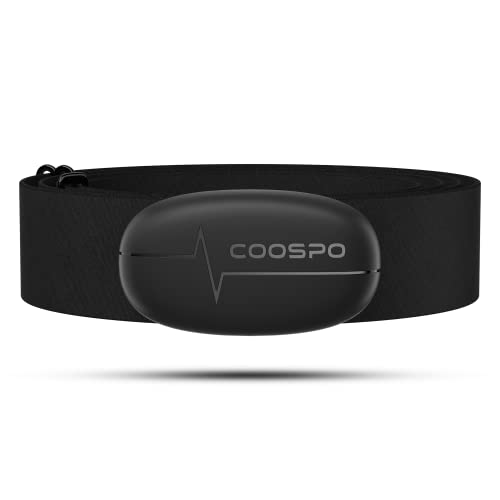
- Bluetooth and ANT+ connectivity
- Works with apps, watches, bikes, and gym equipment
- Up to 300 hours of replaceable-battery life
Best For: Beginners building a flexible connected training setup
Best Garmin-Friendly Pick

- Tracks heart rate and heart rate variability
- Up to one year of replaceable-battery life
- Machine-washable strap with 3 ATM water rating
Best For: Beginners using Garmin watches or cycling computers
Best Long-Battery Value
GEOID HS500 Heart Rate Monitor

- Bluetooth and ANT+ compatibility
- Up to 800 hours with a replaceable battery
- LED confirms initial readiness and connection
Best For: Beginners wanting long battery life across multiple platforms
Best Comfortable Armband

- Soft armband with automatic wear detection
- Pairs with up to three Bluetooth devices
- 38 hours of use per charge
Best For: Beginners who prefer an armband over a chest strap
Best Value Chest Strap
COOSPO H808S Bluetooth Heart Rate Monitor
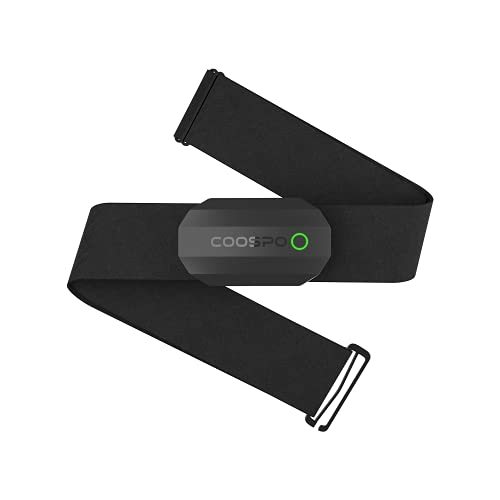
- Claims ±1 BPM exercise heart-rate accuracy
- Bluetooth and ANT+ connectivity
- Up to 300 hours with replaceable battery
Best For: Beginners using fitness apps, watches, or bike computers
Best Everyday Tracker
MorePro 24/7 Health Fitness Tracker

- 24/7 heart-rate and activity tracking
- Seven sports modes and sleep tracking
- Up to seven days of daily battery use
Best For: Beginners wanting an all-day wellness wearable
Best Strap Alternative
Scosche Rhythm+ 2.0 Armband Monitor

- Comfortable forearm, bicep, or tricep placement
- Bluetooth and ANT+ connectivity
- IP68 design with HRV mode
Best For: Beginners who prefer an armband over a chest strap
Best All-Around Starter
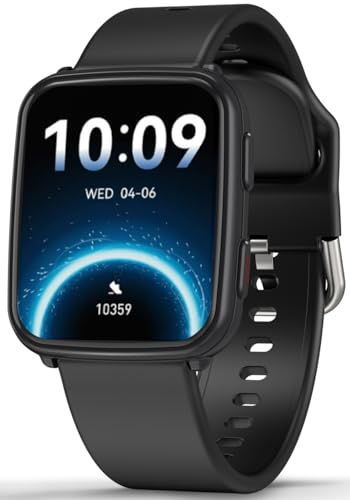
- 24/7 heart rate and wellness tracking
- 120+ sport modes with sleep tracking
- Up to 7 days of normal-use battery
Best For: Beginners wanting a smartwatch with broad health and activity features
Best for Connected Training

- Optical tracking rated within ±1 BPM
- Bluetooth 5.0 and ANT+ connectivity
- Up to 20 hours of battery life
Best For: Beginners using fitness apps, watches, bikes, or gym equipment
Best for Training Alerts

- Five-color heart rate zone indicator
- Custom max-heart-rate vibration alert
- Up to 35 hours of battery life
Best For: Beginners learning workout intensity and heart rate zones
Best Dual-Protocol Starter – COOSPO H6 Chest Strap
For beginners seeking heart rate monitors for beginners that work across several training setups, the COOSPO H6 offers Bluetooth and ANT+ connectivity in a traditional chest-strap design. It supports many fitness apps, bike computers, sports watches, gym machines, and up to 300 hours of battery life.
Best For: Beginners who want broad device and app compatibility for cycling, gym workouts, and connected training.
Pros:
- Supports both Bluetooth and ANT+ connections.
- Works with apps including Strava, Zwift, Polar Beat, and Wahoo Fitness.
- IP67-rated for rainy-day training and sweat, with a replaceable battery.
- Provides real-time heart rate data and is compatible with many gym machines.
Cons:
- The electrode areas should be moistened before use.
- It is not intended for swimming or soaking.
- The sensor should be separated from the strap after each workout.
The H6 is a practical entry point for users who need flexibility across brands and platforms. Its chest-strap format and setup tips may require a little more attention than a simple wrist device, but its dual connectivity is useful as your training setup grows.
Best Garmin-Friendly Pick – Garmin HRM 200
The Garmin HRM 200 is a straightforward choice among heart rate monitors for beginners, especially for people already using Garmin equipment. It transmits real-time heart rate and heart rate variability data to compatible watches, cycling computers, fitness equipment, apps, and smartphones.
Best For: Beginners who want a durable chest strap that integrates with Garmin devices and compatible training equipment.
Pros:
- Transmits heart rate and heart rate variability data.
- Compatible with Garmin smartwatches, cycling computers, apps, and fitness equipment.
- Offers up to one year of user-replaceable battery life.
- Has a 3 ATM water rating and a machine-washable strap.
Cons:
- Compatibility is centered on compatible devices and apps.
- The available strap sizing should be matched to your body type.
For a beginner already invested in Garmin, the HRM 200 emphasizes uncomplicated integration, long battery life, and easier strap maintenance. Its two available strap sizes also make fit selection an important part of the purchase.
Best Long-Battery Value – GEOID HS500 Heart Rate Monitor
For beginners comparing heart rate monitors for beginners, the GEOID HS500 combines Bluetooth and ANT+ support with an LED connection indicator and a claimed 800-hour battery life. It connects with smartphones, sports watches, bike computers, treadmills, and numerous training apps.
Best For: Beginners who want long battery life, broad compatibility, and a visible connection reminder during workouts.
Pros:
- Supports both ANT+ and Bluetooth connections.
- LED flashes to confirm readiness and connection.
- Offers up to 800 hours from a replaceable CR2032 battery.
- IP67-rated and backed by a one-year limited warranty.
Cons:
- Swimming is not recommended.
- Bluetooth pairing should be completed through the fitness app rather than directly through phone settings.
- The LED turns off after its initial flashes, so it is not a continuous display.
The HS500 is appealing if battery changes are a low priority and you use a mix of training platforms. Its pairing guidance is simple but worth following, particularly for first-time users setting up a chest sensor.
Best Comfortable Armband – COROS Heart Rate Monitor
The COROS Heart Rate Monitor offers an alternative to chest straps for beginners exploring heart rate monitors for beginners. Its soft, breathable armband uses Bluetooth only, automatically detects when it is worn, and can pair with up to three devices at once.
Best For: Beginners who prioritize a comfortable armband fit and use Bluetooth-compatible watches, apps, or indoor training equipment.
Pros:
- Soft, breathable band designed for comfortable wear.
- Automatically powers on and off through wear detection.
- Can connect to up to three devices simultaneously.
- Provides 38 hours of operation and up to 80 days of standby per charge.
Cons:
- Bluetooth only; it is not compatible with ANT+.
- It is designed for sports and activities, not daily heart rate tracking.
- A Type-C adapter is not included with the USB charging cable.
The COROS armband is a strong fit for users who find chest straps uncomfortable or want quick, automatic workout setup. Confirm that your equipment supports Bluetooth before choosing it, since ANT+ devices will not be compatible.
Best Value Chest Strap – COOSPO H808S Bluetooth Heart Rate Monitor
For beginners comparing heart rate monitors for beginners, the COOSPO H808S is a straightforward chest-strap option focused on real-time workout data. Its Bluetooth and ANT+ connectivity makes it useful with compatible phones, watches, bike computers, fitness equipment, and popular training apps.
Best For: Beginners who want accurate exercise heart-rate tracking and broad device compatibility.
Pros:
- Claims ±1 BPM accuracy for real-time exercise monitoring.
- Supports both Bluetooth 4.0 and ANT+ connections.
- Offers up to 300 hours of battery life with a replaceable CR2032 battery.
- IP67 waterproof design with LED and beep connection reminders.
Cons:
- Requires moistening the electrode zones before use.
- A chest strap may feel less convenient than a wrist-worn tracker.
- The strap is recommended for replacement after six months or 300 washes.
The H808S is a practical starting point for structured workouts, especially if you already use compatible fitness apps or ANT+ equipment. Remember to pair it inside the app rather than through your phone’s general Bluetooth menu.
Best Everyday Tracker – MorePro 24/7 Health Fitness Tracker
The MorePro tracker suits beginners who want heart-rate monitoring built into an everyday smartwatch-style device. Along with 24/7 heart-rate tracking, it records activity and sleep data, offers seven sports modes, and provides phone notifications from a slim 1.47-inch display.
Best For: Beginners seeking an all-day wellness tracker rather than a dedicated workout heart-rate sensor.
Pros:
- Provides 24/7 heart-rate monitoring and on-demand blood oxygen measurements.
- Tracks steps, distance, calories, sleep, and seven sports modes.
- Includes IP68 waterproofing and up to seven days of daily battery use.
- Offers 300+ watch faces plus call, text, and app notifications.
Cons:
- Heart-rate, blood-pressure, and oxygen readings are for general wellness and fitness reference, not medical use.
- It relies on a smartphone for GPS geotagging.
- It is not compatible with PCs, iPads, or tablets.
This is a convenient choice if you want one wearable for basic health trends, sleep, activity, and notifications. It is less specialized than a chest strap or armband, but its broad daily features can make consistent tracking easier for newcomers.
Best Strap Alternative – Scosche Rhythm+ 2.0 Armband Monitor
For beginners who find chest straps restrictive, the Scosche Rhythm+ 2.0 offers optical heart-rate monitoring from the forearm, bicep, or tricep. It connects through Bluetooth or ANT+ to compatible watches, fitness equipment, and apps, making it suitable for gym sessions, running, and cycling.
Best For: Beginners who want a secure, comfortable alternative to a chest-worn monitor.
Pros:
- Adjustable armband can be worn on the forearm, bicep, or tricep.
- Supports both Bluetooth Smart and ANT+ devices.
- IP68 waterproof construction handles sweat, rain, and demanding workouts.
- Includes HRV mode for RR interval data and offers up to 24 hours of continuous battery life.
Cons:
- Its 24-hour battery life is much shorter than the COOSPO chest strap’s stated battery life.
- Advanced HRV features may be more than a beginner needs.
- Requires charging between extended training sessions.
The Rhythm+ 2.0 balances flexible placement and broad connectivity, which can make it easier to wear consistently than a chest strap. Choose it if comfort during intense exercise is a priority and you want the option to explore HRV data later.
Best All-Around Starter – MorePro Fitness Tracker
For beginners comparing heart rate monitors for beginners, the MorePro Fitness Tracker is a smartwatch-style option that combines all-day heart rate tracking with broader wellness and activity features. It supports on-demand blood oxygen checks, sleep tracking, 120+ sport modes, and everyday notifications in one wrist-worn device.
Best For: Beginners who want heart rate tracking plus sleep, activity, cycle, and smartwatch features.
Pros:
- Provides 24/7 heart rate monitoring and on-demand blood oxygen checks.
- Tracks sleep stages, steps, distance, calories, training time, and workouts across 120+ sport modes.
- Offers IP68 water resistance, message notifications, and up to 7 days of normal-use battery life.
- Works with Android 7.0+ and iOS 13.0+ smartphones.
Cons:
- It is intended to support general wellness and is not a medical device.
- The many smartwatch and wellness features may be more than users seeking only workout heart rate data need.
- Blood pressure readings are included as a wellness feature but should not replace professional medical measurement.
This is a practical entry point if you want one device for basic heart rate monitoring and daily habit tracking. Choose a dedicated armband instead if workout connectivity and training-zone feedback are your main priorities.
Best for Connected Training – COOSPO HW807 Armband
The COOSPO HW807 is a focused choice for beginners comparing heart rate monitors for beginners who want live workout data without wearing a chest strap. Its optical armband sends heart rate information over Bluetooth 5.0 or ANT+ to compatible phones, watches, bike computers, fitness equipment, and training apps.
Best For: Beginners training with Peloton, Garmin, Wahoo, Strava, or compatible gym equipment.
Pros:
- Uses an optical sensor designed for heart rate accuracy within ±1 BPM during exercise.
- Color LED indicators make heart rate zones easier to see during training.
- Supports Bluetooth 5.0 and ANT+ with more than 200 compatible apps and many fitness devices.
- Provides up to 20 hours of battery life and IP67 water resistance.
Cons:
- It has no standalone display, so readings generally require a connected device or app.
- IP67 protection is suitable for rain and training but the product is not recommended for swimming.
- It is primarily a workout sensor rather than an all-day smartwatch or wellness tracker.
The HW807 makes heart rate zones and app-based workout tracking approachable without adding a chest strap. It is a strong beginner pick when compatibility with existing training equipment matters more than smartwatch functions.
Best for Training Alerts – COOSPO HW9 Armband
For beginners looking at heart rate monitors for beginners, the COOSPO HW9 offers a comfortable armband design with workout-focused feedback. It tracks heart rate zones and calories, supports HRV, connects through Bluetooth 5.0 and ANT+, and can vibrate when your heart rate exceeds a customized maximum.
Best For: Beginners who want wearable zone guidance and a customizable high-heart-rate alert.
Pros:
- Optical heart rate monitoring is specified at an accuracy of ±1 BPM.
- Five-color LED zone indicators provide a quick visual guide during exercise.
- Supports two simultaneous Bluetooth connections plus ANT+ compatibility.
- Offers customizable maximum heart rate settings, vibration alerts, and up to 35 hours of battery life.
Cons:
- It does not provide a full on-device workout display.
- Users need a compatible app, watch, bike computer, or fitness device to access broader workout data.
- Its advanced alert and HRV features may require more setup than a basic tracker.
The HW9 is especially useful for beginners who want clearer intensity guidance as they learn pacing. Its longer battery life and customizable alert make it a more training-oriented alternative to a general-purpose fitness tracker.
How We Picked the Best Heart Rate Monitors for Beginners
We focused on practical features that matter when you are buying your first monitor: heart rate accuracy, connection options, comfort, battery life, water resistance, and compatibility with popular fitness equipment and apps. The selection includes both chest-strap and optical designs because neither style is ideal for every user.
Chest straps generally measure electrical signals close to the heart and are often the better choice for interval training, cycling, and other workouts where accuracy and responsiveness matter. Armbands and fitness trackers are easier to put on and may be more comfortable for walking, gym sessions, and everyday activity tracking.
Quick Comparison
- Best for broad compatibility: Choose a dual ANT+ and Bluetooth model, such as the Garmin, COOSPO, or HS500 options.
- Best for training accuracy: Start with a chest strap, particularly for intervals, cycling, and structured workouts.
- Best for comfort and convenience: An optical armband avoids the chest band while still providing live workout data.
- Best for all-day wellness tracking: A fitness tracker can add steps, sleep, calories, and other daily metrics.
- Best for app and equipment flexibility: Look for support for both ANT+ and Bluetooth rather than relying on one connection standard.
Key Buying Factors for Heart Rate Monitors for Beginners
Sensor Style and Fit
A chest strap should sit snugly below the chest muscles without restricting breathing. Optical armbands need firm skin contact, while watches and trackers should not slide during exercise. A secure fit is essential for consistent readings.
Connectivity
Bluetooth works well with phones, tablets, and many training apps. ANT+ is useful for bike computers, gym equipment, and compatible sports watches. Dual-protocol monitors offer the easiest upgrade path.
Battery and Maintenance
Check whether the device uses a replaceable coin cell or rechargeable battery, and consider the advertised runtime. Sweat and water resistance are valuable, but follow the cleaning and storage instructions to protect the sensor and strap.
Data Expectations
Most basic monitors provide live heart rate, zones, calories, or workout summaries. Features such as heart rate variability, blood oxygen, blood pressure estimates, and sleep tracking can be useful, but they should not replace medical equipment or professional advice.
Who Should Buy Which Heart Rate Monitors for Beginners?
New runners and cyclists will usually get the clearest training feedback from a comfortable chest strap with Bluetooth and ANT+. Gym users and group-class participants may prefer an armband that is quick to wear and less noticeable under clothing. Beginners who want one device for daily life should consider a fitness tracker with heart rate, sleep, step, and activity features.
If you are unsure, choose a dual-band model with a replaceable or long-lasting battery and a return policy that lets you test comfort. For medical monitoring, consult a healthcare professional rather than relying on a consumer fitness device.