Choosing among blood pressure monitors for daily monitoring is easier when you focus on consistent readings, cuff fit, simple controls, and a record-keeping system you will actually use.
These 10 upper-arm models include straightforward home monitors and connected options with app integration, giving different types of users practical ways to track their measurements over time.
Best 10 Blood Pressure Monitors for Daily Monitoring Picks for 2026
Connected Confidence
OMRON Bronze Upper Arm Monitor

- Bluetooth app tracking with Apple Health and Google Fit compatibility
- Irregular-heartbeat detection and hypertension indicator
- 9–17-inch cuff, case, and batteries included
Best For: Connected daily monitoring at home
Easy Digital Tracking
iProven Bluetooth Blood Pressure Monitor

- One-touch operation with a large backlit display
- MedM app syncing, reminders, and Apple Health support
- Movement detection and 8.75–16.5-inch adjustable cuff
Best For: Readable, app-connected monitoring for households and caregivers
Expanded Memory Pick
OMRON Silver Upper Arm Monitor
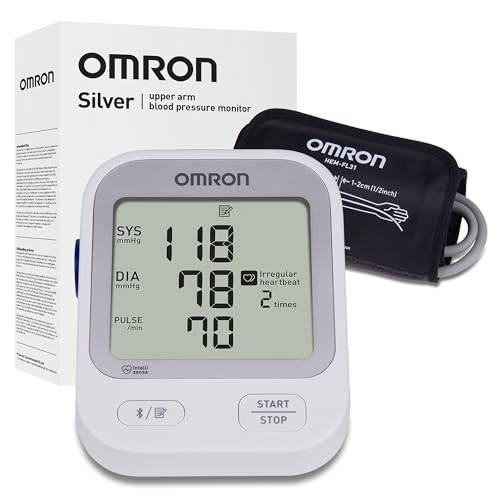
- Stores 30 readings on the monitor
- Bluetooth app support with Apple Health and Google Fit
- 9–17-inch ComFit cuff and heart-health alerts
Best For: Connected users who want more built-in reading storage
High-Capacity Value

- Two-user memory with 120 readings per user
- One-button operation and large backlit LED display
- AA battery or Type-C power options
Best For: Shared household monitoring without app dependence
Smart Tracking Pick

- Bluetooth app tracks readings and trends
- Stores up to 100 readings on the device
- Detects irregular heartbeats
Best For: App-connected daily monitoring
Straightforward Accuracy Pick
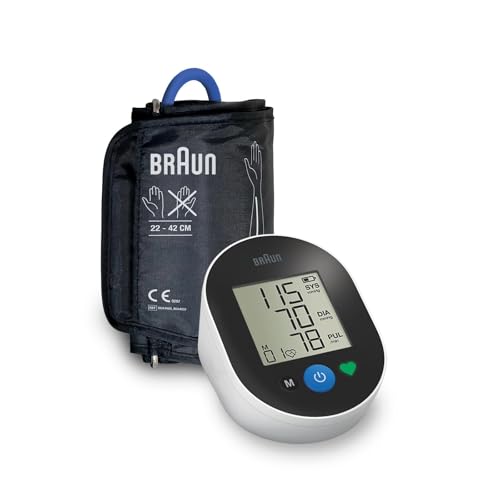
- Clinically proven accuracy
- Color-coded reading interpretation
- Stores up to 30 readings
Best For: Simple routine home checks
Accessibility & Memory Pick

- Voice readings with adjustable volume
- 120-reading memory for each of two users
- Averages three measurements
Best For: Two-user households and accessible monitoring
Clear-Read Choice

- Wide-angle LED screen with color indicators
- One-touch readings with movement and cuff checks
- 120 onboard readings plus app syncing
Best For: Seniors, first-time users, and flexible home or travel monitoring
App-Tracking Pick
Greater Goods Bluetooth Monitor

- Two-user tracking with Balance Health app
- Large backlit display and alignment guide
- Includes case, batteries, and AC adapter
Best For: Caregivers and households tracking readings over time
Shared-Household Pick

- Separate tracking for two users
- Stores up to 240 readings total
- Bluetooth syncing with iHealth MyVitals
Best For: Couples and families sharing one monitor
Connected Confidence – OMRON Bronze Upper Arm Monitor
For blood pressure monitors for daily monitoring, the OMRON Bronze combines upper-arm measurement with Bluetooth connectivity and essential heart-health alerts. It is a practical choice for home users who want app-based trend tracking without a complicated setup.
Best For: People who want connected daily monitoring, irregular-heartbeat detection, and a cuff that fits a broad range of adult arms.
Pros:
- Bluetooth connection to the OMRON connect app, with Apple Health and Google Fit compatibility.
- Detects irregular heartbeats and provides a hypertension indicator.
- Wide-range D-ring cuff fits arms from 9 to 17 inches.
- Includes a storage case and four AA batteries.
Cons:
- On-device memory stores up to 14 readings, so frequent app syncing may be useful.
- Battery powered rather than rechargeable.
The Bronze is a straightforward upper-arm monitor with useful digital tracking features. Its app integration is particularly helpful for users who want to review or share longer-term reading trends.
Easy Digital Tracking – iProven Bluetooth Blood Pressure Monitor
The iProven is designed for convenient blood pressure monitors for daily monitoring, with one-touch operation, a large backlit display, and app syncing. It can work as a standalone monitor or connect to the MedM app for reminders and longer-term recordkeeping.
Best For: Older adults, caregivers, and users who value readable results, customizable reminders, and smartphone-based tracking.
Pros:
- One-touch operation and a large, high-contrast backlit display.
- Bluetooth syncing with the MedM app, iOS, Android, and Apple Health.
- Customizable morning or evening reminders support consistent measurement habits.
- Movement detection alerts users to motion interruptions, and the cuff fits 8.75 to 16.5 inches.
Cons:
- App features require Bluetooth setup and a compatible smartphone.
- The supplied cuff range may not fit arms outside 8.75 to 16.5 inches.
With its accessible display and flexible app-or-standalone operation, the iProven emphasizes ease of use. The five-year warranty is an added consideration for users planning regular home monitoring.
Expanded Memory Pick – OMRON Silver Upper Arm Monitor
The OMRON Silver is a strong option among blood pressure monitors for daily monitoring when you want more on-device storage than the Bronze model. It adds Bluetooth app support, an easy-wrap cuff, and alerts for elevated readings and irregular heartbeats.
Best For: Home users who want a recognized upper-arm monitor with 30 stored readings and connected trend reporting.
Pros:
- Stores up to 30 readings and can also sync unlimited readings through the OMRON connect app.
- Includes irregular-heartbeat detection and a hypertension indicator.
- Easy-wrap ComFit cuff fits arms from 9 to 17 inches.
- Compatible with Apple Health and Google Fit, with a case and four AA batteries included.
Cons:
- Battery powered and not described as rechargeable.
- Requires app syncing for unlimited digital storage and trend tracking.
The Silver offers a useful balance of straightforward operation and connected recordkeeping. Its larger on-device memory makes it more convenient than a lower-capacity monitor when readings are not synced after every session.
High-Capacity Value – Oklar Upper Arm BP Monitor
The Oklar focuses on simple, practical blood pressure monitors for daily monitoring, with one-button operation and a large backlit LED display. Its two-user memory and dual power options make it suitable for shared household use or occasional travel.
Best For: Families or couples who need separate reading storage and prefer a simple monitor with battery and Type-C power options.
Pros:
- Stores 120 readings for each of two users, including time stamps.
- One-button operation and a large LED display are easy to use and read.
- Can run on three AA batteries or the included Type-C cable.
- Includes cuff self-checking and a WHO blood-pressure indicator.
Cons:
- The Type-C connection is not rechargeable; the product requires the provided cable when batteries are not installed.
- The 8.7–15.7-inch cuff may not suit larger arms.
- Warranty coverage is listed as 12 months.
The Oklar stands out for generous memory and shared-user support at a compact size. It is a sensible fit for buyers who prioritize simple controls and flexible power over Bluetooth app features.
Smart Tracking Pick – OMRON Evolv Wireless
For daily monitoring, the OMRON Evolv combines an upper-arm cuff with Bluetooth connectivity, helping you record readings and follow trends through the OMRON connect app. Its one-piece design and irregular-heartbeat detection add useful convenience for routine home checks.
Best For: Users who want app-connected tracking and a portable upper-arm monitor.
Pros:
- Stores up to 100 readings and connects to the OMRON connect app for unlimited tracking.
- Detects irregular heartbeats during measurements.
- Compact one-piece design with an attached cuff fitting 9–17-inch arms.
- Includes four AAA batteries and a five-year manufacturer warranty.
Cons:
- Bluetooth and app features may be unnecessary for shoppers seeking a basic monitor.
- Uses batteries rather than a stated rechargeable power system.
The Evolv is a strong choice when reviewing history and sharing reports with a doctor matters as much as taking an individual reading. Its connected features make it especially practical for ongoing tracking.
Straightforward Accuracy Pick – Braun ExactFit 2
The Braun ExactFit 2 is a practical option for blood pressure monitors for daily monitoring, with clinically proven accuracy, a color-coded reading guide, and memory for reviewing recent results. Its routine-focused design keeps operation simple.
Best For: Shoppers who want an uncomplicated upper-arm monitor with easy-to-interpret results.
Pros:
- Clinically proven accuracy supports dependable home measurements.
- Color-coded indicators help simplify reading interpretation.
- Detects irregular heartbeats and stores up to 30 readings.
- Includes the monitor, cuff, four AA batteries, and owner’s manual.
Cons:
- Stores fewer readings than some competing models in this selection.
- Supplied notes identify it as a medium-size cuff option.
Choose the ExactFit 2 if you value clear feedback and basic measurement history over app connectivity. It covers the core needs of regular home checks without adding smart-device features.
Accessibility & Memory Pick – Alcedo B21
The Alcedo B21 stands out among blood pressure monitors for daily monitoring with a large LCD, adjustable voice readings, and separate memory for two users. It also averages three measurements and provides cuff-position and movement alerts to support more consistent use.
Best For: Two-person households or users who prefer spoken readings and generous on-device memory.
Pros:
- Provides voice broadcasting with adjustable volume and a clear LCD display.
- Stores 120 readings for each of two users.
- Automatically averages three values for a measurement summary.
- Includes self-checking cuff positioning and movement detection.
Cons:
- Does not list Bluetooth or app connectivity in the supplied details.
- Its larger design may be less convenient for travel than a compact monitor.
The B21 is particularly useful when accessibility, shared use, or extensive reading history is important. Its voice function and two-user memory make it a flexible choice for regular household monitoring.
Clear-Read Choice – iHealth Track Pro
The iHealth Track Pro is a practical option for blood pressure monitors for daily monitoring, especially if you want simple one-button operation and easy-to-see results. Its wide-angle LED screen, color-coded indicators, and upper-arm cuff are designed for straightforward home readings.
Best For: Seniors, first-time users, and households wanting app-connected tracking with flexible power options.
Pros:
- Wide-angle LED display with red, yellow, and green indicators for quick reading interpretation.
- One-touch operation with body movement, cuff-wrap, and irregular-heartbeat detection.
- Stores up to 120 readings and syncs unlimited readings through the iHealth MyVitals app.
- Includes batteries and supports USB Type-C power for home or travel use.
Cons:
- Tracks one user on the device.
- The included cuff fits arms from 8.7 to 16.5 inches, so it may not suit users outside that range.
Choose this model if display visibility and uncomplicated controls matter most. The app adds useful trend charts and sharing features, while the dual-power design makes regular monitoring more convenient.
App-Tracking Pick – Greater Goods Bluetooth Monitor
The Greater Goods Bluetooth monitor is built for blood pressure monitors for daily monitoring, combining one-touch operation with app-based history and trend tracking. Its backlit display, alignment guide, and wide-range upper-arm cuff support consistent routines at home.
Best For: Adults and caregivers who want unlimited app history, two-user tracking, and report sharing.
Pros:
- Balance Health app stores unlimited readings, tracks trends, exports reports, and can integrate with Apple Health.
- Supports two-user tracking in the app and stores up to 60 readings per user on the monitor.
- Large backlit display, one-touch operation, and artery alignment guide simplify daily use.
- Includes a travel case, four AAA batteries, and an AC adapter.
Cons:
- The included cuff fits 8.7 to 16.5-inch arms; alternate cuff sizes require contacting Greater Goods support.
- Bluetooth features require using the Balance Health app and a compatible mobile device.
This is a strong fit for users who want more than individual readings. Its built-in memory works without Bluetooth, while the app provides deeper history and sharing tools for ongoing tracking.
Shared-Household Pick – iHealth ACCU Smart
The iHealth ACCU Smart is a convenient choice among blood pressure monitors for daily monitoring when two people need separate reading histories. It combines one-press measurement with cuff-fit and movement checks, Bluetooth syncing, and a wide adult cuff.
Best For: Couples or families who want two-user tracking and app-backed records from a single monitor.
Pros:
- Displays systolic, diastolic, and pulse readings on an easy-to-read LCD, with classification and irregular-heartbeat indicators.
- Stores up to 240 readings total across two users, with unlimited app history through iHealth MyVitals.
- Cuff-fit and body-movement detection provide feedback during measurements.
- Includes a wide 8.7 to 16.5-inch cuff, batteries, power cable, and storage bag.
Cons:
- Bluetooth app features require a compatible iOS or Android device.
- The included cuff may not fit arms outside the 8.7 to 16.5-inch range.
For shared use, the separate two-user histories are the main advantage. It is also a practical pick for anyone who wants on-device storage plus automatic transfer to the iHealth app when Bluetooth is enabled.
How We Picked the Best Blood Pressure Monitors for Daily Monitoring
We prioritized upper-arm monitors because they are generally preferred for reliable home measurements when used correctly. Our selection considers cuff design, display readability, memory capacity, measurement features, portability, app connectivity, and stated regulatory clearance or validation where provided by the manufacturer. We also included a range of prices and operating styles, from simple one-button devices to wireless monitors that sync readings to a phone.
No home monitor replaces professional medical advice. If your readings are unusually high, inconsistent, or accompanied by concerning symptoms, contact a qualified healthcare professional.
Quick Comparison
- Best for simple daily checks: Choose a monitor with one-touch operation, a clear display, and onboard memory.
- Best for tracking trends: Look for multiple-user storage, averaging, and enough memory for repeated readings.
- Best for smartphone users: Bluetooth models can simplify logging and sharing data, provided the companion app is easy to use.
- Best for portability: Wireless or compact designs reduce cable clutter, but confirm battery life and cuff storage.
Key Buying Factors for Blood Pressure Monitors for Daily Monitoring
Cuff Fit and Measurement Position
Correct cuff sizing is essential. Measure the circumference of the upper arm and compare it with the included cuff range. A cuff that is too tight or too loose can affect results. During a reading, sit quietly with your back supported, feet flat, and arm supported at heart level.
Consistency and Ease of Use
Daily monitoring works best when the device is quick and intuitive. Favor large, high-contrast screens, clear error indicators, automatic inflation, and controls that are easy to operate without assistance. Taking readings at similar times and under similar conditions can make trends more useful.
Memory, Averaging, and User Profiles
Built-in memory helps you review previous readings without relying on a phone. If two people will use the device, choose separate user profiles or confirm that readings can be clearly separated. Averaging features can also help reduce the effect of a single unusual measurement.
Bluetooth and App Support
Connected monitors are useful if you want automatic logs, graphs, reminders, or simple sharing with a clinician. Check smartphone compatibility, account requirements, privacy settings, and whether the app remains useful if you prefer to take occasional manual notes.
Who Should Buy Which Blood Pressure Monitors for Daily Monitoring?
Buy a basic upper-arm model if you want dependable routine checks without app setup or extra features. These are often the simplest choice for older adults or households that value a clear display and physical controls.
Choose a Bluetooth monitor if you already track health data on a smartphone or need an organized history for appointments. App-based logging is particularly helpful for people taking readings frequently.
Choose a wireless or compact model if you travel or want less cable clutter, but verify that the cuff fits properly and that replacement batteries are readily available.
Choose a multi-user model for a shared household. Separate memories or profiles help prevent one person’s readings from being confused with another’s. Whichever style you choose, prioritize proper cuff fit, repeatable technique, and regular communication with your healthcare provider.