Good office air quality affects comfort, concentration, and confidence in your ventilation strategy. The right monitor can reveal rising CO2, particulate pollution, humidity problems, or VOCs before they become obvious.
We compared 10 indoor air quality monitors for offices across sensor coverage, display design, alerts, connectivity, portability, and ease of use. Use the guide below to narrow the list to the best fit for your workspace.
Best 10 Indoor Air Quality Monitors for Offices Picks for 2026
Best CO2-Focused Pick
Aranet4 Indoor Air Quality Monitor
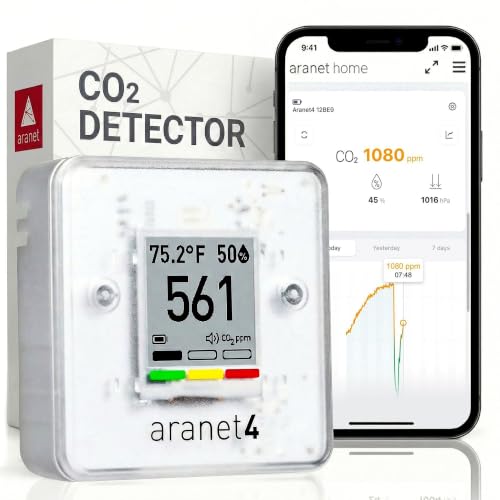
- NDIR CO2 sensor with real-time readings
- Up to four years of battery life
- App stores up to 90 days of history
Best For: Offices focused on ventilation and CO2 monitoring
Best Alexa Integration
Amazon Smart Air Quality Monitor

- Measures five key air-quality factors
- Shows an app-based air quality score
- Supports Alexa alerts and routines
Best For: Alexa-equipped offices seeking automation
Best Multi-Sensor Bluetooth Pick

- Tracks CO2, PM2.5, TVOCs, temperature, and humidity
- Bluetooth app with hourly data logging
- Up to 60 days of battery life
Best For: Nearby monitoring in personal workspaces and offices
Best Large-Display Coverage

- Monitors particles, HCHO, TVOC, and comfort data
- Large full-color display for room-wide viewing
- Color-coded AQI alerts
Best For: Offices wanting broad readings at a glance
Best Portable Coverage
10-in-1 Office Air Quality Monitor

- Tracks gases, particles, temperature, and humidity
- Color display with voice pollution alerts
- Up to 20 hours of rechargeable monitoring
Best For: Portable office-wide air checks and broad pollutant tracking
Best for Frequent Sampling
16-in-1 Real-Time Air Quality Tester

- Refreshes readings every 1.5 seconds
- Covers particles, gases, temperature, and humidity
- Includes Type-C charging cable and AC adapter
Best For: Fast visual checks in offices and other indoor spaces
Best Large-Display Option

- Large 7.2-inch display with adjustable brightness
- Samples conditions every 1–2 seconds
- Up to eight hours of battery-powered use
Best For: Shared offices needing easy-to-read, at-a-glance data
Best Smart-App Monitor
AprilAire ZAWTHCPV 5-in-1 Wi-Fi Monitor
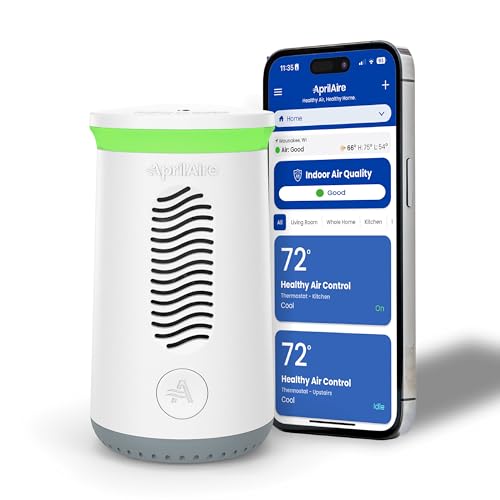
- Tracks CO2, VOCs, PM2.5, humidity, and temperature
- App delivers alerts, trends, and improvement guidance
- Color-coded status display with three light settings
Best For: Connected office monitoring with remote alerts and app-based insights
Best Heavy-Duty Pick
bonoch AirSentry 16-in-1 Monitor

- Shows nine air-quality parameters in real time
- Large 7-inch HD display is easy to view across a room
- Seven pollutant alerts plus USB-C charging
Best For: Shared office spaces that need visible, comprehensive readings
Best CO2-Focused Pick – Aranet4 Indoor Air Quality Monitor
For offices seeking indoor air quality monitors for offices with clear ventilation feedback, the Aranet4 focuses on real-time CO2 readings while also tracking temperature, relative humidity, and atmospheric pressure. Its prominent display, color coding, and optional buzzer make elevated CO2 easy to notice.
Best For: Offices that primarily need dependable, cable-free CO2 and comfort monitoring.
Pros:
- Uses NDIR technology for CO2 measurement.
- Wireless design with an e-ink display and battery life of up to four years.
- App provides graphs and up to 90 days of historical data.
- Color coding and optional buzzer provide straightforward alerts.
Cons:
- Its listed measurements do not include PM2.5, VOCs, or carbon monoxide.
- Requires two AA batteries, even though they are included.
The Aranet4 is a practical choice when office ventilation is the main concern. It offers long battery life and useful historical analysis, but buyers needing broader pollutant coverage should consider a multi-sensor model.
Best Alexa Integration – Amazon Smart Air Quality Monitor
The Amazon Smart Air Quality Monitor is one of the more connected indoor air quality monitors for offices, measuring five factors and presenting results through a color-coded LED and the Alexa app. It can also send notifications or trigger compatible Alexa routines when air quality changes.
Best For: Alexa-equipped offices that want app notifications and smart-device automation.
Pros:
- Tracks PM2.5, VOCs, carbon monoxide, humidity, and temperature.
- Provides an easy-to-understand air quality score in the Alexa app.
- Can announce poor air quality on Echo devices or send phone notifications.
- Alexa routines can control compatible purifiers, fans, and dehumidifiers.
Cons:
- The supplied notes do not specify battery life or display dimensions.
- Its automation features are most useful in an Alexa-enabled setup.
This monitor suits offices already using Alexa and compatible environmental devices. Its broad five-factor tracking and automation potential are useful, although shoppers wanting a prominently detailed standalone display may prefer another design.
Best Multi-Sensor Bluetooth Pick – Temtop M10+ 6-in-1 Monitor
The Temtop M10+ combines CO2, PM2.5, TVOCs, temperature, and humidity readings in a compact unit, making it a versatile option among indoor air quality monitors for offices. Bluetooth connectivity, hourly data logging, and app-based history provide useful tracking without requiring Wi-Fi.
Best For: Personal workspaces and offices that want several measurements with close-range Bluetooth access.
Pros:
- Combines pollutant, temperature, and humidity monitoring in one device.
- Bluetooth app connectivity supports live viewing, historical analysis, and calibration.
- E-ink display and energy-saving design provide up to 60 days of battery life.
- Adjustable alarm can be muted for quieter workspaces.
Cons:
- Bluetooth close-range monitoring requires staying near the device.
- Its battery life is shorter than some long-term cable-free monitors.
- The supplied notes do not indicate Wi-Fi or remote internet access.
The M10+ offers a strong balance of sensor coverage and simple setup. It is especially suitable when staff can check the monitor nearby, while offices needing remote alerts may prefer a Wi-Fi-connected alternative.
Best Large-Display Coverage – 10-in-1 Air Quality Monitor
For offices that need a broad at-a-glance view, this 10-in-1 model monitors PM1.0, PM2.5, PM10, HCHO, TVOC, temperature, humidity, AQI, and time. Its large color display and color-coded AQI indicator make changing conditions easier to read across a room.
Best For: Desks or shared indoor spaces where broad readings and a large display are priorities.
Pros:
- Offers extensive monitoring of particles, HCHO, TVOC, temperature, humidity, and AQI.
- Large full-color screen displays key information clearly.
- Color-coded AQI alerts help indicate when environmental changes may be needed.
- Designed for everyday use in offices and other indoor spaces.
Cons:
- The supplied notes do not list app connectivity or historical data storage.
- The monitor is larger and heavier than compact options at 15.1 ounces.
- Battery life is not specified in the supplied details.
This model is a good fit when employees need to see many readings without opening an app. Its extensive sensor list is appealing, but buyers seeking remote access or documented long battery life should verify those features before choosing it.
Best Portable Coverage – 10-in-1 Office Air Quality Monitor
For offices that need broad indoor air quality monitoring without a complicated setup, this 10-in-1 model tracks CO2, particulate matter, formaldehyde, TVOC, benzene, temperature, humidity, and related readings. Its color screen, voice alerts, rechargeable battery, and compact design make it practical for moving between work areas.
Best For: Offices needing portable, multi-parameter monitoring with audible alerts and long battery life.
Pros:
- Tracks CO2, HCHO, TVOC, benzene, AQI, PM1.0, PM2.5, PM10, temperature, and humidity.
- Large color display and voice alerts make changing conditions easy to notice.
- Built-in 2,000mAh battery supports up to 20 hours of continuous monitoring.
- One-touch controls and automatic self-calibration simplify routine use.
Cons:
- Its compact screen may be less convenient for viewing from across a larger office.
- The voice alert may be distracting in quiet shared workspaces.
This is a versatile choice for teams that want to check multiple air indicators in different rooms or work areas. The long claimed runtime is especially useful for portable inspections, while the alarm system provides an extra layer of awareness.
Best for Frequent Sampling – 16-in-1 Real-Time Air Quality Tester
Businesses comparing indoor air quality monitors for offices may appreciate this model’s frequent sampling and broad indicator coverage. It monitors particulate matter, CO2, TVOC, formaldehyde, temperature, and humidity, while its high-definition color screen presents updated readings at short intervals.
Best For: Offices that want continuously refreshed readings and a straightforward, portable tester.
Pros:
- Monitors PM1.0, PM2.5, PM10, CO2, TVOC, HCHO, temperature, and humidity.
- Samples and processes air data every 1.5 seconds for frequent updates.
- High-definition color display uses color-coded air-level readings.
- Includes a Type-C cable and AC adapter, with 12-month quality support.
Cons:
- Its stated 4–5-hour runtime is shorter than some portable monitors.
- It provides a broad set of readings but does not list Wi-Fi or app connectivity.
This monitor fits offices where users want quick visual feedback and easy repositioning. It is best suited to short inspection rounds, desk-side checks, or locations with convenient access to charging.
Best Large-Display Option – Fil-Fresh 16-in-1 Air Monitor
For shared offices where readings need to be visible from a distance, this Fil-Fresh monitor combines 16-in-1 tracking with a large 7.2-inch display. It monitors common pollutants and environmental conditions, updates every 1–2 seconds, and uses visual alerts to make changes easier to spot.
Best For: Shared workspaces that prioritize at-a-glance readings, adjustable display brightness, and wireless room-to-room use.
Pros:
- Tracks CO2, particulate matter, HCHO, TVOC, temperature, humidity, and time.
- Provides seven air-quality alerts for AQI, CO2, particles, HCHO, and TVOC.
- Large 7.2-inch screen has oversized text and three brightness settings.
- Built-in 2,500mAh battery provides up to eight hours of wireless use.
Cons:
- The larger display may take up more desk or shelf space than compact monitors.
- Its wireless runtime is shorter than the 20-hour claim of some competing models.
- No app, Wi-Fi, or account-based monitoring is included.
The large, adjustable display is the main advantage for an office environment, particularly when several people need to see the status without approaching the device. Its simple controls and lack of app setup also make it accessible for basic, immediate monitoring.
Best Smart-App Monitor – AprilAire ZAWTHCPV 5-in-1 Wi-Fi Monitor
For offices seeking connected indoor air quality monitors for offices, the AprilAire ZAWTHCPV combines real-time readings with app-based alerts and explanations. It tracks CO2, VOCs, PM2.5, humidity, and temperature, making it useful for monitoring changing conditions throughout the workday.
Best For: Offices that want app access, trend data, and guidance for responding to indoor air-quality changes.
Pros:
- Measures CO2, VOCs, PM2.5, humidity, and temperature.
- Healthy Air App provides notifications, trends, explanations, and actionable tips.
- Color-coded status display offers an at-a-glance overview.
- Includes adjustable default, always-on, and always-off light settings.
Cons:
- Requires the AprilAire Healthy Air App to function.
- Healthy Air Mode integration requires a compatible AprilAire Wi-Fi thermostat sold separately.
- Designed for corded-electric operation rather than portable use.
This is a strong choice when shared office monitoring and remote notifications matter more than portability. Its app provides more context than a basic display, although the connected features add setup requirements.
Best Heavy-Duty Pick – bonoch AirSentry 16-in-1 Monitor
The bonoch AirSentry is one of the more comprehensive indoor air quality monitors for offices, displaying multiple readings on a large 7-inch HD screen. It monitors CO2, particulate matter, formaldehyde, TVOC, temperature, humidity, and AQI without requiring menu navigation for every reading.
Best For: Offices that need a prominent shared display and broad pollutant coverage in a reception area, conference room, or workspace.
Pros:
- Tracks CO2, PM1.0, PM2.5, PM10, HCHO, TVOC, temperature, humidity, and AQI.
- 7-inch HD display provides an easy-to-see overview.
- Seven warning alarms can alert users to changes in key measurements.
- USB-C charging and up to eight hours of runtime support flexible placement.
Cons:
- Battery runtime is listed at up to eight hours, so regular charging may be needed for mobile use.
- The broad sensor set and alarm functions may be more than a small office needs.
- Best results require avoiding contact with the sensors and strong odors such as perfume.
Choose this model when visibility is a priority. Its large screen and audible alerts make it practical for group awareness, while rechargeable operation allows temporary placement away from an outlet.
Best Portable Value – Lwyinp MT13S 10-in-1 Air Quality Monitor
The Lwyinp MT13S is a compact option among indoor air quality monitors for offices, measuring gases, particles, temperature, humidity, and AQI in real time. Its three-color screen makes changing conditions easier to notice from a distance, while Bluetooth connectivity can be used to set the clock.
Best For: Offices that need a portable monitor that can also move between cars, meeting rooms, classrooms, or other indoor spaces.
Pros:
- Measures CO2, HCHO, TVOC, PM1.0, PM2.5, PM10, temperature, humidity, and AQI.
- Three-color visualization highlights conditions at a glance.
- Portable design suits offices, vehicles, schools, hotels, and other spaces.
- Offers sound controls, screen sleep, and calibration functions through simple button commands.
Cons:
- Bluetooth connection to a phone is required to calibrate the time.
- Its operating controls rely on repeated button presses, which may take practice.
- The supplied notes do not indicate a dedicated office dashboard or remote alert system.
This monitor fits buyers who value mobility and quick visual feedback over app-based office management. It covers a wide range of measurements in a compact format, making it convenient for spot checks across multiple rooms.
How We Picked the Best Indoor Air Quality Monitors for Offices
We focused on monitors that measure at least one high-value office metric, especially carbon dioxide (CO2), temperature, and humidity. Models with broader coverage may also track PM2.5, PM10, particulate matter, formaldehyde (HCHO), or total volatile organic compounds (TVOC).
We also considered how easily a team can act on the readings. Clear displays, color-coded indicators, audible or visual alerts, app access, Wi-Fi connectivity, battery life, and portability all matter when a monitor is used across meeting rooms, open-plan areas, or private offices.
Quick Comparison
Choose a CO2-focused model when ventilation is your primary concern and you want straightforward readings with minimal setup. Select a multi-sensor monitor when you also need visibility into fine particles, VOCs, formaldehyde, temperature, or humidity.
For a shared office, a large display and prominent alerts make problems easier to spot from across the room. Battery-powered models are more flexible for room-to-room checks, while Wi-Fi or app-connected options are better suited to ongoing monitoring and remote notifications.
Key Buying Factors for Indoor Air Quality Monitors for Offices
Sensor Coverage and Accuracy
CO2 is one of the most useful indicators of ventilation and occupancy, but it does not measure every pollutant. Check which sensors are included and whether the manufacturer explains calibration, accuracy, and expected sensor lifespan. Avoid assuming that a long list of measurements guarantees laboratory-grade results.
Alerts and Readability
Look for adjustable thresholds, clear trend indicators, and a screen that can be read under office lighting. Alerts should be noticeable without becoming disruptive. A device that employees can understand quickly is more useful than one with complicated menus.
Connectivity and Data Access
App and Wi-Fi features can help facilities teams review trends, compare rooms, or receive notifications. Confirm whether the monitor requires a specific platform, supports the office network, stores historical data, or works only while a phone is nearby.
Power, Placement, and Maintenance
Consider USB, battery, or mains power, along with the placement recommended for accurate readings. Keep monitors away from direct airflow, windows, heat sources, and crowded surfaces. Plan for charging, calibration, cleaning, and sensor replacement where applicable.
Who Should Buy Which Indoor Air Quality Monitors for Offices?
Choose a simple CO2 monitor for meeting rooms, classrooms, or small offices where ventilation is the main concern. Choose a multi-parameter display for workplaces that need at-a-glance information about particles, VOCs, humidity, and temperature. Choose a connected Wi-Fi model when facilities staff need remote access or longer-term trend tracking. Choose a portable battery-powered unit when you want to audit multiple rooms rather than monitor one fixed location.
Whichever model you select, use its readings as a practical signal for action—not as a substitute for professional testing when there is a suspected health, mold, chemical, or ventilation issue.