Interactive displays can turn everyday classroom routines into teachable moments. For elementary schools, the best options help students see, hear, and practice skills with less teacher repetition.
Below, we focus on display tools that support hands-on learning, clear visual cues, and simple classroom management for young learners.
Best 10 Interactive Classroom Displays for Elementary Schools Picks for 2026
Tap-and-Learn Poster Set

- 20 themed posters cover ABCs, numbers, colors, animals, and more.
- Tap-to-learn format adds songs, spelling, and Q&A.
- Durable, easy-to-clean build for repeated classroom use.
Best For: Early learning classrooms and daycare spaces needing screen-free interaction
Phonics Practice Wall Boards

- Supports phonics and phonemic awareness lessons.
- Double-sided boards allow guided and blank practice.
- Includes 264 magnets and storage pouches for organization.
Best For: Small-group reading instruction and phonics intervention
Laminated Learning Poster Bundle

- 16 laminated charts cover alphabet, numbers, shapes, routines, and more.
- Screen-free posters support visual learning and classroom reference.
- Good fit for preschool, kindergarten, and homeschool spaces.
Best For: Early childhood rooms that need versatile wall charts
Noise-Control Light Display

- Includes 5 push lights plus a classroom poster.
- Helps teach days of the week and noise-level rules.
- Wall-mounted setup is simple and student-friendly.
Best For: Classroom management displays with interactive student participation
Demo Time Center
Write & Wipe Demonstration Clock

- Large 12-inch face for visibility
- Movable hands teach analog and digital time
- Write-on surface supports repeated practice
Best For: Teacher-led time lessons and circle time in elementary classrooms
Noise Control Board
Push Light and Voice Level Poster Set

- 13 posters and 6 rechargeable LED lights
- Color-coded cues for classroom volume levels
- Supports noise routines during transitions and group work
Best For: Managing classroom noise with a simple visual system
Time Skills Kit
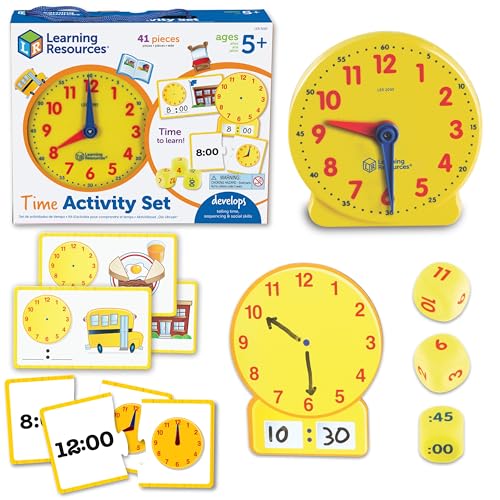
- Includes clocks, cards, puzzles, dice, and guide
- Supports hours, half-hours, and time practice
- Good for small groups and learning centers
Best For: Flexible time-telling practice in elementary classrooms
Noise Management Poster
Voice Level Poster for Classroom Use

- Five voice levels for quick student reference
- Waterproof, tear-resistant cardstock construction
- Colorful wall poster for everyday classroom use
Best For: Elementary classrooms needing a simple voice-level behavior cue
Calendar Pocket Chart
Interactive Classroom Calendar Pocket Chart

- 86 cards for dates, weather, seasons, and more
- Large 29 x 24 inch wall-friendly format
- Extra storage pockets and reinforced hanging eyelets
Best For: Daily calendar routines in elementary classrooms or homeschool settings
Reusable Noise Chart
Boho Voice Level Chart for Classroom

- Five voice levels for clear student guidance
- Waterproof, tear-resistant PVC material
- Bright boho design for classroom walls
Best For: Elementary rooms needing a durable, reusable noise-level display
Tap-and-Learn Poster Set – 20 Themed Posters for Kids
For interactive classroom displays for elementary schools, this 20-poster set adds a hands-on, tap-to-learn option that works well for early learners and small-group practice. It covers a wide mix of basics, including ABCs, numbers, colors, animals, space, and school-related topics, with songs, spelling, and Q&A built in to keep lessons lively.
Best For: Teachers, daycare rooms, and early elementary spaces that want a screen-free, multi-topic visual learning tool.
Pros:
- 20 themed posters cover core early learning topics in one set.
- Tap interaction, songs, spelling, and Q&A add variety to lessons.
- Includes memory and focus activities through matching play.
- Made from durable, easy-to-clean materials for repeated classroom use.
Cons:
- Designed more for early learning than upper elementary content.
- Requires batteries to operate.
- Product format is more poster-based than a full digital display system.
Overall, this is a practical choice if you want classroom visuals that do more than decorate the wall. It blends educational content with simple interactivity, making it a good fit for active preschool and early elementary learning spaces.
Phonics Practice Wall Boards – Magnetic Sound Wall Set
For interactive classroom displays for elementary schools, this magnetic sound wall set is built for phonics instruction, small-group work, and repeated word practice. The double-sided dry-erase boards give teachers a structured way to teach consonant and vowel sounds, while the included magnets and pouches help keep materials organized.
Best For: Elementary teachers, intervention groups, and speech therapy or phonics practice sessions.
Pros:
- Supports explicit phonics and phonemic awareness instruction.
- Double-sided boards offer guided charts on one side and blank practice on the other.
- Includes 264 phoneme magnets and storage pouches for 6 students.
- Works well for classroom or home learning with repeated hands-on practice.
Cons:
- Focused on literacy instruction rather than general classroom decoration.
- Best suited to small groups, since it serves up to 6 students at once.
- Requires managing many small magnets during use and storage.
This is a strong pick if your priority is reading instruction rather than general wall decor. The portable design and included practice materials make it especially useful for structured phonics work in elementary settings.
Laminated Learning Poster Bundle – 16 Preschool Learning Charts
For interactive classroom displays for elementary schools, this laminated poster pack offers a broad set of visual learning aids for preschool and early elementary spaces. It covers foundational topics like the alphabet, numbers, shapes, emotions, weather, days of the week, months, maps, and the solar system, making it useful for wall-based reference and daily review.
Best For: Preschool, kindergarten, and homeschool rooms that want colorful, screen-free learning posters.
Pros:
- 16 laminated posters cover many early learning topics in one bundle.
- Screen-free format supports hands-on, visual learning.
- Includes helpful charts for routines, feelings, and foundational concepts.
- Works well for preschool classrooms, homeschool, and daycare walls.
Cons:
- Not interactive in the same way as tap-to-learn or magnetic systems.
- Primarily aimed at preschool and kindergarten content.
- Best suited to decorative and reference use rather than activity-based instruction.
This set is a practical choice when you want bright classroom visuals that support daily learning without screens. It is broad enough for many early childhood spaces while staying simple to hang and use as wall reference material.
Noise-Control Light Display – Voice Level Push Light Kit
For interactive classroom displays for elementary schools, this push-light sign kit turns a simple wall chart into a hands-on classroom management tool. The included poster helps teach days of the week and noise level expectations, while the five button lights give students a visible way to participate and respond.
Best For: Teachers who want a visual noise-control display with an interactive classroom element.
Pros:
- Combines a poster with 5 push lights for interactive use.
- Supports teaching days of the week and classroom noise expectations.
- Simple setup with wall mounting and tape-based attachment.
- Durable materials include plastic, paper, and PVC components.
Cons:
- Batteries are not included.
- More of a behavior-management display than a full learning system.
- Poster set is limited to one main chart plus the lights.
This kit is useful when you want a classroom display that does double duty as both a teaching aid and a management tool. It is especially relevant for teachers who need a simple, visible way to reinforce routines and noise-level rules.
Demo Time Center – Write & Wipe Demonstration Clock
For interactive classroom displays for elementary schools, this demo clock gives teachers a large, easy-to-see way to model analog time while also introducing digital clock practice. The 12-inch face, movable hands, and write-on surface make it a flexible choice for whole-group lessons, circle time, and guided practice.
Best For: Teachers who want a hands-on demonstration clock for modeling time concepts, practicing routines, and supporting visual learners in elementary classrooms.
Pros:
- Large 12″ face is easy for students to see during classroom demonstrations.
- Movable hands and write-on space support both analog and digital time practice.
- Dry erase surface allows repeated use for lessons and assessment.
- Designed for classroom use, circle time, and group instruction.
Cons:
- It is a manual teaching tool, not a full classroom display system.
- Best suited to time lessons rather than broader classroom management needs.
This is a practical pick if your priority is a reusable, teacher-led time display that supports direct instruction. It works especially well when you want students to follow along visually while practicing both clock formats.
Noise Control Board – Push Light and Voice Level Poster Set
For interactive classroom displays for elementary schools, this noise-level set turns classroom expectations into a clear visual system. The color-coded posters and touch lights help students quickly understand volume targets, making it useful for transitions, independent work, and group activities.
Best For: Teachers, homeschoolers, and childcare staff who want an easy visual cue for managing classroom noise and encouraging student self-regulation.
Pros:
- Includes 13 volume-level posters plus 6 rechargeable LED push lights.
- Color-coded system makes noise expectations easy for children to follow.
- Touch operation lets teachers adjust the display during activities.
- Works well on bulletin boards, blackboards, or classroom walls.
Cons:
- Focused on noise management rather than academic content.
- Poster size is compact, so it may not fill larger display spaces by itself.
This set is a strong option if you want a classroom display that actively supports behavior routines instead of just decorating a wall. It is especially helpful in elementary spaces where visual reminders can reinforce consistent volume standards.
Time Skills Kit – Time Activity Set for Kids
For interactive classroom displays for elementary schools, this time activity set offers a more complete hands-on option than a single demonstration clock. It combines teaching clocks, activity cards, puzzles, and a guide so students can practice telling time in small groups, learning centers, or teacher-led lessons.
Best For: Elementary teachers who want a flexible, all-in-one time-telling resource for practice, guided instruction, and independent learning centers.
Pros:
- Includes a teaching clock, write-and-wipe clock, cards, puzzles, dice, and an activity guide.
- Supports hands-on practice with hours, half-hours, and broader time concepts.
- Designed for classroom use, small groups, and guided instruction.
- Flexible enough for structured lessons or extra practice sessions.
Cons:
- Not a wall-mounted display; it is more of a tabletop learning set.
- Primarily focused on time-telling, so it will not cover other classroom display needs.
If you want a time-learning resource with more variety than a basic clock, this set is a smart choice. It gives teachers multiple ways to reinforce time concepts while keeping lessons interactive and practical.
Noise Management Poster – Voice Level Poster for Classroom Use
For teachers comparing interactive classroom displays for elementary schools, this voice level chart is a simple visual tool that helps students match their volume to the activity. It measures 11.2 x 16.5 inches, uses a colorful design to grab attention, and is made to support day-to-day classroom management.
Best For: Elementary teachers who want a durable, easy-to-read voice level reference for behavior management.
Pros:
- Displays five voice levels to guide student behavior.
- Made of high-quality cardstock that is waterproof, tear resistant, and reusable.
- Bright, colorful design adds visual interest to classroom walls.
- Useful in classrooms, libraries, offices, and homeschooling spaces.
Cons:
- Only covers voice levels, not a broader classroom routine system.
- Unframed poster format may need separate mounting or display support.
This is a practical pick if you want a low-maintenance display that reinforces quiet, normal, and louder speaking expectations throughout the school year. It works best as a behavior cue rather than a full interactive learning center piece.
Calendar Pocket Chart – Interactive Classroom Calendar Pocket Chart
If you’re shopping for interactive classroom displays for elementary schools, this pocket chart calendar adds a hands-on routine students can use every day. It includes 86 colorful cards for dates, weather, seasons, and more, giving young learners plenty of opportunities to practice numbers, weekdays, and time concepts.
Best For: Teachers and homeschoolers who want a large, interactive calendar station with lots of card options.
Pros:
- Includes 86 colorful cards for day, month, year, weather, seasons, and custom use.
- Large 29 x 24 inch size fits well on walls without taking up too much space.
- Extra storage pockets keep pens and small items within reach.
- Reinforced eyelets make wall hanging more durable and convenient.
Cons:
- Best suited for guided routines rather than independent student setup.
- Requires regular card changes to stay useful throughout the year.
This is a strong choice if you want a calendar display that supports daily interaction and early learning skills at the same time. It stands out for its mix of teaching value, storage, and simple wall-mounted convenience.
Reusable Noise Chart – Boho Voice Level Chart for Classroom
For interactive classroom displays for elementary schools, this voice level chart offers a colorful way to reinforce when students should speak softly or more loudly. The 16.5 x 11.8 inch PVC design is waterproof and reusable, making it a practical behavior-support display for classrooms that need something built to last.
Best For: Teachers who want a reusable voice level sign with a bright boho look.
Pros:
- Shows five distinct voice levels for easy classroom reference.
- Waterproof, tear-resistant, and reusable PVC construction.
- Bright boho-inspired design adds visual appeal to learning spaces.
- Suitable for classrooms, offices, libraries, and homeschooling.
Cons:
- Smaller than some classroom wall charts at 16.5 x 11.8 inches.
- Focused on voice management rather than multiple classroom subjects.
This is a good fit if you want a durable visual reminder that helps students self-monitor noise levels during the school day. Its reusable build and clear layout make it easy to keep in rotation across multiple school years.
How We Picked These Interactive Classroom Displays for Elementary Schools
We looked for display tools that are easy for younger students to understand, practical for daily use, and flexible enough for classroom routines. Priority went to clear visuals, durable materials, age-appropriate interaction, and features that support instruction without adding setup burden for teachers.
We also favored products that fit common elementary needs: sound/voice level cues, phonics support, time-telling practice, and calendar or routine reinforcement. For Interactive Classroom Displays for Elementary Schools, usability matters as much as engagement.
Quick Comparison
If you need behavior support, choose voice-level charts or light-based noise indicators. If your focus is academics, sound walls, clocks, and calendar displays are stronger fits. For general classroom organization, themed posters and routine charts can help reinforce expectations and daily structure.
Key Buying Factors for Interactive Classroom Displays for Elementary Schools
Visibility and Readability
Elementary displays should use large text, simple labels, and high-contrast colors so students can recognize information from a distance. Avoid cluttered layouts that compete for attention.
Hands-On Interaction
Look for displays that invite student participation, such as tap lights, wipe-clean practice tools, movable cards, or charts that can be updated during lessons. Interaction helps younger students stay engaged and remember routines.
Durability and Maintenance
Laminated posters, waterproof signs, rechargeable lights, and wipeable surfaces tend to hold up better in busy classrooms. If a display will be handled often, sturdiness should outrank novelty.
Instructional Fit
Choose the display based on the skill you want to reinforce. Phonics and sound walls support literacy, clocks support time concepts, and calendar charts support sequence, dates, and daily responsibility. Behavior tools work best when expectations are simple and consistently taught.
Who Should Buy Which Interactive Classroom Displays for Elementary Schools?
Teachers building literacy centers should lean toward phonics and sound-wall style displays. Grade-level teams focused on routines and behavior management may benefit most from voice-level charts and light-based noise monitors. If you teach early math or need a cross-subject anchor for daily lessons, clock and calendar displays are strong all-around choices.
In short, the best Interactive Classroom Displays for Elementary Schools are the ones that match your daily teaching goals and are easy for students to use independently. Pick the display that solves your most frequent classroom challenge first, then add supporting visuals as needed.