Choosing the right heart rate monitor for a family means balancing accuracy, comfort, compatibility, and ease of use. The best option for one household member may be a medical-grade ECG device, while another may prefer a simple chest strap or armband for workouts.
Below, we compare 10 family heart rate monitors across different designs and budgets, including ECG devices, fitness trackers, optical sensors, and Bluetooth or ANT+ chest straps.
Best 10 Family Heart Rate Monitors Picks for 2026
Detailed Heart Insight
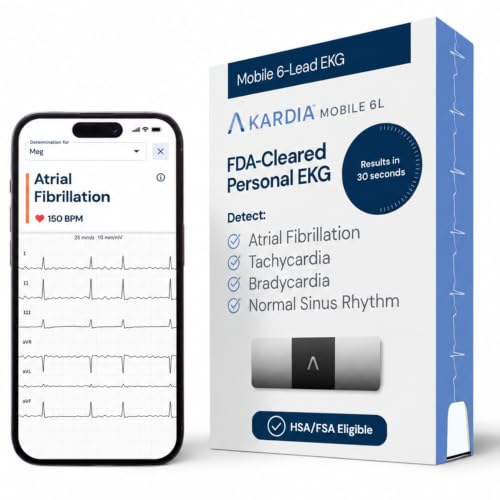
- Six-lead EKG in about 30 seconds
- FDA-cleared rhythm determinations
- Compact and membership-free for core results
Best For: Portable EKG checks and detailed rhythm information
Everyday Training Simplicity

- Real-time heart rate and HRV data
- Up to one year of replaceable-battery life
- Machine-washable strap with 3 ATM rating
Best For: Garmin-connected family workouts
Comfortable Multi-Device Workouts

- Soft, breathable armband design
- Pairs with up to three Bluetooth devices
- 38 hours of use per charge
Best For: Comfort-focused sports and multi-device workouts
Advanced Performance Tracking

- Adds running dynamics and workout recording
- Supports indoor, daily, and swim data
- Rechargeable battery lasts up to two months
Best For: Data-driven Garmin athletes and runners
Best Armband Pick

- Comfortable wrist-free armband design
- Dual Bluetooth and ANT+ connectivity
- Includes swim-goggle clip and session recording
Best For: Flexible workout tracking across apps and activities
Best Smartwatch Value
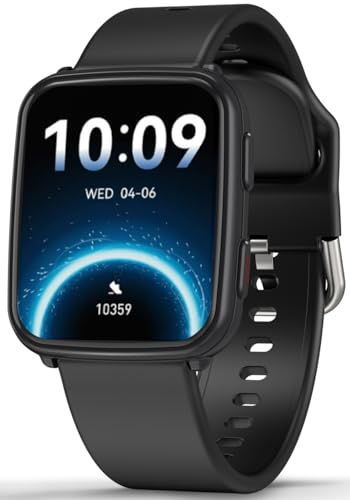
- 24/7 heart rate and wellness tracking
- 120+ sport modes and sleep monitoring
- Notifications, reminders, and up to 7-day battery
Best For: Everyday family wellness and activity tracking
Best Training Chest Strap

- ECG chest sensor for real-time training data
- Bluetooth and ANT+ with three Bluetooth connections
- Rechargeable battery rated for 100+ active hours
Best For: Structured workouts and performance-focused training
Top Long-Life Pick
POWR LABS Bluetooth ANT+ Chest Strap
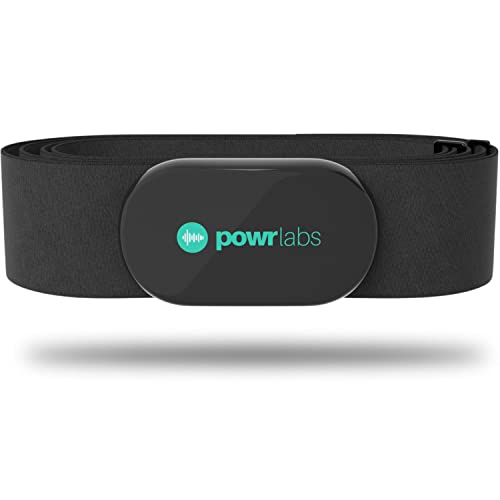
- Dual Bluetooth and ANT+ connectivity
- 400+ hour replaceable-battery life
- Adjustable, soft strap with IPX67 resistance
Best For: Families sharing multiple fitness devices
Best Feedback Features
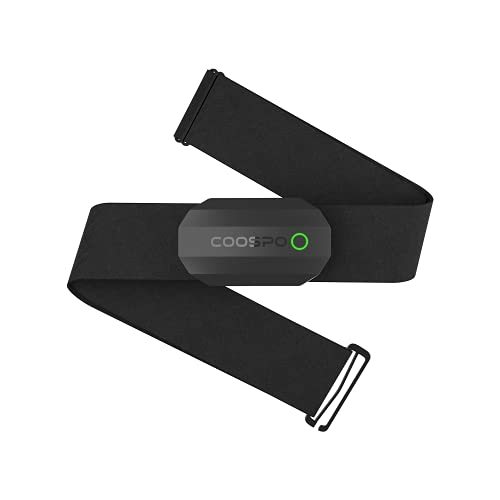
- Bluetooth 4.0 and ANT+ connectivity
- LED and ringtone status reminders
- 300-hour replaceable CR2032 battery
Best For: Families wanting clear connection feedback
Best Battery Balance
GEOID HS500 Heart Rate Monitor

- 800-hour replaceable-battery life
- ANT+ and Bluetooth compatibility
- Automatic activation with IP67 protection
Best For: Families using varied gym and outdoor equipment
Detailed Heart Insight – KardiaMobile 6L
For families comparing family heart rate monitors, the KardiaMobile 6L is the option focused on recording a detailed, medical-grade six-lead EKG rather than tracking workout performance. It provides results in about 30 seconds through a compatible smartphone or tablet, with no membership required for its core rhythm determinations.
Best For: Families seeking portable EKG checks and detailed heart-rhythm information.
Pros:
- Records a six-lead EKG and provides FDA-cleared determinations for AFib, bradycardia, tachycardia, and normal sinus rhythm.
- Works with most compatible smartphones and tablets through Bluetooth, without Wi-Fi, cords, or a PC.
- Compact, lightweight design is easy to carry and is HSA/FSA eligible.
- Does not require a membership for the app’s listed rhythm results.
Cons:
- It does not check for heart attacks or replace regular medical checkups.
- It is not tested or recommended for use with pacemakers or ICDs.
- Requires a compatible smartphone or tablet.
The KardiaMobile 6L stands out when the household priority is occasional, more detailed rhythm information. It is not a general-purpose exercise monitor, so shoppers should consider another category for continuous workout tracking.
Everyday Training Simplicity – Garmin HRM 200
The Garmin HRM 200 is a practical choice among family heart rate monitors for households that already use Garmin watches, cycling computers, fitness equipment, or compatible apps. Its strap sends real-time heart rate and heart rate variability data while keeping maintenance straightforward.
Best For: Garmin users who want a dependable strap-based monitor for workouts.
Pros:
- Transmits real-time heart rate and HRV data to compatible Garmin devices, equipment, apps, and smartphones.
- Available in two strap sizes, including XS–S and M–XL, for a more tailored fit.
- Offers up to one year of battery life with a user-replaceable battery.
- Machine-washable strap and 3 ATM water rating support easier upkeep.
Cons:
- Its feature set depends on compatible devices or apps.
- The listed M–XL version may not suit every family member.
- It is designed primarily for connected workout data rather than standalone readings.
With long battery life, a washable strap, and broad Garmin compatibility, the HRM 200 is a sensible shared-household fitness accessory. Check device compatibility and sizing before buying for multiple users.
Comfortable Multi-Device Workouts – COROS Heart Rate Monitor
For families seeking family heart rate monitors that are comfortable during sports, the COROS Heart Rate Monitor uses an armband design instead of a traditional chest strap. It connects by Bluetooth to up to three devices at once and automatically powers on when worn.
Best For: Multi-device sports users who prefer a soft, breathable armband.
Pros:
- Soft, breathable fabric band is designed for comfortable sports and activity use.
- Can pair with up to three compatible devices, including watches, phones, trainers, treadmills, and rowing machines.
- Wear detection automatically powers the monitor on and off based on use.
- Provides up to 38 hours of operation or 80 days of standby per charge.
Cons:
- Connects via Bluetooth only and is not compatible with ANT+.
- It is intended for sports and activities, not daily heart-rate tracking.
- The large band fits 9.4 to 16.9-inch arms, so sizing should be checked carefully.
The COROS monitor is a flexible option for families sharing workout equipment or devices, especially when an armband feels more comfortable than a chest strap. Its Bluetooth-only design may limit compatibility with some setups.
Advanced Performance Tracking – Garmin HRM 600
The Garmin HRM 600 is a performance-oriented pick among family heart rate monitors, offering real-time heart rate and HRV data plus expanded running metrics. It can also record activities when a user cannot wear a watch and sync the results to Garmin Connect.
Best For: Data-focused runners, swimmers, and athletes using Garmin devices.
Pros:
- Captures heart rate and HRV data along with running dynamics such as stride length and vertical oscillation when paired with a compatible smartwatch.
- Records workouts during activities where a watch is impractical, then syncs data to Garmin Connect.
- Tracks selected daily metrics and provides pace and distance for compatible indoor track and treadmill runs.
- Stores heart rate data during swims and offers up to two months of rechargeable-battery life.
Cons:
- Many advanced features require a compatible Garmin smartwatch or app.
- Its performance-focused feature set may be more than casual users need.
- The listed M–XL strap size may not fit every family member.
The HRM 600 is the most comprehensive fitness monitor in this group for households focused on training data. Its value is highest for Garmin users who will use the extra running, indoor-workout, daily, and swim features.
Best Armband Pick – Polar Verity Sense
Polar Verity Sense - Optical Heart Rate Monitor Armband - ANT+, Dual Bluetooth, Black, S-L
Check Price On AmazonFor families comparing family heart rate monitors, the Polar Verity Sense is a compact armband sensor designed for comfortable, flexible workout tracking. It broadcasts live heart rate to compatible devices or records sessions for later transfer.
Best For: Families who want a lightweight, wrist-free monitor that works with phones, tablets, fitness equipment, apps, or swim goggles.
Pros:
- Comfortable upper- or lower-arm placement keeps the wrist free.
- Supports dual Bluetooth connections and unlimited ANT+ connections.
- Includes a swimming goggle clip and records sessions for later syncing.
- Small, lightweight design weighs only 19 g.
Cons:
- It requires a compatible connected device or app for live viewing.
- It is an optical sensor rather than a smartwatch with a built-in display.
The Verity Sense is a versatile choice for households sharing training devices or using different fitness apps. Its multiple wearing options and connectivity support make it especially practical for varied activities.
Best Smartwatch Value – MorePro Fitness Tracker
For families seeking family heart rate monitors with broader everyday features, the MorePro Fitness Tracker combines 24/7 heart rate monitoring with activity, sleep, blood oxygen, and lifestyle tools. It is designed for Android and iOS smartphones and is not intended for medical use.
Best For: Families wanting an all-day wrist tracker with workout modes, notifications, sleep tracking, and practical smart features.
Pros:
- Offers 24/7 heart rate monitoring and on-demand blood oxygen checks.
- Tracks sleep, steps, distance, calories, and workouts across 120+ sport modes.
- Includes call, SMS, and app notifications plus weather and music controls.
- Provides up to 7 days of normal-use battery life and IP68 water resistance.
Cons:
- Health readings are for general wellness and are not for medical use.
- Requires an Android 7.0+ or iOS 13.0+ smartphone and is not compatible with PCs or tablets.
- Its many features may be more than needed for simple heart rate tracking.
The MorePro is the most feature-rich option here for families who want one wearable for exercise and daily routines. Choose it when notifications, sleep data, and smartwatch tools matter alongside heart rate tracking.
Best Training Chest Strap – Wahoo TRACKR HEART RATE
For families comparing family heart rate monitors for serious workouts, the Wahoo TRACKR uses an ECG chest sensor to provide real-time data during training. Bluetooth and ANT+ support make it suitable for phones, fitness equipment, and popular training apps.
Best For: Families who prioritize accurate workout data, a secure chest-strap fit, and long rechargeable battery life.
Pros:
- ECG chest sensor provides precise real-time heart rate data.
- Supports Bluetooth, ANT+, and up to three simultaneous Bluetooth connections.
- Rechargeable battery offers over 100 hours of active use according to the product notes.
- Soft, secure strap and IPX7 protection suit intense exercise.
Cons:
- A chest strap may be less convenient for casual, all-day wear than a smartwatch.
- It is primarily designed to connect with other devices rather than provide an on-device display.
- The one-size strap may not offer the same fit customization as some alternatives.
The TRACKR is the performance-focused pick in this group. Its ECG sensing, secure fit, broad connectivity, and rechargeable battery make it a strong option for structured training sessions.
Top Long-Life Pick – POWR LABS Bluetooth ANT+ Chest Strap
For families comparing family heart rate monitors, the POWR LABS chest strap stands out for broad device compatibility and an exceptionally long stated battery life. Its dual Bluetooth and ANT+ connectivity supports phones, watches, cycling computers, Peloton, Garmin, Wahoo, Polar, and many fitness apps.
Best For: Families who want one versatile monitor for multiple fitness devices and frequent training.
Pros:
- Dual Bluetooth and ANT+ connectivity works with many fitness platforms.
- Stated 400+ hour battery life with a replaceable battery included.
- Soft, seamless strap adjusts across a broad 24–61-inch range.
- IPX67 sweatproof and water-resistant construction.
Cons:
- The sensor must be worn before pairing.
- Chest straps may be less convenient than wrist-based monitors for some users.
Choose this model if flexible connectivity, long intervals between battery changes, and an adjustable strap matter more than built-in display features.
Best Feedback Features – COOSPO H808S Chest Strap
The COOSPO H808S is a practical choice for families seeking family heart rate monitors with dual-mode wireless connectivity and straightforward status feedback. It connects through Bluetooth 4.0 or ANT+ and supports sports watches, bike computers, smartphones, Peloton, Strava, Zwift, and other listed apps.
Best For: Families who appreciate connection indicators and want a monitor for varied indoor and outdoor workouts.
Pros:
- Uses both Bluetooth 4.0 and ANT+ transmission.
- Compatible with numerous fitness apps and training devices.
- LED light and ringtone indicate operating status.
- Replaceable CR2032 battery provides a stated 300-hour life.
Cons:
- The electrode zones should be moistened before use.
- The manufacturer recommends replacing the strap every six months or 300 washes.
- Users should pair through the fitness app rather than the phone’s Bluetooth menu.
Its reminders and pairing guidance can be helpful when several family members use the same type of monitor, though the strap requires more routine care than some alternatives.
Best Battery Balance – GEOID HS500 Heart Rate Monitor
The GEOID HS500 offers a useful balance for families shopping for family heart rate monitors: dual ANT+/Bluetooth compatibility, automatic activation when worn, and a stated 800-hour battery life. It works with smartphones, tablets, sports watches, bike computers, treadmills, and several training apps.
Best For: Families who want long battery life, automatic wake-up, and compatibility with both gym and outdoor equipment.
Pros:
- Supports both ANT+ and Bluetooth connections.
- Stated 800-hour battery life with a replaceable CR2032 battery.
- Automatically turns on when properly worn and wakes in under one second.
- IP67 waterproof design and a one-year limited warranty.
Cons:
- Swimming is not recommended.
- Bluetooth pairing should be completed inside the app rather than directly through phone settings.
- The front indicator light turns off after 10 flashes.
With its long stated runtime and broad equipment support, the HS500 is a strong everyday option for households rotating between running, cycling, gym equipment, and app-based workouts.
How We Picked the Best Family Heart Rate Monitors
We focused on the features that matter most when several people may use heart rate technology for different purposes. Our selection considers sensor type, measurement approach, comfort, battery life, water resistance, wireless compatibility, app support, and overall versatility. We included options for exercise tracking, continuous wellness monitoring, cycling and gym equipment, and users who want more medically oriented heart data.
Because heart rate monitors vary significantly in purpose, we did not treat every device as interchangeable. ECG monitors can provide different information from optical sensors or chest straps, and consumer wellness features should not be considered a substitute for medical advice or diagnosis.
Quick Comparison
| Monitor type | Best suited for | Key advantage |
|---|---|---|
| Portable ECG | Users seeking spot-check heart readings | More detailed electrical heart data |
| Chest strap | Training, cycling, and gym equipment | Responsive readings during exercise |
| Optical armband | Comfort-focused workouts | Less restrictive than a chest strap |
| Fitness tracker or smartwatch | Everyday wellness tracking | Heart rate plus activity and sleep features |
Key Buying Factors for Family Heart Rate Monitors
Sensor Type and Intended Use
Chest straps generally suit serious exercise because they sit close to the heart and can respond quickly to changing intensity. Optical armbands and wrist-based trackers are often easier to wear throughout the day. An ECG device is better for users who specifically want on-demand electrical heart readings, rather than just training data.
Compatibility
Check whether the monitor supports Bluetooth, ANT+, or both. Bluetooth is useful for phones and many fitness apps, while ANT+ works with numerous bike computers, watches, treadmills, and other training equipment. If multiple family members use different devices, dual-protocol support can provide more flexibility.
Comfort, Fit, and Durability
A monitor is only useful if people will wear it consistently. Look for adjustable straps, a suitable sensor placement, sweat resistance, and a design that matches the user’s activity. Water resistance and washable or replaceable straps can also make a difference in a busy household.
Battery and Maintenance
Compare rechargeable and replaceable-battery designs. Long battery life reduces charging interruptions, while rechargeable models may be more convenient for frequent users. Keep sensor contacts clean and follow the manufacturer’s fitting instructions to improve reading reliability.
Who Should Buy Which Family Heart Rate Monitors?
Choose a portable ECG monitor for someone who prioritizes spot-check heart readings and wants a more specialized device. Pick a chest strap for runners, cyclists, athletes, or anyone connecting heart data to gym equipment. An optical armband is a strong middle ground for users who want workout accuracy without wearing a chest strap.
For households that want heart rate data alongside steps, sleep, blood oxygen, or general activity metrics, a fitness tracker or smartwatch may be the most practical choice. If several people use different phones and training devices, prioritize broad Bluetooth and ANT+ compatibility. Finally, anyone concerned about symptoms or abnormal readings should discuss the appropriate device and results with a qualified healthcare professional.