The best heart rate monitors for home use make it easier to track workout intensity, resting pulse, and changes worth discussing with a healthcare professional. The right option depends on whether you prioritize exercise accuracy, all-day comfort, portability, or heart-rhythm readings.
Our roundup includes reliable chest straps, optical armbands, fingertip pulse oximeters, and FDA-cleared-style personal EKG devices designed for different monitoring goals. Use the guide below to narrow the choices by features, connectivity, and intended use.
Best 10 Heart Rate Monitors for Home Use Picks for 2026
Most Accurate Chest Strap
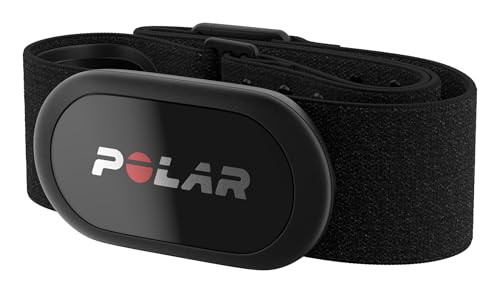
- Highly accurate heart rate sensing
- Bluetooth, ANT+, and 5 kHz connectivity
- Waterproof with up to 400-hour battery life
Best For: Data-focused home workouts and broad device compatibility
Best for Training Metrics

- Tracks real-time heart rate and HRV
- Adds running dynamics with compatible Garmin devices
- Records workouts and lasts up to two months per charge
Best For: Garmin-based performance training at home
Best Wrist-Free Option

- Wear it on the arm or swimming goggles
- Supports dual Bluetooth and ANT+
- Records workouts or broadcasts live heart rate
Best For: Comfortable, versatile home and swim workouts
Best Simple Garmin Strap

- Provides real-time heart rate and HRV
- Up to one year of replaceable-battery life
- Machine-washable strap with 3 ATM water rating
Best For: Straightforward Garmin-connected home workouts
Best Chest-Strap Pick
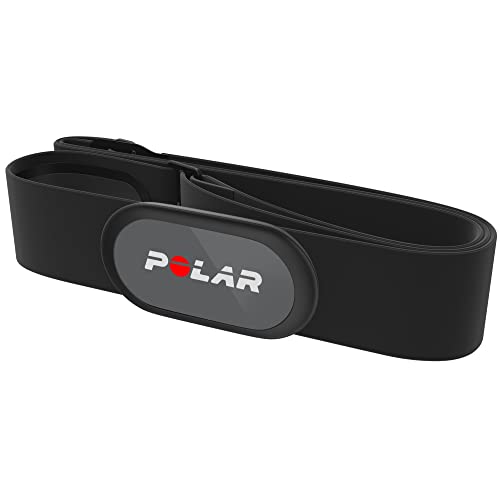
- High-accuracy chest-strap tracking
- Works with compatible equipment and apps
- Up to 400 hours of battery life
Best For: Users wanting a reliable, app-compatible chest strap
Best for Rhythm Checks
KardiaMobile 1-Lead EKG Monitor

- Records a single-lead EKG in 30 seconds
- Detects several listed rhythm results
- Pocket-sized and FDA-cleared
Best For: Users seeking quick, portable heart-rhythm spot checks
Best Strap-Free Workout Option

- Optical armband avoids a chest strap
- Bluetooth and ANT+ connectivity
- Tracks heart rate, calories, and workout time
Best For: Users wanting comfortable app-connected workout tracking
Advanced Heart Rhythm Tracking

- Six-lead EKG in about 30 seconds
- One year of KardiaCare included
- Portable Bluetooth smartphone design
Best For: Detailed rhythm checks with optional cardiologist review
Simple Oxygen and Pulse Checks

- Shows pulse rate and SpO2
- Large OLED display with waveform bar
- Batteries and lanyard included
Best For: Quick home, workout, and outdoor spot checks
Membership-Free EKG Monitoring
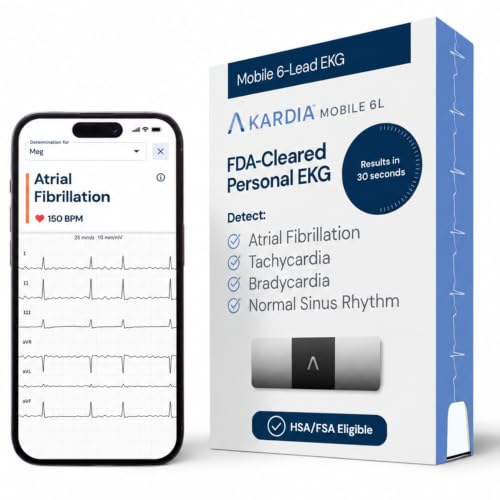
- Six-lead EKG results in about 30 seconds
- Core app readings need no membership
- Compact Bluetooth smartphone connectivity
Best For: Portable EKG checks without a required subscription
Most Accurate Chest Strap – Polar H10
For shoppers comparing heart rate monitors for home use, the Polar H10 is a strong chest-strap option when measurement precision and broad compatibility matter. It connects through Bluetooth, ANT+, and 5 kHz, and can maintain multiple connections for use with compatible equipment, phones, tablets, and computers.
Best For: Home users who prioritize highly precise readings, waterproofing, and wide device compatibility.
Pros:
- Recognized by Polar as its most accurate heart rate sensor.
- Supports Bluetooth, ANT+, and 5 kHz connections, including simultaneous Bluetooth connections.
- Waterproof and includes internal memory for multiple hours of data.
- Battery life is rated at up to 400 hours.
Cons:
- Chest-strap design may be less convenient than an armband for some users.
- Requires a CR2025 button-cell battery.
- Listed size is M–XXL, so fit options may be limited for smaller users.
The H10 is a practical pick for structured indoor workouts, especially if you already use compatible fitness equipment or apps. Its accuracy, connectivity options, and long battery life make it particularly appealing for data-focused home training.
Best for Training Metrics – Garmin HRM 600
The Garmin HRM 600 suits shoppers seeking heart rate monitors for home use that provide more than basic pulse data. It sends real-time heart rate and HRV information to compatible Garmin devices, equipment, and apps, while also recording workouts when wearing a watch is impractical.
Best For: Garmin users and performance athletes who want heart rate, HRV, running dynamics, and stored workout data.
Pros:
- Transmits real-time heart rate and HRV data to compatible devices and apps.
- Supports running metrics such as stride length, vertical oscillation, and ground contact time balance with a compatible smartwatch.
- Can record workouts during activities where a watch cannot be worn.
- Rechargeable battery provides up to two months of use.
Cons:
- Some running-dynamics features require a compatible Garmin smartwatch.
- Its advanced feature set may be unnecessary for users seeking simple heart rate tracking.
- Available strap sizing is listed as XS–S and M–XL, requiring careful fit selection.
Choose the HRM 600 if you want a training-oriented sensor that can support treadmill sessions, indoor-track runs, swimming data storage, and broader Garmin performance metrics. It is more specialized than a basic monitor but offers useful flexibility for serious home training.
Best Wrist-Free Option – Polar Verity Sense
Polar Verity Sense - Optical Heart Rate Monitor Armband - ANT+, Dual Bluetooth, Black, S-L
Check Price On AmazonThe Polar Verity Sense is a flexible choice among heart rate monitors for home use because it avoids both wrist wear and a chest strap. The lightweight optical sensor can be worn on the upper or lower arm, clipped to swimming goggles, or used under close-fitting clothing.
Best For: Users who want a comfortable, compact monitor for varied workouts and swimming.
Pros:
- Lightweight 19-gram design keeps the wrist free.
- Offers dual Bluetooth channels and unlimited ANT+ connections.
- Can broadcast live heart rate or record sessions for later transfer.
- Includes an armband and swimming goggle clip.
Cons:
- Optical readings depend on placing the sensor snugly against the skin.
- Does not provide a built-in display for viewing heart rate directly.
- Its listed S–L size range may not suit every user.
The Verity Sense is a good middle ground between convenience and versatility. Its one-button operation, multiple wearing positions, and swimming accessories make it well suited to home workouts that vary in intensity and activity type.
Best Simple Garmin Strap – Garmin HRM 200
For straightforward heart rate monitors for home use, the Garmin HRM 200 delivers real-time heart rate and HRV data to compatible Garmin devices, fitness equipment, smartphones, and apps. Its machine-washable strap and user-replaceable battery emphasize practical day-to-day use.
Best For: Garmin users who want dependable heart rate and HRV tracking without the advanced feature set of a higher-end strap.
Pros:
- Transmits heart rate and HRV data in real time.
- Works with compatible Garmin watches, cycling computers, equipment, apps, and smartphones.
- Offers up to one year of battery life with a replaceable battery.
- Machine-washable strap and 3 ATM water rating support regular use.
Cons:
- Requires compatible devices or apps to view transmitted data.
- Provides fewer specialized training features than the Garmin HRM 600.
- Chest-strap wear may not appeal to users who prefer an armband.
The HRM 200 is a sensible option when you want Garmin compatibility, long battery life, and easy maintenance. It focuses on core monitoring features, making it suitable for routine indoor workouts and connected home fitness equipment.
Best Chest-Strap Pick – Polar H9 Heart Rate Sensor
Polar H9 Heart Rate Sensor – ANT + / Bluetooth - Waterproof HR Monitor with Soft Chest Strap, M-XXL
Check Price On AmazonFor home users who want dependable heart rate monitors for home use, the Polar H9 is a straightforward chest-strap sensor built for everyday tracking. Its high-accuracy sensor works with compatible equipment and popular smartphone apps, making it flexible for workouts and routine monitoring.
Best For: Users who prefer a traditional chest strap with broad app and equipment compatibility.
Pros:
- Designed for high-accuracy heart rate tracking.
- Works with compatible equipment, smartphones, tablets, laptops, and desktops.
- Offers up to 400 hours of battery life with the included CR2025 battery.
- Includes a soft strap and a two-year manufacturer warranty.
Cons:
- Requires wearing a chest strap.
- Uses a replaceable CR2025 button-cell battery.
- Medium-to-XXL sizing may not suit every user; the listed range is 26–36 inches.
The Polar H9 is a practical choice when accuracy, long battery life, and compatibility matter more than having a display or a completely strap-free design.
Best for Rhythm Checks – KardiaMobile 1-Lead EKG Monitor
KardiaMobile takes a different approach to heart rate monitors for home use by recording a single-lead EKG rather than continuously tracking workout data. Place your fingers on its sensors while using the Kardia app to capture a reading in about 30 seconds and review the result on a compatible smartphone or tablet.
Best For: Home users who want quick, portable heart-rhythm readings and shareable EKG results.
Pros:
- Captures a single-lead EKG in approximately 30 seconds.
- Can identify Normal Sinus Rhythm, AFib, tachycardia, and bradycardia.
- Compact, under-one-ounce design is convenient for home or travel.
- Works without Bluetooth, Wi-Fi, cords, or a computer and is FDA-cleared.
Cons:
- Requires a compatible smartphone or tablet and the Kardia app.
- It is a spot-check EKG device, not a continuous workout heart-rate monitor.
- Additional KardiaCare features and doctor reviews require a paid subscription.
Choose KardiaMobile when the priority is checking heart rhythm and sending an EKG to a doctor, rather than tracking calories or workout duration in real time.
Best Strap-Free Workout Option – Wahoo TICKR FIT Armband
The Wahoo TICKR FIT is a comfortable alternative for shoppers comparing heart rate monitors for home use and exercise. Its optical armband tracks heart rate, calories, and workout time in real time, while Bluetooth and ANT+ support lets it connect with smartphones, GPS devices, and compatible training apps.
Best For: Workout users who want an optical armband instead of a chest strap.
Pros:
- Uses an optical sensor with no chest strap.
- Tracks heart rate, calories, and workout duration in real time.
- Supports both Bluetooth Smart and ANT+ connections.
- Includes small and large adjustable bands and has an IPX7 rating.
Cons:
- Battery life is listed at about 30–35 hours, shorter than the Polar H9’s stated battery life.
- Requires a compatible app or device for viewing tracked metrics.
- Designed primarily for workouts rather than EKG-style rhythm checks.
The TICKR FIT is a strong fit for app-based exercise tracking when you want a secure arm-worn design, rechargeable power, and broad wireless connectivity.
Advanced Heart Rhythm Tracking – KardiaMobile 6L Max EKG
For shoppers comparing heart rate monitors for home use, the KardiaMobile 6L Max is designed for detailed heart-rhythm checks rather than basic pulse tracking. It records a six-lead EKG in about 30 seconds and connects to compatible smartphones or tablets through Bluetooth.
Best For: Adults who want detailed, app-connected EKG readings and optional cardiologist review between appointments.
Pros:
- Records a medical-grade, six-lead EKG with FDA-cleared rhythm determinations.
- Can identify several rhythm patterns, including AFib, bradycardia, tachycardia, PVCs, SVE, and wide QRS.
- Includes one year of KardiaCare with four EKG reviews by board-certified cardiologists.
- Compact 24-gram design supports portable use and unlimited recordings.
Cons:
- The six-lead EKG requires a KardiaCare membership; renewal occurs after the first year unless canceled.
- It is not tested or recommended for use with pacemakers or ICDs.
- It does not check for heart attacks or replace medical checkups.
The 6L Max is a feature-rich choice when rhythm detail and access to optional professional review matter more than simple pulse-rate readings. Check device compatibility before buying and seek medical attention for concerning symptoms.
Simple Oxygen and Pulse Checks – Fingertip Pulse Oximeter
This fingertip pulse oximeter is a straightforward option among heart rate monitors for home use, displaying pulse rate alongside blood oxygen saturation. Its one-button operation, large OLED digits, and included batteries make it ready for quick spot checks.
Best For: Home users, fitness enthusiasts, and outdoor travelers who want an easy-to-read pulse and SpO2 monitor.
Pros:
- Displays SpO2, pulse rate, signal strength, and a waveform bar graph.
- Compact design and one-button operation are easy to use.
- Includes two AAA batteries, a lanyard, and an instruction manual.
- Auto power-off helps preserve battery life.
Cons:
- It provides spot readings rather than the detailed EKG information of a heart-rhythm monitor.
- The listed SpO2 measuring range is 70% to 100%.
- Battery life is listed at approximately 30 hours.
This model makes sense for convenient pulse and oxygen checks at home or on the go. Its display and included accessories keep the setup simple, though shoppers seeking arrhythmia detection should consider an EKG-focused device instead.
Membership-Free EKG Monitoring – KardiaMobile 6L EKG
The KardiaMobile 6L is a strong option for shoppers seeking heart rate monitors for home use with more detail than a basic pulse sensor. It records a six-lead EKG in about 30 seconds, then displays results through the Kardia app on a compatible smartphone or tablet without requiring a membership.
Best For: Users who want portable, medical-grade EKG readings and basic rhythm determinations without a required subscription.
Pros:
- Provides FDA-cleared six-lead EKG results in about 30 seconds.
- No membership is required to view app results for AFib, bradycardia, tachycardia, and normal sinus rhythm.
- Compact 24-gram monitor connects to compatible devices through Bluetooth.
- HSA/FSA eligible and designed for use without Wi-Fi, cords, or a computer.
Cons:
- It does not check for heart attacks or replace regular health checkups.
- Compatibility should be verified because use requires a supported smartphone or tablet.
- It is not tested or recommended for people with pacemakers or ICDs.
Compared with subscription-based EKG packages, this KardiaMobile 6L keeps core app readings available without a membership. It is best suited to users who value portable rhythm information and can use a compatible mobile device.
How We Picked the Best Heart Rate Monitors for Home Use
We evaluated these devices by considering sensor type, measurement purpose, connectivity, comfort, portability, water resistance, app compatibility, and ease of use. Chest straps generally provide highly responsive readings during exercise, while optical armbands offer a less restrictive fit. Fingertip pulse oximeters are convenient for quick spot checks, and personal EKG monitors are designed to capture electrical heart-rhythm data rather than simply track pulse.
We also considered whether each monitor supports common Bluetooth or ANT+ connections, works with popular fitness equipment or apps, and offers practical features for home workouts and routine checks. No consumer monitor replaces professional medical advice or emergency care.
Quick Comparison
| Monitor type | Best for | Main advantage |
|---|---|---|
| Chest strap | Training accuracy | Fast, responsive readings during movement |
| Optical armband | Comfortable exercise tracking | Less restrictive than a chest strap |
| Personal EKG | Rhythm checks | Records electrical heart activity for review |
| Pulse oximeter | Quick spot checks | Shows pulse and blood oxygen saturation |
Key Buying Factors for Heart Rate Monitors for Home Use
Choose the Right Sensor Style
A chest strap is usually the strongest choice for interval training, cycling, rowing, and treadmill workouts where rapid changes matter. An armband may be easier to put on and more comfortable for longer sessions. A fingertip monitor is better suited to brief readings while seated, not continuous exercise tracking.
Check Compatibility and Connectivity
Confirm that the monitor works with your phone, smartwatch, fitness machine, or preferred training app. Bluetooth is common for smartphones, while ANT+ is useful with compatible bike computers and gym equipment. Some devices support two Bluetooth connections, which can help you pair with multiple devices at once.
Separate Heart Rate Tracking from EKG Monitoring
Standard heart rate monitors measure pulse, often continuously or during exercise. Kardia-style devices record an EKG and can help users capture rhythm information for sharing with a clinician. They are not substitutes for diagnosis, emergency evaluation, or prescribed monitoring equipment.
Consider Comfort, Maintenance, and Ongoing Costs
Look for an adjustable fit, replaceable or rechargeable batteries, washable straps, and suitable water resistance. Also check whether advanced app features require a subscription, particularly with personal EKG products. For occasional readings, a simpler device may offer better value.
Who Should Buy Which Heart Rate Monitors for Home Use?
- For serious training: Choose a dependable chest strap such as the Polar H10, Garmin HRM 600, Garmin HRM 200, or Polar H9.
- For comfortable workouts: Consider an optical armband such as the Polar Verity Sense or Wahoo TICKR FIT.
- For rhythm-focused checks: Look at a KardiaMobile 1-Lead or 6L model, depending on the amount of EKG detail you need.
- For quick pulse and oxygen readings: A fingertip pulse oximeter is the most straightforward option.
- For broad home coverage: Pair an exercise-focused monitor with a separate EKG device only if both uses are important to you.