Travel can disrupt your usual training and health routines, but a compact heart monitor makes it easier to track effort, recovery, and vital readings on the go.
This roundup compares ten portable options, from accurate chest straps and comfortable armbands to fingertip oximeters and multi-lead ECG devices, so you can choose the right fit for your itinerary and goals.
Best 10 Heart Rate Monitors for Travel Picks for 2026
Most Accurate
- Highly accurate heart rate measurement
- Bluetooth, ANT+, and 5 kHz connectivity
- Waterproof with up to 400-hour battery life
Best For: Travelers prioritizing accuracy and connection flexibility
Low-Maintenance Pick

- Up to one year of battery life
- Machine-washable strap with 3 ATM water rating
- Transmits heart rate and HRV data
Best For: Garmin users wanting a durable travel-ready strap
Most Comfortable

- Lightweight optical armband design
- Dual Bluetooth and ANT+ connectivity
- Live broadcasting or onboard workout recording
Best For: Travelers who prefer a compact, wrist-free monitor
Best for Training Data

- Records workouts when a watch cannot be worn
- Adds running dynamics and swim data
- Rechargeable battery with up to two months of life
Best For: Data-driven athletes traveling with Garmin equipment
Best for Active Travelers
COROS Armband Heart Rate Monitor

- Comfortable, breathable armband design
- Bluetooth connects with up to three devices
- 38 hours of operation per charge
Best For: Workout-focused travelers using COROS-compatible devices
Best for Altitude Trips
Zacurate 500 Series Pulse Oximeter

- Displays pulse and blood oxygen readings
- Results appear in about 10 seconds
- Includes batteries, cover, and lanyard
Best For: Hikers, skiers, and travelers wanting portable SpO2 and pulse checks
Best for Connected Training
- Bluetooth and ANT+ dual connectivity
- Compatible with apps, watches, and gym equipment
- Up to 300 hours with a replaceable battery
Best For: Travelers training across multiple fitness devices
Best Medical-Style Travel Pick
- Six-lead EKG with 30-second results
- No membership, Wi-Fi, or PC required
- Compact and HSA/FSA-eligible
Best For: Travelers seeking detailed rhythm checks on the go
Best for Active Travel

- ANT+ and Bluetooth compatibility
- Up to 800 hours of battery life
- IP67 waterproof for active workouts
Best For: Travelers tracking heart rate during exercise
Best Subscription-Free ECG Travel Option

- Records and stores six-channel ECGs
- No subscription or hidden app costs
- Works with phones and Windows or Mac PCs
Best For: Travelers wanting stored ECG records without a subscription
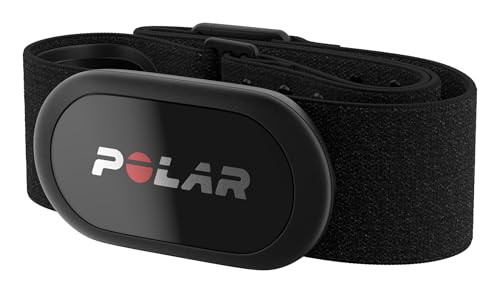
Most Accurate – Polar H10 Chest Strap
For travelers who prioritize measurement precision, the Polar H10 is a dependable choice among heart rate monitors for travel. Its chest strap supports Bluetooth, ANT+, and 5 kHz connections, while internal memory lets you record workouts without keeping a phone or watch connected.
Best For: Travelers seeking highly accurate readings, broad device compatibility, and waterproof workout tracking.
Pros:
- Recognized for precise heart rate measurement.
- Supports Bluetooth, ANT+, and 5 kHz connections, including simultaneous connections.
- Waterproof with internal memory for multiple hours of data.
- Battery lasts up to 400 hours.
Cons:
- Chest-strap design may be less convenient than an armband for some travelers.
- Uses a replaceable CR2025 button-cell battery rather than a rechargeable battery.
The H10 is a strong travel pick when accuracy and connectivity matter most. Its included battery and long runtime are practical for extended trips, although packing a replacement CR2025 is sensible.
Low-Maintenance Pick – Garmin HRM 200
The Garmin HRM 200 offers a straightforward option for heart rate monitors for travel, transmitting real-time heart rate and HRV data to compatible Garmin devices, fitness equipment, apps, and smartphones. Its machine-washable strap and user-replaceable battery simplify regular use on the road.
Best For: Garmin users who want a durable chest strap with long battery life and easy cleaning.
Pros:
- Transmits real-time heart rate and heart rate variability data.
- Compatible with Garmin smartwatches, cycling computers, fitness equipment, apps, and smartphones.
- Offers up to one year of battery life.
- Machine-washable strap and 3 ATM water rating support frequent use.
Cons:
- Its strongest compatibility is centered on compatible Garmin and app ecosystems.
- Battery is replaceable rather than rechargeable.
With a year of claimed battery life and a washable strap, the HRM 200 is well suited to travelers who want minimal maintenance. Confirm compatibility with your preferred watch or app before packing it.
Most Comfortable – Polar Verity Sense
Polar Verity Sense - Optical Heart Rate Monitor Armband - ANT+, Dual Bluetooth, Black, S-L
Check Price On AmazonThe Polar Verity Sense uses an optical sensor worn on the upper or lower arm, making it a comfortable alternative to chest straps for heart rate monitors for travel. Its compact design, simple one-button operation, and onboard recording make it easy to pack and use across different activities.
Best For: Travelers who prefer an unobtrusive armband and flexible Bluetooth or ANT+ connectivity.
Pros:
- Small, lightweight design that keeps the wrist free.
- Supports two simultaneous Bluetooth channels and limitless ANT+ connections.
- Can broadcast live heart rate or record sessions for later transfer.
- Includes a swimming goggle clip and charging unit.
Cons:
- Requires proper placement against the skin on the arm or goggles for accurate tracking.
- Armband fit is listed for sizes S–L.
The Verity Sense is an especially convenient travel companion when comfort and compact packing are priorities. Its multiple wearing options also make it more adaptable than a conventional chest strap.
Best for Training Data – Garmin HRM 600
The Garmin HRM 600 is designed for travelers who want more than basic heart rate tracking. In addition to real-time heart rate and HRV data, it records workouts when a watch cannot be worn and supports running dynamics, swim data, and direct syncing with the Garmin Connect smartphone app.
Best For: Data-focused athletes who train across running, swimming, team sports, and watch-free activities.
Pros:
- Records workouts and syncs heart rate, calories, speed, and distance to Garmin Connect.
- Provides running dynamics when paired with a compatible smartwatch.
- Stores heart rate data during swimming for later synchronization.
- Machine-washable strap with a rechargeable battery.
Cons:
- Battery life is up to two months, shorter than some replaceable-battery models.
- Several advanced metrics require a compatible Garmin smartwatch.
- May offer more training features than casual travelers need.
The HRM 600 is a compelling travel choice for athletes who want detailed records across varied activities. Its rechargeable design avoids carrying disposable batteries, but the full feature set depends on compatible Garmin equipment.
Best for Active Travelers – COROS Armband Heart Rate Monitor
For travelers who want heart rate monitors for travel that focus on workouts rather than all-day tracking, the COROS armband offers a comfortable alternative to a chest strap. It uses Bluetooth, supports up to three connected devices at once, and provides up to 38 hours of operating time per charge.
Best For: Workout-focused travelers using COROS watches, phones, indoor trainers, or compatible fitness equipment.
Pros:
- Soft, breathable armband sits flat and is designed for quick cleaning.
- Pairs with up to three devices simultaneously through Bluetooth.
- Wear detection powers the monitor on and off automatically.
- Provides 38 hours of operation or up to 80 days of standby time.
Cons:
- Bluetooth only; it does not support ANT+.
- Designed for sports and activities, not daily heart rate tracking.
- Large band fits arm sizes from 9.4 to 16.9 inches.
The COROS is a strong travel pick when comfort, automatic wear detection, and multi-device Bluetooth connectivity matter most. Remember to pack a suitable Type-C adapter, since the included charging cable does not include one.
Best for Altitude Trips – Zacurate 500 Series Pulse Oximeter
Although it is not a dedicated heart rate monitor, the Zacurate 500 Series is a compact option for travelers who want quick pulse-rate readings alongside blood oxygen measurements. It displays results in about 10 seconds and includes batteries, a protective silicone cover, and a lanyard.
Best For: Travelers, hikers, skiers, and mountain climbers who want portable pulse and SpO2 readings.
Pros:
- Measures pulse rate, pulse strength, and SpO2 on a large LED display.
- Reads SpO2 from 70% to 100% and pulse rates from 30 to 250 BPM.
- Includes two AAA batteries for immediate use.
- Silicone cover and lanyard make it easier to protect and carry.
Cons:
- Measures pulse rate intermittently rather than providing continuous workout monitoring.
- Intended for users ages 12 and above.
- Battery life is listed at approximately 30 hours.
The Zacurate makes sense for travel health kits where oxygen saturation is as important as pulse rate. Choose it as a compact spot-checking tool, not as a replacement for a wearable heart rate monitor during exercise.
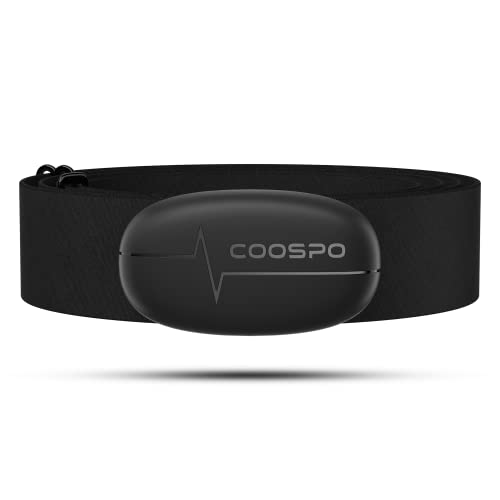
Best for Connected Training – COOSPO H6 Chest Strap
The COOSPO H6 is a practical choice for travelers who need heart rate monitors for travel that work across phones, sports watches, bike computers, and gym equipment. Its Bluetooth and ANT+ connectivity support a broad range of fitness apps and devices, while the replaceable battery provides up to 300 hours of use.
Best For: Cyclists, runners, and travelers training with multiple Bluetooth or ANT+ devices.
Pros:
- Supports both Bluetooth and ANT+ for broad device compatibility.
- Works with many fitness apps, sports watches, bike computers, and gym machines.
- Offers real-time heart rate data with stated accuracy of ±1 BPM.
- Provides up to 300 hours of battery life with a replaceable CR2032 battery.
Cons:
- The electrode areas should be moistened before use for stable transmission.
- It is IP67-rated for rain and sweat but should not be used for swimming or soaked.
- The sensor and strap should be separated after each workout.
For travelers carrying varied fitness gear, the H6 stands out for its dual wireless modes and wide compatibility. Its chest-strap format may take more setup than an armband, but the long battery life is convenient for extended trips.
Best Medical-Style Travel Pick – KardiaMobile 6L
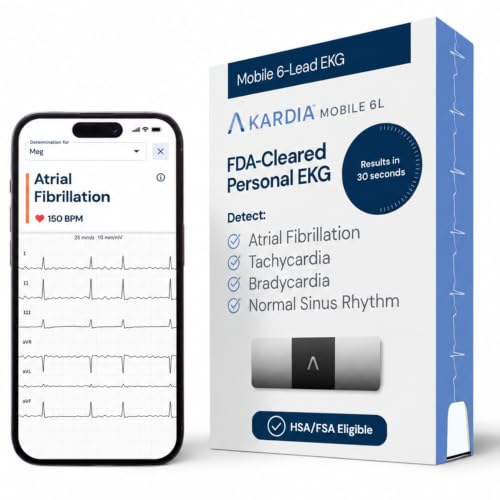
For travelers who want detailed heart data in a pocket-size device, the KardiaMobile 6L is a strong option among heart rate monitors for travel. It records a six-lead EKG in about 30 seconds, works through a compatible smartphone or tablet, and does not require a membership, Wi-Fi, cords, or a PC.
Best For: Travelers who want quick, detailed rhythm checks and FDA-cleared determinations from a compact monitor.
Pros:
- Records a medical-grade, six-lead EKG with results in about 30 seconds.
- Provides determinations for AFib, bradycardia, tachycardia, and normal sinus rhythm.
- Compact 24-gram design connects to compatible smartphones and tablets via Bluetooth.
- No membership is required, and the device is HSA/FSA-eligible.
Cons:
- Compatibility should be checked before travel, since the device works only with supported smartphones and tablets.
- It is not tested or recommended for people with pacemakers or ICDs.
- It does not check for heart attacks or replace medical checkups.
Its six-lead format makes this more informative than a basic exercise tracker, while the small size suits carry-on packing. Use it as an at-home or travel monitoring tool, not as a substitute for emergency care or professional evaluation.
Best for Active Travel – GEOID HS500 Chest Strap
For exercise-focused travelers, the GEOID HS500 is a practical choice among heart rate monitors for travel. This chest-strap sensor supports ANT+ and Bluetooth connections, pairs with numerous fitness apps and devices, and offers up to 800 hours of battery life.
Best For: Runners, cyclists, and fitness travelers who need continuous exercise heart-rate tracking across compatible apps and equipment.
Pros:
- Supports both ANT+ and Bluetooth connections with phones, watches, bike computers, treadmills, and fitness apps.
- Offers up to 800 hours of battery life from a replaceable CR2032 battery.
- IP67 waterproof design is suited to active workouts, though swimming is not recommended.
- LED indicators confirm readiness and connection, while the strap weighs about 56 grams with packaging.
Cons:
- It is designed for exercise tracking rather than six-lead ECG recordings or rhythm analysis.
- Bluetooth pairing should be completed through the app rather than directly through the phone’s Bluetooth settings.
- Swimming is not recommended.
The HS500 makes sense when your travel routine includes running, cycling, or gym sessions. Its long battery life reduces charging concerns, and dual-protocol support gives it flexibility across different fitness setups.
Best Subscription-Free ECG Travel Option – EMAY 6L Portable ECG
The EMAY 6L Portable ECG is worth considering for travelers who want to record ECG signals and view heart rate without a subscription. It connects to smartphones through Bluetooth or to a computer by USB, and its built-in rechargeable battery avoids reliance on disposable batteries during a trip.
Best For: Travelers who want stored six-channel ECG recordings with smartphone and computer access at home or on the road.
Pros:
- Records and stores ECG signals across six channels while displaying heart rate.
- No subscription or hidden app cost is required.
- Compatible with iOS and Android smartphones plus Windows and Mac computers.
- Uses a built-in rechargeable lithium battery and includes a USB cable.
Cons:
- At 85 grams and 4.7 by 2.2 by 0.7 inches, it is less pocket-friendly than the smallest travel monitors.
- The device is intended for over-the-counter use and is not a substitute for a hospital diagnostic ECG.
- Use is not recommended for people with implanted pacemakers.
With onboard storage, review tools, and both mobile and PC connectivity, the EMAY offers useful flexibility for organized health records. Its larger form and clinical-use limitations make it better for deliberate monitoring than quick fitness checks.
How We Picked the Best Heart Rate Monitors for Travel
We considered portability, measurement method, connectivity, battery life, water resistance, comfort, and compatibility with popular phones, watches, cycling computers, and fitness apps. We also separated everyday exercise tracking from devices designed for spot checks or ECG recording, since these products serve different purposes.
For travel, a useful monitor should be easy to pack, simple to pair, and dependable away from home. Chest straps typically provide responsive workout data, while armbands can be more comfortable for all-day or intermittent use. ECG devices and pulse oximeters are better suited to specific health checks than continuous training feedback.
Quick Comparison
| Type | Best For | What to Check |
|---|---|---|
| Chest strap | Training accuracy and low-latency readings | Fit, sensor compatibility, battery, water resistance |
| Optical armband | Comfort and flexible placement | Band security, Bluetooth or ANT+ support, charging |
| Pulse oximeter | Occasional oxygen and pulse checks | Display readability, portability, intended use |
| Portable ECG | Recording heart rhythm readings | Lead count, app requirements, medical guidance |
Key Buying Factors for Heart Rate Monitors for Travel
Choose the Right Sensor Style
Chest straps are usually the strongest choice for running, cycling, interval sessions, and other movement-heavy workouts. Optical armbands avoid the tight band around the torso and may be preferable when comfort matters more than maximum responsiveness. Fingertip devices and ECG monitors are not substitutes for workout heart-rate sensors.
Check Connectivity Before Packing
ANT+ is useful with many sports watches, bike computers, and gym equipment, while Bluetooth is convenient for phones and tablets. Dual-protocol models offer the most flexibility. Confirm whether your intended app supports the monitor and whether it can connect to multiple devices at once.
Consider Battery and Durability
Long battery life reduces the need for chargers during multi-day trips. Look for replaceable batteries if you prefer simple maintenance, or rechargeable models if you want fewer consumables. Water resistance is valuable for sweaty workouts, rain, and poolside use, but verify the stated rating before swimming.
Separate Fitness Tracking from Health Monitoring
ECG products can record electrical heart signals, while pulse oximeters measure oxygen saturation and pulse at a fingertip. These tools may support personal monitoring, but they do not diagnose conditions on their own. Seek medical advice for concerning symptoms or abnormal readings.
Who Should Buy Which Heart Rate Monitors for Travel?
Frequent runners, cyclists, and serious trainees: Choose a dependable chest strap with ANT+ and Bluetooth for responsive readings across multiple devices.
Comfort-focused travelers: An optical armband is a practical alternative when a chest strap feels restrictive or inconvenient.
Travelers wanting occasional spot checks: A fingertip pulse oximeter is compact and simple, but it is not intended for continuous workout tracking.
Users monitoring heart rhythm: Consider a portable ECG device with the lead configuration and app support you need, and use recorded results alongside professional medical guidance.