The best low-light telephoto camera lenses help you capture distant subjects with more detail when light levels drop. The right choice depends on more than reach: aperture, autofocus, stabilization, camera mount, and carrying comfort all affect real-world results.
This roundup spans bright portrait primes, versatile telephoto zooms, long-range wildlife lenses, and budget-friendly options for DSLR and mirrorless systems. Use the guide below to match your shooting style, camera body, and budget to the most suitable lens.
Best 10 Low-Light Telephoto Camera Lenses Picks for 2026
Bright-Aperture Manual Reach
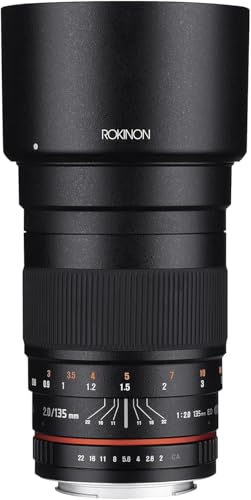
- Bright f/2.0 aperture for low-light shooting
- ED element and UMC optics
- Manual-focus 135mm prime for Canon EF
Best For: Portraits, video, and controlled low-light photography
Stabilized Zoom Flexibility

- 100-400mm range in a compact zoom
- Optical stabilization for handheld shooting
- Quiet autofocus and optional 800mm reach
Best For: Sony wildlife, sports, and distant-subject photography
Extreme Wildlife Reach

- 200-800mm range for distant subjects
- Optical stabilization and USM autofocus
- Supports Canon RF 1.4x and 2x extenders
Best For: Canon RF wildlife, nature, and outdoor sports
Lightweight APS-C Telephoto
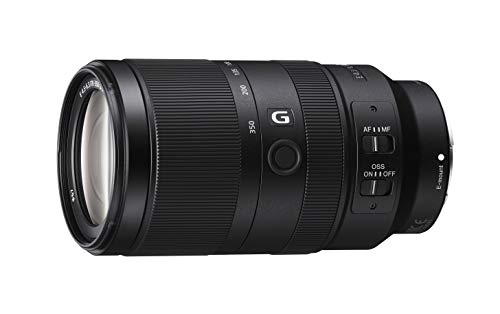
- 105-525mm full-frame-equivalent range
- Lightweight 22-ounce design
- Optical stabilization and quiet tracking AF
Best For: Portable Sony APS-C wildlife, travel, and sports shooting
Best Compact Zoom
Canon RF100-400mm F5.6-8 IS USM

- 100-400mm range for flexible telephoto framing
- Up to 5.5 stops of optical stabilization
- Quiet Nano USM autofocus
Best For: Canon EOS R users wanting a lightweight stabilized zoom
Best Fast Portrait Prime

- Bright f/1.8 aperture for dim conditions
- 85mm perspective for portraits
- STM autofocus with face and eye recognition
Best For: Nikon Z portrait and video shooters needing a bright prime
Best Budget DSLR Zoom

- 75-300mm telephoto zoom range
- Smoothing-focused zoom mechanism
- Lightweight 16.8-ounce design
Best For: Canon EF DSLR owners seeking an affordable telephoto zoom
Best Affordable RF Reach

- 75-300mm reach for distant subjects
- Servo AF and pupil detection
- No stabilization; f/4-5.6 aperture
Best For: Affordable Canon RF sports and wildlife shooting
Best Heavy-Duty Pick

- Four-times 75-300mm zoom range
- Super Spectra coating
- No stabilization; f/4-5.6 aperture
Best For: Occasional Canon DSLR telephoto shooting
Best Renewed Value

- 75-300mm telephoto zoom
- Optical stabilization listed in specifications
- 90-day limited warranty
Best For: Budget-conscious Canon SLR owners
Bright-Aperture Manual Reach – Rokinon 135mm F2.0
For photographers seeking low-light telephoto camera lenses, the Rokinon 135mm F2.0 stands out with its bright f/2.0 maximum aperture. Its fixed focal length, full-frame compatibility, and extra-low dispersion element make it a practical choice when image quality and light gathering matter more than autofocus or zoom flexibility.
Best For: Portraits, video, and low-light telephoto shooting with Canon EF cameras where manual focus is acceptable.
Pros:
- Bright f/2.0 maximum aperture for low-light work.
- Full-frame and APS-C compatibility, with an 18.8-degree full-frame angle of view.
- ED element and Ultra Multi-Coated optics help reduce chromatic aberration and support sharp images.
- 2.6-foot minimum focusing distance and nine-blade diaphragm.
Cons:
- Manual focus only.
- Fixed 135mm focal length offers no zoom flexibility.
- At 1.8 pounds, it is less lightweight than some compact telephoto options.
This lens is especially compelling when a wide aperture is the priority. Choose it for controlled shooting and creative subject isolation, but look elsewhere if fast autofocus or handheld versatility is essential.
Stabilized Zoom Flexibility – Sony FE 100-400mm
Sony FE 100-400mm F5.6-8 OSS | Compact, Lightweight FE 100–400mm Telephoto Zoom
Check Price On AmazonThe Sony FE 100-400mm F5.6-8 OSS gives Sony shooters a broad telephoto range in a compact zoom design. Among low-light telephoto camera lenses, its optical stabilization and quiet, precise autofocus are useful for handheld shooting, though its f/5.6-8 aperture is less suited to very dim conditions than a bright prime.
Best For: Sony E and FE users photographing wildlife, sports, and distant subjects in daylight or reasonably bright conditions.
Pros:
- Flexible 100-400mm zoom range in a compact, lightweight design.
- Optical image stabilization supports steadier handheld shooting.
- Fast, precise, and quiet autofocus helps track moving subjects.
- Optional teleconverter support can extend reach to 800mm.
Cons:
- Maximum aperture ranges from f/5.6 to f/8, limiting low-light performance.
- At 2.3 pounds, it is heavier than the compact APS-C Sony option listed here.
- Its long-end reach is less extensive than an 800mm super-telephoto zoom.
This is a versatile Sony telephoto for users who value reach, stabilization, and autofocus. It is a stronger all-around choice for moving subjects than a manual prime, but it is not the best fit for genuinely dark scenes.
Extreme Wildlife Reach – Canon RF 200-800mm
The Canon RF200-800mm F6.3-9 IS USM prioritizes reach, covering everything from 200mm to an impressive 800mm. It is not a bright-aperture specialist among low-light telephoto camera lenses, but its optical stabilization, autofocus, and compact-for-class design make it valuable for wildlife and outdoor subjects when light levels are adequate.
Best For: Canon RF users who need maximum native reach for wildlife, nature, and outdoor sports.
Pros:
- Powerful 200-800mm 4x zoom range.
- Compatible with Canon RF1.4x and RF2x extenders at all focal lengths.
- Optical image stabilization and USM autofocus support handheld subject tracking.
- Designed to remain compact and manageable for a super-telephoto zoom.
Cons:
- f/6.3-9 aperture is relatively slow for low-light shooting.
- At 4.5 pounds, it is substantially heavier than the other listed lenses.
- Its 800mm reach is most useful when adequate light and stable technique are available.
This lens is about access to distant subjects rather than maximum light gathering. It makes sense for Canon RF wildlife specialists who value reach and mobility, but photographers working primarily after dark should consider a faster aperture.
Lightweight APS-C Telephoto – Sony E 70-350mm G OSS
The Sony E 70-350mm f/4.5-6.3 G OSS is a lightweight APS-C zoom with a useful 5x range and optical stabilization. While its variable f/4.5-6.3 aperture is not designed for the darkest environments, its handling and autofocus make it a practical option for photographers comparing low-light telephoto camera lenses for Sony APS-C systems.
Best For: Sony APS-C users who want portable reach for wildlife, travel, sports, and outdoor shooting.
Pros:
- 70-350mm range, equivalent to 105-525mm on full frame.
- Lightweight 22-ounce design is easy to handle.
- Optical SteadyShot image stabilization supports handheld shooting.
- XD linear motor provides fast, precise, and quiet autofocus and tracking.
Cons:
- f/4.5-6.3 maximum aperture is not ideal for very low light.
- Compatible with Sony APS-C E-mount cameras rather than full-frame systems.
- Less reach than the 800mm Canon zoom.
This lens is a strong portability pick for Sony APS-C owners. Its stabilization, autofocus, and low weight help in real-world outdoor shooting, but photographers prioritizing dim-scene performance should favor a faster aperture.
Best Compact Zoom – Canon RF100-400mm F5.6-8 IS USM
For photographers seeking low-light telephoto camera lenses in a compact zoom, the Canon RF100-400mm offers flexible reach for distant subjects. Its optical stabilization can provide up to 5.5 stops of shake correction, or up to 6 stops with compatible EOS R cameras using IBIS.
Best For: Canon EOS R-series mirrorless users who want a lightweight, versatile telephoto zoom for subjects at varying distances.
Pros:
- Versatile 100-400mm zoom range
- Optical stabilization with up to 5.5 stops of shake correction
- Nano USM autofocus is fast, smooth, and quiet
- Compact, lightweight design at 816 g
Cons:
- Maximum aperture ranges from f/5.6 to f/8, limiting low-light brightness compared with a faster prime
- Compatible with Canon RF mirrorless cameras rather than Canon EF DSLR bodies
- Not water resistant
This is a practical choice when portability, reach, and stabilization matter more than a wide maximum aperture. Its 100-400mm range is especially useful for outdoor and distant-subject photography.
Best Fast Portrait Prime – Brightin Star AF 85mm F1.8
The Brightin Star AF 85mm F1.8 is a strong option among low-light telephoto camera lenses for Nikon Z users who prioritize a bright aperture and portrait-friendly perspective. Its f/1.8 aperture is designed to help highlight subjects in low-light environments.
Best For: Nikon Z photographers shooting portraits, people, and video who want a bright 85mm prime with autofocus and face- and eye-recognition features.
Pros:
- Bright f/1.8 maximum aperture for low-light work
- 85mm perspective suits close-up and full-body portraits
- STM autofocus motor is designed for fast, smooth, quiet focusing
- Two ED and three HD lenses support resolution and dispersion control
Cons:
- No image stabilization
- Fixed 85mm focal length offers less framing flexibility than a zoom
- Not water resistant
With its bright aperture and portrait-oriented focal length, this lens is better suited to people and controlled subject distances than wildlife or far-away action. A stabilized camera or steady shooting technique may be helpful because the lens has no built-in stabilization.
Best Budget DSLR Zoom – Canon EF 75-300mm III
The Canon EF 75-300mm f/4-5.6 III provides an accessible zoom range for Canon SLR cameras and can be considered when comparing low-light telephoto camera lenses on a budget. Its 4x zoom covers moderate to long telephoto framing, though it does not include image stabilization.
Best For: Canon EF-mount DSLR owners who want an affordable, straightforward telephoto zoom for general distant-subject photography.
Pros:
- Useful 75-300mm focal-length range
- 4x zoom provides framing flexibility
- Improved mechanism is designed to make zooming smoother
- Compact 16.8-ounce design with a one-year warranty
Cons:
- No image stabilization
- Maximum aperture ranges from f/4 to f/5.6, so it is less suited to very dim scenes than an f/1.8 lens
- Designed for Canon EF-mount SLR cameras, not RF mirrorless mounts
This lens makes the most sense for DSLR users who want telephoto reach without a complex feature set. Because stabilization is absent and the aperture is modest, brighter conditions or faster shutter speeds may be preferable.
Best Affordable RF Reach – Canon RF75-300mm F4-5.6
Canon RF75-300mm F4-5.6, Telephoto Zoom Lens, Compatible with EOS R Series Mirrorless Cameras, Black
Check Price On AmazonThe Canon RF75-300mm F4-5.6 is a practical entry point for photographers seeking low-light telephoto camera lenses with substantial reach. Its 75-300mm range helps frame distant sports and wildlife subjects, while Servo AF and pupil detection support focusing at the long end. However, the f/4-5.6 aperture and lack of image stabilization make good light and steady technique important.
Best For: Canon EOS R users who want an affordable, portable telephoto zoom for sports, wildlife, and outdoor outings.
Pros:
- Versatile 75-300mm zoom range, with an approximate 120-480mm equivalent on APS-C bodies.
- Servo AF and pupil detection can track subjects at maximum telephoto range.
- Long focal lengths provide background compression and blur.
- Relatively lightweight at 1.1 pounds for this zoom range.
Cons:
- No image stabilization.
- The f/4-5.6 maximum aperture is not especially bright for dim conditions.
- Not water resistant.
This lens offers useful reach without an especially demanding price or size, but it is better suited to daylight and well-supported shooting than genuinely dark scenes. It is a straightforward choice for Canon RF owners prioritizing zoom range and portability.
Best Heavy-Duty Pick – Canon EF 75-300mm III
The Canon EF 75-300mm f/4-5.6 III gives DSLR photographers a budget-friendly way to explore low-light telephoto camera lenses and long-distance composition. Its four-times zoom range is useful for sports, wildlife, and outdoor subjects, though the f/4-5.6 aperture and absence of image stabilization favor brighter conditions or careful support.
Best For: Canon DSLR owners who need an affordable 75-300mm zoom for occasional telephoto photography.
Pros:
- Broad 75-300mm focal-length range for flexible framing.
- Super Spectra coating is included on the optical construction.
- Autofocus operation is available for straightforward shooting.
- Lightweight design at 1.1 pounds.
Cons:
- No image stabilization.
- f/4-5.6 aperture limits low-light flexibility.
- Closest focusing distance is 4.9 feet.
The EF 75-300mm III is a simple, accessible telephoto option for compatible Canon SLR cameras. Its reach is the main attraction, while photographers working after sunset or at fast shutter speeds should account for the lack of stabilization and modest maximum aperture.
Best Renewed Value – Canon EF 75-300mm III Renewed
Canon EF 75-300mm f/4-5.6 III Telephoto Zoom Lens for Canon SLR Cameras, 6473A003 (Renewed)
Check Price On AmazonThis renewed Canon EF 75-300mm f/4-5.6 III offers a cost-conscious route into low-light telephoto camera lenses for Canon SLR users. It combines a 75-300mm range with a DC autofocus motor and a 4.9-foot minimum focus distance. The supplied specifications list optical stabilization, but the f/4-5.6 aperture still makes brighter scenes or additional support preferable for dim shooting.
Best For: Budget-minded Canon SLR photographers comfortable buying a renewed lens for outdoor telephoto work.
Pros:
- Flexible 75-300mm focal-length range.
- Supplied details list optical image stabilization.
- 4.9-foot closest focusing distance and 58mm filter thread.
- Compact 16.8-ounce listed weight and smoother zooming mechanism.
Cons:
- Renewed item has a 90-day limited warranty.
- f/4-5.6 aperture is modest for low-light work.
- Not water resistant.
The renewed version is appealing when price and reach matter more than premium brightness or weather protection. Verify compatibility with your Canon SLR and inspect the renewed condition and warranty terms before purchase.
How We Picked These Low-Light Telephoto Camera Lenses
We focused on the factors that matter most when photographing distant subjects in challenging light: maximum aperture, usable focal-length range, optical stabilization, autofocus performance, mount compatibility, and handling. The selection includes primes for subject separation, flexible zooms for wildlife and sports, and affordable lenses for photographers building a telephoto kit.
It is important to set expectations. A lens with a wide maximum aperture, such as f/2 or f/1.8, gathers substantially more light than a compact zoom that reaches f/8 or f/9 at the long end. However, slower zooms may offer much more reach and flexibility. Your camera’s high-ISO performance and the type of subject you photograph should influence the trade-off.
Quick Comparison
- Best for maximum light: Bright primes such as the Rokinon 135mm f/2 and Brightin Star 85mm f/1.8.
- Best for long-range wildlife: The Canon RF 200-800mm provides exceptional reach for compatible RF-mount cameras.
- Best for flexible mirrorless shooting: Sony and Canon 70-350mm or 100-400mm-class zooms balance reach and portability.
- Best for budget buyers: Canon EF and RF 75-300mm options offer accessible telephoto coverage, though with fewer advanced features.
Key Buying Factors for Low-Light Telephoto Camera Lenses
Aperture and Light Gathering
A wider aperture lets you use faster shutter speeds or lower ISO settings, which can reduce blur and noise. For moving wildlife or sports, this can be more valuable than maximum focal length. Remember that many telephoto zooms become noticeably slower as you zoom in.
Focal Length and Subject Distance
Choose based on how far your subjects usually are. Portrait photographers may prefer 85mm or 135mm, while birds and distant wildlife often benefit from 400mm, 600mm, or 800mm coverage. A zoom is especially useful when subject distance changes quickly.
Stabilization and Autofocus
Optical stabilization helps counter camera shake for static subjects, but it cannot freeze a running animal or athlete. For action, prioritize autofocus responsiveness and a sufficiently fast shutter speed. Stabilization is still valuable when panning, composing, or shooting handheld in dim conditions.
Mount, Size, and Compatibility
Confirm the lens mount before buying. EF lenses fit Canon DSLR systems, while RF lenses are designed for Canon RF mirrorless cameras; Sony E and Nikon Z lenses require their respective mounts. Also check weight, filter size, weather sealing, and whether your camera supports the lens’s autofocus features.
Who Should Buy Which Low-Light Telephoto Camera Lenses?
Choose a bright prime if you mainly shoot portraits, indoor events, or subjects where background blur and shutter speed matter most. Choose a stabilized mid-range zoom if you want one practical lens for travel, sports, and general wildlife. Choose an ultra-telephoto zoom if reach is the priority and you regularly photograph distant birds or animals in daylight. Choose a 75-300mm budget zoom if you are learning telephoto photography or need an inexpensive lens for occasional outdoor use.
Finally, match the lens to your camera system before comparing specifications. A lens with impressive reach or a wide aperture is not a good purchase if it requires incompatible equipment or is too heavy to carry consistently.