Choosing a telephoto lens for professional video means balancing reach, aperture, stabilization, autofocus, handling, and camera-system compatibility. The right model can deliver polished interviews, sports coverage, wildlife footage, and cinematic compression without forcing unnecessary equipment compromises.
This roundup compares 10 leading options across Sony, Nikon, and Canon systems, including bright professional zooms and more affordable super-telephoto lenses for specialized shooting.
Best 10 Telephoto Camera Lenses for Professional Video Picks for 2026
Premium Hybrid Pick
Sony FE 70-200mm F2.8 GM OSS II
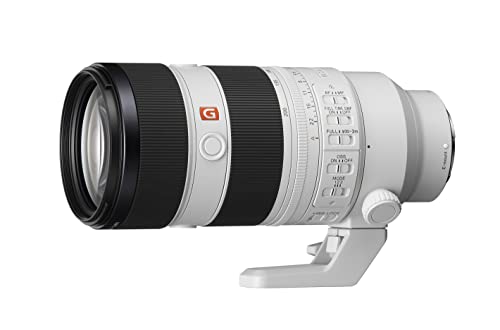
- Constant f/2.8 aperture
- Fast, quiet XD autofocus
- Movie-focused controls and reduced breathing
Best For: Professional Sony E-mount video shooters
Long-Reach Production Pick

- 180-600mm ultra-telephoto range
- Up to 5.5-stop VR effect
- Internal zooming and teleconverter support
Best For: Nikon Z wildlife, sports, and action video
Canon Cinema-Ready Zoom
Canon RF70-200mm F2.8 L IS USM Z
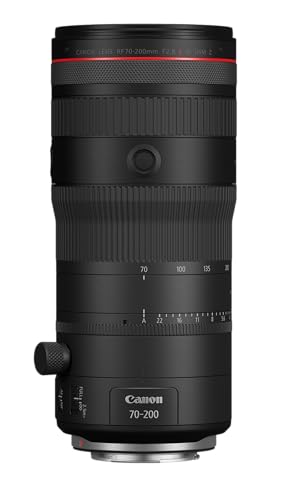
- Constant f/2.8 aperture
- Quiet dual Nano USM focusing
- Iris ring and breathing control
Best For: Canon RF filmmakers and production crews
Compact Ultra-Telephoto Value
Tamron 150-500mm Di III VC VXD

- 150-500mm full-frame range
- VC stabilization for handheld shooting
- Fast autofocus and water-resistant design
Best For: Sony shooters filming wildlife and outdoor action
Long-Reach Pro
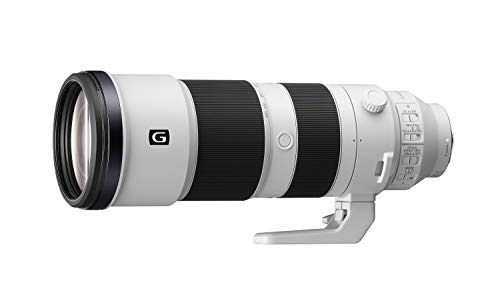
- 200-600mm super-telephoto zoom
- Optical stabilization and quiet autofocus
- Professional-oriented G-series optics
Best For: Distant wildlife, sports, and outdoor video with Sony E/FE cameras
Versatile RF Workhorse

- 100-500mm flexible zoom range
- Up to 5 stops of optical stabilization
- Quiet Dual Nano USM autofocus
Best For: Canon RF video crews covering varied subject distances
Lightweight APS-C Specialist
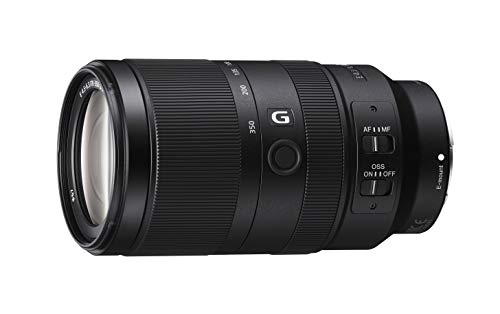
- 105-525mm full-frame-equivalent reach
- Lightweight 22-ounce design
- Optical stabilization and quiet tracking AF
Best For: Portable Sony APS-C video setups needing long reach
Compact RF Telephoto

- Lightweight 70-200mm f/4 zoom
- Up to 7.5 stops coordinated stabilization
- Quiet Dual Nano USM autofocus
Best For: Handheld Canon RF video and events
Extreme RF Reach
Canon RF200-800mm F6.3-9 IS USM

- 200-800mm super-telephoto range
- Compatible with RF1.4x and RF2x extenders
- Compact design for handheld mobility
Best For: Wildlife and outdoor sports video
Classic EF Action Zoom

- Flexible 100-400mm telephoto range
- Two image stabilizer modes
- Compatible with EF 1.4x II and 2x II extenders
Best For: Canon EF sports and action video
Premium Hybrid Pick – Sony FE 70-200mm F2.8 GM OSS II
For creators seeking telephoto camera lenses for professional video, the Sony FE 70-200mm F2.8 GM OSS II combines a constant f/2.8 aperture with fast, quiet autofocus and controls designed for movie shooting. Its 70-200mm range suits portraits, events, interviews, and action coverage.
Best For: Professional Sony E-mount video shooters who need a bright, stabilized zoom with dependable tracking.
Pros:
- Constant f/2.8 aperture supports low-light work and consistent exposure while zooming.
- Four XD Linear Motors provide fast, precise continuous autofocus and tracking.
- Movie-oriented design reduces focus breathing, focus shift, and axis shift during zooming.
- Independent focus, zoom, and iris rings include an aperture click on/off switch.
Cons:
- Limited to Sony E-mount cameras.
- High-end features and construction may exceed the needs of casual users.
- 1.4x and 2x teleconverters are sold separately.
The lightweight 2.3-pound design, optical stabilization, and constant-length barrel make this a particularly agile professional zoom. It is a strong choice when autofocus performance and refined video handling matter as much as optical quality.
Long-Reach Production Pick – Nikon NIKKOR Z 180-600mm VR
The Nikon NIKKOR Z 180-600mm f/5.6-6.3 VR is built for distant subjects, making it one of the most useful telephoto camera lenses for professional video when reach is the priority. Its broad zoom range moves from easy subject acquisition to tightly compressed 600mm framing with a 70-degree zoom-ring turn.
Best For: Nikon Z video crews covering wildlife, birds, sports, and action from a distance.
Pros:
- 180-600mm range provides substantial framing flexibility for distant subjects.
- Optical VR offers a stabilization effect equivalent to up to 5.5 stops.
- Internal zooming preserves the lens’s size and center of gravity while helping minimize dust intrusion.
- Supports Nikon Z 1.4x and 2x teleconverters for up to 840mm or 1200mm reach.
Cons:
- At 4.7 pounds, it is substantially heavier than standard telephoto zooms.
- The f/5.6-6.3 aperture is less suited to low-light shooting than a constant-bright-aperture zoom.
- Teleconverters are sold separately.
Built-in stabilization, a tripod foot, customizable controls, and internal zooming support practical field operation. Choose it when distant-subject coverage is more important than compact size or a bright aperture.
Canon Cinema-Ready Zoom – Canon RF70-200mm F2.8 L IS USM Z
The Canon RF70-200mm F2.8 L IS USM Z is a video-focused option among telephoto camera lenses for professional video. Its constant f/2.8 aperture, internal zoom and focus design, iris ring, and focus-breathing control are tailored to productions using Canon RF mirrorless cameras.
Best For: Canon RF filmmakers who want a bright 70-200mm zoom with manual iris control and quiet autofocus.
Pros:
- Constant f/2.8 aperture suits controlled exposure and low-light shooting.
- Dual floating focus units with Nano USM motors provide fast, quiet focus.
- Internal zooming and focus help maintain a stable physical configuration.
- Includes an iris ring, focus-breathing control, weather-resistant construction, and Power Zoom Adapter compatibility.
Cons:
- Designed for Canon RF-mount mirrorless cameras.
- Its 70-200mm range offers less reach than ultra-telephoto alternatives.
- The supplied details list a 4.4-pound weight, which may be significant for handheld work.
This lens is especially compelling for productions that value repeatable manual iris adjustments and quiet, controlled focusing. Its L-series durability and weather-resistant construction also support demanding environments.
Compact Ultra-Telephoto Value – Tamron 150-500mm Di III VC VXD
Tamron 150-500mm f/5-6.7 Di III VC VXD Lens for Full Frame Sony Mirrorless Camera
Check Price On AmazonFor Sony mirrorless users who need substantial reach, the Tamron 150-500mm f/5-6.7 Di III VC VXD offers a practical balance of coverage and handheld support. It belongs on a shortlist of telephoto camera lenses for professional video when a 500mm maximum focal length and optical stabilization are more important than a bright aperture.
Best For: Sony E-mount shooters covering wildlife, outdoor action, and distant subjects with a comparatively compact 500mm zoom.
Pros:
- 150-500mm range handles medium telephoto through ultra-telephoto framing.
- VC optical stabilization supports handheld shooting at the 500mm position.
- High-speed, high-precision autofocus helps track changing subjects.
- Full-frame compatibility and a water-resistant design support outdoor use.
Cons:
- The f/5-6.7 aperture is less favorable for low-light scenes than an f/2.8 zoom.
- At 4.1 pounds, it may still require support for extended handheld sessions.
- Supplied video specifications list 1080p rather than 4K.
This Tamron is a sensible reach-first choice for Sony users who want 500mm coverage without moving to a larger, more specialized lens. Its stabilization and autofocus make it useful in the field, while the variable aperture favors well-lit shooting conditions.
Long-Reach Pro – Sony FE 200-600mm G OSS
For professionals seeking telephoto camera lenses for professional video, the Sony FE 200-600mm f/5.6-6.3 G OSS combines a highly extended zoom range with optical stabilization and quiet autofocus. Its Sony E/FE compatibility makes it a strong fit for distant wildlife, sports, and outdoor production work.
Best For: Sony E-mount and FE-mount video shooters who need substantial reach for subjects that cannot be approached closely.
Pros:
- 200-600mm zoom range provides extensive super-telephoto reach.
- Optical image stabilization supports steadier handheld or supported shooting.
- Direct Drive Super Sonic Wave Motor is designed for fast, quiet, precise focusing.
- Five ED elements, an aspherical element, and Nano AR coating help control optical issues.
Cons:
- Its f/5.6-6.3 maximum aperture is relatively slow, especially at the long end.
- At 4.7 pounds, it is a substantial lens for mobile video setups.
- It is compatible with Sony E/FE cameras rather than other mount systems.
The Sony FE 200-600mm G OSS is best when reach is the priority. Its stabilization, quiet focusing motor, and optical construction make it particularly practical for demanding outdoor video, provided your support system can handle its weight.
Versatile RF Workhorse – Canon RF100-500mm L IS USM
The Canon RF100-500mm F4.5-7.1 L IS USM is a versatile option among telephoto camera lenses for professional video, covering medium telephoto through super-telephoto perspectives. Its optical stabilization, multiple stabilization modes, and quiet Dual Nano USM autofocus suit Canon RF mirrorless production.
Best For: Canon EOS R-series shooters who need one stabilized zoom for wildlife, sports, events, and other changing subject distances.
Pros:
- 100-500mm range handles both closer and distant telephoto subjects.
- Optical stabilization provides up to five stops of shake correction.
- Standard, panning, and exposure-only stabilization modes add shooting flexibility.
- Dual Nano USM supports smooth, quiet autofocus, while the lens focuses as close as 3 feet.
Cons:
- The f/4.5-7.1 aperture becomes slower as focal length increases.
- Compatibility is limited to Canon RF-mount mirrorless cameras.
- Its 3-pound weight may still require thoughtful support for extended handheld filming.
With its broad range and configurable stabilization, the RF100-500mm is a flexible Canon-native choice for productions that move between moderately distant and faraway subjects. It is especially compelling when quiet autofocus and panning support matter.
Lightweight APS-C Specialist – Sony E 70-350mm G OSS
For Sony APS-C users comparing telephoto camera lenses for professional video, the E 70-350mm f/4.5-6.3 G OSS offers a practical 5x zoom in a relatively lightweight package. Its 105-525mm full-frame-equivalent range, optical stabilization, and quiet autofocus make it useful for mobile shooting.
Best For: Sony APS-C E-mount filmmakers who value portability and extended effective reach for outdoor, sports, wildlife, or event video.
Pros:
- 70-350mm range delivers a 105-525mm full-frame-equivalent field of view.
- At 22 ounces, it is notably easier to handle than larger super-telephoto lenses.
- Optical SteadyShot image stabilization supports steadier footage.
- XD Linear Motor autofocus is designed for fast, precise, quiet focusing and tracking.
Cons:
- The f/4.5-6.3 aperture is relatively slow, particularly at 350mm.
- It is designed for Sony APS-C E-mount cameras rather than full-frame coverage.
- The 350mm native maximum is less extensive than the 500mm and 600mm options here.
The Sony E 70-350mm G OSS is a strong portability-first choice. It gives APS-C users impressive effective reach without the bulk of a larger professional super-telephoto, making it easier to carry and operate on location.
Compact RF Telephoto – Canon RF70-200mm F4 L IS USM
For professional video shooters using Canon RF-mount mirrorless cameras, the Canon RF70-200mm F4 L IS USM is a compact telephoto zoom with a constant f/4 aperture. Its optical stabilization and quiet Dual Nano USM autofocus make it a practical choice for mobile 4K production.
Best For: Handheld video, portraits, events, and general-purpose telephoto work with Canon EOS R-series cameras.
Pros:
- Shortest and lightest Canon 70-200mm f/4 interchangeable zoom lens.
- Optical image stabilization provides up to 5 stops of shake correction, or up to 7.5 stops with coordinated in-body stabilization.
- Fast, smooth, and quiet autofocus with Dual Nano USM.
- Constant f/4 aperture and 4K video support.
Cons:
- Its 200mm maximum focal length is less suited to distant wildlife or sports than a super-telephoto lens.
- Designed for Canon RF-mount cameras, limiting compatibility with other systems.
This lens balances portability, stabilization, and dependable autofocus well for professional video kits that need a manageable telephoto range rather than extreme reach.
Extreme RF Reach – Canon RF200-800mm F6.3-9 IS USM
For professional video projects that demand serious distance, the Canon RF200-800mm F6.3-9 IS USM delivers a 200-800mm super-telephoto zoom for Canon RF cameras. Its 4x range and relatively compact design support mobile wildlife, nature, and outdoor sports coverage.
Best For: Wildlife, nature, and outdoor sports video where long-reach framing is more important than a bright aperture.
Pros:
- Powerful 200-800mm zoom range with an 800mm telephoto end.
- Compatible with Canon Extender RF1.4x and RF2x at all focal lengths.
- Compact and lightweight for a super-telephoto 4x zoom, supporting handheld mobility.
- Optical design is optimized for the RF mount to maintain image quality through the zoom range.
Cons:
- The f/6.3-9 maximum aperture is relatively slow, especially at the long end.
- Not water resistant according to the supplied specifications.
- Limited to Canon RF-mount cameras.
This is a reach-first option for outdoor video teams. It offers exceptional framing flexibility in a single lens, though productions should account for its slower aperture and weather limitations.
Classic EF Action Zoom – Canon EF 100-400mm L IS USM
Canon EF 100-400mm f/4.5-5.6L is USM Telephoto Zoom Lens for Canon SLR Cameras
Check Price On AmazonFor professional video crews working with Canon SLR cameras, the Canon EF 100-400mm f/4.5-5.6L IS USM offers flexible telephoto framing for distant action and portraits. Its optical image stabilization, fluorite and Super UD elements, and extender compatibility make it a capable choice for established EF kits.
Best For: Canon EF/SLR users filming sports, action, portraits, and other subjects that benefit from a 100-400mm range.
Pros:
- Versatile 100-400mm telephoto zoom range.
- Two image stabilizer modes help with distant action and close-in portraits.
- Fluorite and Super UD-glass elements help reduce secondary spectrum.
- Compatible with Canon Extenders EF 1.4x II and 2x II.
Cons:
- Compatible with Canon EF SLR cameras rather than Canon RF mirrorless mounts.
- Its f/4.5-5.6 aperture is less bright than a constant-aperture telephoto zoom.
- Not water resistant according to the supplied specifications.
This lens remains a practical long-range option for Canon EF workflows, particularly when stabilization and extender compatibility matter more than a modern mirrorless mount or constant aperture.
How We Picked the Best Telephoto Camera Lenses for Professional Video
We focused on lenses that offer practical value for professional and advanced video work, evaluating focal-length flexibility, maximum aperture, optical stabilization, autofocus behavior, construction, handling, and compatibility with current camera systems. We also considered whether each lens suits handheld production, tripod-based wildlife work, event coverage, or run-and-gun shooting.
The selection includes fast 70-200mm workhorses, longer zooms for sports and wildlife, and compact options for creators who need lower weight. No single lens is ideal for every production, so the best choice depends on subject distance, lighting, camera format, and support equipment.
Quick Comparison
- Best all-around professional zooms: Sony FE 70-200mm F2.8 GM OSS II and Canon RF70-200mm F2.8 L IS USM Z.
- Best extreme reach: Nikon NIKKOR Z 180-600mm and Canon RF200-800mm.
- Best balanced wildlife options: Sony FE 200-600mm and Canon RF100-500mm.
- Best lighter telephoto choices: Sony E 70-350mm and Canon RF70-200mm F4.
- Best DSLR-compatible option: Canon EF 100-400mm L IS USM.
Key Buying Factors for Telephoto Camera Lenses for Professional Video
Focal Length and Framing
A 70-200mm lens is versatile for interviews, stage work, portraits, and event coverage. Lenses reaching 400mm, 500mm, 600mm, or 800mm are better suited to wildlife, field sports, aviation, and distant subjects. Remember that crop-sensor cameras provide a narrower field of view than full-frame bodies.
Aperture and Low-Light Performance
Fast f/2.8 lenses gather more light, provide stronger subject separation, and make it easier to maintain consistent exposure indoors. Slower super-telephoto zooms can still perform well outdoors, but they may require higher ISO settings and offer less background blur.
Stabilization, Autofocus, and Handling
Optical stabilization is valuable for handheld video, though a monopod or tripod remains important with very long lenses. Look for quiet, responsive autofocus and controls that support smooth operation. Weight, internal zooming, focus breathing, and the location of zoom and focus rings can significantly affect real-world usability.
Mount and Production Compatibility
Confirm the lens mount, sensor coverage, stabilization behavior, and communication features for your camera. Adapted DSLR lenses may work well, but native mirrorless lenses generally provide the most predictable autofocus and control. Check filter size, minimum focus distance, weather sealing, and support requirements before buying.
Who Should Buy Which Telephoto Camera Lenses for Professional Video?
Choose a fast 70-200mm f/2.8 if you cover events, interviews, performances, or mixed indoor and outdoor assignments. Choose a 70-200mm f/4 when portability matters more than low-light performance. Wildlife and sports shooters should consider a 100-500mm, 150-500mm, or 180-600mm zoom for a useful blend of reach and flexibility.
For maximum distance in bright outdoor conditions, the 200-600mm and 200-800mm options provide exceptional framing range. APS-C users who want a smaller setup may prefer the 70-350mm class. Finally, Canon DSLR owners seeking a proven long zoom should consider the EF 100-400mm, provided its mount matches their existing system and adapter needs.