OLED gaming monitors deliver the kind of motion clarity, contrast, and near-instant response times that can make both competitive and cinematic games look dramatically better.
From 240Hz 4K displays to ultrawide QD-OLED options, this roundup focuses on the best choices for different play styles, desk setups, and budgets.
Best 10 OLED Gaming Monitors Picks for 2026
Elite 4K QD-OLED Performance
ASUS ROG PG32UCDM 32" 4K 240Hz

- 32-inch 4K QD-OLED panel
- 240Hz refresh and 0.03ms response
- Heatsink, graphene film, and burn-in coverage
Best For: Gamers who want premium 4K OLED detail and speed
Ultrawide QD-OLED Speed
Alienware AW3425DW 34.2" 240Hz

- 34.2-inch ultrawide QD-OLED panel
- 240Hz refresh with 0.03ms response
- G-SYNC Compatible, FreeSync Premium Pro, AdaptiveSync
Best For: Players who want a fast ultrawide OLED with rich color
Compact QD-OLED Precision

- 27-inch QD-OLED with QHD resolution
- 240Hz refresh and 0.03ms response
- OLED Safeguard and Pantone Validated display
Best For: Competitive players wanting a smaller fast OLED panel
Elite Speed QD-OLED Pick
Alienware 27 360Hz QD-OLED Gaming Monitor

- 360Hz refresh rate with 0.03ms response time
- QD-OLED color with 99.3% DCI-P3 and Delta E<2
- True Black 400 plus OLED burn-in coverage
Best For: Competitive gamers who want speed first with premium OLED color
Value 27-Inch QD-OLED Option
AOC 27 QHD 240Hz QD OLED Monitor

- 240Hz refresh rate with 0.03ms response time
- QD-OLED color with wide sRGB and DCI-P3 coverage
- HDR400 True Black plus G-SYNC Compatible support
Best For: Gamers who want a fast, color-rich 27-inch OLED without extra complexity
Large-Screen Dual-Mode Pick
LG 32 UltraGear 4K OLED Gaming Monitor

- 32-inch 4K glossy OLED display with strong contrast
- Dual mode: 165Hz at 4K or 330Hz at Full HD
- 0.03ms response time with G-SYNC and FreeSync Pro
Best For: Gamers who want a big 4K OLED with a high-refresh fallback mode
Most flexible premium OLED
32-inch 4K OLED with dual-mode 240Hz/480Hz performance
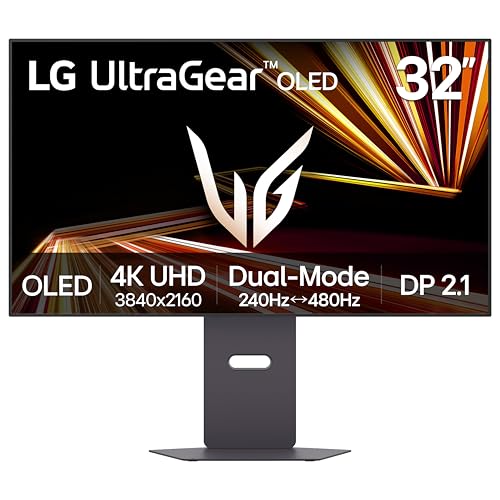
- Dual Mode: 4K 240Hz or Full HD 480Hz
- 0.03ms response time with OLED contrast
- USB-C, DP 2.1, and anti-glare finish
Best For: Players who want both 4K immersion and esports-level speed
Straightforward 27-inch performance pick
27-inch QHD OLED with 240Hz and 0.03ms response

- 240Hz refresh rate with 0.03ms response time
- DisplayHDR True Black 400 and 1.5M:1 contrast
- Anti-glare panel with G-SYNC and FreeSync
Best For: Gamers who want a simple, fast 27-inch OLED
Elite 4K QD-OLED Performance – ASUS ROG PG32UCDM 32" 4K 240Hz
If you want one of the most capable OLED gaming monitors for high-end PC play, the ASUS ROG PG32UCDM pairs 4K resolution with a 240Hz refresh rate and 0.03ms response time. It also adds QD-OLED color, HDR support, and a 32-inch screen size that works well for immersive gaming and sharp detail.
Best For: Competitive and immersive gamers who want 4K OLED clarity with fast refresh.
Pros:
- 32-inch 4K QD-OLED panel with 240Hz refresh and 0.03ms response time
- VESA DisplayHDR 400 True Black, 99% DCI-P3, and true 10-bit color
- Advanced heat management with custom heatsink, airflow design, and graphene film
- USB-C with 90W power delivery plus G-SYNC Compatible support
Cons:
- 4K at 32 inches may be more demanding on your gaming PC
- Premium feature set is likely best suited to higher budgets
- Some OLED care features are aimed at long-term panel protection rather than simplicity
This is a strong pick if you want OLED gaming monitors with top-tier motion handling, vivid HDR, and practical burn-in protection features. It’s especially appealing for gamers who also want flexible connectivity and a more premium all-around display.
Ultrawide QD-OLED Speed – Alienware AW3425DW 34.2" 240Hz
The Alienware AW3425DW is built for players who want OLED gaming monitors with an ultrawide field of view and fast motion handling. Its 34.2-inch WQHD QD-OLED panel, 240Hz refresh rate, and 0.03ms response time make it a strong fit for responsive games and cinematic desktops.
Best For: Gamers who want ultrawide immersion with fast OLED performance.
Pros:
- 34.2-inch ultrawide 3440 x 1440 QD-OLED display
- 240Hz refresh rate and 0.03ms response time
- DisplayHDR TrueBlack 400 with 1000 nits peak HDR brightness
- Adaptive sync support including G-SYNC Compatible, FreeSync Premium Pro, and VESA AdaptiveSync
Cons:
- Ultrawide 21:9 format may not suit every game or workspace
- Display brightness is listed at 250, so lighting preferences may vary
- Large curved monitor footprint may require more desk space
This model stands out if you want an OLED gaming monitor that blends speed, ultrawide immersion, and accurate color. It is especially compelling for players who like a curved screen and broad adaptive sync support.
Compact QD-OLED Precision – Samsung Odyssey OLED G6 27"
The Samsung Odyssey OLED G6 is a practical choice if you want OLED gaming monitors in a more compact 27-inch size. It combines QD-OLED color, QHD resolution, a 240Hz refresh rate, and 0.03ms response time for quick competitive play with sharp detail.
Best For: Competitive gamers who want a smaller OLED monitor with fast response.
Pros:
- 27-inch QD-OLED panel with QHD resolution
- 240Hz refresh rate and 0.03ms response time
- OLED Safeguard thermal modulation system for burn-in prevention support
- Pantone Validated screen and HDR10 support for color and depth
Cons:
- Smaller screen size offers less immersion than ultrawide or 32-inch options
- QHD resolution is not as detailed as 4K alternatives
- Feature set is focused on gaming performance rather than extras like smart TV functions
This is a sensible option if you want the speed and color quality of OLED without moving to a larger ultrawide or 4K panel. Its compact size and ergonomic stand make it especially easy to fit into a focused gaming setup.
Smart Ultrawide OLED Pick – LG 34GX90SA-W 34" 240Hz
The LG 34GX90SA-W is a versatile entry in OLED gaming monitors, combining a 34-inch WQHD curved panel with 240Hz speed and 0.03ms response time. It also stands out for webOS support, so you can stream content and access cloud gaming directly from the monitor.
Best For: Gamers who want a curved OLED monitor with smart streaming features.
Pros:
- 34-inch WQHD OLED panel with a steep 800R curve
- 240Hz refresh rate and 0.03ms response time
- webOS24 with streaming apps and cloud gaming access
- FreeSync Premium and G-SYNC Compatible support with USB-C 65W
Cons:
- 800R curve is very aggressive and may not suit everyone
- WQHD resolution is less sharp than 4K alternatives
- Smart TV-style features add complexity if you only want a basic monitor
This LG model is a smart fit if you want an OLED gaming monitor that doubles as a streaming hub. It balances fast gaming specs with practical extras like webOS, strong frame sync support, and a focus on deep contrast.
Elite Speed QD-OLED Pick – Alienware 27 360Hz QD-OLED Gaming Monitor
If you want OLED gaming monitors built for fast competitive play, the Alienware AW2725DF stands out with a 27-inch QD-OLED panel, QHD resolution, and a 360Hz refresh rate. It pairs that speed with 0.03ms response time, strong HDR performance, and accurate color, making it a strong fit for players who care about both reaction time and image quality.
Best For: Competitive gamers who want extremely high refresh speed with premium OLED image quality.
Pros:
- 360Hz refresh rate and 0.03ms response time for very fluid motion clarity
- QD-OLED panel with 99.3% DCI-P3 coverage and Delta E<2 accuracy
- VESA DisplayHDR True Black 400 and infinite contrast for deep blacks
- Includes height, tilt, swivel, and pivot adjustments plus OLED burn-in coverage
Cons:
- QHD resolution may not satisfy buyers looking for 4K detail
- Only one HDMI port is listed
- Designed more for speed than large-screen immersion
Overall, this Alienware model is a high-performance OLED gaming monitor that prioritizes elite motion clarity without giving up the rich color and contrast QD-OLED is known for. It is especially compelling if you play fast shooters or esports titles and want premium panel quality as well as a generous feature set.
Value 27-Inch QD-OLED Option – AOC 27 QHD 240Hz QD OLED Monitor
For shoppers comparing OLED gaming monitors, the AOC Q27GAZD offers a balanced mix of speed, color, and pricing-friendly essentials in a 27-inch QHD format. Its 240Hz refresh rate and 0.03ms response time make it responsive for gaming, while the QD-OLED panel adds the deep contrast and vivid color that help single-player and multiplayer games look their best.
Best For: Gamers who want a fast 27-inch QD-OLED display with a straightforward feature set.
Pros:
- 240Hz refresh rate with 0.03ms response time for smooth gameplay
- QD-OLED panel with 147.6% sRGB and 110.2% DCI-P3 coverage
- HDR400 True Black support for deeper blacks and brighter highlights
- G-SYNC Compatible and Adaptive-Sync support for reduced tearing and stutter
Cons:
- Only one HDMI port is listed in the supplied specs
- Fewer premium extras than higher-end flagship OLED monitors
- 27-inch 1440p layout may be less appealing for buyers wanting 4K
The AOC Q27GAZD makes sense if you want a capable OLED gaming monitor without moving into the highest-end speed tier. It delivers the core benefits most players are after—fast response, strong contrast, and wide color—while keeping the setup simple.
Large-Screen Dual-Mode Pick – LG 32 UltraGear 4K OLED Gaming Monitor
If you want OLED gaming monitors with a bigger canvas, the LG 32GX850A-B brings a 32-inch glossy 4K OLED panel and a useful dual-mode setup. You can run it at 4K 165Hz for detailed story-driven games or switch to Full HD 330Hz when you want faster motion for FPS, MOBA, or racing play.
Best For: Players who want a large 4K OLED monitor that can also switch into a very high-refresh competitive mode.
Pros:
- 32-inch 4K UHD OLED display for sharp detail and immersive visuals
- Dual mode supports 165Hz at 4K or 330Hz at Full HD
- 0.03ms response time with G-SYNC Compatible and FreeSync Premium Pro
- True Black 400, 1.5M:1 contrast, and 98.5% DCI-P3 for strong image depth
Cons:
- Glossy finish may not suit every lighting setup
- Base refresh rate is 165Hz in 4K mode, not 240Hz or higher
- Large 32-inch size may take more desk space than 27-inch models
This LG UltraGear is a flexible choice if you want one OLED monitor that can handle both cinematic gaming and faster competitive sessions. The dual-mode design is the key advantage, especially for buyers who want 4K detail most of the time but still want a high-refresh fallback for speed-focused games.
Brightest 27-inch OLED speed pick – 27-inch QHD OLED with 280Hz and 1500-nit peak brightness
If you want OLED gaming monitors that pair high refresh rates with strong daylight visibility, the LG 27GX700A-B is built for fast competitive play. Its 27-inch QHD panel reaches up to 280Hz with a 0.03ms response time, and LG says its 4th Gen OLED with Primary RGB Tandem tech can hit up to 1500 nits for brighter scenes and clearer details.
Best For: Competitive gamers who want a bright 27-inch OLED with very high speed and strong contrast.
Pros:
- Up to 280Hz refresh rate with 0.03ms response time for ultra-smooth gameplay
- Up to 1500 nits peak brightness with DisplayHDR True Black 500
- NVIDIA G-SYNC Compatible and AMD FreeSync Premium Pro support
- UL-verified Perfect Black and color accuracy features for detailed visuals
Cons:
- 27-inch QHD resolution may feel less spacious than 32-inch 4K options
- Focused more on speed than extra screen real estate or multitasking size
This is a strong pick if your priority is responsive gaming with OLED contrast and unusually high brightness for the category. The adjustable stand, LG Switch app, and DTS Headphone:X support add practical everyday flexibility, but the core appeal is clearly fast, vivid gameplay.
Most flexible premium OLED – 32-inch 4K OLED with dual-mode 240Hz/480Hz performance
Among OLED gaming monitors, the LG 32GX870A-B stands out for its dual-mode design. You can run 4K UHD at up to 240Hz for cinematic games or switch to Full HD at up to 480Hz for faster genres, while the 0.03ms response time keeps motion clean and responsive.
Best For: Gamers who want one OLED monitor that can switch between sharp 4K visuals and extreme high-refresh esports performance.
Pros:
- Dual Mode support for 4K UHD 240Hz or Full HD 480Hz
- 0.03ms response time for low-lag gameplay
- Micro Lens Array+ with up to 1300 nits peak brightness
- DisplayHDR True Black 400 plus G-SYNC Compatible and FreeSync Premium Pro
Cons:
- Premium feature set is more specialized than a basic gaming monitor
- 32-inch size may take up more desk space than a 27-inch display
This model makes sense if you split time between story-driven single-player games and high-speed competitive titles. The anti-glare OLED finish, built-in speakers, USB-C, DP 2.1, and adjustable stand round out a very versatile flagship-style setup.
Straightforward 27-inch performance pick – 27-inch QHD OLED with 240Hz and 0.03ms response
If you want OLED gaming monitors that keep the price and feature set focused, the LG 27GS93QE delivers a straightforward high-refresh QHD experience. It pairs a 27-inch 1440p panel with a 240Hz refresh rate and a 0.03ms response time, making it well suited to smooth, responsive play without adding extra complexity.
Best For: Gamers who want a clean, no-frills 27-inch OLED with strong response time and standard high-refresh performance.
Pros:
- 240Hz refresh rate with 0.03ms response time
- DisplayHDR True Black 400 and 1.5M:1 contrast ratio
- G-SYNC Compatible and FreeSync Premium Pro support
- Anti-glare panel with adjustable height, tilt, and pivot stand
Cons:
- Peak brightness is listed at 400 nits in the supplied details
- Fewer extras than the more feature-rich dual-mode LG model
This is the most straightforward choice in the group for gamers who want OLED contrast, fast motion handling, and a familiar 27-inch QHD format. It keeps the focus on core performance and includes a 2-year limited warranty covering the OLED panel.
How We Picked the Best OLED Gaming Monitors
We prioritized panel quality, refresh rate, response time, resolution, and real-world gaming versatility. The strongest OLED Gaming Monitors in this roundup offer a smart balance of speed and image quality rather than chasing specs alone.
We also looked for practical features like adaptive sync support, useful screen sizes, and connectivity that makes each model easier to recommend for PC or console gaming.
Quick Comparison
For pure competitive play, higher refresh rates and lower input delay matter most. For immersive single-player games, ultrawide formats and 4K panels deliver the biggest visual upgrade. If you want one display to do both, dual-mode models are especially appealing.
High-Refresh Competitive Options
These are best suited for esports players who want the fastest possible feel, especially at 1440p.
Premium Visual and Immersion Picks
4K and ultrawide OLED Gaming Monitors are better for story-driven games, open-world titles, and users who value picture quality over raw frame rate.
Key Buying Factors for OLED Gaming Monitors
Refresh rate: 240Hz is an excellent all-around target, while 360Hz is ideal if you mostly play fast shooters and can drive high frame rates.
Resolution and size: 27-inch QHD models are the sweet spot for sharpness and speed. 32-inch 4K displays suit users who want more detail, while 34-inch ultrawides improve immersion.
Panel behavior: OLED technology excels at black levels, contrast, and response time, but buyers should still pay attention to brightness, reflection handling, and any built-in pixel protection features.
Sync support: Compatibility with NVIDIA G-SYNC or AMD FreeSync helps reduce tearing and stutter, especially on variable frame rate systems.
Connectivity: Check for HDMI 2.1, DisplayPort, USB hubs, and console-friendly features if you plan to use more than one device.
Who Should Buy Which OLED Gaming Monitors?
If you mainly play competitive shooters, choose a 27-inch high-refresh model for the cleanest motion and least demanding performance target. If you want the best balance of clarity and speed, a 32-inch 4K or 32-inch dual-mode display is hard to beat.
If immersion matters most, an ultrawide OLED gaming monitor is the better choice for racing, RPGs, and single-player adventures. And if you want a versatile premium setup that can handle both work and play, look for strong color accuracy, good connectivity, and adaptive sync support alongside the OLED panel.