OLED has become the go-to display tech for players who want elite motion clarity, deep contrast, and near-instant response times. For competitive gaming, that means cleaner tracking, less blur, and a more responsive feel in fast shooters and arena titles.
In this roundup, we focus on OLED gaming monitors for competitive gaming that balance speed, image quality, and real-world usability across 240Hz, 280Hz, and 360Hz options.
Best 10 OLED Gaming Monitors for Competitive Gaming Picks for 2026
Elite Speed Pick
MSI MAG 274QP QD-OLED X24 27" 240Hz QHD

- 240Hz refresh rate with 0.03ms response time
- QD-OLED panel with 99% DCI-P3 color
- OLED Care 2.0 plus HDMI 2.1 and DP 1.4a
Best For: Competitive players who want fast 1440p OLED performance with console support
Esports Speed Leader
MSI MPG 271QRX QD-OLED 27" 360Hz QHD

- 360Hz refresh rate for elite competitive motion
- 0.03ms response time with QD-OLED image quality
- USB-C, KVM, and OLED Care 2.0 included
Best For: Esports players who want the fastest refresh rate and OLED contrast
Value-Driven Glossy Pick
ASUS ROG XG27AQDMG 27" 240Hz Glossy OLED

- 240Hz OLED with 0.03ms response time
- Anti-flicker tech and OLED care for protection
- 3-year warranty with burn-in coverage
Best For: Gamers who want a polished 240Hz OLED with protection features and strong color
QD-OLED Speed Pick
INNOCN 27" 280Hz QHD Gaming Monitor

- 280Hz refresh rate with 0.03ms response time
- QD-OLED panel with HDR400 and deep blacks
- HDMI 2.1, DisplayPort, and adjustable stand
Best For: Fast-paced PC and console gamers who want QHD OLED speed
Premium Motion Pick
ASUS ROG XG27AQDMGR 27" Glossy OLED

- 240Hz QHD WOLED with 0.03ms response time
- OLED Care Pro with Neo Proximity Sensor
- 3-year warranty with ARR and burn-in coverage
Best For: Players wanting premium OLED speed with extra protection
Editor’s Pick
GIGABYTE GO27Q24G 27" W-OLED 240Hz QHD Gaming Monitor
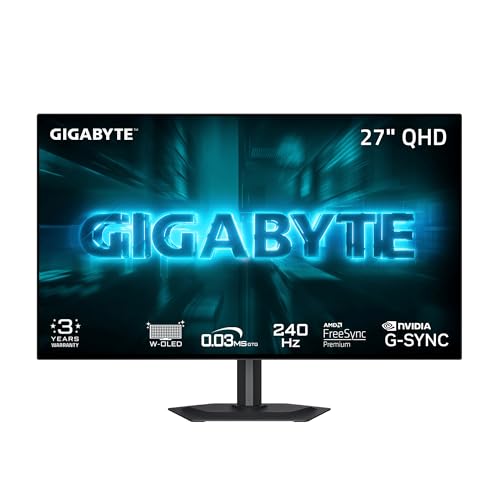
- 240Hz refresh and 0.03ms response for competitive play
- MLA+ WOLED panel with up to 1300 nits peak brightness
- AI OLED Care and RealBlack glossy finish help daily use
Best For: Competitive gamers who want a bright, fast 27-inch OLED
Value QD-OLED Option
AOC 27" QD-OLED 240Hz QHD G-SYNC Monitor

- QD-OLED panel delivers true blacks and vivid colors
- 240Hz and 0.03ms response for competitive gaming
- HDMI 2.1, G-SYNC, and adjustable stand add flexibility
Best For: Players wanting QD-OLED speed with broad device support
Premium All-Rounder
LG 27GX704A-B 27" Ultragear 240Hz OLED Monitor

- 240Hz and 0.03ms response support competitive gaming
- Up to 1300 nits peak brightness with True Black 400
- Dual HDMI 2.1 and wide sync support for PC and consoles
Best For: Serious gamers who want a feature-rich 27-inch OLED
Elite Speed Pick – MSI MAG 274QP QD-OLED X24 27" 240Hz QHD
If you want an OLED gaming monitor for competitive gaming that balances speed, sharpness, and strong connectivity, the MSI MAG 274QP QD-OLED X24 is built to fit that brief. Its QD-OLED panel, 240Hz refresh rate, and 0.03ms response time are aimed at fast-paced play, while HDMI 2.1 and DisplayPort 1.4a make it easy to use with PC or console setups.
Best For: Competitive players who want a fast 1440p OLED with strong color, low latency, and console-friendly inputs.
Pros:
- 240Hz refresh rate and 0.03ms response time for very fast motion handling
- QD-OLED panel with 10-bit color, 99% DCI-P3, and 1,500,000:1 native contrast
- OLED Care 2.0 and graphene heatsink help with panel protection and durability
- HDMI 2.1 and DP 1.4a support broad compatibility for PC and consoles
Cons:
- 27-inch 1440p format may not suit users who prefer larger screens
- Glossy screen finish may reflect more light than matte alternatives
- Peak brightness is strong for OLED, but still below many LCD gaming monitors
This MSI model is a practical pick if your priority is responsiveness first and visual quality second. It delivers the core advantages many buyers want from OLED gaming monitors for competitive gaming without giving up useful extras like burn-in care and console-ready connectivity.
Premium Motion Upgrade – ASUS ROG XG27AQWMG 27" 280Hz Tandem OLED
The ASUS ROG XG27AQWMG is aimed at buyers who want an OLED gaming monitor for competitive gaming with a clear emphasis on speed and image refinement. Its 280Hz refresh rate, 0.03ms response time, and Tandem OLED panel make it a strong fit for fast esports play, while the TrueBlack Glossy surface is designed for a sharper-looking image.
Best For: Gamers who want a higher-refresh 1440p OLED with premium panel tech and strong burn-in protection.
Pros:
- 280Hz refresh rate and 0.03ms response time for extremely smooth gameplay
- Tandem OLED promises higher peak brightness, larger color volume, and longer lifespan than previous WOLED panels
- TrueBlack Glossy panel aims for zero-haze clarity and sharp visuals
- OLED Care Pro with Neo Proximity Sensor adds smart burn-in protection
Cons:
- Pricing may be harder to justify if you do not need 280Hz performance
- Glossy finish may show reflections in bright rooms
- Designed primarily around PC gaming rather than broad multitasking features
For competitive players who want a little more headroom than 240Hz models, this ASUS stands out. It combines top-tier motion performance with advanced OLED protection and a premium panel design that should appeal to focused esports users.
Esports Speed Leader – MSI MPG 271QRX QD-OLED 27" 360Hz QHD
For buyers searching for OLED gaming monitors for competitive gaming, the MSI MPG 271QRX QD-OLED pushes refresh rate even further with a 360Hz panel. Combined with a 0.03ms response time, QD-OLED color, and a 1440p resolution, it is clearly built for players who want maximum motion smoothness in fast-paced titles.
Best For: Esports-focused gamers who want the fastest refresh rate in this group and still want OLED image quality.
Pros:
- 360Hz refresh rate is ideal for extremely fast competitive gameplay
- 0.03ms response time helps keep motion crisp and reactive
- QD-OLED panel with Delta E≤2 color accuracy and True Black HDR 400
- USB-C, HDMI, DP, KVM, and OLED Care 2.0 add practical flexibility
Cons:
- 360Hz makes the most sense only if your PC can drive very high frame rates
- Brightness is listed at 250 nits, so it is not the brightest gaming display here
- Only one HDMI port may be limiting for some multi-device setups
This is the most aggressive performance option in the lineup. If your priority is getting the highest possible refresh rate for competitive play, this MSI model is the clearest specialist pick.
Value-Driven Glossy Pick – ASUS ROG XG27AQDMG 27" 240Hz Glossy OLED
The ASUS ROG XG27AQDMG is a strong option if you want an OLED gaming monitor for competitive gaming with a familiar 240Hz class performance profile. It pairs a 0.03ms response time with a glossy WOLED panel, third-generation panel tech, and anti-flicker features aimed at keeping motion stable and text looking cleaner.
Best For: Competitive gamers who want a 240Hz OLED with strong color, anti-flicker support, and burn-in coverage.
Pros:
- 240Hz refresh rate and 0.03ms response time for fast gameplay
- Third-generation WOLED panel offers brighter white windows and improved motion clarity
- ROG OLED Anti-flicker technology helps reduce flicker during refresh-rate fluctuations
- 3-year warranty includes burn-in coverage and ARR support
Cons:
- 240Hz is excellent, but below the 280Hz and 360Hz models in this roundup
- Glossy panel finish may be less ideal in bright environments
- Brightness and feature set are strong, but this model is still mainly centered on PC gaming use
This ASUS lands in a practical sweet spot for players who want proven competitive specs without moving up to the most expensive speed tiers. It is a solid fit if you value motion clarity, OLED protection, and a polished all-around gaming display.
QD-OLED Speed Pick – INNOCN 27" 280Hz QHD Gaming Monitor
If you want OLED gaming monitors for competitive gaming, this INNOCN 27-inch QD-OLED model is built around speed and clarity. Its 2560 x 1440 resolution, 280Hz refresh rate, and 0.03ms response time are aimed at fast-moving shooters and action games, while the QD-OLED panel adds deep blacks and vivid color for a sharper overall image.
Best For: Players who want a fast QHD OLED monitor with strong console and PC compatibility.
Pros:
- 280Hz refresh rate and 0.03ms response time for fast motion
- QD-OLED panel with perfect blacks, vibrant colors, and HDR400 support
- HDMI 2.1 and DisplayPort make it flexible for PC and next-gen consoles
- Fully adjustable stand with height, tilt, and pivot
Cons:
- Only one HDMI port is listed
- HDR performance is tied to HDR400 rather than a higher certification
This is a strong pick if competitive responsiveness is your top priority, but you still want OLED contrast and a 1440p panel for general gaming use.
Burn-In Aware Choice – Samsung Odyssey OLED G5 27" QD-OLED
Among OLED gaming monitors for competitive gaming, this Samsung Odyssey OLED G5 focuses on fast response, clean image quality, and practical protection features. The 27-inch QD-OLED panel pairs QHD resolution with a 180Hz refresh rate and 0.03ms GTG response time, while Glare Free handling and G-Sync/FreeSync support help keep gameplay smooth.
Best For: Gamers who want a balanced QD-OLED monitor with burn-in protection and low-reflection gaming.
Pros:
- QD-OLED panel with QHD resolution and strong color accuracy
- 180Hz refresh rate plus 0.03ms GTG response time for quick play
- OLED Safeguard thermal modulation system helps reduce burn-in risk
- Glare Free finish and G-Sync/FreeSync support improve usability
Cons:
- Refresh rate is lower than some competing 240Hz and 280Hz models
- Best-in-class speed is not the main focus here
This monitor makes sense if you want OLED contrast and competitive responsiveness, but also value screen protection and low glare during long sessions.
Premium Motion Pick – ASUS ROG XG27AQDMGR 27" Glossy OLED
If you are comparing OLED gaming monitors for competitive gaming, the ASUS ROG XG27AQDMGR stands out for its 240Hz QHD WOLED panel and ultra-fast 0.03ms response time. It also adds a glossy finish, DisplayHDR 400 True Black support, and 99% DCI-P3 coverage, giving it a mix of motion performance and strong image quality.
Best For: Competitive players who want a premium 1440p OLED with advanced protection and warranty support.
Pros:
- 240Hz refresh rate with 0.03ms gray-to-gray response time
- OLED Care Pro and Neo Proximity Sensor help reduce burn-in risk
- DisplayHDR 400 True Black, 99% DCI-P3, and true 10-bit color
- 3-year warranty with ARR and burn-in coverage
Cons:
- Glossy panel may not suit every lighting setup
- Premium features likely place it toward the higher end of the market
This ASUS model is the most feature-rich option here if you want fast competitive performance plus extra OLED protection and warranty coverage.
Editor’s Pick – GIGABYTE GO27Q24G 27" W-OLED 240Hz QHD Gaming Monitor
If you want OLED gaming monitors for competitive gaming, the GIGABYTE GO27Q24G focuses on the essentials that matter in fast matches: 240Hz speed, 0.03ms response time, and a 27-inch QHD WOLED panel. Its MLA+ panel and glossy RealBlack finish are built to keep motion sharp and dark scenes readable, while AI-based OLED Care helps reduce burn-in risk with minimal interference.
Best For: Players who want a fast 27-inch OLED with strong brightness and built-in panel protection.
Pros:
- 240Hz refresh rate and 0.03ms GtG response time for ultra-fast competitive play
- MLA+ WOLED panel with up to 1300 nits peak brightness for vivid highlights
- RealBlack glossy coating and zero-haze optical layer help preserve dark detail
- AI-based OLED Care adds burn-in protection with adjustable settings
Cons:
- Glossy finish may still show reflections in very bright rooms
- Brightness is lower at typical use than its peak spec suggests
Overall, this is a well-rounded competitive OLED pick if you want speed first but still care about brightness, clarity, and maintenance features. It fits especially well in a desk setup where its borderless design and dual-monitor appeal can shine.
Value QD-OLED Option – AOC 27" QD-OLED 240Hz QHD G-SYNC Monitor
For shoppers comparing OLED gaming monitors for competitive gaming, the AOC Q27GAZDV delivers the core speed and clarity players look for: 240Hz, 0.03ms response time, and a 27-inch QHD QD-OLED panel. It also adds HDMI 2.1, G-SYNC compatibility, and an ergonomic stand, making it a practical choice for PC and console setups alike.
Best For: Gamers who want a fast QD-OLED monitor with strong connectivity and adjustable ergonomics.
Pros:
- QD-OLED panel with true blacks and vivid color coverage
- 240Hz refresh rate and 0.03ms response time suit fast competitive games
- HDMI 2.1 and DisplayPort 1.4 support high-refresh gaming on PC and consoles
- Height, tilt, swivel, and pivot adjustments add comfort for long sessions
Cons:
- Brightness is listed at 200, which is lower than some rivals
- USB hub is useful, but not as extensive as some premium productivity monitors
This AOC model stands out as a straightforward speed-focused option with enough flexibility to work in mixed PC and console setups. If you prioritize motion performance and OLED contrast over extras, it is an easy monitor to shortlist.
Premium All-Rounder – LG 27GX704A-B 27" Ultragear 240Hz OLED Monitor
Among OLED gaming monitors for competitive gaming, the LG 27GX704A-B blends speed, brightness, and comfort features in a glossy 27-inch QHD OLED package. It offers up to 240Hz refresh, 0.03ms response, dual HDMI 2.1, and both G-SYNC Compatible and FreeSync Premium Pro support, making it well suited to serious play across PC and next-gen consoles.
Best For: Competitive gamers who want a bright OLED with broad sync support and strong console connectivity.
Pros:
- Up to 240Hz refresh rate and 0.03ms response time for fast motion clarity
- 275 nits typical brightness with up to 1300 nits peak brightness
- VESA DisplayHDR True Black 400 and 1.5M:1 contrast for deep blacks
- Dual HDMI 2.1 plus DisplayPort and USB ports suit modern setups
Cons:
- Glossy screen finish can reflect ambient light in bright rooms
- Premium feature set may be more than casual players need
This LG is the most complete all-around option in the group if you want a fast OLED that also covers brightness, HDR, and convenience. It is a strong fit for players who game hard but also care about long-session comfort and flexible connectivity.
How We Picked the Best OLED Gaming Monitors for Competitive Gaming
We prioritized the specs that matter most for OLED Gaming Monitors for Competitive Gaming: refresh rate, response time, panel type, VRR support, and resolution. We also looked at practical features such as HDMI 2.1, DisplayPort bandwidth, HDR implementation, and stand or connectivity options that make a monitor easier to use every day.
Because these displays are aimed at fast play, we gave extra weight to models that pair 1440p resolution with 240Hz or higher, since that is the current sweet spot for sharp visuals and low-latency performance.
Quick Comparison
If you want the highest competitive ceiling, 360Hz models are the fastest on paper and best suited to esports-first players. If you want the most balanced experience, 240Hz QD-OLED and W-OLED models offer excellent clarity, strong HDR, and broad compatibility. 280Hz options sit in the middle and can be a smart value choice if priced well.
Key Buying Factors for OLED Gaming Monitors for Competitive Gaming
Refresh Rate Vs. Real-World Performance
Higher refresh rates reduce perceived motion blur and can improve target tracking, but only if your PC can consistently push high frame rates. Match the monitor to your GPU and the games you play most.
Panel Type and Text/Color Tradeoffs
QD-OLED often delivers stronger color volume, while W-OLED can still look excellent with a slightly different subpixel structure and coating behavior. Glossy finishes can boost perceived contrast, but they may also reflect more room light.
Resolution and Screen Size
For 27-inch competitive displays, 2560 x 1440 is the most versatile choice. It gives you sharper detail than 1080p without the heavier performance penalty of 4K, which helps sustain higher frame rates.
VRR, Ports, and HDR
Look for adaptive sync support, preferably with G-SYNC compatibility or FreeSync Premium Pro, to reduce tearing and stutter. HDMI 2.1 and a strong DisplayPort implementation improve compatibility with modern PCs and consoles. HDR on OLED can be impressive, but performance varies by tuning and brightness limits.
Who Should Buy Which OLED Gaming Monitors for Competitive Gaming?
Choose a 360Hz OLED if you play competitive shooters at a high level and can drive very high frame rates. Pick a 240Hz model if you want the best all-around blend of speed, image quality, and price. Go with a 280Hz monitor if you want a small edge over 240Hz without moving into the most expensive tier. If you value richer contrast and a premium look, QD-OLED is often the most appealing place to start.
For most buyers, the best OLED Gaming Monitors for Competitive Gaming are the ones that match your hardware, your favorite genres, and your tolerance for reflections, brightness limits, and price.