If you stream games, your monitor has to do more than look fast on a spec sheet. It needs excellent motion clarity, strong HDR, reliable color, and features that make your setup easier to manage live.
This roundup of the best OLED gaming monitors for streamers in 2026 focuses on displays that can handle high frame rates, sharp image quality, and the practical needs of a creator workspace.
Best 10 OLED Gaming Monitors for Streamers Picks for 2026
4K Creator-Ready Choice
MSI MPG 321URX 32-inch QD-OLED

- 32-inch 4K QD-OLED with 240Hz refresh
- 0.03ms response time and HDR True Black 400
- USB-C 90W, HDMI 2.1, DP 1.4a, and AI KVM
Best For: Creators who want 4K detail and flexible multi-device control
Value-Focused QHD Option
HP HyperX OMEN OLED 27 QHD 240Hz

- 27-inch QD-OLED with 240Hz refresh rate
- 0.03ms response time plus NVIDIA G-SYNC support
- Two HDMI 2.0 ports, DP 1.4, and adjustable stand
Best For: Streamers who want a practical 27-inch OLED with easy connectivity
Premium Glossy Pick
ASUS ROG XG27AQDMGR 27-inch 240Hz OLED

- 27-inch glossy WOLED with 240Hz refresh and 0.03ms response
- OLED Care Pro and Neo Proximity Sensor for panel protection
- 3-year warranty with ARR and burn-in coverage
Best For: Streamers who want a glossy premium OLED with protection features
QD-OLED Color Accuracy Pick
MSI MAG 274QP QD-OLED X24 27-Inch WQHD Gaming Monitor

- Quantum Dot OLED with 10-bit color and 99% DCI-P3
- 240Hz refresh rate with 0.03ms response time
- OLED Care 2.0 and graphene heatsink for protection
Best For: Streamers who want a sharp WQHD OLED with accurate color
Dual-Mode Streaming Powerhouse
LG 32GX870A-B 32-inch Ultragear 4K UHD OLED Gaming Monitor
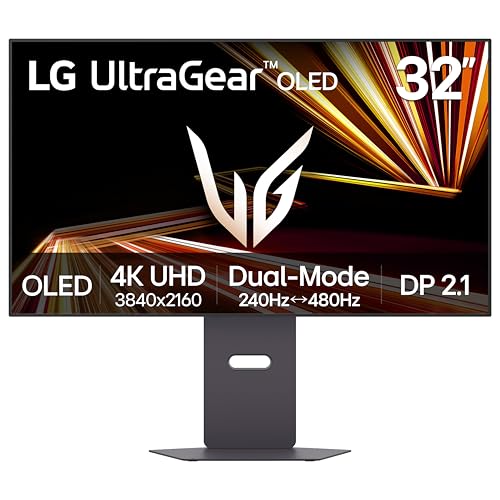
- Dual Mode: 4K 240Hz or Full HD 480Hz
- Micro Lens Array+ with up to 1300 nits peak brightness
- Switch app supports split-screen streaming workflows
Best For: Streamers who want one display for cinematic games, competitive titles, and multitasking
Ultrawide Competitive Pick
Alienware 34 Gaming Monitor AW3426DW

- UWQHD QD-OLED ultrawide panel
- 280Hz refresh rate and 0.03ms response time
- G-SYNC support for smoother compatible gameplay
Best For: Streamers who prefer an ultrawide OLED for immersive gameplay and a wider desktop layout
Glare-Free Speed Pick
LG 27GX704A-B 27-inch 240Hz QHD OLED Gaming Monitor

- 240Hz refresh rate and 0.03ms response time
- Up to 1300 nits peak brightness with True Black 400
- Dual HDMI 2.1, DisplayPort, and USB connectivity
Best For: Streamers who want a bright, fast 27-inch OLED with strong console and PC support
QD-OLED Value Pick
AOC 27" 240Hz QHD QD-OLED Gaming Monitor

- QD-OLED panel with deep blacks and vivid color
- 240Hz refresh rate with 0.03ms response time
- HDMI 2.1, DisplayPort 1.4, and ergonomic stand
Best For: Streamers who want a glossy 27-inch QD-OLED with good ergonomics and console support
Brightest 27-inch Pick – LG 27GX700A-B 280Hz QHD OLED
If you want an OLED gaming monitor for streamers that can stay sharp in fast matches and still look rich on camera, the LG 27GX700A-B is built around speed and brightness. Its 27-inch QHD panel, 280Hz refresh rate, and 0.03ms response time make it a strong fit for creators who want smooth gameplay while keeping motion crisp.
Best For: Streamers who play fast-paced games and want a brighter OLED for clearer visibility in demanding scenes.
Pros:
- Up to 280Hz refresh rate and 0.03ms response time for very smooth motion.
- 4th Gen OLED with Primary RGB Tandem tech and up to 1500 nits brightness for improved visibility.
- VESA DisplayHDR True Black 500 and UL-verified Perfect Black/Perfect Color for strong contrast and accurate visuals.
- HDMI 2.1, G-SYNC Compatible, and FreeSync Premium Pro support for flexible gaming setups.
Cons:
- 27-inch 1440p resolution is less detailed than 4K alternatives.
- Brightness-focused OLED tuning may be more than some users need for darker rooms.
This LG model stands out when you want fast performance and extra brightness from an OLED panel. It is especially appealing for streamers who value fluid gameplay, accurate color, and a display that can handle both bright scenes and dark-game contrast well.
4K Creator-Ready Choice – MSI MPG 321URX 32-inch QD-OLED
The MSI MPG 321URX is a compelling OLED gaming monitor for streamers who want a larger 4K canvas with premium panel specs. Its 32-inch QD-OLED display, 240Hz refresh rate, and 0.03ms response time make it well suited to gaming, multitasking, and content-heavy setups.
Best For: Streamers who want 4K detail, a large screen, and strong connectivity for mixed gaming and productivity use.
Pros:
- 32-inch 4K UHD QD-OLED panel delivers high detail and strong contrast.
- 240Hz refresh rate with 0.03ms response time for fast, fluid gameplay.
- 90W USB-C, HDMI 2.1, and DP 1.4a provide flexible connection options.
- AI KVM, PiP/PbP, and Console Mode add convenience for multi-device setups.
Cons:
- 4K on a 32-inch screen usually asks more from your GPU than 1440p options.
- Its larger size may not suit compact desks.
If your stream setup mixes gaming, chat, and desktop work, this MSI model offers a lot of versatility. The combination of 4K clarity, fast refresh, and USB-C support makes it easy to recommend for creators building a more advanced workstation.
Value-Focused QHD Option – HP HyperX OMEN OLED 27 QHD 240Hz
The HP HyperX OMEN OLED 27-inch monitor is a straightforward pick for streamers who want QHD OLED performance without overcomplicating the setup. With a 240Hz refresh rate, 0.03ms response time, and NVIDIA G-SYNC support, it covers the essentials for smooth gameplay and clean motion.
Best For: Streamers who want a well-rounded 27-inch QHD OLED with practical ports and easy setup.
Pros:
- 27-inch QHD QD-OLED panel with a 240Hz refresh rate.
- 0.03ms response time and NVIDIA G-SYNC for fluid, low-lag gaming.
- Two HDMI 2.0 ports, DisplayPort 1.4, and a headphone jack support common setups.
- Fully adjustable stand plus OMEN Gaming Hub for convenience.
Cons:
- HDMI 2.0 is less future-proof than HDMI 2.1 on some competing monitors.
- Brightness is listed at 200 cd, which may feel modest beside brighter OLED models.
This HP model makes sense if you want the core advantages of an OLED panel in a tidy 27-inch format. It is especially practical for streamers who value an adjustable stand, simple connectivity, and a balanced feature set.
Premium Glossy Pick – ASUS ROG XG27AQDMGR 27-inch 240Hz OLED
The ASUS ROG XG27AQDMGR is aimed at streamers who want a glossy OLED look with strong protection features and fast gaming performance. Its 27-inch QHD panel, 240Hz refresh rate, and 0.03ms response time make it a solid fit for smooth, responsive play while the OLED Care Pro tools help manage burn-in risk.
Best For: Streamers who want a premium-looking glossy OLED with burn-in protection and broad warranty coverage.
Pros:
- 27-inch QHD TrueBlack glossy WOLED panel with 240Hz refresh and 0.03ms response time.
- OLED Care Pro with Neo Proximity Sensor helps reduce burn-in risk.
- VESA DisplayHDR 400 True Black, 99% DCI-P3, and Delta E < 2 support strong image quality.
- Three-year warranty with ARR and burn-in coverage adds peace of mind.
Cons:
- Glossy finish may not be ideal in very bright rooms.
- Only one HDMI port is listed, which may limit some setups.
This ASUS monitor is a strong choice if you want an OLED that looks premium and includes serious panel protection features. For streamers who keep long hours and care about visual polish, it offers a compelling mix of speed, image quality, and warranty support.
QD-OLED Color Accuracy Pick – MSI MAG 274QP QD-OLED X24 27-Inch WQHD Gaming Monitor
For OLED gaming monitors for streamers, this MSI 27-inch QD-OLED keeps the focus on image quality and speed. Its 2560 x 1440 panel, 240Hz refresh rate, and 0.03ms response time make it a strong fit for smooth gameplay while the Quantum Dot OLED design adds deep contrast and 10-bit color for cleaner-looking visuals on camera.
Best For: Streamers who want a sharp WQHD OLED with accurate color and fast motion handling.
Pros:
- Quantum Dot OLED panel with 10-bit color and 99% DCI-P3 coverage
- 240Hz refresh rate and 0.03ms response time for fast, responsive play
- OLED Care 2.0 and an elite graphene heatsink for panel protection support
- HDMI 2.1 and DisplayPort 1.4a support for PC, console, and laptop use
Cons:
- 27-inch 1440p format may feel smaller than ultrawide or 32-inch options
- Peak brightness is listed up to 400 nits, which is lower than some brighter OLED rivals
This is a strong all-around streaming monitor if you want OLED contrast without giving up speed. It leans especially well toward creators who value accurate color, sharp motion, and built-in burn-in protection tools.
Dual-Mode Streaming Powerhouse – LG 32GX870A-B 32-inch Ultragear 4K UHD OLED Gaming Monitor
Among OLED gaming monitors for streamers, this 32-inch LG stands out for flexibility. You can run it at 4K UHD 240Hz for story-driven games or switch to Full HD 480Hz for fast competitive play, while the 0.03ms response time helps keep motion crisp during live sessions.
Best For: Streamers who want one display for cinematic games, competitive titles, and multitasking.
Pros:
- Dual Mode supports 4K 240Hz or Full HD 480Hz via hotkey
- Micro Lens Array+ technology with up to 1300 nits peak brightness
- VESA DisplayHDR True Black 400 and 1.5M:1 contrast ratio
- Switch app helps split the screen and manage streaming workflows
Cons:
- 32-inch 4K OLED is likely larger and pricier than smaller 1440p options
- Best features depend on making use of the Dual Mode and Switch app tools
This model is especially practical if your stream setup doubles as a gaming and productivity station. It offers excellent motion performance, strong HDR credentials, and built-in tools that make juggling games, chats, and content easier.
Ultrawide Competitive Pick – Alienware 34 Gaming Monitor AW3426DW
If you want OLED gaming monitors for streamers with extra horizontal space, the Alienware AW3426DW is built around a UWQHD QD-OLED panel and a very fast 280Hz refresh rate. The 0.03ms response time and G-SYNC support make it a strong option for smooth gameplay, especially when you want a wider view for game HUDs, chat, or multitasking.
Best For: Streamers who prefer an ultrawide OLED for immersive gameplay and a wider desktop layout.
Pros:
- UWQHD QD-OLED panel provides an ultrawide workspace and deep OLED contrast
- 280Hz refresh rate with 0.03ms response time for very fast motion
- G-SYNC support for smoother gameplay on compatible systems
Cons:
- Ultrawide format may not suit every game, stream layout, or desk setup
- Limited supplied details make it harder to judge extra features beyond panel speed and sync
This is the most specialized pick in the group for players who like ultrawide immersion and quick reaction performance. It makes sense if your stream workflow benefits from extra screen width more than it needs extra resolution or display extras.
Glare-Free Speed Pick – LG 27GX704A-B 27-inch 240Hz QHD OLED Gaming Monitor
If you want OLED gaming monitors for streamers that stay sharp during fast play, the LG 27GX704A-B is built around speed, clarity, and strong connectivity. Its 27-inch QHD OLED panel, 240Hz refresh rate, and 0.03ms response time make it a solid fit for smooth gameplay, while the glossy finish and high peak brightness help keep the image vivid on camera or at your desk.
Best For: Streamers who want a fast 27-inch OLED with bright, vivid image quality and plenty of console/PC connectivity.
Pros:
- 240Hz refresh rate and 0.03ms response time for very smooth, low-ghosting gameplay
- OLED brightness up to 1300 nits with VESA DisplayHDR True Black 400 for deep blacks and strong highlights
- G-SYNC Compatible and FreeSync Premium Pro support for tear-free gaming
- Dual HDMI 2.1 plus DisplayPort and USB ports for versatile setup options
Cons:
- 27-inch 16:9 screen is less immersive than ultrawide options
- Glossy panel may be less ideal in very bright rooms with reflections
- OLED care settings are important for long-term panel protection
The LG 27GX704A-B is a practical pick if you value speed first but still want premium OLED contrast and color. It balances competitive refresh rates with useful protection features and flexible adjustments for a clean streaming or gaming desk setup.
Immersive Ultrawide Streamer Pick – LG 34GX90SA-W 34-inch Curved 240Hz OLED Monitor
For OLED gaming monitors for streamers who want an all-in-one screen, the LG 34GX90SA-W stands out with a 34-inch ultrawide OLED panel, steep 800R curve, and built-in webOS. That means you can game, stream, and watch content on the same display, while the 240Hz refresh rate and 0.03ms response time keep motion extremely smooth.
Best For: Streamers who want an ultrawide OLED with built-in streaming apps and cloud gaming support.
Pros:
- 34-inch WQHD ultrawide with an 800R curve for an immersive view
- 240Hz refresh rate and 0.03ms response time for fast, fluid gameplay
- webOS24 with Netflix, Prime Video, Disney+, HBO Max, and cloud gaming access
- HDMI 2.1, DisplayPort 1.4, and USB-C with 65W power delivery
Cons:
- Ultrawide 3440 x 1440 format may not suit every game or streaming layout
- 800R curve is very aggressive if you prefer a flatter display
- Built-in smart features add complexity if you only want a simple monitor
This model is especially appealing if your streaming setup benefits from extra screen space and fewer separate devices. Its blend of OLED image quality, smart TV features, and strong gaming specs makes it one of the most flexible options here.
QD-OLED Value Pick – AOC 27" 240Hz QHD QD-OLED Gaming Monitor
If you’re comparing OLED gaming monitors for streamers and want a compact 27-inch option, the AOC Q27GAZDV is focused on color, speed, and practical features. Its QD-OLED panel delivers deep blacks and vivid color, while the 240Hz refresh rate and 0.03ms response time support fast competitive play and smooth on-screen motion.
Best For: Streamers who want a glossy 27-inch QD-OLED with strong color and ergonomic adjustments.
Pros:
- QD-OLED panel with true blacks, infinite contrast, and vivid color coverage
- 240Hz refresh rate and 0.03ms response time for low-blur gaming
- HDMI 2.1 and DisplayPort 1.4 support for PC and current-gen consoles
- Height, tilt, swivel, and pivot adjustments plus USB hub and VESA mount support
Cons:
- 200-nit listed brightness is lower than some other premium OLED options
- 27-inch 16:9 screen may feel less expansive than ultrawide displays
- Glossy finish can show reflections depending on your room lighting
The AOC Q27GAZDV is a well-rounded choice if you want a straightforward OLED that covers the basics for gaming and streaming. It brings strong adaptive-sync support and useful ergonomics without adding unnecessary extras.
How We Picked These OLED Gaming Monitors for Streamers
We prioritized OLED and QD-OLED models with the right mix of speed, image quality, and creator-friendly connectivity. That means high refresh rates, low response times, strong HDR performance, and useful extras like USB-C, KVM-style convenience, and modern HDMI or DisplayPort support.
We also considered streamers’ real-world needs: readability in OBS and chat windows, screen sizes that work with capture layouts, and panel formats that suit both gaming and on-camera productivity.
Quick Comparison
In simple terms, 27-inch 1440p models are the safest all-around choice for competitive players and desk-based streamers. 32-inch 4K OLED monitors favor sharper desktop text and premium presentation. Ultrawide options are best for immersive single-player content and multitasking, but they can be less convenient for some capture workflows and game compatibility.
Key Buying Factors for OLED Gaming Monitors for Streamers
Refresh Rate and Response Time
For fast-paced streaming, aim for at least 240Hz if your system can keep up. OLED’s near-instant pixel response helps reduce blur and ghosting, which is especially noticeable in motion-heavy games and during live audience viewing.
Resolution and Screen Size
1440p at 27 inches is the sweet spot for many creators because it balances clarity, performance, and affordability. 4K at 32 inches is better if you want extra workspace, sharper text, and a more premium editing or streaming setup. Ultrawide panels are ideal when you want room for timelines, chat, and gameplay side by side.
HDR, Color, and Panel Type
QD-OLED models often deliver especially vivid color and strong perceived contrast, while standard OLED panels can still offer excellent black levels and uniformity. If your stream includes dark games, cinematic content, or visual showcases, stronger HDR support can make a noticeable difference.
Connectivity and Streamer-Friendly Features
Look for HDMI 2.1, DisplayPort 1.4, and USB-C if you use a laptop, console, or dual-PC setup. Features like FreeSync, G-SYNC compatibility, and VESA mounting can make the monitor easier to integrate into a clean streaming rig.
Who Should Buy Which OLED Gaming Monitors for Streamers?
Competitive streamers should lean toward 27-inch 1440p OLED Gaming Monitors for Streamers with 240Hz or higher. If you want the best desktop clarity and a polished premium look on camera, choose a 32-inch 4K OLED. If your priority is multitasking, editing, or immersive single-player content, an ultrawide OLED can be the most versatile pick.
For most buyers, the best choice is the model that matches your GPU power, desk space, and the type of content you stream most often.