Setting up a home studio can feel overwhelming, especially when it comes to choosing the right condenser microphone. With so many options available, each offering distinct features and sound quality, it’s essential to find one that fits your specific needs. Whether you’re recording vocals, instruments, or podcasts, the right mic can elevate your sound. Let’s explore the top ten condenser microphones that could make all the difference in your recordings.
Audio-Technica AT2020 Cardioid Condenser Studio Microphone
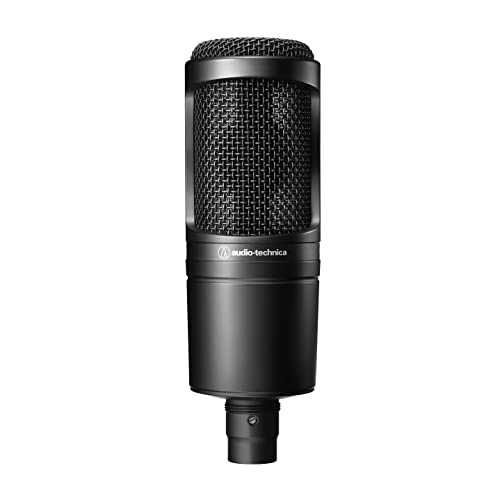
If you’re setting up a home studio and need a reliable, high-quality microphone, the Audio-Technica AT2020 Cardioid Condenser Studio Microphone is an excellent choice. This versatile mic features a cardioid pattern, reducing unwanted noise while delivering clear, warm sound. With a wide dynamic range and high SPL handling, it captures everything from soft vocals to loud instruments beautifully. Weighing just 1.32 pounds, it’s easy to position, and its rugged construction guarantees durability. Plus, setup is straightforward, and it includes handy accessories like a shock mount and cable. It’s perfect for novice podcasters, YouTubers, or anyone looking to elevate their audio quality.
Best For: Beginners and amateur content creators looking for a reliable, high-quality microphone to enhance their audio production.
Pros:
- Clear and warm sound quality, ideal for vocals and instruments.
- Rugged construction ensures durability for long-term use.
- Easy plug-and-play setup with included accessories like a shock mount and cable.
Cons:
- May require input volume adjustment on PC for optimal performance.
- Limited features compared to higher-end professional microphones.
- Room treatment recommended for best sound quality, which may require additional investment.
FIFINE Studio Condenser USB Microphone Kit (T669)

The FIFINE Studio Condenser USB Microphone Kit (T669) is an ideal choice for aspiring podcasters and content creators seeking professional-quality audio without a hefty price tag. This kit includes a sturdy boom arm, shock mount, and double pop filter, ensuring you capture crystal-clear sound. With a cardioid condenser capsule and 20 kHz frequency response, it excels in various settings. Setup is a breeze with USB connectivity—no drivers needed. While some users find the boom arm slightly flimsy, the overall build quality remains solid. At an affordable price, it’s a reliable option for anyone looking to elevate their audio game.
Best For: Aspiring podcasters and content creators seeking professional-quality audio on a budget.
Pros:
- Excellent audio quality with a cardioid condenser capsule that captures clear sound for vocals and podcasts.
- Easy setup via plug-and-play USB connectivity, compatible with popular software like OBS and Audacity.
- Includes essential accessories such as a boom arm, shock mount, and pop filter, enhancing the overall recording experience.
Cons:
- Boom arm may feel flimsy for some users, potentially requiring replacement for daily use.
- Background noise pickup in uncontrolled environments can affect audio quality.
- Not compatible with Xbox or phones, limiting versatility for some users.
Shure SM4 Studio Recording Microphone Kit (SM4-K-KIT)

Looking for a versatile microphone that delivers professional-quality sound for your home studio? The Shure SM4 Studio Recording Microphone Kit (SM4-K-KIT) features a brass 1-inch dual-diaphragm capsule, capturing clean lows and detailed highs for natural audio reproduction. With a cardioid polar pattern, it effectively rejects unwanted noise, ensuring clarity. Plus, its patented interference shielding blocks RF noise, resulting in cleaner recordings. The integrated pop filter minimizes plosive sounds, and the large “sweet spot” manages proximity effects, making it perfect for close-miking. You’ll find the SM4 is mix-ready from the start, simplifying your post-production process.
Best For: The Shure SM4 Studio Recording Microphone Kit is best for home studio enthusiasts and professional musicians seeking high-quality audio reproduction and clarity in their recordings.
Pros:
- Superior audio quality with a dual-diaphragm capsule for clean lows and detailed highs.
- Effective noise rejection due to its cardioid polar pattern and patented interference shielding technology.
- Integrated pop filter and large sweet spot make it ideal for close-miking vocals and instruments.
Cons:
- May be considered expensive for beginners or casual users.
- Requires proper setup and positioning for optimal performance.
- Limited versatility for capturing sounds outside the cardioid pattern.
MAONO XLR Condenser Microphone for Streaming and Podcasting

For aspiring podcasters and streamers, the MAONO XLR Condenser Microphone (PM320S) stands out as an exceptional choice. This professional cardioid mic delivers impressive sound quality with its built-in 16 mm condenser capsule and custom low-mass diaphragm. It captures your voice clearly while minimizing background noise thanks to its cardioid pattern. You’ll need 48V phantom power, so connect it to an audio interface or mixer for peak performance. The included accessories, like a pop filter and shock mount, enhance your recording setup. With durable construction and a foldable boom arm, this microphone is perfect for your home studio or on-the-go needs.
Best For: Aspiring podcasters and streamers looking for a professional-quality microphone that delivers clear sound and minimizes background noise.
Pros:
- Excellent sound quality with a built-in 16 mm condenser capsule and low-mass diaphragm.
- Cardioid pattern effectively reduces surrounding noise for focused recordings.
- Durable construction with included accessories like a pop filter and shock mount for enhanced setup.
Cons:
- Requires 48V phantom power, necessitating additional equipment such as an audio interface or mixer.
- May be cumbersome for portable use due to its full metal construction and included boom arm.
- Not ideal for users who prefer USB microphones for simplicity and convenience.
RØDE NT1 5th Generation Studio Condenser Microphone

Designed for aspiring musicians and podcasters, the RØDE NT1 5th Generation Studio Condenser Microphone offers a perfect blend of classic sound and modern technology. With its large diaphragm, you’ll enjoy a warm, silky sound that’s perfect for vocals and instruments alike. It connects via XLR or USB, giving you flexibility for any setup. The ultra-low self-noise and high SPL handling guarantee that your recordings capture every detail. Plus, the durable aluminum body means it can withstand daily use. With RØDE’s advanced preamp and high-resolution conversion, you’ll achieve crystal-clear audio quality for all your projects.
Best For: Aspiring musicians and podcasters looking for a versatile and high-quality recording microphone.
Pros:
- Versatile connectivity: Can connect via XLR or USB for flexible recording setups.
- Exceptional sound quality: Delivers a warm, silky character with extremely low self-noise.
- Durable design: Constructed from high-grade aluminum for resilience in everyday use.
Cons:
- Requires audio interface for XLR connection: May necessitate additional equipment for some users.
- Higher price point: Considered premium compared to entry-level microphones.
- Limited portability: Larger size may not be ideal for mobile recording setups.
Elgato Wave:3 USB Condenser Microphone for Streaming and Gaming

The Elgato Wave:3 USB Condenser Microphone stands out as an exceptional choice for streamers and gamers craving professional audio quality. With its 24-bit/96kHz converter, you’ll enjoy crystal-clear sound, while the cardioid capsule captures your voice with impressive clarity. Thanks to the proprietary Clipguard Technology, distortion is a thing of the past. The Wave Link App lets you easily manage the Wave:3 alongside up to eight other audio sources, creating two independent mixes. Plus, its plug ’n play functionality guarantees a hassle-free setup, making it perfect for your home office, podcasting, or gaming needs. Upgrade your audio experience today!
Best For: Streamers, podcasters, gamers, and home office users seeking high-quality audio solutions.
Pros:
- Exceptional 24-bit/96kHz audio quality for professional broadcasting.
- Cardioid condenser capsule captures speech with clarity and detail.
- User-friendly plug ’n play functionality for easy setup.
Cons:
- Limited to USB connection, which may not suit all setups.
- May require additional software for advanced audio mixing features.
- The price point might be higher compared to basic microphones.
Upgraded Studio Recording Microphone with Isolation Shield & Pop Filter

If you’re looking to elevate your home studio setup, the upgraded studio recording microphone with an isolation shield and pop filter is an excellent choice for podcasters and musicians alike. This DJM5 condenser mic delivers high-quality sound through USB connectivity, making it easy to plug directly into your PC, smartphone, or laptop. With a cardioid polar pattern and a wide frequency response of 30Hz to 16kHz, you’ll enjoy crystal-clear audio. Plus, its compact design includes a tripod stand and shockproof filter, ensuring you have everything you need for professional-grade recordings in one convenient package.
Best For: Podcasters, musicians, and home studio enthusiasts seeking a high-quality, easy-to-use recording microphone.
Pros:
- High-quality sound with a wide frequency response (30Hz to 16kHz) for professional audio reproduction.
- USB connectivity allows for direct plug-and-play use with PCs, smartphones, and laptops without the need for extra hardware.
- Compact design includes essential accessories like a tripod stand and shockproof filter, making it a complete audio solution.
Cons:
- Limited to USB connection, which may not suit users who prefer XLR connections for more advanced setups.
- Weight of 4.1lbs may be considered heavy for portable use or travel setups.
- Echo control and volume adjustments might require fine-tuning, which can be tricky for beginners.
Logitech for Creators Blue Microphones Yeti USB Microphone (Blackout)

For creators seeking versatility in their recordings, the Logitech for Creators Blue Microphones Yeti USB Microphone (Blackout) stands out as an exceptional choice. Weighing 3.51 pounds, this premium USB mic offers four pickup patterns, including cardioid and omnidirectional, making it perfect for vocals or instruments. You’ll appreciate the studio controls for volume, pattern selection, and instant mute. With real-time monitoring through a 3.5mm headphone jack, your recordings maintain clarity. It’s compatible with both Mac and PC and integrates seamlessly with Logitech G HUB. Whether podcasting or streaming, this mic delivers broadcast-quality sound you’ll love.
Best For: Creators looking for a versatile and high-quality USB microphone for recording vocals, instruments, podcasts, and streaming.
Pros:
- Versatile pickup patterns allow for tailored recording options suited to various needs.
- Real-time monitoring through a 3.5mm headphone jack ensures clarity and accurate audio feedback during recordings.
- User-friendly setup with included desktop stand and compatibility with both Mac and PC systems.
Cons:
- Relatively heavy at 3.51 pounds, which may affect portability for some users.
- Requires Logitech G HUB software for full functionality, which may be an extra step for some.
- Sensitive to background noise, necessitating a quiet recording environment or additional noise management tools.
TONOR Professional Cardioid Studio Microphone Kit (TC20)

Looking for a versatile microphone that suits your home studio needs? The TONOR Professional Cardioid Studio Microphone Kit (TC20) has you covered. This XLR condenser mic delivers high-quality sound, perfect for recording, podcasting, and streaming. With its upgraded mic capsule and low-noise preamplifier, you’ll enjoy warm, natural audio. The cardioid pattern effectively suppresses off-axis noise, ensuring clear vocals. Plus, the kit includes essential accessories like a boom arm, shock mount, and pop filter, making setup a breeze. Just remember, it requires 48V phantom power to function properly, so be sure to have an audio interface or mixer handy!
Best For: Content creators, podcasters, and musicians seeking high-quality audio recording in a home studio setting.
Pros:
- High-quality sound with warm and natural audio due to upgraded mic capsule and low-noise preamplifier.
- Effective off-axis noise suppression from the cardioid polar pattern, ensuring clear and focused vocals.
- Comprehensive kit that includes essential accessories like a boom arm, shock mount, and pop filter for easy setup.
Cons:
- Requires external power (48V phantom power) for operation, necessitating additional equipment like an audio interface or mixer.
- Limited portability due to the need for a stable setup and additional power source.
- Weight restriction on the boom arm, supporting only microphones up to 4lbs, which may limit options for heavier mics.
Shure SM4 Studio Recording Microphone (SM4-K)

The Shure SM4 Studio Recording Microphone (SM4-K) stands out as an excellent choice for home studio enthusiasts and professionals alike, thanks to its brass 1-inch dual-diaphragm capsule that captures clean low-end frequencies and detailed highs. Weighing 1.78 pounds and featuring all-metal construction, it’s built to last. With a cardioid polar pattern, it effectively minimizes off-axis noise, making it ideal for vocals and instruments. The integrated pop filter helps you achieve plosive-free audio, while the interference shielding technology blocks unwanted RF noise. Users rave about its audio quality, making it a reliable option for your recording needs.
Best For: The Shure SM4 Studio Recording Microphone (SM4-K) is best for home studio enthusiasts and professionals seeking high-quality audio for vocals, instruments, and podcasts.
Pros:
- Exceptional audio quality with a balanced frequency response, requiring minimal post-processing.
- Durable all-metal construction ensures reliability in various recording environments.
- Integrated pop filter and advanced interference shielding technology provide cleaner recordings by reducing unwanted noise.
Cons:
- Requires phantom power (typically 48V), which may necessitate additional equipment for some users.
- Heavier than some competing microphones, which could be a consideration for portable setups.
- The cardioid polar pattern may not suit all recording scenarios, limiting its versatility in certain situations.
Factors to Consider When Choosing Condenser Microphones for Home Studio
When choosing a condenser microphone for your home studio, you need to evaluate several key factors. Think about the type of microphone you want, the connectivity options available, and the sound quality features that will best suit your needs. Additionally, pay attention to build quality and any included accessories that might enhance your recording experience.
Microphone Type Selection
Choosing the right condenser microphone for your home studio can greatly impact your recordings, especially since these mics are renowned for their sensitivity and ability to capture a wide frequency range. First, consider the polar pattern; cardioid patterns effectively reduce ambient noise from the sides and rear, enhancing sound isolation for vocals and instruments. Next, look for a microphone with a high signal-to-noise ratio—aim for above 70 dB to guarantee minimal background noise. Also, pay attention to the maximum sound pressure level (SPL) handling; models that can handle SPLs above 130 dB are perfect for loud sources like drums. Finally, remember that many condenser mics need 48V phantom power, so verify compatibility with your setup.
Connectivity Options Available
While selecting a condenser microphone for your home studio, connectivity options play an essential role in ensuring compatibility with your recording setup. You’ll typically find microphones that connect via XLR or USB. XLR mics often require an audio interface and 48V phantom power, whereas USB mics plug directly into your computer, making them more user-friendly. Many modern options combine both, giving you the flexibility to switch between XLR and USB as needed. When choosing, consider your intended use; USB mics are great for beginners, while XLR mics offer superior audio quality for professional applications. Make sure your chosen microphone is compatible with your recording software, as USB mics usually come with built-in drivers for quick setup.
Sound Quality Features
Sound quality is a critical factor in selecting a condenser microphone for your home studio. The diaphragm size plays a significant role; larger diaphragms usually deliver warmer and more detailed audio, particularly in the low frequencies. You’ll want to take into account the frequency response too, as a wider range (like 20 Hz to 20 kHz) guarantees better capture of vocals and instruments. Sensitivity, measured in decibels, indicates how well the mic picks up quiet sounds; aim for higher sensitivity ratings for nuanced audio. Additionally, check the signal-to-noise ratio (SNR)—a higher SNR means cleaner recordings with less background noise. Finally, the polar pattern, especially cardioid, enhances sound isolation, reducing unwanted noise from the sides and rear in untreated spaces.
Build Quality Considerations
When selecting a condenser microphone for your home studio, build quality is just as important as sound quality. Look for all-metal construction, which enhances durability and protects against wear and tear. A rugged design signifies that your microphone can withstand various recording environments, making it ideal for both studio and on-location work. Pay attention to diaphragm type; custom-engineered low-mass diaphragms offer better frequency response and transient performance. Integrated features like built-in pop filters and interference shielding improve robustness by reducing unwanted noise. Finally, consider weight and portability—heavier microphones often indicate solid build quality, while lighter models should still maintain structural integrity to avoid damage during transport. Choose wisely to guarantee longevity and reliability in your recordings.
Included Accessories Importance
Included accessories play an essential role in maximizing the performance of your condenser microphone in a home studio setting. Shock mounts and pop filters are vital for reducing unwanted noise and plosive sounds, ensuring your recordings sound professional. A boom arm or adjustable stand provides ideal microphone positioning, enhancing both sound capture and comfort during long sessions. Additionally, having a carrying bag or case protects your microphone and accessories, promoting longevity and consistent performance. Some kits even include cables and filters, saving you from extra purchases and offering a complete solution for your setup. Remember, the quality of these accessories can greatly affect your audio results, so invest in high-quality components to avoid frustration and achieve the best sound possible.