The best music synthesizers can turn basic musical ideas into basses, leads, pads, rhythms, and experimental sounds. This lineup spans analog, FM, MIDI-controller, portable, and novelty instruments for different creative workflows.
Whether you want hands-on sound shaping, computer-based production, stage-ready keys, or a compact instrument for casual play, compare the features that matter most before choosing.
Best 10 Music Synthesizers Picks for 2026
Flagship Analog Powerhouse

- Two wavefolding VCOs plus sub-oscillator
- 32 full-size velocity- and aftertouch-sensitive keys
- Sequencer, arpeggiator, CV, MIDI, and USB-C
Best For: Analog sound designers and live performers
Portable Wireless Controller

- 25 velocity-sensitive mini keys
- Bluetooth battery supports about 16 hours
- Pads, knobs, touch strips, and scale features
Best For: Mobile beat makers and software synth users
Iconic Pocket Synth
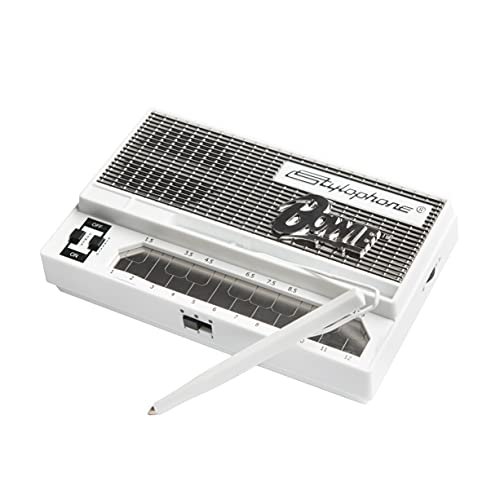
- Limited-edition Bowie-inspired white design
- Compact and battery-powered
- Three synth and bass sound modes
Best For: Fans, beginners, and portable creative play
Hybrid Production Hub

- 37-key controller with pads and knobs
- CV/Gate and MIDI I/O for external hardware
- 64-step sequencer and chord and scale modes
Best For: DAW producers integrating software and hardware
Best Portable FM Pick
M-VAVE Wireless FM Synthesizer (Black)

- Battery-powered with a built-in speaker
- Six operators, 32 algorithms, and 128 presets
- Effects, sequencing, and three MIDI connections
Best For: Portable composition and compact FM sound design
Best Weighted-Key Workstation
Yamaha MODX M8 88-Key Synthesizer
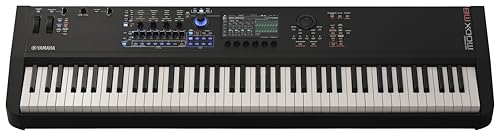
- 88-key graded-hammer action for pianists
- Three engines span FM, analog-style, and instrument sounds
- Hands-on controls plus DAW softsynth integration
Best For: Professional stage and studio players
Best White Portable FM Synth
M-VAVE Wireless FM Synthesizer

- Ultra-light battery-powered design with speaker
- 128 presets plus FM SYSEX sound-bank support
- Effects, arpeggiator, sequencer, and wireless MIDI
Best For: Mobile musicians and FM synthesis beginners
Best Pocket Synth

- Three-octave analog sound with optional vibrato
- Stylus control is easy to learn
- Pocket-sized and battery powered
Best For: Beginners and portable retro-synth experimentation
Best FM Synth

- Six-operator FM engine with 128 presets
- Built-in sequencer, arpeggiator, and effects
- USB-C, Bluetooth, and 3.5mm MIDI
Best For: Producers and guitarists needing portable FM synthesis
Best Novelty Synth

- Expressive stem, wah, and vibrato controls
- Wider neck with three pitch settings
- 3.5mm output for headphones and amplifiers
Best For: Families, gifts, and playful musical performances
Flagship Analog Powerhouse – MOOG Messenger
The MOOG Messenger is a full-featured choice for musicians seeking a powerful analog option among music synthesizers. Its two wavefolding VCOs, sub-oscillator, versatile ladder filter, full-size keys, and hands-on controls suit both studio sound design and live performance.
Best For: Producers and performers who want a portable, expressive monophonic analog synthesizer with extensive modulation and connectivity.
Pros:
- Two variable-shape oscillators, sync, frequency modulation, and a sub-oscillator provide broad bass and lead sounds.
- 32 semi-weighted full-size keys include velocity and aftertouch for expressive playing.
- Integrated 64-step sequencer, arpeggiator, 256 presets, CV patch points, MIDI, and USB-C offer flexible workflow options.
Cons:
- Its monophonic design is focused on single-note lines rather than polyphonic chords.
- The feature-rich, full-size build is less compact than a small MIDI controller.
With knob-per-function controls and a broad set of performance and sound-design tools, the Messenger is a serious centerpiece for an analog-focused setup.
Portable Wireless Controller – M-VAVE K5 MIDI Controller
The M-VAVE K5 is a compact controller for computer- and mobile-based music synthesizers. Its 25 velocity-sensitive keys, RGB drum pads, assignable knobs, touch strips, Bluetooth, and rechargeable battery make it practical for composing and controlling software away from a fixed studio.
Best For: Mobile producers, beat makers, and beginners who need a portable controller for compatible DAWs and virtual instruments.
Pros:
- Bluetooth connectivity and a built-in 2,000 mAh battery provide about 16 hours of wireless use.
- Eight RGB velocity-sensitive pads and eight assignable rotary encoders support beat making and plugin control.
- Works with Windows, Mac OS, Android, iOS, and several listed DAWs.
Cons:
- Its 25 mini keys provide less playing range than larger keyboard controllers.
- It is a MIDI controller rather than a standalone synthesizer with built-in sound generation.
The K5 emphasizes portability and flexible software control, making it a convenient entry point for music production in small spaces or on the go.
Iconic Pocket Synth – Bowie Stylophone
The limited-edition Bowie Stylophone offers a simple, compact way to explore music synthesizers. Its stylus-based interface, battery-powered design, white Bowie detailing, and three sound modes make it suited to casual playing, portable inspiration, or display in a collection.
Best For: David Bowie fans, beginners, and anyone wanting a small battery-powered instrument with a distinctive playing style.
Pros:
- Limited-edition design features a white finish and embossed Bowie logo.
- Compact, battery-powered body is easy to carry.
- Three modes provide classic analog synth and bass sounds.
Cons:
- The stylus interface is more limited than a conventional keyboard for detailed performance.
- Its compact feature set is better suited to simple ideas than extensive studio sound design.
The Bowie Stylophone is primarily a fun, accessible instrument and collectible rather than a comprehensive production synthesizer, but its unique interface can spark quick musical ideas.
Hybrid Production Hub – Akai MPK Mini Plus
The Akai MPK Mini Plus combines a 37-key controller with pads, knobs, sequencing, and hardware connectivity for music synthesizers and DAW-based production. CV/Gate and MIDI I/O extend its usefulness beyond software, while the built-in sequencer supports computer-free rhythm and melodic workflows.
Best For: Producers who want one compact controller for DAW work, software instruments, modular gear, and performance-oriented beat making.
Pros:
- 37 keys provide three full octaves for melodic and harmonic performance.
- CV/Gate and MIDI I/O connect to modular gear, sound modules, and synthesizers.
- Includes eight RGB pads, eight assignable knobs, chord and scale modes, and a 64-step sequencer.
Cons:
- It is a controller and does not function as a standalone synthesizer with its own sound engine.
- USB connectivity is central to the controller setup, while computer-free use depends on connected production equipment.
The MPK Mini Plus is a versatile middle ground for producers who need tactile DAW control but also want to integrate external hardware into a compact setup.
Best Portable FM Pick – M-VAVE Wireless FM Synthesizer (Black)
If you want music synthesizers that can travel easily, the black M-VAVE FM Synthesizer combines battery operation, a built-in speaker, and a compact 9.6-ounce design. Its 27 silicone keys, FM engine, onboard effects, and sequencing tools make it a practical choice for portable experimentation.
Best For: Portable composition, casual sound design, and musicians who want a compact FM sound module with built-in playback.
Pros:
- Battery-powered design with a built-in speaker for creating away from a larger setup.
- Six operators, 32 algorithms, and 128 presets cover a broad range of classic FM sounds.
- Includes effects, an arpeggiator, a 16-step sequencer, and USB, Bluetooth, and 3.5mm MIDI connectivity.
Cons:
- The 27-key silicone keyboard is much smaller than a standard 88-key instrument.
- Its FM-focused architecture may be less suitable for players seeking extensive analog-style synthesis.
This M-VAVE is strongest as an ultra-portable sketchpad, controller, or sound module. Choose it for convenience and immediate FM experimentation rather than full-size keyboard performance.
Best Weighted-Key Workstation – Yamaha MODX M8 88-Key Synthesizer
Among music synthesizers for pianists and stage performers, the Yamaha MODX M8 stands out with 88-key graded-hammer action and a performance-oriented control layout. It combines three sound engines, hands-on controls, and a color touchscreen in a lightweight-for-its-class instrument.
Best For: Professional pianists, stage players, and studio users who need realistic weighted action alongside broad synthesis and instrument sounds.
Pros:
- 88-key graded-hammer action provides heavier response in the low register and lighter response in the high register.
- Three engines cover analog-style synthesis, FM synthesis, and realistic instruments.
- Eight physical faders, a Super Knob, color touchscreen, and dedicated display knobs support hands-on control.
- Expanded Softsynth Plugin support extends MODX M sound work into a DAW.
Cons:
- At 40.5 pounds and nearly 58 inches long, it is considerably less portable than compact synthesizers.
- The professional feature set may be more than beginners need.
The MODX M8 is the most performance-focused option here, especially for players who do not want to compromise on piano-style touch. Its size and professional workflow make it better suited to a dedicated stage or studio setup.
Best White Portable FM Synth – M-VAVE Wireless FM Synthesizer
The white M-VAVE FM Synthesizer is a convenient entry point for music synthesizers if portability and immediate playability matter most. It has a battery-powered body, built-in speaker, 27 full-range silicone keys, and a selection of FM sounds ready to use without a larger keyboard rig.
Best For: Mobile musicians, beginners exploring FM synthesis, and creators who prefer a lightweight instrument with wireless MIDI options.
Pros:
- Compact 6.4-by-3.8-by-1.2-inch body weighs just 9.6 ounces.
- 128 presets and support for standard FM SYSEX sound-bank decoding offer quick access to additional sounds.
- Six effects, seven arpeggiator modes, and a looping 16-step sequencer encourage hands-on experimentation.
- USB MIDI, Bluetooth MIDI, and 3.5mm MIDI IN can support simultaneous controller and sound-module use.
Cons:
- The compact 27-key format cannot provide the range or feel of a full-size keyboard.
- Its built-in speaker and small form factor are aimed at convenience rather than large performance environments.
This white version offers the same portable FM feature set as the black model, with color being the primary distinction in the supplied specifications. It is a sensible pick for quick ideas, travel, and compact MIDI setups.
Best Pocket Synth – Stylophone Original
The Stylophone Original is a compact, battery-powered choice for anyone exploring music synthesizers without committing to a full-size keyboard. Its touch-sensitive metal surface, stylus control, vintage analog sound, and built-in speaker make it easy to experiment with melodies wherever you are.
Best For: Beginners, portable practice, retro-sound fans, and experienced musicians seeking a compact creative instrument.
Pros:
- Distinctive analog sound with three octaves and optional vibrato
- Simple stylus-based controls are approachable for beginners
- Compact, battery-powered design includes a speaker and headphone socket
- Can connect to a computer or other gear through a 3.5mm stereo cable
Cons:
- Its small touch surface offers less traditional keyboard control
- Requires three AA batteries
- Limited to the included pocket-synth format rather than a full workstation
The Stylophone is best viewed as a fun, highly portable sound-making instrument rather than a comprehensive production keyboard. Its recognizable retro character and straightforward controls make it a memorable entry point into music synthesizers.
Best FM Synth – M-VAVE FM-1
The M-VAVE FM-1 packs a serious set of music synthesizers features into a lightweight, portable unit. Its six-operator FM engine, 128 presets, sequencing tools, effects, and multiple MIDI connections suit producers and guitarists who want deep sound options in a compact format.
Best For: Guitarists, mobile producers, and players who want FM synthesis, MIDI flexibility, and built-in production tools.
Pros:
- Six-operator FM synthesis with 32 algorithms and 128 factory presets
- Includes an arpeggiator, 16-step sequencer, and six effects
- Offers USB-C, Bluetooth BLE MIDI, and 3.5mm MIDI connectivity
- Rechargeable battery provides up to 12 hours of play and the unit weighs 251g
Cons:
- Its FM architecture may be more involved than a basic beginner synth
- The 27-key silicone keyboard may not feel like a conventional keyboard
- Its compact size prioritizes portability over expansive physical controls
For players who want more than preset playback, the FM-1 offers a broad toolkit in a travel-friendly package. The color display and onboard controls help balance its advanced FM engine with practical editing access.
Best Novelty Synth – Otamatone Deluxe
The Otamatone Deluxe takes a playful approach to music synthesizers, combining a touch-sensitive stem with expressive face controls. Its larger neck, multiple pitch ranges, strap, and 3.5mm output make it more capable than the standard version while preserving its unusual, entertaining design.
Best For: Families, gift shoppers, curious musicians, and performers looking for a distinctive instrument with a humorous personality.
Pros:
- Wider neck supports more precise playing than a smaller model
- Face squeeze adds a wah effect, while shaking the stem adds vibrato
- Three pitch settings provide roughly four octaves each
- Connects to headphones, amplifiers, and speakers through a 3.5mm stereo jack
Cons:
- Its unusual control layout is less conventional than a keyboard
- The playful design may not suit traditional studio workflows
- Runs on three AAA batteries
The Otamatone Deluxe is a characterful choice when entertainment and expressiveness matter as much as conventional synthesis. It is particularly appealing as a gift or performance novelty, with enough pitch range and connectivity for musicians to explore.
How We Picked These Music Synthesizers
We selected this roundup to cover a broad range of synthesis styles, playing formats, and experience levels. The list includes traditional synthesizers, portable battery-powered instruments, MIDI keyboard controllers, analog hardware, and compact novelty designs. We considered control layout, keyboard or pad support, sound-generation options, portability, connectivity, built-in features, and the type of musician each instrument best serves.
Because these products are not direct substitutes, the right choice depends on whether you need an independent instrument with its own sounds or a controller that operates primarily with music software.
Quick Comparison
| Best For | Look For | Typical Advantage |
|---|---|---|
| Analog sound design | Oscillators, filters, and hands-on controls | Immediate tactile tone shaping |
| Computer production | USB MIDI, keys, pads, and knobs | Flexible software control |
| Portable playing | Battery power, speakers, and compact size | Practice and performance anywhere |
| Expressive piano-style playing | Full-size keys and weighted action | More natural finger response |
| Experimentation and gifting | Simple controls and distinctive design | Approachable, playful creativity |
Key Buying Factors for Music Synthesizers
Synthesis Engine
Analog synthesis is valued for hands-on control and classic oscillator-filter behavior. FM synthesis can produce bright, metallic, bell-like, and complex digital tones. Preset-focused instruments are easier to start with, while deeper engines reward users who want to build sounds from the ground up.
Keys, Pads, and Expression
Choose the playing surface around your workflow. Compact keyboards save space, while 37-key and larger layouts provide more range. Drum pads are useful for beats and clip triggering, and weighted or graded-hammer action is better suited to piano-style technique. Also check whether the instrument supports velocity, aftertouch, pitch control, or other expressive input.
Connectivity and Independence
USB MIDI controllers generally need a computer, tablet, or external sound source. Standalone synthesizers may include audio outputs, speakers, headphones, or MIDI connections. Battery operation is valuable for portable practice, but confirm battery life and charging requirements before relying on it for performance.
Controls, Presets, and Build
Dedicated knobs and sliders make editing faster than menu navigation. Presets help beginners start immediately, while patch storage and hands-on controls matter more for producers and performers. Consider construction quality, key feel, display readability, and the layout of controls you will use most often.
Who Should Buy Which Music Synthesizers?
Beginners: Choose a compact instrument with accessible controls, built-in sounds, or guided preset exploration. A portable model can make regular practice easier.
Bedroom producers: A USB MIDI keyboard with pads and knobs is often the most flexible option when paired with a DAW and virtual instruments.
Sound designers: Look for an analog or deeper FM synthesizer with dedicated controls, multiple sound-shaping parameters, and room to save or explore patches.
Performers: Prioritize reliable construction, comfortable key range, responsive controls, clear outputs, and a layout that can be operated quickly onstage.
Casual players and gift buyers: Pocket and novelty synthesizers offer an inexpensive, distinctive way to explore electronic sound without the setup of a full production rig.