The best music synthesizers for live performance balance expressive control, dependable operation, portability, and the right sound engine for your set. The ideal choice depends on whether you need deep analog tones, flexible sampling, compact travel gear, or a simple secondary instrument.
We’ve selected 10 stage-friendly options across several formats, including polyphonic and monophonic synthesizers, standalone production keyboards, MIDI controllers, portable instruments, and characterful novelty synths.
Best 10 Music Synthesizers for Live Performance Picks for 2026
Portable MPC Creativity

- Battery-powered standalone sampler with speaker and microphone
- 16 MPC pads, chopping, sequencing, and internal effects
- Compact connectivity for live rigs and studio setups
Best For: Portable beatmaking, sampling, and DAWless performance
Analog Polyphonic Centerpiece
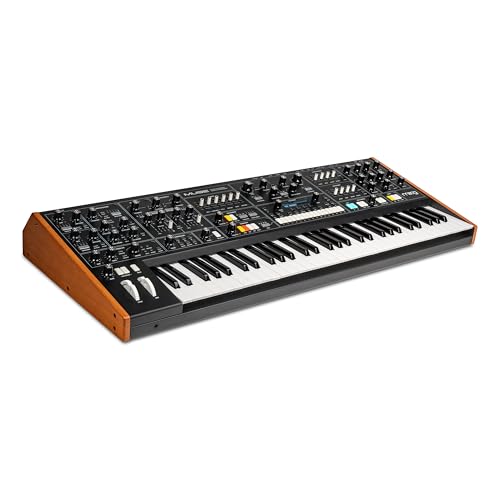
- Eight-voice analog architecture with dual VCOs and dual filters
- Performance controls plus stereo Diffusion Delay
- Polyphonic sequencing, chord memory, and 256 patch locations
Best For: Expressive analog polyphony on stage or in the studio
Standalone Keyboard Production

- 37-key keyboard paired with 16 MPC pads and touchscreen control
- Standalone MPC3 production with sampling and sequencing
- USB-C, MIDI, Ableton control, and extensive factory content
Best For: Live keyboard performance and complete standalone production
Expressive Monosynth Performance

- Two wavefolding VCOs, sub-oscillator, and ladder filter
- 32 full-size velocity- and aftertouch-sensitive keys
- Sequencer, arpeggiator, CV, MIDI, USB-C, and audio input
Best For: Expressive analog basses, leads, and modular performance
Hands-On Monosynth

- Dedicated monosynth for studio and live use
- Alloy-steel body in gray
- 10.1-pound, substantial build
Best For: Performers wanting a dedicated hardware monosynth
Polyphonic Performance Powerhouse
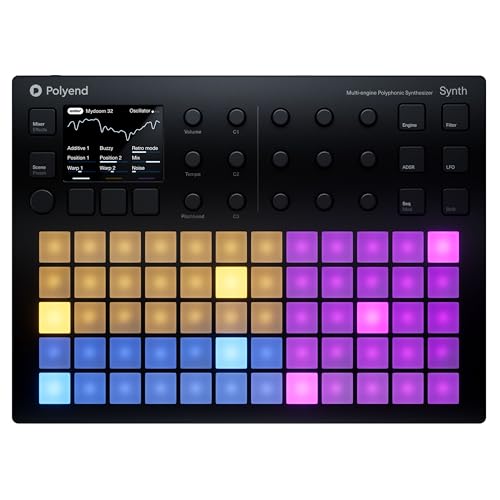
- 8-voice polyphonic desktop synthesizer
- 60 RGB pads with polyphonic aftertouch
- Eight engines and step sequencer
Best For: Expressive live performers using pads and sequencing
Compact MIDI Control Hub

- 25 velocity-sensitive mini keys
- Eight pads, knobs, and pitch/modulation control
- USB-powered control for virtual instruments
Best For: Portable laptop-based live performance rigs
Best Portable FM Option
M-VAVE Wireless FM Synthesizer

- Battery-powered with a built-in speaker
- Six operators and 32 FM algorithms
- Effects, arpeggiator, sequencer, and three MIDI options
Best For: Portable live performers who want hands-on FM synthesis and flexible connectivity
Best Pocket Retro Pick
Stylophone Original Pocket Synthesizer

- Pocket-sized and powered by three AA batteries
- Three octaves with optional vibrato
- Built-in speaker, headphone socket, and 3.5mm connectivity
Best For: Portable retro accents, beginners, and stylus-based performance
Best for Novelty Stage Effects

- Wider neck and full-sized deluxe design
- Pitch slides, wah effect, and vibrato controls
- 3.5mm connection for headphones, amps, and speakers
Best For: Expressive, theatrical live parts and distinctive stage presentation
Portable MPC Creativity – Akai MPC Sample
For shoppers seeking music synthesizers for live performance, the Akai MPC Sample is a compact, battery-powered option for sampling, sequencing, and effects-driven beatmaking. Its built-in speaker, microphone, rechargeable battery, pads, and standalone workflow make it especially practical for mobile or DAWless setups.
Best For: Portable beatmaking, finger drumming, sampling, and compact live rigs.
Pros:
- Standalone operation with a rechargeable battery, speaker, microphone, and microSD storage
- 16 responsive MPC pads and a 2.4-inch color display support fast hands-on workflows
- Includes internal effects, real-time timestretching, repitching, and sample chopping
- Offers line, headphone, MIDI, sync, and USB-C connectivity for live and studio integration
Cons:
- It is centered on sampling and beatmaking rather than traditional keyboard synthesis
- MIDI DIN connection requires a separate 1/8-inch-to-DIN adapter
The MPC Sample is a strong choice when portability and immediate sampling matter more than a full keyboard. It can function as a self-contained performance tool or as a compact addition to a larger live setup.
Analog Polyphonic Centerpiece – Moog Muse
The Moog Muse is a premium performance-focused instrument for musicians comparing music synthesizers for live performance. Its eight analog voices, knob-per-function layout, stereo effects, arpeggiator, chord memory, and polyphonic sequencer give it the scope to serve as a centerpiece from stage to studio.
Best For: Polyphonic analog performance, expressive sound design, and studio-to-stage setups.
Pros:
- Eight analog voices with dual VCOs, dual filters, modulation VCOs, and stereo VCAs
- Hands-on controls provide direct access to core sound-shaping parameters
- Includes a stereo Diffusion Delay, arpeggiator, chord memory, and polyphonic sequencer
- Provides 256 patch locations, including 224 preloaded patches and two user banks
Cons:
- Its 32-pound weight and 39-inch width make it less portable than compact performance synths
- Its premium, full-size design may be more instrument than a minimalist live rig requires
The Muse fits performers who want substantial analog polyphony and immediate control rather than a lightweight travel instrument. Its sequencing and patch memory also make it useful for building repeatable live sets.
Standalone Keyboard Production – Akai MPC Key 37 G2
The Akai MPC Key 37 G2 combines a 37-key synth-action keyboard with MPC pads, sampling, sequencing, and a touchscreen. For music synthesizers for live performance, it is a versatile all-in-one choice for players who want to perform melodic parts, trigger rhythms, and build complete arrangements without a computer.
Best For: Keyboard-based live production, hybrid performance, sampling, and standalone song creation.
Pros:
- Combines 37 full-size keys, pitch and mod wheels, and 16 velocity-sensitive MPC pads
- MPC3 OS supports standalone arrangement, up to 16 stereo audio tracks, and 32 plugin instruments per project
- Seven-inch touchscreen and one-cable USB-C connectivity streamline control and integration
- Includes more than 20GB of factory content plus Ableton Live Control Mode
Cons:
- The 37-key format is more compact than a full-size keyboard but still requires meaningful setup space
- Its broad production feature set may be more complex than a dedicated synth for simple live parts
The MPC Key 37 G2 is a practical bridge between a keyboard workstation, sampler, and performance controller. Choose it when live playing and complete track construction need to happen in the same instrument.
Expressive Monosynth Performance – Moog Messenger
The Moog Messenger is a portable-format monophonic analog synthesizer for performers who prioritize expressive basses, leads, and hands-on sound shaping. Its 32 full-size keys, velocity and aftertouch, sequencer, arpeggiator, and broad connectivity make it a focused option among music synthesizers for live performance.
Best For: Expressive monophonic basses and leads, hands-on stage playing, and modular integration.
Pros:
- Two wavefolding VCOs, a sub-oscillator, and a resonant ladder filter provide extensive analog tone shaping
- Full-size keys include velocity and aftertouch for expressive performance
- Integrated 64-step sequencer and arpeggiator support evolving live parts
- Offers CV patch points, external audio input, DIN MIDI, USB-C MIDI, and pedal connections
Cons:
- Monophonic design limits it to one note at a time rather than chords or polyphonic pads
- Its 32-key format is smaller than a full keyboard while the instrument remains substantial in size
The Messenger is best suited to players who want a dedicated analog voice with strong tactile control and expressive key response. It is especially compelling for bass and lead duties in a live rig that already includes polyphonic instruments.
Hands-On Monosynth – MS-1 MK II-GY
The Behringer MS-1 MK II-GY is a dedicated monosynth for musicians who want a focused hardware instrument in a live performance setup. Its alloy-steel construction and substantial 10.1-pound weight may suit players who prefer a more robust desktop or stage unit.
Best For: Performers seeking a dedicated gray monosynth for studio and live use.
Pros:
- Designed for both studio and live use.
- Alloy-steel body material.
- Substantial 10.1-pound construction.
Cons:
- As a monosynth, it is focused on monophonic use.
- Its 29.5-inch width may require considerable setup space.
The MS-1 MK II-GY is a straightforward choice when your music synthesizers for live performance setup calls for a dedicated, physically substantial monosynth rather than a compact controller.
Polyphonic Performance Powerhouse – Polyend Synth
The Polyend Synth is an 8-voice polyphonic desktop synthesizer built around hands-on performance control. Its 60 RGB-backlit pads, polyphonic aftertouch, nine customizable combo knobs, eight synth engines, and step sequencer give live players several ways to shape and trigger sounds.
Best For: Live performers who want polyphony, expressive pads, multiple synth engines, and sequencing in a desktop instrument.
Pros:
- 8-voice polyphonic design.
- 60 RGB-backlit performance pads with polyphonic aftertouch.
- Eight synth engines and a built-in step sequencer.
- Nine customizable combo knobs.
Cons:
- Desktop format may require a separate stand or suitable surface.
- Its plastic body may feel less rugged than a metal-bodied instrument.
For players comparing music synthesizers for live performance, the Polyend Synth stands out as the most feature-rich performance-oriented option here, especially if pad control and polyphonic expression are priorities.
Compact MIDI Control Hub – MPK Mini MK3
The Akai Professional MPK Mini MK3 is a compact USB MIDI controller for controlling virtual synthesizers, effects, and DAW sessions during live performance. It combines 25 velocity-sensitive mini keys with eight MPC-style pads, eight assignable knobs, a pitch-and-modulation thumbstick, and a built-in arpeggiator.
Best For: Laptop-based performers who need portable control over virtual instruments and DAW functions.
Pros:
- Compact 0.9-kilogram controller with 25 velocity-sensitive keys.
- Eight backlit MPC-style pads with Note Repeat and Full Level.
- Eight 360-degree knobs for plugin and synth control.
- Built-in arpeggiator and four-way pitch/modulation thumbstick.
Cons:
- It is a MIDI controller, not a standalone synthesizer.
- USB connectivity and power are required.
- Mini keys may be less suitable for players wanting a full-size keyboard feel.
The MPK Mini MK3 is a practical choice among music synthesizers for live performance when your sounds come from a computer or compatible USB setup and portability matters more than standalone hardware.
Best Portable FM Option – M-VAVE Wireless FM Synthesizer
For performers seeking music synthesizers for live performance in a compact format, the M-VAVE combines a battery-powered design, built-in speaker, FM synthesis, and several hands-on performance tools. Its 27 silicone keys, effects, arpeggiator, and sequencer make it a flexible option for mobile sets, practice, and spontaneous ideas.
Best For: Portable live performers who want FM sounds, onboard sequencing, and multiple MIDI connection options.
Pros:
- Battery operation and built-in speaker support playing away from a full setup.
- Six operators and 32 algorithms provide substantial FM sound-shaping range.
- Includes 128 presets, six effects, an arpeggiator, and a 16-step sequencer.
- Offers USB MIDI, wireless Bluetooth MIDI, and 3.5mm MIDI input.
Cons:
- The compact 27-key silicone keyboard may feel limited for traditional keyboard technique.
- Its plastic construction and very light weight may not suit players seeking a substantial stage instrument.
The M-VAVE is the most feature-rich choice here for portable electronic performance. It is especially appealing when built-in sounds, effects, sequencing, and flexible MIDI connectivity matter more than a full-size keyboard.
Best Pocket Retro Pick – Stylophone Original Pocket Synthesizer
The Stylophone is a tiny, battery-powered instrument for performers who want a distinctive sound and an unusual playing method. As a choice among music synthesizers for live performance, it works best as a compact sound-color tool, portable practice instrument, or memorable accent in an electronic setup.
Best For: Beginners and experienced musicians who want a pocket-sized retro synth with a built-in speaker and headphone output.
Pros:
- Highly portable design measures less than 12cm wide and runs on three AA batteries.
- Touch-sensitive metal surface and stylus create an distinctive, easy-to-learn playing experience.
- Provides three octaves, an optional vibrato effect, built-in speaker, and headphone socket.
- Can connect to a computer or other gear using a 3.5mm stereo cable.
Cons:
- The stylus-based interface is less familiar than a conventional keyboard.
- Its compact format and limited feature set may not replace a full live-performance synthesizer.
The Stylophone stands out for character rather than extensive programming. Choose it when portability, vintage-style sound, and an instantly recognizable performance interface are priorities.
Best for Novelty Stage Effects – Otamatone Deluxe Synthesizer
The Otamatone Deluxe brings a theatrical playing style to the live setup, using a touch-sensitive stem rather than conventional keys. For music synthesizers for live performance, it is best viewed as an expressive specialty instrument that can add visual personality, pitch slides, vibrato, and a wah-like effect.
Best For: Performers who want a distinctive stage instrument with amplifier, speaker, or headphone compatibility.
Pros:
- Full-sized deluxe design has a wider neck for more precise playing.
- Touch-sensitive stem supports sliding pitches across roughly four octaves in each of three settings.
- Face squeeze creates a wah effect, while shaking the stem adds vibrato.
- 3.5mm stereo jack connects to headphones, amplifiers, and speakers; a strap and aux cable are included.
Cons:
- The playful, nontraditional design may not suit conventional keyboard parts.
- It uses three AA batteries and offers a specialized sound and playing approach rather than broad synthesizer programming.
The Otamatone Deluxe is a strong choice for memorable live presentation and expressive novelty parts. Its wider neck and external audio connection make it more performance-ready than a purely toy-sized version, but it remains a specialty instrument.
How We Picked the Best Music Synthesizers for Live Performance
We focused on features that matter on stage rather than judging instruments solely by studio specifications. Our selection considers sound-generation flexibility, hands-on control, keyboard or pad playability, portability, power requirements, connectivity, preset access, and how easily each instrument can fit into a live rig.
The lineup spans serious performance keyboards, standalone groovebox-style instruments, compact synths, controllers, and inexpensive specialty options. Because musicians have different setups, we considered both self-contained instruments and products that work best alongside a computer, hardware sequencer, mixer, or audio interface.
Quick Comparison
| Best For | Look For | Recommended Type |
|---|---|---|
| Expressive lead and bass parts | Hands-on controls and responsive keys | Monophonic analog synthesizer |
| Layered chords and pads | Polyphony, presets, and performance controls | Polyphonic synthesizer |
| Complete live production | Built-in sequencing, sampling, and effects | Standalone production keyboard or sampler |
| Computer-based rigs | Reliable MIDI control and compact dimensions | USB MIDI keyboard controller |
| Travel and quick sketches | Battery operation, speaker, and lightweight design | Portable mini synthesizer |
Key Buying Factors for Music Synthesizers for Live Performance
Sound Engine and Polyphony
Analog instruments are often appealing for immediate basses and leads, while digital or multi-engine designs can provide broader timbral variety. Polyphony matters when playing chords, sustained pads, or layered parts; monophonic synths are usually better suited to focused lead and bass work.
Hands-On Control
Look for accessible knobs, faders, pads, pitch controls, and modulation options. Live players should be able to adjust filters, effects, envelopes, or sequences without navigating several menus. Preset buttons, scene recall, and clear displays can also reduce pauses between songs.
Connectivity and Integration
Check the available audio outputs, MIDI connections, USB support, synchronization options, and pedal inputs. A controller may require a computer or external sound source, whereas a standalone synth can be more dependable when you want a compact rig with fewer points of failure.
Portability and Power
Measure the instrument against your transport and stage space. Full-size keyboards offer more playing room but add weight, while mini instruments are easier to carry and position. Battery-powered models can simplify street performances, rehearsals, and backup setups, but confirm battery life and whether the speaker is suitable for anything beyond personal monitoring.
Who Should Buy Which Music Synthesizers for Live Performance?
Choose a full-featured polyphonic synthesizer if you need chords, pads, evolving textures, and a dedicated stage keyboard. Choose a monophonic analog model for prominent basses, leads, and hands-on sound shaping. Choose a standalone production keyboard or sampler if you want sequencing, samples, and arrangement tools without relying on a laptop.
Choose a compact MIDI controller when your main sounds come from software or another module. Choose a battery-powered portable synth for travel, casual performance, or mobile composition. Smaller specialty instruments are best viewed as affordable color instruments, educational tools, or fun additions rather than replacements for a primary stage keyboard.
Before buying, confirm the key size, number of keys, output format, power adapter requirements, and compatibility with your existing equipment. The best choice is the one that provides the sounds and controls you will actually use while remaining easy to transport, connect, and operate under live conditions.