Recording away from the studio calls for equipment that is portable, dependable, and compatible with the devices you already carry. The best audio press boxes for mobile recording can help distribute interview audio, connect microphones, or capture music directly to a phone, tablet, or computer.
Our roundup includes dedicated press-box hardware alongside compact USB interfaces and recording accessories, so you can choose a setup that matches your workflow, input needs, and recording environment.
Best 10 Audio Press Boxes for Mobile Recording Picks for 2026
For Multi-Mic Press Events

- One line input feeds 12 mic outputs
- Transformer-isolated outputs help limit interference
- 20 Hz–20 kHz range with 150-ohm outputs
Best For: Press conferences and multi-reporter audio distribution
For Portable Studio Kits

- Includes interface, condenser mic, headphones, and software
- Compact 24-bit/96 kHz USB-C recording system
- Two-channel design suits small recording setups
Best For: Portable music, podcasting, and beginner recording kits
For Direct Mobile DJ Recording
EvermixBox5 Mobile DJ Interface
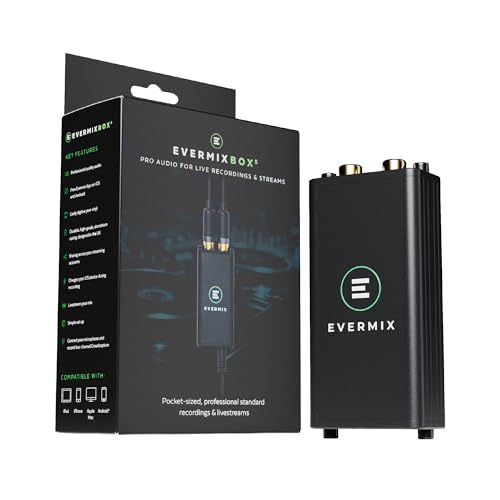
- RCA input captures audio from DJ mixers
- USB-C connection supports compatible mobile devices
- Compact 90-gram design for travel
Best For: Mobile DJ recording to iPhone or compatible Android devices
Portable Acoustic Booth
Foldable Vocal Isolation Shield

- Two-inch foam reduces reflections and echo
- Folds for travel and compact storage
- Supports desk or compatible stand use
Best For: Mobile voiceover, podcast, audiobook, and vocal recording
Two-Channel Recording Hub
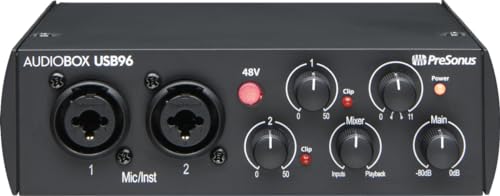
- Two mic preamps with 48V phantom power
- USB bus-powered for portable use
- Supports up to 24-bit/96 kHz recording
Best For: Portable two-input microphone and instrument recording
Mobile Creator Interface
MAONO P1 High-Gain USB Interface
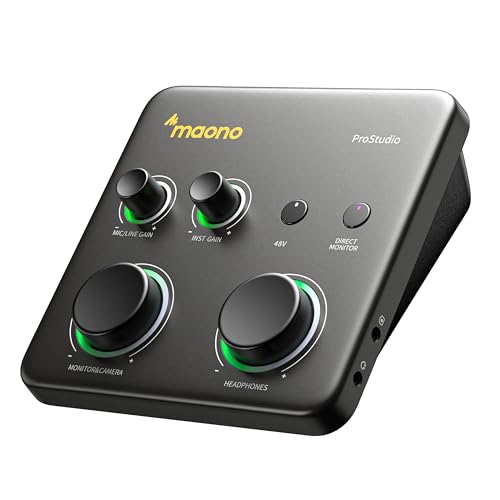
- Up to 70 dB of microphone gain
- Supports computers, phones, tablets, and cameras
- Includes direct monitoring and loopback features
Best For: Solo mobile creators recording voice, guitar, podcasts, or livestreams
Best Mobile Recording Pick

- USB-C bus-powered design
- 24-bit/96 kHz recording
- Mic and instrument inputs
Best For: Portable music recording with included software
Best Budget Recording Option
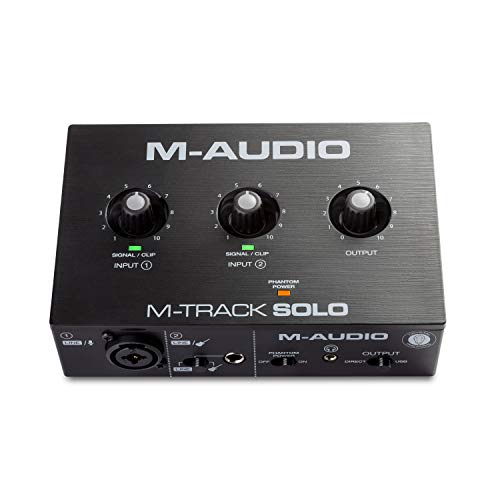
- Two-channel USB interface
- Combo mic/line and instrument inputs
- Zero-latency monitoring switch
Best For: Entry-level recording, podcasting, and streaming
Best DI-Style Mobile Solution
StudioMan MOB-2 Active USB DI Box

- USB-C plug-and-play operation
- Bluetooth smartphone audio
- Balanced XLR outputs with ground lift
Best For: DI routing, live performance, and phone-based audio
For Multi-Mic Press Events – Whirlwind PB12 Press Box
The Whirlwind PB12 is a dedicated choice for audio press boxes for mobile recording when one source needs to feed multiple reporters or recording devices. Its passive design accepts one line input and provides 12 transformer-isolated mic outputs, making it well suited to press conferences, speeches, and other location-based media work.
Best For: Press events, speeches, and multi-reporter recording setups requiring 12 microphone feeds.
Pros:
- Provides one line input and 12 mic outputs.
- Transformer isolation on each output helps reduce crosstalk, ground noise, and interference.
- Offers a 20 Hz–20 kHz frequency range and 150-ohm output impedance.
Cons:
- Passive operation requires a suitable input source and connected recording equipment.
- At 6.1 pounds, it is less compact than small mobile interfaces.
The PB12 is purpose-built for distributing a single audio feed to many microphones. Choose it when output count and isolation matter more than USB connectivity or a compact, all-in-one recording workflow.
For Mobile Creator Workflows – MAONO P2 Hybrid USB Interface
The MAONO P2 is a flexible option for audio press boxes for mobile recording when your setup also includes phones, tablets, computers, or cameras. Dual USB connectivity lets you connect a computer and a phone or iPad simultaneously, while dual XLR inputs support microphones and instruments for recording, streaming, and live content.
Best For: Mobile podcasters, streamers, musicians, and creators recording or streaming from multiple devices.
Pros:
- Supports simultaneous computer and phone or iPad connections through dual USB ports.
- Dual XLR inputs offer 56 dB of gain and up to 24-bit/192 kHz recording.
- Includes direct monitoring, loopback, mute controls, and software support for common recording and streaming applications.
Cons:
- Its creator-focused controls and software features may be more than needed for simple press-feed distribution.
- The supplied notes do not specify included microphones or other audio sources.
The P2 is better suited to an active creator rig than a traditional passive press box. Its strongest advantage is workflow flexibility, particularly when mobile recording, computer production, and live streaming need to work together.
For Portable Studio Kits – PreSonus AudioBox Go Bundle
The PreSonus AudioBox Go Creator Complete bundle is a practical starting point for audio press boxes for mobile recording when you need a compact interface plus basic monitoring equipment. It combines a two-channel USB-C interface with a condenser microphone, headphones, and Studio One 6 Artist Edition software.
Best For: Musicians, podcasters, and producers who want a compact, ready-to-start recording package.
Pros:
- Includes the AudioBox GO interface, M7 condenser microphone, HD7 headphones, and recording software.
- Compact 3.3 x 4.25 x 1.73-inch interface weighs 8.16 ounces.
- Supports 24-bit/96 kHz recording and works with computers, smartphones, and tablets.
Cons:
- Two channels provide less expansion than a dedicated multi-output press box.
- The supplied notes do not identify the interface’s specific input connector layout.
This bundle is appealing when portability and completeness matter. It provides the core pieces for a small recording kit, but users covering larger press events may need more inputs or dedicated output distribution.
For Direct Mobile DJ Recording – EvermixBox5 Mobile DJ Interface
EvermixBox5 DJ Audio Interface – USB-C – iOS & Android Compatible | USB-C Cable
Check Price On AmazonThe EvermixBox5 is a highly compact option for audio press boxes for mobile recording when the source is a DJ mixer or other RCA-equipped setup. It accepts RCA audio, connects to compatible devices through USB-C, and is designed for iOS and Android use in a small 90-gram enclosure.
Best For: DJs and mobile users capturing mixer audio directly to an iPhone or compatible Android device.
Pros:
- USB-C connectivity supports compatible mobile devices.
- RCA audio input fits common DJ mixer outputs.
- Small 3 x 1.5 x 0.5-inch form factor and 90-gram weight suit travel.
Cons:
- Its RCA input is less suitable for direct microphone connection without additional equipment.
- The maximum sample rate is 44.1 kHz.
- The supplied notes list iOS compatibility, while Android support is stated more generally.
The EvermixBox5 prioritizes simple, lightweight capture from a line-level DJ source. It is a convenient mobile recorder for compatible setups, but it is not a replacement for a multi-output press box or a dual-XLR interface.
Portable Acoustic Booth – Foldable Vocal Isolation Shield
For audio press boxes for mobile recording, the TroyStudio Portable Vocal Booth focuses on reducing room reflections around a microphone rather than handling signal conversion. Its foldable design, cable openings, and table-or-stand setup make it practical for recording voiceovers, podcasts, and vocals in rooms without dedicated acoustic treatment.
Best For: Mobile voiceover, podcast, audiobook, and vocal recording where reducing room reverb is the main priority.
Pros:
- Foldable 2-pound design is convenient for travel and storage.
- Two-inch dense foam helps reduce echoes and reflections.
- Works on a desk or compatible microphone stand.
- Large interior accommodates various microphones and recording equipment.
Cons:
- It is an acoustic isolation enclosure, not an audio interface or press-box signal splitter.
- Stand compatibility is limited to mounts under 0.86 inches in diameter.
- Incorrect setup may cause stability problems.
The TroyStudio is best viewed as a portable room-treatment accessory. Pair it with a mobile-friendly interface and microphone when you need cleaner, drier spoken-word recordings away from a studio.
Two-Channel Recording Hub – PreSonus AudioBox 96
For audio press boxes for mobile recording, the PreSonus AudioBox 96 provides a straightforward two-channel interface for connecting microphones, instruments, and monitoring gear. USB bus power removes the need for a separate power supply, making it suitable for portable computer-based recording setups.
Best For: Portable two-input recording with microphones, guitar, bass, or other line-level sources.
Pros:
- USB bus-powered design supports mobile recording without an additional power supply.
- Two Class-A mic preamps and 48V phantom power support compatible condenser microphones.
- Records and plays back at up to 24-bit/96 kHz.
- Includes MIDI I/O, direct monitoring, headphone output, and balanced TRS outputs.
Cons:
- Two input channels may be limiting for larger interviews, panels, or full-band sessions.
- USB 2.0 connectivity may require the appropriate adapter for some mobile devices.
- Phantom power is global rather than individually selectable per input.
The AudioBox 96 is a versatile choice when your mobile press-box workflow needs two microphone or instrument inputs and computer connectivity. Its bundled software also gives new users a useful starting point for recording.
Mobile Creator Interface – MAONO P1 High-Gain USB Interface
For audio press boxes for mobile recording, the MAONO P1 is designed around flexible computer-and-phone workflows. Its dual USB connectivity, high microphone gain, direct monitoring, and compact controls support spoken content, voiceovers, livestreams, and basic guitar recording across compatible devices.
Best For: Solo creators who move between phones, tablets, and computers for voice, guitar, podcast, or livestream production.
Pros:
- Up to 70 dB of gain can support gain-hungry dynamic microphones without an external booster.
- Works with Mac, PC, iPhone/iPad, Android phones, and cameras through its hybrid workflow.
- 24-bit/192 kHz recording, direct monitoring, and 48V phantom power cover common creator needs.
- Loopback and software routing support livestream and desktop-audio workflows.
Cons:
- Its focused setup is not intended as a replacement for a multi-input interface.
- Software routing features may require setup in ProStudio2.
- Device, cable, microphone, and power compatibility should be checked before use.
The P1 is a strong fit for mobile-first creators who need one compact interface for speech, guitar, and streaming. It offers more flexible device switching than a basic desktop-only interface, while remaining aimed at solo recording rather than large press events.
Best Mobile Recording Pick – PreSonus AudioBox GO
For audio press boxes for mobile recording, the PreSonus AudioBox GO stands out as a compact, bus-powered option with USB-C connectivity for compatible computers, phones, and tablets. It supports recording up to 24-bit/96 kHz and can handle a microphone and instrument simultaneously.
Best For: Musicians and mobile creators who want a lightweight interface with strong recording quality and included software.
Pros:
- USB-C bus power eliminates the need for a separate power supply.
- Combines an XLR mic/line input with a dedicated instrument input.
- Offers zero-latency headphone monitoring with an adjustable input/playback mix.
- Includes Studio One Prime and Studio Magic software resources.
Cons:
- Its two-input layout may be limiting for larger recording setups.
- Compatibility depends on the connected device and operating system.
The AudioBox GO is a practical choice when portability, phantom-powered microphone support, and high-resolution recording matter more than having many inputs.
Best Budget Recording Option – M-AUDIO M-Track Solo
For audio press boxes for mobile recording, the M-AUDIO M-Track Solo is a straightforward two-channel interface for recording, podcasting, and live streaming. Its combination XLR/line input, instrument input, and USB connectivity supports flexible setups with Mac or PC systems.
Best For: Budget-conscious users recording vocals, guitar, instruments, podcasts, or streams with a simple interface.
Pros:
- Provides both a combo XLR/line input and a separate line/instrument input.
- Includes phantom power for compatible condenser microphones.
- USB/Direct switching supports zero-latency monitoring.
- Includes MPC Beats and Ableton Live Lite software.
Cons:
- Its maximum sample rate is 48 kHz, lower than some competing interfaces.
- Monitoring connections use 1/8-inch headphones and stereo RCA outputs.
The M-Track Solo keeps the essentials accessible and affordable, making it a sensible entry-level solution for compact recording and streaming workflows.
Best DI-Style Mobile Solution – StudioMan MOB-2 Active USB DI Box
For audio press boxes for mobile recording, the StudioMan MOB-2 combines an active stereo DI box with a USB audio interface. USB-C connection, Bluetooth audio, balanced XLR outputs, and a ground-lift switch make it suited to musicians and creators moving between personal devices, monitors, and live sound systems.
Best For: Guitarists, keyboard players, live performers, and creators who need DI connectivity plus wireless phone audio.
Pros:
- Connects to PCs, smartphones, and tablets without driver installation.
- Bluetooth pairing enables wireless audio streaming from a smartphone.
- Balanced left and right XLR outputs connect to monitors or PA systems.
- Ground-lift switching can help address ground-loop noise.
Cons:
- The supplied notes do not specify recording bit depth or maximum sample rate.
- At 1.54 pounds, it is heavier than the smaller interfaces listed here.
- Its DI-focused design may be less suited to multi-microphone recording.
The MOB-2 is best viewed as a versatile DI and connectivity hub rather than a traditional multi-input studio interface, especially when Bluetooth and balanced outputs are priorities.
How We Picked the Best Audio Press Boxes for Mobile Recording
We evaluated these 10 products by looking at their connection options, portability, input and output flexibility, device compatibility, power requirements, and suitability for field recording. Because “press box” can describe both a dedicated audio distribution unit and a compact mobile recording interface, this list covers both categories while clearly distinguishing their typical uses.
We also considered whether each product is practical for journalists, podcasters, musicians, DJs, and content creators who may need to record with a phone, tablet, or laptop outside a permanent studio.
Quick Comparison
| Best For | What to Look For | Typical Product Type |
|---|---|---|
| Press conferences | One input feeding multiple isolated outputs | Passive press box |
| Phone and tablet recording | USB-C, iOS/Android support, and suitable gain | Mobile audio interface |
| Music and podcast production | Clean preamps, instrument inputs, and software support | USB interface or creator bundle |
| DJ and live-event capture | Line-level connectivity, stereo options, and direct monitoring | DJ interface or DI box |
| Noisy recording spaces | Microphone isolation and reflection control | Portable vocal booth |
Key Buying Factors for Audio Press Boxes for Mobile Recording
Connection and Device Compatibility
Check whether the unit connects through USB-C, USB-A, Lightning, XLR, or standard line outputs. A model marketed for mobile use may still require an adapter, powered hub, or separate cable for your phone or tablet.
Input, Output, and Signal Type
Dedicated press boxes are designed to distribute one microphone or mixer feed to several outputs. USB interfaces instead convert microphone, instrument, or line signals for recording. Confirm whether you need mic-level, instrument-level, or line-level connectivity before buying.
Power and Monitoring
Bus-powered equipment is convenient, but it can drain a phone or tablet quickly. Look for external power options when recording for long sessions. Headphone monitoring, a volume control, and low-latency direct monitoring are especially useful for checking levels in the field.
Portability and Durability
For mobile work, prioritize compact dimensions, a protective enclosure, dependable connectors, and controls that are easy to operate without a full desktop setup. A soft case or cable-management solution can also make a small rig much easier to transport.
Who Should Buy Which Audio Press Boxes for Mobile Recording?
Journalists and event crews: Choose a dedicated passive press box if you need to send one source to multiple reporters or cameras at a press conference.
Solo podcasters and interviewers: A compact USB interface with phone or tablet compatibility is generally more useful than a multi-output press splitter, particularly when recording one or two microphones.
Musicians: Look for an interface with clean preamps, an instrument input, phantom power when required, and recording software. A bundle can be worthwhile if you also need headphones, a microphone, or production tools.
DJs and live audio users: Prioritize stereo operation, line-level inputs, direct monitoring, and a durable connection layout. A DI-style product may be a better fit for integrating mixers and live systems than a basic vocal interface.
Creators recording in untreated rooms: Add a portable vocal booth or isolation shield when reflections and background sound are limiting clarity. It will not replace acoustic treatment, but it can improve close-mic recordings in temporary spaces.