The best single-board computer kits for STEM projects make it easier to move from theory to working prototypes. The options in this roundup cover beginner electronics, Python coding, IoT, robotics, AI, and guided classroom-style learning.
Use the buying guide below to compare hardware, software support, project variety, and the learning curve before choosing a kit for a student, classroom, hobbyist, or home lab.
Best 10 Single-Board Computer Kits for STEM Projects Picks for 2026
Best Guided Learning Kit

- Interactive curriculum with step-by-step projects
- Includes sensors, motors, LEDs, and breadboard
- Designed for beginner STEM electronics learning
Best For: Students and educators introducing Arduino and circuit concepts
Best Component Variety

- 22+ guided Arduino projects
- Includes sensors, displays, motors, and input modules
- Solderless setup for beginner-friendly building
Best For: Classrooms, coding clubs, and hands-on Arduino experimentation
Best All-in-One Python Board

- Pre-installed Debian and Python environment
- Built-in touchscreen, sensors, microphone, and buzzer
- Wi-Fi, Bluetooth, and expandable interfaces
Best For: Python, IoT, and interactive STEM projects with minimal setup
Best Connected Project Kit
ELEGOO ESP-32 Super Starter Kit

- Dual-core ESP-32 with Wi-Fi and Bluetooth
- 35+ modules and 200+ parts included
- 30+ guided Arduino IDE projects
Best For: IoT, wireless electronics, and progressive maker learning
AI Learning Pick
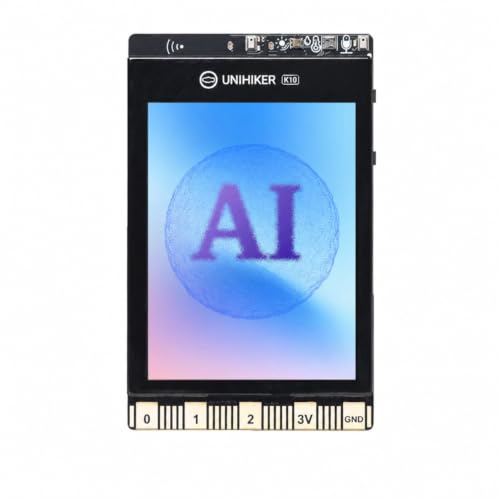
- Preloaded vision AI and offline voice features
- TinyML support for custom models
- Mind+ and MicroPython programming
Best For: Beginners exploring AI, computer vision, and IoT
Most Complete Electronics Set
ELEGOO UNO R3 Starter Kit V2.0

- 250+ parts across 71 component types
- 34 guided Arduino-compatible projects
- Labeled sensor shield simplifies wiring
Best For: Structured electronics learning and classroom projects
Connected Project Pick
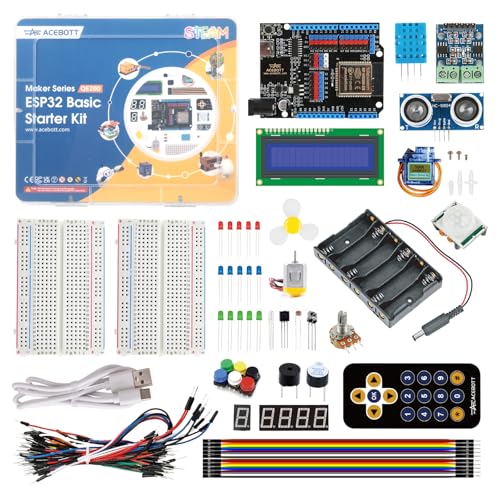
- Wi-Fi and Bluetooth ESP32 board
- 96 components for 40+ projects
- Graphical, Arduino IDE, and Python options
Best For: Beginners building wireless and IoT projects
Best All-in-One Arduino Kit

- Original Arduino UNO R4 WiFi included
- 300+ components and 50 projects
- 100+ video lessons for guided learning
Best For: Beginners, students, and makers exploring Arduino and IoT
Best 3-in-1 Learning Path

- 192 items and 87 guided projects
- Covers Arduino, IoT, and smart cars
- Includes tutorials and technical support
Best For: Beginners progressing from basic circuits to robotics
Best R4 Minima Project Kit

- Original Arduino Uno R4 Minima included
- ESP8266 supports WiFi and IoT projects
- 50+ tutorials cover Arduino, IoT, and smart cars
Best For: Learners ready for modern Arduino and connected projects
Best Guided Learning Kit – Arduino Student Kit
The Arduino Student Kit is a structured choice for learners exploring single-board computer kits for STEM projects. Its guided curriculum, breadboard, sensors, and beginner-friendly builds help students connect programming concepts with practical electronics.
Best For: Students, educators, and beginners learning Arduino fundamentals through guided projects.
Pros:
- Includes step-by-step tutorials, video resources, and interactive curriculum.
- Supports hands-on projects involving circuits, sensors, actuators, and programming.
- Provides LEDs, resistors, capacitors, motors, sensors, and a breadboard for experimentation.
Cons:
- The emphasis on guided learning may be less suitable for advanced makers seeking a high-performance computer.
- Its recommended age range and curriculum are geared primarily toward younger beginners.
This kit stands out when clear instruction matters more than wireless connectivity or advanced computing. It offers a practical path from basic circuits to simple programmed projects.
Best Component Variety – ELEGOO UNO R3 Starter Kit
The ELEGOO UNO R3 Project Super Starter Kit is a broad, hands-on option among single-board computer kits for STEM projects. With 22+ guided lessons and a large assortment of modules, it lets beginners practice coding, sensing, displays, and motor control without soldering.
Best For: Homeschool units, coding clubs, family projects, and STEM classrooms needing varied Arduino-compatible activities.
Pros:
- Includes 22+ guided projects covering LEDs, sensors, motors, displays, and input devices.
- Offers a substantial assortment of components, including an LCD, ultrasonic sensor, DHT11, joystick, motors, and relay.
- Solderless breadboard and pre-soldered LCD help beginners focus on wiring and code.
Cons:
- The many components may require careful organization and part identification.
- The power module should not be used with input voltage above 9V.
- Younger learners may need experienced adult supervision.
Choose this kit if project variety is a priority. Its downloadable tutorials and example code provide a useful starting point, while the extensive parts list leaves room for custom experiments.
Best All-in-One Python Board – UNIHIKER M10
The UNIHIKER M10 offers a more computer-like approach to single-board computer kits for STEM projects. Its pre-installed Debian system, Python environment, touchscreen, wireless connectivity, and integrated sensors reduce setup work for interactive IoT and programming activities.
Best For: Beginners and high school learners building Python, IoT, data-visualization, and sensor-based projects.
Pros:
- Pre-installed Debian and Python support allow coding through Jupyter Notebook or VS Code.
- Built-in 2.8-inch touchscreen, microphone, gyroscope, accelerometer, light sensor, and buzzer reduce the need for extra modules.
- Wi-Fi, Bluetooth, micro:bit accessory compatibility, and Gravity interfaces support expansion.
Cons:
- It offers less of a traditional breadboard-and-discrete-component learning experience out of the box.
- The included kit contents are relatively limited compared with larger component starter kits.
This is a strong fit for learners who want to move quickly into Python and connected projects. The touchscreen and integrated sensors make it especially convenient for portable, interactive prototypes.
Best Connected Project Kit – ELEGOO ESP-32 Super Starter Kit
The ELEGOO ESP-32 Super Starter Kit is designed for connected single-board computer kits for STEM projects. Its dual-core ESP-32 board, built-in Wi-Fi and Bluetooth, 35-module assortment, and 30+ project tutorial support a progression from basic electronics to IoT builds.
Best For: Students, makers, and hobbyists exploring wireless devices, sensors, displays, and introductory IoT applications.
Pros:
- ESP-32 board includes dual-core processing, Wi-Fi, Bluetooth 4.2, and Arduino IDE compatibility.
- Includes more than 35 modules and over 200 parts for varied experiments.
- Online tutorial provides 30+ projects with code, circuit diagrams, and step-by-step instructions.
Cons:
- The broader IoT feature set may present a steeper learning curve than a basic UNO kit.
- Projects require access to the online tutorial and a compatible Arduino IDE setup.
Consider this kit when wireless control and IoT experimentation are central goals. It combines substantial component variety with a guided learning path and room for more advanced projects.
AI Learning Pick – UNIHIKER K10 AI Coding Board
The UNIHIKER K10 is a compact choice among single-board computer kits for STEM projects when the focus is introductory AI, computer vision, voice control, and IoT. Its preloaded models, onboard display, sensors, and support for graphical coding and MicroPython let beginners start experimenting without assembling a large collection of separate modules.
Best For: Beginners and STEM learners exploring offline AI, TinyML, computer vision, and connected sensor projects.
Pros:
- Combines vision AI, offline voice recognition, and TinyML in one board.
- Includes four pre-installed vision models for face, pet, QR-code, and motion projects.
- Built-in camera, microphone, speaker, environmental sensors, Wi-Fi, Bluetooth, and 2.8-inch display support varied projects.
- Supports Mind+ graphical programming and MicroPython.
Cons:
- Includes only one USB port.
- The included media lists the board and a Type-C USB cable rather than a large component assortment.
- Warranty coverage is listed as 30 days.
Choose this board if AI experimentation and quick visual feedback matter more than a broad traditional electronics parts collection. It is especially approachable for learners who want to move from block-based coding into MicroPython.
Most Complete Electronics Set – ELEGOO UNO R3 Starter Kit V2.0
The ELEGOO UNO R3 V2.0 is a strong all-around option among single-board computer kits for STEM projects when hands-on electronics practice is the priority. With more than 250 pieces across 71 component types, 34 guided projects, and an upgraded sensor shield, it provides a structured path from basic circuits to multi-module builds.
Best For: Teens, classrooms, makers, and beginners who want a broad Arduino-compatible electronics curriculum.
Pros:
- Includes 34 guided projects covering LEDs, displays, sensors, games, alarms, and motors.
- Provides more than 250 pieces across 71 component types.
- The labeled sensor shield helps reduce loose wiring and connection errors.
- PDF lessons cover setup, C-language fundamentals, libraries, code references, and troubleshooting.
Cons:
- It is designed for Arduino-compatible projects rather than built-in Wi-Fi or Bluetooth applications.
- The manufacturer recommends the kit for ages 12 and up, so younger learners may need extra guidance.
- The large number of components can require organization despite the included compartment case.
This kit makes sense for buyers who want many parts and a clearly staged project sequence in one package. Its sensor shield and organized case also make repeated classroom or home use more manageable.
Connected Project Pick – ACEBOTT ESP32 Electronics Kit
The ACEBOTT ESP32 kit suits learners comparing single-board computer kits for STEM projects with an emphasis on wireless control and IoT. Its ESP32 board includes Wi-Fi and Bluetooth, while the 96-piece set, three programming approaches, and more than 40 tutorials provide a progression from simple circuits to connected applications.
Best For: Beginners, STEM clubs, and aspiring makers learning electronics, Arduino IDE, Scratch-style coding, Python, and IoT.
Pros:
- ESP32 connectivity includes built-in Wi-Fi and Bluetooth for wireless projects.
- Offers graphical coding, Arduino IDE programming, and Python support.
- Includes 96 labeled components such as ultrasonic and PIR sensors, motors, RGB LEDs, and a breadboard.
- More than 40 step-by-step tutorials create a progressive learning path.
Cons:
- The kit has one USB port.
- Its broad programming options may require learners to choose a starting path before advancing.
- The supplied notes do not specify a display or camera module.
This is a practical fit for learners who want to progress beyond basic LED circuits into wireless and smart-home-style projects. The labeled components and staged tutorials help make the ESP32 platform less intimidating for first-time builders.
Best All-in-One Arduino Kit – Elite Explorer Kit
For shoppers comparing single-board computer kits for STEM projects, the SunFounder Elite Explorer Kit stands out as a complete Arduino learning package. It combines an original Arduino UNO R4 WiFi with more than 300 components, 50 guided projects, and over 100 video lessons for a structured introduction to electronics, coding, and IoT.
Best For: Beginners ages 8 and up, students, teachers, and aspiring makers who want a broad, guided Arduino and IoT curriculum.
Pros:
- Includes the original Arduino UNO R4 WiFi with built-in WiFi and Bluetooth.
- Offers 300+ components and 50 projects across basic, fun, and IoT activities.
- Includes more than 100 free video lessons, open-source code, and beginner support.
Cons:
- The large number of components and projects may feel overwhelming to complete beginners.
- Its strongest learning path is centered on Arduino C++ and the Arduino ecosystem.
This is a strong pick when project variety and guided instruction matter most. The UNO R4 WiFi also gives learners room to move from basic circuits into connected applications without immediately replacing the board.
Best 3-in-1 Learning Path – Ultimate Starter Kit
The SunFounder Ultimate Starter Kit is a versatile option among single-board computer kits for STEM projects, pairing an Arduino-compatible controller with 192 items and 87 projects. Its three-part curriculum covers foundational electronics, IoT, and smart-car builds, with online tutorials and video courses designed for beginners age 8 and up.
Best For: Learners who want one kit that progresses from simple Arduino exercises to robot-car and IoT projects.
Pros:
- Combines basic, IoT, and smart-car projects in one package.
- Includes sensors, actuators, power supplies, motors, a breadboard, and an Arduino-compatible Uno.
- Provides 87 projects plus expert-designed video and online tutorials.
- Offers community and technical support for troubleshooting.
Cons:
- It uses an Arduino-compatible Uno rather than the original Arduino board listed in the Elite Explorer kit.
- The broad 3-in-1 curriculum may require more organization as projects become more advanced.
This kit is a practical choice for families or classrooms seeking variety. Its smart-car and IoT sections add motivating build goals after students learn the basics of LEDs, sensors, and simple control logic.
Best R4 Minima Project Kit – 3-in-1 Super Starter Kit
For STEM learners wanting newer Arduino hardware, the SunFounder 3-in-1 Super Starter Kit includes an original Arduino Uno R4 Minima, an ESP8266 WiFi module, and components for Arduino, IoT, and smart-car projects. More than 50 step-by-step tutorials provide a structured route from basic programming to connected sensors and robotic builds.
Best For: Beginners and engineers who want to learn on the Arduino Uno R4 Minima while exploring WiFi-enabled IoT and smart-car projects.
Pros:
- Includes the original Arduino Uno R4 Minima with a 32-bit ARM Cortex-M4 processor and 5V logic.
- Combines core Arduino lessons, smart-car construction, and IoT projects.
- Includes an ESP8266 module for wireless communication and cloud-oriented builds.
- Provides 50+ tutorials and access to technical support and an online community.
Cons:
- It does not include built-in WiFi on the Uno R4 Minima; wireless projects use the included ESP8266 module.
- The project scope may be more advanced than a basic LED-and-sensor starter kit.
This is a compelling option for learners who want an updated Arduino foundation and a clear path toward connected projects. The included ESP8266 and smart-car components make it especially suitable for hands-on IoT experimentation.
How We Picked the Best Single-Board Computer Kits for STEM Projects
We focused on kits that combine a programmable board with the components, documentation, and project support needed for hands-on learning. The selection includes Arduino-compatible boards, ESP32 and ESP8266 platforms, Python-focused single-board computers, and newer boards built for AI or computer-vision experiments.
We also considered the quality of the learning path. Step-by-step tutorials, Scratch or Python compatibility, wiring guidance, active ecosystems, and a useful mix of sensors and output components can make a major difference for beginners. Because STEM needs vary, the list includes both inexpensive starter bundles and more capable development kits.
Quick Comparison
| Best For | Recommended Platform Type | What to Look For |
|---|---|---|
| First electronics projects | Arduino UNO starter kit | Clear tutorials, breadboard, LEDs, sensors, and motors |
| IoT and wireless experiments | ESP32 or ESP8266 kit | Wi-Fi, Bluetooth, Arduino IDE support, and networking examples |
| Python and Linux learning | UNIHIKER-style computer | Onboard display, storage, Debian support, and Python tools |
| AI and computer vision | AI coding board | Camera support, offline processing, TinyML examples, and expansion options |
| Robotics and smart-car builds | Arduino robotics kit | Motors, chassis components, sensors, and structured project guides |
Key Buying Factors for Single-Board Computer Kits for STEM Projects
Board and Software Compatibility
Arduino UNO boards are approachable for learning circuits and embedded programming, while ESP32 platforms add Wi-Fi and Bluetooth for connected projects. Python-oriented boards can offer a gentler path into scripting, Linux, displays, and data-driven applications. Check whether the kit supports the software your learner already uses, such as Arduino IDE, Scratch, or Python.
Included Components and Project Coverage
A board alone is rarely enough for meaningful experimentation. Look for a breadboard, jumper wires, LEDs, buttons, resistors, displays, sensors, and motor-control parts. A larger component assortment is useful only when the tutorials explain how to use it, so compare both the parts list and the number and quality of guided projects.
Learning Curve and Documentation
Beginners benefit from wiring diagrams, downloadable manuals, video lessons, and troubleshooting notes. More advanced learners may prefer open-ended kits with broader GPIO access and fewer restrictions. Also verify whether the curriculum is included, online, or available only through a separate app or account.
Expansion and Durability
Choose a kit that can grow with the learner. Standard headers, a large user community, compatible shields, and replaceable components make future projects easier. For classrooms, consider organized storage, repeated-use parts, electrical safety, and whether several students can work through the same lesson sequence.
Who Should Buy Which Single-Board Computer Kits for STEM Projects?
Choose an Arduino UNO starter bundle for a first introduction to circuits, sensors, and simple automation. It is usually the clearest option for younger learners and beginners who want visual, step-by-step progress. Pick an ESP32 kit when wireless control, smart-home concepts, Bluetooth, or web-connected projects are priorities.
Python learners and students interested in Linux, displays, or more computer-like applications should consider a UNIHIKER board. For AI, computer vision, voice recognition, or TinyML, an AI-focused coding board is the better fit, provided the learner is ready for a steeper technical curve. Robotics-oriented SunFounder kits are well suited to students who stay motivated by moving vehicles and tangible mechanical builds.