Choosing among blood pressure monitors for beginners can feel complicated, especially when cuff sizes, memory functions, and smart features vary widely. The right home monitor should be simple to operate, comfortable to use, and easy to read consistently.
We selected 10 upper-arm models with beginner-friendly controls and practical features for routine home tracking. Use the guide below to compare them and match the best option to your budget, household, and monitoring habits.
Best 10 Blood Pressure Monitors for Beginners Picks for 2026
Smart Simplicity
iHealth Track Smart Upper Arm Monitor
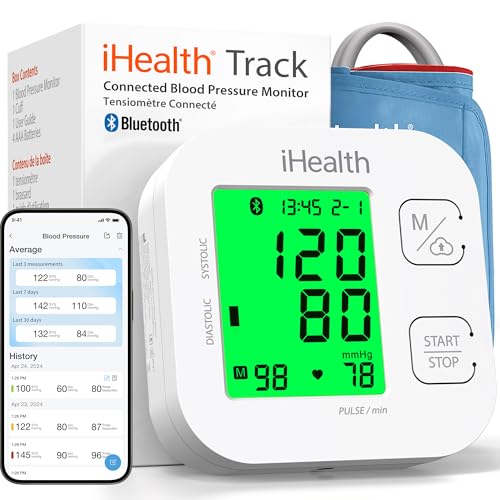
- Two-button operation with large color-coded display
- Stores 99 readings; app supports unlimited tracking
- Wide cuff and rhythm-disturbance alerts
Best For: Beginners wanting simple controls and optional smartphone tracking
One-Touch Value
AILE FDA Cleared Upper Arm Monitor

- Automatic one-touch measurement
- Two users can store 99 readings each
- Large display and 8.7–16.5-inch cuff
Best For: Households sharing a simple monitor with separate memory profiles
Connected Confidence
OMRON Bronze Upper Arm Monitor

- Bluetooth app tracks and shares unlimited readings
- Irregular-heartbeat and hypertension indicators
- 9–17-inch cuff, case, and batteries included
Best For: Beginners who want connected trend tracking
Flexible Home Kit
Greater Goods Automatic Monitor

- AC adapter and batteries included
- Two-user memory with large backlit display
- Wide cuff and travel case included
Best For: Beginners wanting flexible power and a complete kit
Best Overall

- One-touch operation for simple readings
- 9–17-inch wide-range cuff
- Movement and irregular-heartbeat alerts
Best For: Beginners seeking a simple, established-brand monitor
Best for Easy-Read Displays

- Large backlit LED display
- Two-user memory with 120 readings each
- Battery or Type-C power options
Best For: Beginners who value readability and stored readings
Best for Guided Tracking
SmartHeart Automatic Arm Monitor

- One-button automatic inflation and deflation
- Cuff-placement and movement indicators
- Two-user memory with date/time stamps
Best For: Beginners wanting guidance during setup and tracking
Easy-Read Choice
Alcedo B21 Blood Pressure Monitor

- Large LCD and adjustable voice guidance
- One-button operation with three-reading average
- Two-user memory with 120 readings each
Best For: Beginners who want guided, easy-to-read home monitoring
Simple Family Pick
Sinocare One-Button BP Monitor

- One-button operation and large 3.6-inch screen
- Posture, hypertension, and irregular-heartbeat indicators
- Two users can save up to 99 readings each
Best For: Families seeking simple controls and flexible power options
High-Capacity Tracker

- Backlit display with enlarged numbers
- 240 total records for two users
- Three-reading average and included carrying case
Best For: Beginners who want extensive history and clear viewing
Smart Simplicity – iHealth Track Smart Upper Arm Monitor
For beginners comparing blood pressure monitors for beginners, the iHealth Track offers straightforward two-button operation, a large color-coded display, and a wide-range upper-arm cuff. It can also store readings on the monitor or sync them to a compatible smartphone app.
Best For: Beginners who want simple controls plus optional app-based tracking.
Pros:
- Two-button operation and large, backlit numbers are easy to use and read.
- Wide cuff fits upper arms from 8.7 to 16.5 inches.
- Stores up to 99 readings and supports unlimited readings in the iHealth app.
- Automatically flags possible heart rhythm disturbances.
Cons:
- App features require a compatible iOS or Android device and Bluetooth 4.0 or later.
- Uses four AAA batteries, with no plug-in power option listed.
The iHealth Track is a well-rounded starting point when visible results and optional smartphone tracking matter. Follow the manual carefully and use the correct cuff placement for consistent readings.
One-Touch Value – AILE FDA Cleared Upper Arm Monitor
The AILE monitor is a practical choice for blood pressure monitors for beginners because it automates inflation, measurement, and display with one touch. Its large LCD and two-user memory make routine home tracking easy to organize.
Best For: Individuals or couples who want simple operation and separate reading histories.
Pros:
- One-touch operation automatically completes the measurement.
- Large LCD shows systolic pressure, diastolic pressure, and pulse together.
- Stores 99 readings for each of two users, with date and time.
- Includes a cuff for arms measuring 8.7 to 16.5 inches.
Cons:
- The supplied notes do not list Bluetooth or smartphone syncing.
- Only the included cuff size is specified; measure your arm before ordering.
With uncomplicated controls and generous dual-user storage, the AILE is suited to basic home monitoring. Its battery operation and external power option also provide flexibility for everyday use or travel.
Connected Confidence – OMRON Bronze Upper Arm Monitor
For shoppers seeking blood pressure monitors for beginners with connected tracking, the OMRON Bronze combines automatic upper-arm measurements with Bluetooth access to the OMRON connect app. It also provides alerts for hypertension indicators and irregular heartbeats.
Best For: Beginners who want app-based trend tracking and a recognized home-monitoring brand.
Pros:
- Bluetooth connects with the OMRON connect app for storing and sharing readings.
- Detects irregular heartbeats and provides hypertension indicator alerts.
- Wide-range cuff fits arms from 9 to 17 inches.
- Includes a case, quick-start guide, manual, and four AA batteries.
Cons:
- On-device memory stores up to 14 readings, which is less than some alternatives.
- App connectivity requires a compatible smartphone.
The Bronze is a strong fit when a beginner wants more than a basic display, particularly for reviewing trends in an app or sharing reports. The included case and batteries make it ready for home use out of the box.
Flexible Home Kit – Greater Goods Automatic Monitor
The Greater Goods monitor keeps blood pressure monitors for beginners approachable with a large backlit display, two-user memory, and both battery and wall-adapter power. Its included case also makes the kit convenient to store or take on the road.
Best For: Beginners who want flexible power options and a complete, travel-friendly kit.
Pros:
- Includes the monitor, cuff, AC adapter, four AAA batteries, and travel case.
- Wide-range cuff fits arms from 8.7 to 16.5 inches.
- Large backlit display and two-user memory support everyday monitoring.
- Detects irregular heartbeats.
Cons:
- The supplied notes do not list Bluetooth or smartphone app support.
- Additional cuff sizes are available through customer support rather than included.
This is a practical beginner kit for users who prefer a simple monitor without requiring phone connectivity. The choice between plug-in and battery power is especially useful for regular home use and travel.
Best Overall – OMRON Iron Upper Arm Monitor
For beginners looking for blood pressure monitors, the OMRON Iron offers straightforward one-touch operation alongside features designed to support more consistent home readings. Its wide-range cuff fits 9–17-inch arms, while movement alerts and irregular-heartbeat detection provide useful reading feedback.
Best For: Beginners who want a simple, clinically validated upper-arm monitor from a widely recommended brand.
Pros:
- One-button operation makes routine measurements simple.
- Wide-range D-ring cuff fits 9–17-inch arms.
- Includes body-movement alerts and irregular-heartbeat detection.
- Comes with the monitor, cuff, instructions, and quick-start guide.
Cons:
- Battery powered, with no stated rechargeable option.
- Provides a single-reading display rather than listed multi-user memory.
The OMRON Iron is a practical starting point when ease of use and brand familiarity matter most. Its guidance features can help beginners follow better measurement habits, though users wanting extensive reading storage may prefer another model.
Best for Easy-Read Displays – Oklar Upper Arm BP Monitor
Among blood pressure monitors for beginners, the Oklar stands out for its one-button design and large backlit LED display. It can store up to 120 readings for each of two users, making it useful for tracking results at home, while its battery or Type-C power options add flexibility.
Best For: Beginners and households that want a highly readable display, two-user memory, and flexible power.
Pros:
- One-button operation simplifies measurement.
- Large backlit LED screen shows clear digits.
- Stores up to 120 readings per user for two users.
- Supports 3 AA batteries or the included Type-C cable.
Cons:
- The Type-C connection powers the unit but does not recharge it.
- The cuff fits 8.7–15.7-inch arms, a narrower range than some wide-range models.
The Oklar is especially approachable for users who prioritize visibility and basic tracking. Its memory and dual-power setup add convenience, although buyers should confirm the cuff fits their arm before ordering.
Best for Guided Tracking – SmartHeart Automatic Arm Monitor
For beginners comparing blood pressure monitors, the SmartHeart Automatic Arm Monitor combines one-button measurement with visual cues that make results easier to interpret. It includes a wide-range cuff for 8.66–16.53-inch arms, two-user memory, and indicators for cuff placement, movement, hypertension ranges, and irregular heartbeat.
Best For: Beginners who want built-in measurement guidance and simple two-person result tracking.
Pros:
- Fully automatic inflation and deflation with one-button start.
- Two memory banks store up to 99 measurements each with date and time.
- Cuff-placement and excessive-movement indicators support better technique.
- Includes four AAA batteries, bilingual instructions, and a results log.
Cons:
- Memory capacity is lower than some competing two-user monitors.
- Its latex cuff may not suit users avoiding latex materials.
The SmartHeart is a strong fit for first-time users who want prompts during setup and measurement rather than a bare-bones monitor. Its visual indicators and included charting log make ongoing home tracking more structured.
Easy-Read Choice – Alcedo B21 Blood Pressure Monitor
For beginners comparing blood pressure monitors for beginners, the Alcedo B21 emphasizes simple operation and readable results. Its one-button design, large LCD, talking function, and automatic three-reading average make routine home checks easier to follow.
Best For: Beginners who want voice guidance, clear readings, and separate memory for two users.
Pros:
- Large LCD with clear number values and adjustable live voice broadcast.
- One-button operation, three-reading averaging, cuff-position checks, and movement detection.
- Two-user memory stores up to 120 readings per user.
- Comfortable cuff fits arms measuring 8.7 to 16.5 inches.
Cons:
- The talking feature may be unnecessary for users who prefer silent operation.
- It is designed for adult upper-arm use rather than wrist measurement.
The Alcedo is a beginner-friendly pick when readability and guided operation matter most. Its generous cuff range and substantial two-user storage also make it practical for shared household tracking.
Simple Family Pick – Sinocare One-Button BP Monitor
The Sinocare is a straightforward option for people shopping for blood pressure monitors for beginners. A one-button start, large 3.6-inch screen, posture detection, and color-coded blood pressure indicators help simplify the measuring process.
Best For: Beginners and families who want simple controls, flexible power, and two-user tracking.
Pros:
- One-button operation requires no setup or calibration.
- Large 3.6-inch display shows readings clearly.
- Supports two users with up to 99 stored readings per user.
- Offers 4 AAA battery power or Type-C charging and includes irregular-heartbeat alerts.
Cons:
- The Type-C cable is not included.
- Its cuff range, 8.6 to 16.5 inches, may not suit arms outside that measurement.
Sinocare focuses on approachable operation and useful feedback rather than complicated controls. The posture reminder, hypertension indicator, and dual-user storage give beginners practical support for regular home measurements.
High-Capacity Tracker – B23 Upper-Arm BP Monitor
For beginners who want more detailed tracking, this B23 monitor combines one-press operation with a large backlight display and substantial memory. It also averages three consecutive readings and includes a carrying case for convenient storage or transport.
Best For: Beginners who want clear nighttime viewing, extensive history storage, and shared household use.
Pros:
- Large backlight display with enlarged font supports easier reading day or night.
- Stores up to 240 records for two users, with 120 readings per user.
- Three-reading averaging and arm-position indicators support consistent measurements.
- Detects heart rate and alerts users to irregular heartbeats; a case is included.
Cons:
- The cuff fits arms from 8.7 to 15.7 inches, a narrower range than some alternatives.
- The listed power source is corded electric, which may be less convenient for battery-only use.
The B23 stands out for beginners who expect to review readings over time or share the monitor with another person. Its backlit screen, automatic operation, and carrying case add convenience, while the cuff fit should be checked before purchase.
How We Picked These Blood Pressure Monitors for Beginners
We focused on automatic upper-arm monitors because they generally offer a more dependable positioning method than wrist models for home users. The selected products were evaluated for setup simplicity, cuff adjustability, display readability, memory capacity, user profiles, operation speed, and useful alerts.
FDA clearance or stated regulatory clearance can be a helpful starting point, but it does not guarantee that every reading will be accurate for every person. Proper cuff fit and consistent measurement technique matter just as much. Always follow the manufacturer’s instructions and your clinician’s advice.
Quick Comparison
| Best for | Features to prioritize | Models to consider |
|---|---|---|
| First-time users | One-button operation, clear display, automatic inflation | Greater Goods, Alcedo, Sinocare |
| Couples or families | Two-user memory and substantial reading storage | AILE, OMRON Iron, large-memory dual-user model |
| Smartphone tracking | App connectivity and digital history | iHealth Track |
| Larger arms | Wide-range or adjustable cuff | iHealth Track, SmartHeart, Sinocare |
| Brand-focused shoppers | Established manufacturer and straightforward controls | OMRON Bronze, OMRON Iron |
Key Buying Factors for Blood Pressure Monitors for Beginners
Cuff Fit Comes First
Measure the circumference of the upper arm before buying. A cuff that is too small or too large can produce misleading results. Look for a stated range that includes your arm measurement, with room for comfortable placement without pinching.
Choose an Upper-Arm Design
Upper-arm monitors are usually the better default for beginners because the cuff sits closer to heart level when positioned correctly. Wrist monitors can be convenient, but they require stricter positioning and may be less forgiving of movement.
Prioritize Readable Results
A large, high-contrast screen helps users read systolic pressure, diastolic pressure, and pulse without relying on a phone. Backlighting may be useful in dim rooms, while color-coded indicators can provide a quick reference without replacing medical interpretation.
Match Memory to Your Routine
Basic memory is enough for occasional checks, but frequent monitoring benefits from multiple user profiles, date-and-time stamps, and larger storage. App connectivity can simplify long-term tracking, though it is unnecessary if you prefer a paper log or the monitor’s built-in memory.
Look for Practical Error Alerts
Irregular-heartbeat, movement, and cuff-placement indicators can help identify readings that may need to be repeated. They are reminders to check technique, not diagnoses. Sit quietly for about five minutes, keep your feet flat, support your arm, and avoid talking during measurement.
Who Should Buy Which Blood Pressure Monitors for Beginners?
Choose a straightforward one-button model if you want the least complicated setup or are buying for an older adult. A dual-user monitor is the better fit for couples, while a high-memory model suits households that need to review many readings. Select a wide-range cuff model when standard sizing may not fit comfortably. If you already track health data on a phone, the iHealth Track is worth considering for a more connected routine.
Whichever monitor you choose, take readings at consistent times and use the same arm and posture whenever possible. Compare unusual or unexpected results with repeat readings, and contact a healthcare professional for guidance rather than adjusting medication based on a single measurement.