Choosing among beginner-friendly digital anatomy models can be difficult when listings mix hands-on torso kits, skeletons, brain replicas, and interactive learning toys. The right option depends on the learner’s age, study goals, available space, and need for removable or movable parts.
This roundup compares 10 approachable anatomy models for home education, classroom demonstrations, medical-study displays, and introductory biology practice. Use the guide below to narrow your choice by educational value, construction, labeling, and ease of use.
Best 10 Beginner-Friendly Digital Anatomy Models Picks for 2026
Best Overall Torso Model
EVOTECH 15-Piece Human Anatomy Torso

- 15 removable organ and body pieces
- Portable 11-inch PVC model with wood base
- Includes a colorful educational brochure
Best For: Beginners studying major organs and torso anatomy
Best for Hands-On Learning
Interactive 60-Piece Human Body Figure
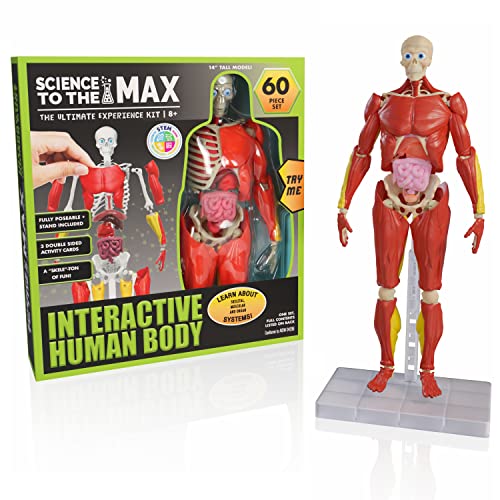
- 60 removable bones, muscles, and organs
- Fully articulated 14-inch poseable figure
- Includes stand and illustrated instruction cards
Best For: Children ages 8–14 learning anatomy through play
Best for Skin Anatomy

- Shows four detailed skin and tissue components
- Includes numbered parts and teaching manual
- PVC construction is reusable and easy to clean
Best For: Skin anatomy study, teaching, and patient explanations
Best for Growing Learners
MyBODY Magnetic Anatomy Puzzle

- Seven magnetic layers cover major body systems
- Large color-coded pieces suit young learners
- Includes info sheets, labels, and QR codes
Best For: Ages 5+ home learning, homeschooling, and classrooms
Detailed Brain Study

- Life-size brain with vessel details
- Eight magnetic detachable components
- Durable, washable PVC construction
Best For: Introductory brain anatomy lessons and clinical explanations
Interactive Kids’ Anatomy

- Explanation and Quiz learning modes
- 15+ removable organs, muscles, and bones
- Includes book and knowledge cards
Best For: Children ages 6–12 learning anatomy through play
Compact Starter

- 17.7-inch desktop skeleton
- Movable limbs and jaw
- Removable skull cap
Best For: Beginners needing a simple skeletal study model
Organ Study Pick

- 15 detachable components
- Colorful educational manual
- Stable, compact 11-inch base
Best For: Students learning major organ systems
Best Simple Pick

- 15 removable organ parts
- Covers multiple body systems
- Portable and easy to clean
Best For: Interactive classroom and home anatomy lessons
Best Overall Torso Model – EVOTECH 15-Piece Human Anatomy Torso
For shoppers seeking beginner-friendly digital anatomy models but preferring a hands-on display, this portable EVOTECH torso offers a straightforward introduction to organ placement. Its 15 removable pieces, colorful brochure, and compact design make it practical for anatomy, nursing, or physiology study.
Best For: Students and beginners who want a compact, display-ready torso model for learning major organs and their relative positions.
Pros:
- Includes 15 detachable body parts, including the brain, heart, lungs, stomach, liver, pancreas, spleen, and intestines.
- Non-toxic PVC construction is easy to clean, with hand-painted details on an oak-wooden base.
- Parts are designed to fit securely, and a colorful educational brochure is included.
- Portable 11-inch format works for classes, home study, or shelf display.
Cons:
- Small organ pieces should be kept away from young children who may put them in their mouths.
- The manufacturer recommends the model for ages 14 and up.
This is a solid choice when you want a traditional 3D anatomy aid rather than a screen-based resource. It focuses on core organs and torso structure without adding unnecessary complexity.
Best for Hands-On Learning – Interactive 60-Piece Human Body Figure
This interactive figure is a strong hands-on alternative for families comparing beginner-friendly digital anatomy models. The 14-inch articulated body can be posed and rebuilt with 60 pieces, giving children a playful way to explore bones, muscles, organs, and movement.
Best For: Children ages 8 to 14, homeschoolers, and budding science learners who benefit from assembly and interactive play.
Pros:
- Includes 60 removable bones, muscles, and organs for repeated assembly and exploration.
- Fully articulated and poseable design helps demonstrate how the body moves.
- Comes with an adjustable stand and colorful illustrated instruction cards.
- Supports anatomy, biology, health, wellness, science, and STEM learning objectives.
Cons:
- The numerous pieces may require organization during assembly and storage.
- It is a toy-oriented educational model, so it may be less suitable for advanced medical study.
- The supplied details list no manufacturer warranty.
Choose this model when engagement and movement matter as much as anatomical labeling. Its poseable construction makes introductory lessons more active than a static display model.
Best for Skin Anatomy – 35X Human Anatomy Skin Model
For learners who want a focused introduction rather than a full-body model, this 35X skin anatomy display provides a close look at the layers and appendages of skin. Its numbered components, teaching manual, and clear construction make it a useful supplement to beginner-friendly digital anatomy models.
Best For: Medical students, educators, practitioners, and learners studying skin structure or explaining basic skin anatomy visually.
Pros:
- Magnified 35X to show the epidermis, dermis, subcutaneous tissue, and deeper tissue connections.
- Displays hair, sebaceous glands, sweat glands, nerve endings, and other skin appendages.
- Numbered parts and corresponding anatomical illustrations support teaching and demonstrations.
- Handcrafted PVC construction is designed to be durable, reusable, and easy to wipe clean.
Cons:
- Focuses specifically on skin anatomy rather than the complete human body.
- Its medical-study orientation may be more detailed than needed for very young learners.
This is best viewed as a specialized teaching aid. It adds depth to skin-related lessons and patient communication but works most effectively alongside broader anatomy resources.
Best for Growing Learners – MyBODY Magnetic Anatomy Puzzle
This large magnetic puzzle offers a clear, layer-by-layer starting point for families considering beginner-friendly digital anatomy models. Children build upward from a skeleton base through seven color-coded systems, while information sheets, labels, and QR codes add guided learning.
Best For: Children ages 5 and up, homeschoolers, classrooms, and families wanting an anatomy activity that can grow with different skill levels.
Pros:
- Seven layers cover the skeleton, muscular, digestive, nervous, circulatory, and respiratory systems.
- Large, color-coded magnetic pieces are designed for easy handling and display.
- Includes seven information sheets, reusable sticky labels, instructions, and QR-code learning content.
- Four interchangeable top-body options offer two boy and two girl designs.
Cons:
- The magnetic puzzle format may provide less anatomical detail than a specialist medical model.
- Its larger footprint requires more storage or display space than a compact torso model.
This is an approachable choice for progressive learning, especially when children need to see how body systems stack together. The magnetic layers make it easy to revisit concepts as learners advance.
Detailed Brain Study – BEAMNOVA Human Brain Model
For learners seeking beginner-friendly digital anatomy models, this life-size brain model offers a straightforward, hands-on way to identify major brain regions. Its eight detachable, magnet-connected pieces and visible vessel details make it practical for classroom study, therapy explanations, and repeated handling.
Best For: Anatomy students, educators, and clinicians introducing brain structures and basic neuroscience concepts.
Pros:
- Life-size format with clearly represented brain structures and vessel details.
- Eight detachable parts support hands-on learning and reassembly practice.
- Lightweight, washable PVC construction is suited to frequent handling.
- Includes structures such as the cerebellum, brain stem, pons, and medulla oblongata.
Cons:
- Focuses on the brain rather than providing a full-body anatomy overview.
- Small magnets and detachable parts may require careful handling.
- The supplied notes do not mention electronic or interactive digital functions.
This is a durable physical model rather than a screen-based tool, but its clear segmentation and realistic scale can make foundational brain anatomy easier to visualize.
Hands-On Torso Learning – 15-Piece Human Body Model
For beginners comparing beginner-friendly digital anatomy models, this torso kit provides a tangible alternative for learning organ placement. The 15 removable pieces, illustrated details, and included installation manual give students a guided way to explore the major organs and restore the model after disassembly.
Best For: Medical education, classroom demonstrations, anatomy enthusiasts, and learners who want a broad torso overview.
Pros:
- Includes a torso and 15 detachable anatomical components.
- Covers major structures including the heart, lungs, brain, liver, stomach, and intestines.
- Realistic organ positioning and hand-painted details support visual learning.
- PVC construction can be wiped with alcohol after disassembly.
Cons:
- Small removable pieces may not be suitable for unsupervised children.
- It is a torso model, so it does not provide a complete full-body view.
- Reassembly may require consulting the included installation tutorial.
Its wide selection of removable organs makes this a useful starting point for learners who benefit from physically matching structures to their positions, especially when paired with the manual.
Interactive Kids’ Anatomy – Science Can Human Body Model
For children beginning with beginner-friendly digital anatomy models, this interactive kit combines removable body parts with spoken explanations and quizzes. The 11-inch torso, illustrated book, and knowledge cards create an approachable introduction to anatomy for home learning, school projects, or STEM-focused play.
Best For: Children ages 6–12 who learn well through interactive quizzes, tactile exploration, and guided reading.
Pros:
- Explanation and Quiz modes make learning more interactive.
- Includes 15 or more removable organs, muscles, and bones.
- Comes with a 26-page anatomy book and four double-sided knowledge cards.
- Supports hands-on STEM learning and observation skills.
Cons:
- Requires three AA batteries, which are not included.
- Designed for children, so it may not offer the depth expected by advanced students.
- Removable parts should be kept away from young children who could swallow small pieces.
This is the most accessible option for younger beginners because it adds audio-style guidance and quiz practice to the physical model, helping turn basic anatomy review into an active learning activity.
Compact Starter – Mini Movable Skeleton
For shoppers seeking beginner-friendly digital anatomy models in a compact physical format, this 17-inch skeleton offers a straightforward introduction to major skeletal structures. Its movable limbs and removable skull cap make basic observation and demonstration easy in classrooms, study spaces, or clinical settings.
Best For: Beginners, students, and anyone needing a simple desktop skeleton for learning or display.
Pros:
- Movable arms and legs support basic demonstrations.
- Removable skull cap and movable jaw add useful interaction.
- Compact 17.7-inch height and 4.75-inch square base suit small spaces.
- Lightweight design is portable and easy to install or remove.
Cons:
- Shows mainly basic detail in the spine, ribs, and skull.
- It does not include removable internal organs.
This is a no-frills entry-level model rather than a detailed full anatomy teaching aid. Choose it when portability, simple skeletal orientation, and a small footprint matter most.
Organ Study Pick – 15-Part Anatomy Torso
This compact torso is a practical choice for learners comparing beginner-friendly digital anatomy models with hands-on alternatives. Its 15 detachable components let students examine the brain, heart, lungs, esophagus, aorta, and skull individually while the included manual supports identification and basic study.
Best For: Students and self-learners studying core respiratory, circulatory, and nervous-system structures in limited space.
Pros:
- 15-piece design supports direct exploration of major organs and structures.
- Includes a colorful educational manual for identifying parts and functions.
- Compact 11-inch size fits desks, home study areas, and small labs.
- Sturdy base keeps the assembled torso upright for display or demonstrations.
Cons:
- Focuses on selected core structures rather than a complete organ set.
- Small components may require careful handling during assembly.
Its combination of detachable parts, a guide manual, and a stable base makes this a balanced introductory torso. It is especially useful when you want more organ detail than a basic skeleton without needing a large model.
Best Simple Pick – Removable Organ Torso
For a more comprehensive introduction to anatomy, this 10.5-inch torso combines beginner-friendly digital anatomy models with an interactive physical learning approach. Its 15 removable parts cover the head, chest, digestive organs, and abdominal structures, allowing learners to practice where each organ fits.
Best For: Kids, students, teachers, healthcare learners, and demonstrations that benefit from assembling a full torso organ layout.
Pros:
- Includes 15 removable parts spanning respiratory, digestive, urinary, and nervous systems.
- Hands-on assembly helps learners understand organ placement and relationships.
- Stable base keeps the torso upright, with organs designed not to fall out easily while standing.
- Portable size is easy to carry, display, and clean with water and a cloth.
Cons:
- Small pieces should be kept away from young children who may put them in their mouths.
- Assembly may be challenging for some younger learners.
This model offers broader organ coverage than the simpler torso option and is well suited to interactive instruction. Its removable pieces make it useful for repeated demonstrations, though supervision is important around small children.
How We Picked These Beginner-Friendly Digital Anatomy Models
We focused on models that make basic human anatomy easier to see, handle, and discuss. The selection includes removable-part torso models, interactive kits, skeletons, brain models, and skin-focused teaching aids so beginners can choose a format that matches their learning style.
We also considered practical details such as scale, assembly, movable joints, included manuals, age suitability, display value, and whether the model supports hands-on identification rather than simply serving as decoration. Product listings should be checked for the latest dimensions, materials, and included components before purchase.
Quick Comparison
| Model Type | Best For | What to Look For |
|---|---|---|
| Removable-part torso | Organ identification and demonstrations | Secure pieces, clear labeling, storage |
| Interactive anatomy kit | Children and guided learning | Age range, activity pieces, instructions |
| Skeleton model | Bone structure and movement | Joint mobility, stability, scale |
| Brain model | Introductory neuroanatomy | Visible regions, vessels, durability |
| Skin model | Surface anatomy and tissue layers | Magnification, manual, visual detail |
Key Buying Factors for Beginner-Friendly Digital Anatomy Models
Learning Objective
Choose a torso if the priority is organs and body systems, a skeleton for bones and joint movement, or a brain model for a focused introduction to neuroanatomy. A broader kit may be more useful for younger learners who need activities and guided discovery.
Scale and Detail
Small models are easier to store but can make labels and small structures difficult to inspect. Larger models generally work better for demonstrations, while highly magnified specialty models can explain details that a standard torso cannot show.
Construction and Usability
Removable components should fit securely and be easy to replace. For skeletons, look for stable stands and joints that move without feeling excessively loose. If the model is intended for repeated classroom use, durable construction and a clear teaching manual matter more than appearance alone.
Age and Supervision
Check the recommended age, small-part warnings, and assembly requirements. Younger children may benefit from magnetic or interactive designs, while older students may prefer labeled structures and less toy-like presentation.
Who Should Buy Which Beginner-Friendly Digital Anatomy Models?
Parents and elementary learners: Choose an interactive kit with accessible language and manageable pieces. Middle- and high-school students: A removable-part torso or skeleton offers better support for biology assignments and review. Neuroanatomy beginners: Select a dedicated brain model with visible regions or vessels. Teachers: Favor larger, clearly organized models that can be handled or viewed by a group. Collectors and display users: Prioritize scale, finish, stability, and the structures you want visible when the model is assembled.
No single model covers every anatomy topic equally well. Start with the learner’s immediate objective, then compare construction, included parts, and instructional support to find the most useful fit.