Choosing among digital anatomy models for students is easier when you match the model to your course, study space, and preferred learning style. The options in this roundup cover compact revision aids, removable-organ torsos, detailed musculature models, brains, and articulated skeletons.
Use the guide below to compare construction, scale, labeling, portability, and practical classroom value before choosing a model for independent study, teaching, or display.
Best 10 Digital Anatomy Models for Students Picks for 2026
Interactive Revision Pick

- Folding cube covers nine body areas and systems
- Compact 7 × 7 × 7 cm revision aid
- Engaging alternative to posters and flash cards
Best For: Portable anatomy revision and educational gifting
Hands-On Brain Study Pick

- Life-size model with vessel details
- Eight magnetic detachable components
- Durable washable PVC for teaching use
Best For: Brain anatomy classes, demonstrations, and patient education
Musculature Demonstration Pick

- 17-inch, 16-piece removable torso
- Hand-painted non-toxic PVC construction
- Freestanding oak-wooden base frame
Best For: Classroom musculature study and laboratory display
Professional Brain Teaching Pick

- 1:1-scale, color-coded brain on a base
- Two removable parts reveal internal structures
- Highlights frontal, parietal, occipital, and temporal lobes
Best For: University neuroscience teaching and clinical demonstrations
Compact Organ Explorer

- 15 detachable anatomy components
- Compact 11-inch desktop format
- Manual and stable display base included
Best For: Portable organ-focused study and classroom demonstrations
Deluxe Torso Study Set
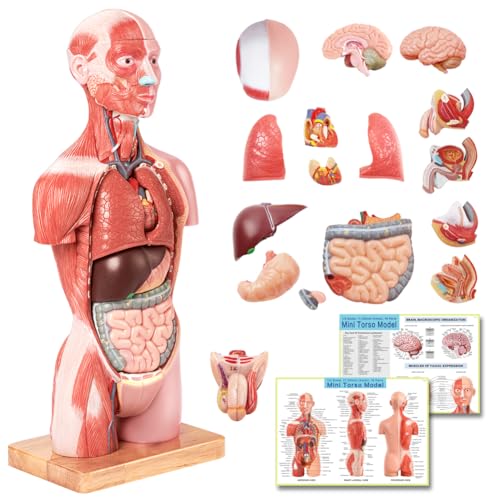
- 16 removable organs and body parts
- Includes male and female parts
- Wooden base and educational brochure
Best For: Detailed torso, nursing, and physiology study
Entry-Level Skeleton Guide
17-Inch Movable Skeleton Model

- Movable arms and legs
- Removable skull cap and movable jaw
- Compact base for small study spaces
Best For: Introductory skeletal anatomy and desktop display
Best for Muscle-System Study

- 33-inch, half-life-size format
- 27 removable muscles and organs
- 347+ numbered structures
Best For: Detailed muscular-system study and classroom demonstrations
Best Portable Torso

- Compact 11-inch torso design
- 15 detachable anatomical pieces
- Oak-wooden base and brochure
Best For: Portable classroom study of organs and their positions
Best Budget-Friendly Study Aid

- 15 removable organ parts
- Lightweight 1.23-pound design
- Stable, wipe-clean construction
Best For: Compact introductory anatomy and physiology practice
Interactive Revision Pick – Human Anatomy Study Cube
For students seeking digital anatomy models for students alternatives that are compact and engaging, this anatomy study cube offers a hands-on revision format. Its folding design reveals information on nine body systems and parts, including the brain, heart, lungs, eye, ear, and digestive system.
Best For: Students, nursing learners, medical trainees, and anatomy enthusiasts who want portable revision material or an unusual educational gift.
Pros:
- Interactive folding format makes revision more engaging.
- Covers nine anatomy topics in a compact 7 × 7 × 7 cm cube.
- Includes detailed information on systems such as circulation, muscles and bones, and digestion.
Cons:
- It is a physical cube rather than a digital or three-dimensional electronic model.
- The compact format may limit how much information can be displayed at once.
This is a playful, space-saving study aid rather than a full anatomical replica. Choose it when portability and quick revision matter more than removable parts or life-size detail.
Hands-On Brain Study Pick – BEAMNOVA Human Brain Model
When comparing digital anatomy models for students with physical teaching tools, this BEAMNOVA brain model stands out for its life-size scale and detachable construction. The eight-part PVC model uses magnets to separate and reassemble major brain components for classroom or clinical demonstrations.
Best For: Anatomy teachers, medical students, healthcare professionals, therapy practices, and patient education settings that need a durable brain model for repeated handling.
Pros:
- Life-size 15 × 12 × 11 cm design shows major brain structures and vessels.
- Eight detachable components support hands-on study of internal anatomy.
- Durable, washable PVC construction is suited to frequent classroom or clinical use.
Cons:
- Focuses specifically on brain anatomy rather than the whole body.
- The product is physical, so it does not provide digital interactivity or software-based labeling.
This model is a practical choice for learners who benefit from physically separating brain sections and examining their relationships. Its magnets and durable PVC body make it more suitable for shared teaching than delicate display-only models.
Musculature Demonstration Pick – Deluxe Human Torso Model
For buyers exploring digital anatomy models for students alongside traditional physical displays, this 17-inch human torso provides a detailed musculature-focused study option. The 16-piece model is made from non-toxic PVC, hand painted, and mounted on an oak-wooden base frame for freestanding classroom display.
Best For: Medical education, anatomy learning, laboratory study, and students who need a larger visual model for studying the human musculature.
Pros:
- Large 17-inch torso provides a substantial classroom display.
- Sixteen removable pieces support closer examination of the model.
- Hand-painted PVC construction is easy to clean and mounted on a wooden base.
Cons:
- Its main emphasis is musculature and torso anatomy rather than full-body coverage.
- The larger 2.38 kg format is less portable than compact study aids.
- Supplied notes do not specify the individual anatomical structures represented by each removable piece.
This is the strongest fit for learners who want a visible, freestanding musculature model for group instruction or desk-side study. It offers more physical presence than a compact revision tool, but requires more storage space.
Professional Brain Teaching Pick – ZENFUN Life-Size Brain Model
Students and educators comparing digital anatomy models for students may prefer this ZENFUN model when a life-size physical aid is more useful for instruction. Its color-coded, two-part brain separates to reveal internal structures and identifies the frontal, parietal, occipital, and temporal lobes.
Best For: College-level students, medical professionals, university instructors, clinical communication, and advanced neurological teaching.
Pros:
- 1:1-scale design measures 20.5 × 17 × 15 cm and includes a stable white base.
- Two-part removable construction helps demonstrate internal brain anatomy.
- Color-coded regions support teaching of the four major lobes and functional divisions.
Cons:
- It covers brain anatomy rather than the complete human body.
- Its two-part design offers fewer detachable sections than some multi-piece brain models.
- It is intended for professional use and is not suitable for children under 14.
This model is well suited to structured university or clinical demonstrations where scale, stability, and clear lobe identification are priorities. It is a focused teaching instrument, not a general-purpose anatomy reference.
Compact Organ Explorer – 15-Part Human Body Model
For students comparing digital anatomy models for students with hands-on study aids, this 11-inch torso model offers a compact way to examine major organs and structures. Its detachable components, colorful manual, and stable base support classroom demonstrations or focused home review.
Best For: Students who want a portable, organ-focused anatomy model for studying the brain, heart, lungs, and related structures.
Pros:
- Separates into 15 components, including a two-part brain, heart, lungs, skull, esophagus, and aorta.
- Compact 11-inch size fits classroom desks, home study areas, and smaller lab spaces.
- Includes a colorful educational manual and a sturdy display base.
Cons:
- Focuses on core torso and organ structures rather than a complete skeleton or full-body model.
- Its smaller size may provide less visual scale than larger teaching models.
This is a practical choice when portability and removable organ components matter more than full-body coverage. The included manual adds useful support for self-guided identification and review.
Deluxe Torso Study Set – 16-Part Musculature Model
Among anatomy models for students, this 17-inch torso model is designed for broader organ-system exploration. It includes 16 removable parts, a colorful brochure, and a wood-style base, making it suitable for anatomy, nursing, or physiology study where relative organ positions are important.
Best For: Anatomy, nursing, and physiology learners seeking a larger torso model with removable internal organs and male and female parts.
Pros:
- Includes 16 detachable parts, covering the brain, heart, lungs, stomach, liver, intestines with pancreas, and other structures.
- Features male and female parts for a broader teaching presentation.
- Hand-painted PVC construction, a wooden base, and a colorful educational brochure.
- Portable design can be taken to class, while securely fitting pieces support display.
Cons:
- At about 5 pounds, it is less lightweight than smaller torso models.
- Some organ pieces are small and require care around young children.
The extensive removable-part layout makes this a strong option for learners who need more than a basic organ overview. Its size and included reference material also make it useful for demonstrations and shelf display.
Entry-Level Skeleton Guide – 17-Inch Movable Skeleton Model
Students looking beyond organ models may prefer this compact skeleton for learning basic bone structure. As a simple alternative to digital anatomy models for students, it has movable arms and legs, a removable skull cap, and a movable jaw for introductory study or display.
Best For: Beginners who need a small, straightforward skeleton for studying the spine, ribs, skull, and basic limb positioning.
Pros:
- Approximately 17.7 inches tall with a compact 4.75-by-4.75-inch base.
- Movable arms and legs allow basic positional observation.
- Removable skull cap and movable jaw add useful skull-study features.
- Lightweight, entry-level design suits small study areas and clinical settings.
Cons:
- Shows only basic anatomical detail in the spine, ribs, and skull.
- Does not provide the removable-organ coverage of a torso anatomy model.
This model works best as a no-frills introduction to skeletal anatomy. Its modest footprint and movable limbs make it convenient for desks, demonstrations, and basic review, but advanced learners may need a more detailed skeleton.
Best for Muscle-System Study – 27-Part Human Muscle Model
For students comparing digital anatomy models for students with a hands-on alternative, this 33-inch, half-life-size model offers an expansive view of the muscular system alongside removable organs. Numbered structures, detachable muscles, and an included color manual support detailed study and classroom demonstration.
Best For: Medical students, teachers, and learners who want an in-depth physical model of muscles and major organs.
Pros:
- Includes 27 removable parts, including multiple muscles, organs, brain sections, lungs, heart, and digestive structures.
- Features more than 347 numbered markings for identifying anatomical structures.
- Large 33-inch design provides a clear view for individual study or teaching.
- Includes a sturdy removable base and colorful educational brochure.
Cons:
- At 10.13 pounds and 32.5 inches long, it is less convenient to transport than smaller torso models.
- The many removable pieces may require careful organization and reassembly.
This is the strongest choice of the three for muscle-focused learning and detailed demonstrations. Its larger footprint makes it better suited to a study area, classroom, or display shelf than frequent travel.
Best Portable Torso – 15-Piece Human Anatomy Model
This compact torso model is a practical option for students seeking digital anatomy models for students as a supplement to physical, hands-on learning. Its 15 detachable pieces cover the brain, heart, lungs, digestive organs, and supporting structures, while the portable size makes it suitable for classes or shelf display.
Best For: Students, nursing learners, and teachers who need a portable model for studying organ positions and relationships.
Pros:
- Includes 15 removable pieces covering major organs and torso structures.
- Portable 11-inch design can fit in a bag for taking to class.
- Hand-painted PVC construction is easy to clean and mounted on an oak-wooden base.
- Parts are designed to fit securely, and a colorful educational brochure is included.
Cons:
- Its smaller torso format provides less muscular detail than the larger muscle model.
- Small organ pieces should be kept away from young children.
Choose this model when portability and broad organ coverage matter more than full-body scale. It offers a balanced classroom aid for anatomy and physiology fundamentals without taking up much space.
Best Budget-Friendly Study Aid – 10.5-Inch Anatomy Torso
For learners evaluating digital anatomy models for students on a smaller scale, this 10.5-inch torso model provides a straightforward way to explore organ placement and major body systems. The 15 removable parts can be assembled and removed for interactive study, while the lightweight design is easy to carry and clean.
Best For: Students, schools, teachers, and beginners who want a compact hands-on model for anatomy or physiology lessons.
Pros:
- Provides 15 removable parts, including brain sections, heart, lungs, digestive organs, and supporting structures.
- Shows the relative positions and features of organs in the head, neck, and torso.
- Lightweight 1.23-pound design is easy to carry to class or place on a shelf.
- Stable upright base and wipe-clean construction support regular classroom use.
Cons:
- At 10.5 inches, it offers less visual scale than the 33-inch muscle model.
- Small pieces require careful handling and should be kept away from children who may put objects in their mouths.
This is a practical introductory model for interactive lessons and basic organ-location practice. Its compact dimensions and low weight make it especially convenient for students who need to move or store their study aid frequently.
How We Picked These Digital Anatomy Models for Students
We focused on educational usefulness rather than appearance alone. The selection includes models that support hands-on identification of organs, muscles, bones, brain structures, or major body regions. We also considered removable components, anatomical detail, scale, stability, portability, and how easily a student can use each model for revision or demonstration.
Because product specifications can vary by seller, check the current listing for exact dimensions, included parts, materials, labeling, and assembly requirements before buying.
Quick Comparison
| Model type | Best for | What to look for |
|---|---|---|
| Study cube | Fast revision and portability | Clear diagrams and durable construction |
| Brain model | Neuroanatomy basics | Color-coded regions, vessels, and separable sections |
| Torso model | Organ-location practice | Removable organs, secure fittings, and stable display |
| Musculature model | Muscle-system study | Muscle detail, removable parts, and useful scale |
| Skeleton model | Bone and movement study | Movable joints, clear proportions, and sturdy support |
Key Buying Factors for Digital Anatomy Models for Students
Match the Model to the Syllabus
A torso is generally more useful for introductory anatomy and organ placement, while a brain model suits neuroscience or head-and-neck study. Choose a musculature model if muscle attachments and surface anatomy matter most. A skeleton is better for osteology, joint movement, and basic biomechanics.
Check Scale and Study Space
Small models are easier to carry and store, but larger models can make structures easier to identify. Measure your desk, shelf, or lab bag before buying, especially for 17-inch or 33-inch products.
Prioritize Removable and Movable Parts
Removable organs can turn passive viewing into active practice. Movable limbs are useful for demonstrating joints, but loose components may be easier to misplace. Look for secure connections and a stand or base when the model will be handled often.
Consider Clarity and Durability
Color coding, clean molding, and visible structure boundaries help with revision. For frequent classroom use, favor robust construction and parts that can withstand repeated assembly. If the model is mainly decorative, visual finish may matter more than extensive disassembly.
Who Should Buy Which Digital Anatomy Models for Students?
Choose a study cube if you need an inexpensive, portable revision companion. Pick a brain model for focused neuroanatomy study and a skeleton for bones, joints, or movement lessons. A compact 11-inch torso works well for limited desks and introductory courses, while a larger removable-muscle model is better for detailed demonstrations or shared study sessions. If you want broad coverage, a torso with removable organs offers the most versatile starting point; advanced learners may then add a specialized brain, muscle, or skeleton model.