Choosing among carbon dioxide monitors for homes can be confusing because products vary widely in sensor technology, display features, alerts, battery life, and smart-home support.
This roundup compares 10 options for bedrooms, living spaces, offices, classrooms, and other indoor areas so you can match monitoring features to your household’s needs and budget.
Best 10 Carbon Dioxide Monitors for Homes Picks for 2026
Best Overall
Aranet4 Indoor Air Quality Monitor
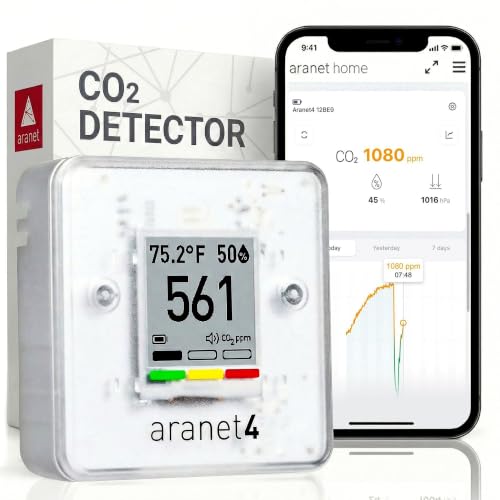
- Tracks CO2, temperature, humidity, and pressure
- Cable-free e-ink display with up to four-year battery life
- App stores up to 90 days of historical data
Best For: Homes wanting premium wireless monitoring and data history
Best for Carbon Monoxide Safety

- Dedicated electrochemical carbon monoxide detection
- Battery backup protects during power failures
- 85-decibel alarm with test and silence button
Best For: Households adding plug-in CO protection
Best Portable Option

- Measures CO2, temperature, and humidity
- Five-second refresh rate with 1 ppm resolution
- Portable design with up to 70 days of battery life
Best For: Moving between rooms, offices, nurseries, or schools
Best Simple Plug-in Alarm
Kidde Plug-in Carbon Monoxide Detector
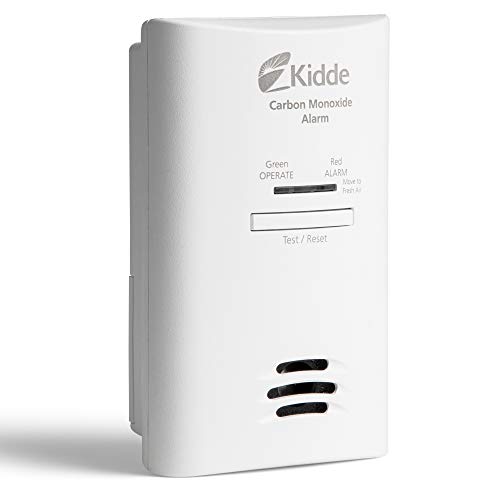
- Plugs into a standard 120V outlet
- Two-AA battery backup for outages
- 85-decibel alarm with peak-level memory
Best For: Simple, dedicated CO protection with minimal setup
Best for Easy Setup

- Battery powered and lightweight
- Tracks CO2, temperature, and humidity
- Color and audible alerts
Best For: Portable monitoring around the home
Best Carbon Monoxide Alarm

- Detects carbon monoxide, not CO2
- Plug-in power with AA backup
- 85 dB alarm and 10-year warranty
Best For: Dedicated CO safety in homes and apartments
Best Sensor Upgrade
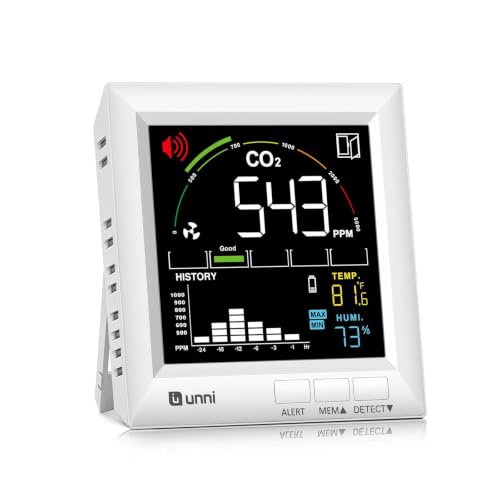
- Sensirion photoacoustic sensor
- CO2 history chart and air-quality readings
- USB power with battery backup
Best For: Detailed monitoring and ventilation awareness
Best Connected Option

- Large screen displays CO2, temperature, humidity, and comfort level
- NDIR sensor measures every second with stated ±50 ppm accuracy
- Optional hub enables app notifications for customized alerts
Best For: Connected homes and offices needing prominent readings
Best Portable Value

- Monitors CO2, AQI, temperature, and humidity
- Rechargeable 1600mAh battery runs up to 72 hours
- Bright LED display suits home, office, travel, and grow tents
Best For: Users wanting a simple rechargeable monitor for mobile checks
Best Overall – Aranet4 Indoor Air Quality Monitor
For shoppers comparing carbon dioxide monitors for homes, the Aranet4 is a polished wireless option that tracks CO2, temperature, relative humidity, and atmospheric pressure. Its prominent color-coded display, NDIR sensor, and long battery life make everyday ventilation checks straightforward.
Best For: Households wanting a premium, cable-free monitor with historical smartphone data.
Pros:
- Measures CO2, temperature, humidity, and atmospheric pressure in real time.
- Wireless e-ink display offers battery life of up to four years with included AA batteries.
- App provides graphs and up to 90 days of historical data.
- Uses NDIR technology for precise CO2 measurements.
Cons:
- Its smartphone app features may be unnecessary for shoppers seeking only a basic display.
- Premium positioning may not suit the tightest budgets.
The Aranet4 stands out when you want detailed information without running a power cable. It is especially useful for monitoring ventilation patterns over time rather than checking CO2 only occasionally.
Best for Carbon Monoxide Safety – First Alert Plug-in CO Alarm
Although many carbon dioxide monitors for homes track indoor ventilation, the First Alert CO606 is designed for a different safety task: detecting dangerous carbon monoxide. It plugs into a standard outlet, includes battery backup, and uses an 85-decibel alarm for urgent warnings.
Best For: Families needing a dedicated plug-in carbon monoxide alarm for bedrooms and home levels.
Pros:
- Electrochemical sensor detects carbon monoxide levels.
- Battery backup continues monitoring during a power failure.
- Loud 85-decibel alarm and single test/silence button simplify operation.
- Includes a seven-year limited warranty and end-of-life signal.
Cons:
- It detects carbon monoxide, not carbon dioxide or general indoor air quality.
- Designed for outlet placement rather than portable, app-based monitoring.
This is not a substitute for a CO2 monitor, but it addresses a separate and critical household hazard. Consider placing alarms on each level and in each bedroom, as recommended in the supplied product information.
Best Portable Option – Temtop Portable CO2 Monitor
The Temtop C1 is a flexible choice among carbon dioxide monitors for homes, combining CO2 measurement with temperature and humidity readings. Its portable design, five-second refresh rate, customizable alerts, and multiple mounting options suit rooms that need monitoring in different locations.
Best For: Users who want a portable CO2, temperature, and humidity monitor for homes, offices, nurseries, or schools.
Pros:
- Measures CO2 from 400–5000 ppm, temperature, and humidity.
- Uses a Sensirion SCD41 photoacoustic sensor with 1 ppm resolution.
- Offers up to 70 days of battery life and a five-second refresh rate.
- Audio alerts and display illumination can be disabled for quieter use.
Cons:
- The manufacturer advises keeping it plugged in for the most up-to-date real-time monitoring.
- It does not detect carbon monoxide.
- Its broad feature set may be more than needed for simple CO2 checks.
The Temtop is a practical pick when portability matters, especially if you want to move one monitor between rooms. Keep its CO2-only purpose in mind and use a separate carbon monoxide alarm for CO safety.
Best Simple Plug-in Alarm – Kidde Plug-in Carbon Monoxide Detector
For basic household hazard protection, the Kidde KN-COB-DP2 offers simple plug-in operation and battery backup. It is not one of the carbon dioxide monitors for homes that measures ventilation, but it is a dedicated carbon monoxide detector with an audible warning and useful peak-level memory.
Best For: Shoppers wanting straightforward plug-in carbon monoxide protection with battery backup.
Pros:
- Installs by plugging into a standard 120V outlet.
- Two AA batteries provide backup during a power outage.
- 85-decibel alarm announces detected carbon monoxide.
- Peak-level memory records the last detected CO event or test.
Cons:
- It detects carbon monoxide, not carbon dioxide.
- It lacks the temperature, humidity, and historical air-quality features found on dedicated CO2 monitors.
The Kidde is a focused safety device for buyers who value easy installation and clear alerts. Choose a separate CO2 monitor if your goal is ventilation awareness or broader indoor air-quality tracking.
Best for Easy Setup – Compact CO2 Monitor
For shoppers comparing carbon dioxide monitors for homes, this compact model offers a straightforward way to track CO2, temperature, and humidity. Its foldable stand, battery power, color alerts, and readable display make it convenient for moving between rooms.
Best For: Portable, battery-powered monitoring in bedrooms, offices, classrooms, and other indoor spaces.
Pros:
- Small, lightweight design with a foldable stand.
- Measures CO2, temperature, and humidity in real time.
- Five-color visual alerts plus adjustable audible alarm volume.
- Supports manual calibration and automatic calibration after continuous monitoring.
Cons:
- Manual calibration requires a standard 400-ppm environment.
- Battery operation means you will need to monitor battery status.
Its compact size and flexible alerts make it a practical choice when you want basic air-quality awareness without a permanently installed monitor.
Best Carbon Monoxide Alarm – Kidde Plug-In CO Detector
Although it is not a carbon dioxide monitor, this Kidde unit is an important companion for shoppers researching carbon dioxide monitors for homes because it detects carbon monoxide, a separate household hazard. It plugs into a standard outlet and includes AA battery backup for power outages.
Best For: Homeowners, renters, and travelers who need dedicated carbon monoxide protection.
Pros:
- Uses an electrochemical sensor and sounds an 85 dB alarm.
- Includes two AA backup batteries for outage protection.
- Rotating plug fits vertical or horizontal outlets.
- UL 2034 5th Edition tested, ETL Listed, with a 10-year limited warranty.
Cons:
- Measures carbon monoxide, not carbon dioxide or general indoor air quality.
- Designed for outlet use rather than portable CO2 monitoring.
Choose this product for carbon monoxide safety, but pair it with a true CO2 monitor if your goal is to track ventilation and indoor air quality.
Best Sensor Upgrade – Photoacoustic CO2 Monitor
For buyers seeking carbon dioxide monitors for homes with detailed tracking, this model combines a Swiss-made Sensirion photoacoustic sensor with real-time CO2, temperature, and humidity readings. It also records a CO2 history chart and can prompt you to improve ventilation when levels rise.
Best For: Home, RV, and grow-tent users who want continuous readings, history data, and flexible placement.
Pros:
- Uses a photoacoustic sensor with a stated accuracy of +/- 5% + 50 ppm.
- Displays CO2 history along with current temperature and humidity.
- Offers three alarm-volume settings and three backlight levels.
- Supports USB power, wall mounting or tabletop placement, and battery backup.
Cons:
- Three AAA backup batteries are not included.
- Manual calibration requires a 400-ppm environment and a specific setup process.
Its history display and ventilation-focused alerts make it a strong fit for users who want more context than a simple current CO2 reading.
Most Comprehensive – 10-in-1 Smart Air Quality Monitor
For shoppers comparing carbon dioxide monitors for homes, this 10-in-1 model stands out by combining CO2 tracking with readings for formaldehyde, TVOC, particulate matter, temperature, humidity, and AQI. Its color display and portable design make it useful for checking several rooms or other indoor spaces.
Best For: Households wanting broad indoor air quality information from one portable monitor.
Pros:
- Measures CO2, HCHO, TVOC, PM1.0, PM2.5, PM10, temperature, humidity, and AQI.
- Three-color screen visualization helps highlight changing air quality conditions.
- Supports smart calibration and Bluetooth time synchronization.
- Suitable for bedrooms, living rooms, offices, cars, schools, and other indoor areas.
Cons:
- The many readings may be more than shoppers seeking only CO2 data need.
- Bluetooth is used for time calibration rather than described as a full app-monitoring system.
This is the most versatile choice of the group for users who want a fuller snapshot of indoor air quality, not just carbon dioxide levels. Its color alerts and portable format also make quick checks straightforward.
Best Connected Option – SwitchBot Meter Pro CO2
Among carbon dioxide monitors for homes, the SwitchBot Meter Pro CO2 is a strong fit for shoppers who prioritize a large display and frequent readings. Its Swiss-made NDIR sensor measures CO2 every second, while the optional SwitchBot Hub enables app notifications when customized limits are exceeded.
Best For: Connected homes and offices that want prominent readings and multiple alert methods.
Pros:
- Large 92-millimeter screen shows CO2, temperature, humidity, time, date, and comfort level.
- Swiss-made NDIR sensor offers a stated ±50 ppm accuracy and a 400–9000 ppm range.
- Provides audible and visual alerts, with app notifications available when paired with a SwitchBot Hub.
- Built-in battery lasts up to 12 months and the unit supports wall mounting or bracket placement.
Cons:
- App notifications require a separate SwitchBot Hub.
- It focuses on CO2, temperature, and humidity rather than a wider set of pollutants.
The Meter Pro CO2 is especially practical for a fixed monitoring station in a living room, bedroom, greenhouse, or office. Its long stated battery life and flexible placement reduce maintenance, while the large screen keeps readings easy to see.
Best Portable Value – Dienmern 5-in-1 CO2 Detector
For shoppers seeking portable carbon dioxide monitors for homes, the Dienmern 5-in-1 detector offers core readings in a compact, rechargeable format. It monitors CO2, AQI, temperature, and humidity, and its 1600mAh battery can run for up to 72 hours per charge.
Best For: Travelers and users who want a simple monitor for home, office, grow tents, or on the go.
Pros:
- Tracks CO2, AQI, temperature, and humidity in real time.
- Swiss-made sensor has a stated ±50 ppm accuracy and 400–5000 ppm range.
- Bright LED display is designed for quick reading in day or night conditions.
- 1600mAh battery provides up to 72 hours of operation and supports USB charging.
Cons:
- Its battery runtime is much shorter than a year-long fixed-monitor design.
- It does not measure formaldehyde, TVOC, or particulate matter.
- The supplied notes acknowledge possible variation of around ±50 ppm between meters.
This model keeps the feature set focused and adds useful portability for room-to-room checks, travel, or office use. It is a sensible option when CO2, temperature, humidity, and AQI are sufficient and a rechargeable battery matters.
How We Picked the Best Carbon Dioxide Monitors for Homes
We focused on monitors that measure carbon dioxide directly and also considered practical indoor-air features such as temperature, humidity, portability, display readability, audible or visual alerts, and battery operation. Products were also assessed for their likely fit in different spaces, from a permanently monitored bedroom or nursery to a portable office or classroom setup.
Because carbon monoxide and carbon dioxide are different hazards, we treated dedicated CO alarms separately from CO2 monitors. A carbon monoxide alarm is essential for detecting combustion-related CO, but it does not measure ventilation or indoor CO2 levels.
Quick Comparison
| Best for | Look for | Typical advantage |
|---|---|---|
| Everyday home monitoring | Clear display, CO2 trend data, temperature and humidity | Easy decisions about ventilation |
| Portable use | Rechargeable battery and compact design | Move it between rooms or locations |
| Smart-home users | App connectivity, alerts, and historical data | Remote monitoring and automation |
| Simple protection | Plug-in power and backup battery | Low-maintenance operation |
| Whole-home safety | Dedicated carbon monoxide alarms | Protection from combustion-related CO |
Key Buying Factors for Carbon Dioxide Monitors for Homes
Sensor Type and Accuracy
Prefer a monitor with a true CO2 sensor, ideally a non-dispersive infrared (NDIR) or photoacoustic design. Check the stated measurement range, accuracy, calibration method, and whether the device supports automatic or manual calibration. A low-cost display with an estimated or inferred reading may be less useful for ventilation decisions.
Alerts and Thresholds
Adjustable audible, visual, or app alerts help you respond when readings rise. Choose a model with an easily readable display and thresholds you can understand rather than relying on a single unexplained color.
Power, Placement, and Privacy
Battery models are convenient, but frequent charging can be inconvenient in a busy household. Plug-in units suit fixed locations, while backup batteries help maintain operation during outages. Place the monitor at breathing height, away from windows, vents, direct sunlight, kitchens, and other sources of rapid temperature or airflow changes. If an app is included, review its permissions and connectivity requirements.
Extra Measurements
Temperature and relative humidity readings add useful context, especially in bedrooms, nurseries, and home offices. VOC or particulate readings can be helpful, but they should not distract from the quality of the CO2 sensor itself.
Who Should Buy Which Carbon Dioxide Monitors for Homes?
- For most households: Choose a dedicated CO2 monitor with a clear screen, reliable sensor, and temperature and humidity readings.
- For bedrooms and home offices: Prioritize quiet operation, adjustable alerts, historical trends, and a display that is easy to read at a glance.
- For renters, classrooms, and shared spaces: A portable rechargeable model makes it easier to compare rooms and identify ventilation problems.
- For connected homes: Select a smart model only if app notifications, remote viewing, or automation justify the added setup.
- For combustion safety: Buy certified carbon monoxide alarms separately and install them according to the manufacturer’s instructions; CO2 monitors cannot replace them.