The best heart rate monitors for daily monitoring make it easier to understand resting heart rate, exercise intensity, sleep patterns, and possible changes in your cardiovascular data. The right choice depends on whether you want passive all-day tracking, highly accurate workout readings, or on-demand EKG checks.
We selected 10 options spanning fitness bands, chest-strap sensors, and FDA-cleared-style personal EKG devices. Use the guide below to compare features, compatibility, comfort, and the type of information each monitor can provide.
Best 10 Heart Rate Monitors for Daily Monitoring Picks for 2026
Best All-Around Tracker
MorePro 24/7 Health Fitness Tracker
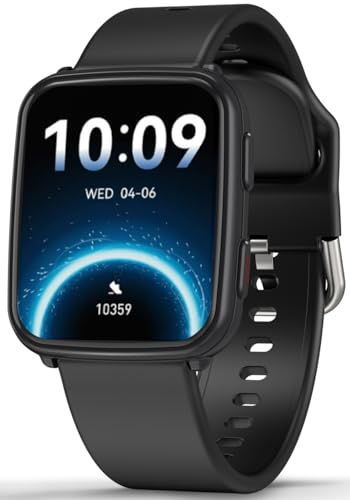
- 24/7 heart rate, blood pressure, and sleep tracking
- 120+ sport modes with steps and calorie tracking
- IP68 design and up to 7 days of normal use
Best For: Everyday wellness and activity tracking
Best Simple Chest Strap

- Real-time heart rate and HRV transmission
- Two strap sizes and machine-washable construction
- Up to one year of replaceable-battery life
Best For: Garmin users wanting a dedicated connected strap
Best Budget Smart Band

- Automatic heart rate, sleep, SpO2, and blood pressure tracking
- 25 sports modes with steps, distance, and calories
- IP68 water resistance and phone notifications
Best For: Affordable everyday health and activity tracking
Best for Performance Data

- Real-time heart rate, HRV, and running dynamics
- Stores workouts when a watch cannot be worn
- Rechargeable battery lasts up to two months
Best For: Data-driven runners and multisport athletes
Most Accurate Chest Strap

- Highly accurate heart rate sensor
- Bluetooth, ANT+, and 5 kHz connectivity
- Waterproof with multi-hour internal memory
Best For: Users seeking precise readings across compatible equipment and apps
Best for Spot-Check EKGs

- Records a 30-second single-lead EKG
- Detects several listed heart rhythms
- Pocket-sized and usable without a subscription
Best For: Portable, on-demand heart rhythm checks
Most Comfortable for Workouts

- Soft, breathable armband design
- Bluetooth pairing with up to three devices
- Up to 38 hours of operation per charge
Best For: Workout-focused users who prefer an armband
Best Medical-Grade Pick
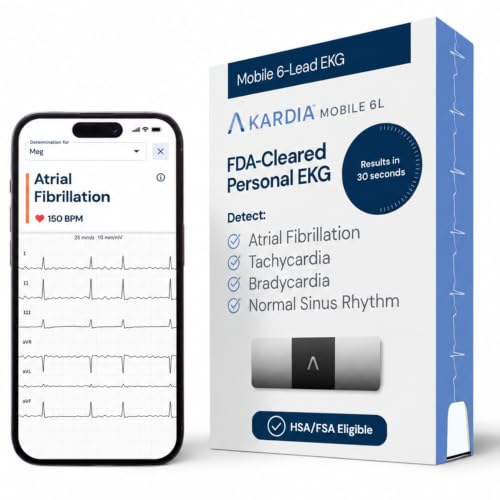
- Six-lead EKG in about 30 seconds
- FDA-cleared rhythm determinations
- Portable, membership-free smartphone app
Best For: Detailed at-home heart-rhythm checks
Best Connected Chest Strap
POWR LABS Bluetooth ANT+ Monitor
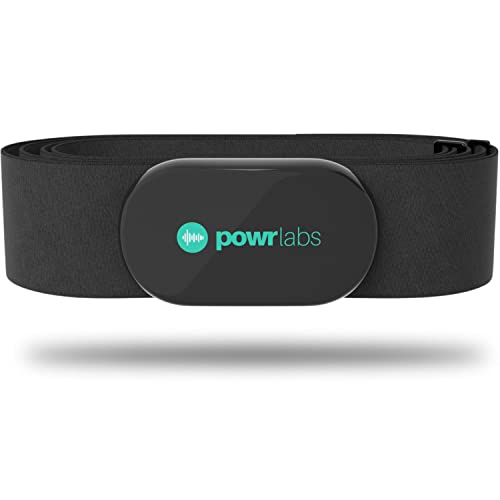
- Dual Bluetooth and ANT+ connectivity
- 400-plus hours of battery life
- Soft, adjustable, sweatproof strap
Best For: Daily training across multiple devices
Best Long-Battery Value

- 800-hour replaceable-battery life
- ANT+ and Bluetooth compatibility
- LED connection indicator and IP67 design
Best For: Frequent workouts with minimal charging
Best All-Around Tracker – MorePro 24/7 Health Fitness Tracker
For shoppers comparing heart rate monitors for daily monitoring, the MorePro combines continuous heart rate tracking with blood pressure, blood oxygen, sleep, and activity features in a smartwatch-style design. Its broad sport support and phone notifications make it suited to everyday wellness tracking rather than specialized training.
Best For: Users who want an all-day health and activity tracker with smartwatch features, sleep tracking, and broad Android/iOS compatibility.
Pros:
- Offers 24/7 heart rate and blood pressure monitoring, plus on-demand blood oxygen checks.
- Tracks sleep stages, steps, distance, calories, and workouts across 120+ sport modes.
- Includes IP68 water resistance, notifications, reminders, music and camera controls, and up to 7 days of normal battery life.
Cons:
- It is not intended for medical use.
- Does not work with PCs or tablets.
- The large feature set may be more than needed for users seeking heart rate data only.
The MorePro is a practical choice when daily heart rate monitoring is only one part of a broader wellness routine. Choose it for its smartwatch conveniences and extensive tracking features, while treating its health readings as general wellness references.
Best Simple Chest Strap – Garmin HRM 200
The Garmin HRM 200 is a focused option for shoppers seeking heart rate monitors for daily monitoring and workouts without a smartwatch display. It transmits real-time heart rate and heart rate variability data to compatible Garmin devices, fitness equipment, apps, and smartphones.
Best For: Garmin users who want a lightweight, dedicated heart rate strap with long battery life and easy maintenance.
Pros:
- Transmits real-time heart rate and HRV data to compatible devices and apps.
- Available in two strap sizes for a more suitable fit.
- Provides up to one year of user-replaceable battery life and has a machine-washable strap.
Cons:
- Requires compatible connected devices or apps to view the transmitted data.
- Provides fewer standalone smartwatch features than a wrist-based tracker.
- Its 3 ATM water rating is less specialized than the swim-focused capabilities of some other monitors.
The HRM 200 is a streamlined choice for reliable connected monitoring. Its replaceable battery and washable strap are especially useful for frequent use, while Garmin-device compatibility makes it most appealing within that ecosystem.
Best Budget Smart Band – USMECBL 24/7 Health Tracker
For budget-minded shoppers evaluating heart rate monitors for daily monitoring, this smart band pairs automatic heart rate tracking with sleep, blood oxygen, blood pressure, and activity measurements. The 1.47-inch OLED display, notifications, and IP68 rating make it convenient for day-and-night wear.
Best For: Users seeking an affordable Android/iOS smart band for general health trends, basic workouts, and everyday notifications.
Pros:
- Provides all-day heart rate tracking alongside sleep-stage, blood oxygen, and blood pressure data.
- Includes 25 sports modes and automatic step, distance, and calorie tracking.
- Offers IP68 water resistance, phone notifications, and up to 7 days of continuous use according to the notes.
Cons:
- Has no built-in GPS, so it relies on the phone for location-based tracking.
- Health readings are best treated as general wellness information rather than medical measurements.
- The advertised battery descriptions vary between up to 7 days of continuous use and 10–14 days of regular use.
This band covers the core features many people want for routine monitoring at a relatively simple form factor. It is a sensible pick for basic tracking and notifications, provided you do not need onboard GPS or advanced training analytics.
Best for Performance Data – Garmin HRM 600
The Garmin HRM 600 is designed for athletes who want more than basic heart rate monitors for daily monitoring. It records and transmits heart rate and HRV data, adds running dynamics, and can store workout information when a watch cannot be worn before syncing with Garmin Connect.
Best For: Data-driven runners, swimmers, and team-sport athletes using compatible Garmin devices and Garmin Connect.
Pros:
- Captures real-time heart rate and HRV data plus advanced running dynamics such as stride length and ground contact time balance.
- Records workouts during activities where wearing a watch is impractical and syncs data to Garmin Connect.
- Supports swim heart rate recording, indoor pace and distance, daily metrics, and up to two months of rechargeable battery life.
Cons:
- Several advanced running features require a compatible Garmin smartwatch.
- It is more specialized and potentially more feature-heavy than needed for casual daily monitoring.
- Its usefulness depends on compatible devices and the Garmin Connect ecosystem.
The HRM 600 stands out when training detail is a priority. Its onboard recording, swim support, and running metrics make it the strongest fit for structured athletes, while casual users may prefer a simpler strap or smartwatch tracker.
Most Accurate Chest Strap – Polar H10
For shoppers comparing heart rate monitors for daily monitoring, the Polar H10 is a strong choice when measurement precision and broad device compatibility matter. Its chest-strap design supports Bluetooth, ANT+, and 5 kHz connections, while built-in memory enables recording for multiple hours.
Best For: Users who want highly accurate readings for compatible equipment, smartphones, tablets, and training devices.
Pros:
- Recognized for highly accurate heart rate measurement.
- Supports Bluetooth, ANT+, and 5 kHz connectivity.
- Can use Bluetooth and ANT+ simultaneously, or connect to two Bluetooth devices.
- Waterproof and includes internal memory for multiple hours of data.
Cons:
- Chest-strap format may be less convenient than an armband for some users.
- Requires a CR2025 button-cell battery.
The Polar H10 prioritizes dependable readings and flexible connectivity over screen-based convenience. It is especially practical for people who already use compatible fitness equipment or apps and want a dedicated sensor.
Best for Spot-Check EKGs – KardiaMobile 1-Lead
Among heart rate monitors for daily monitoring, KardiaMobile stands out as a pocket-sized option for quick rhythm checks rather than continuous workout tracking. Place your fingers on its sensors, record a 30-second single-lead EKG through the Kardia app, and view results on a compatible smartphone or tablet.
Best For: People who want portable, on-demand heart rhythm recordings and easy-to-share EKG results.
Pros:
- Captures a single-lead EKG in about 30 seconds.
- Can identify Normal Sinus Rhythm, AFib, tachycardia, and bradycardia.
- Compact design weighs less than an ounce and works without a subscription.
- Results can be emailed to a doctor or another recipient.
Cons:
- Designed for spot checks, not continuous heart-rate tracking.
- Requires the Kardia app and a compatible smartphone or tablet.
- Additional KardiaCare features require a paid subscription.
KardiaMobile is a practical choice when the goal is recording and reviewing heart rhythm at selected moments. Its small size and clear app results make it convenient for home, work, travel, or the gym.
Most Comfortable for Workouts – COROS Heart Rate Monitor
For heart rate monitors for daily monitoring, note that the COROS Heart Rate Monitor is specifically intended for sports and activities, not daily tracking. Its soft armband design, automatic wear detection, and Bluetooth pairing make it a convenient workout companion for users who want to avoid a chest strap.
Best For: Athletes and fitness users who need a comfortable armband for workouts with compatible Bluetooth devices.
Pros:
- Soft, breathable armband is designed for comfortable wear during activities.
- Automatically powers on and off through wear detection.
- Pairs with up to three Bluetooth devices at once.
- Provides up to 38 hours of operation or 80 days of standby per charge.
Cons:
- Not intended for collecting daily tracking data.
- Bluetooth-only and not compatible with ANT+.
- USB charging cable is included, but a Type-C adapter is not.
The COROS monitor is best viewed as a comfortable sports sensor rather than an all-day monitor. Its automatic wear detection and multi-device Bluetooth support are useful for workout setups, especially within the COROS ecosystem.
Best Medical-Grade Pick – KardiaMobile 6L EKG Monitor
For shoppers seeking heart rate monitors for daily monitoring, the KardiaMobile 6L stands out as a pocket-size EKG device designed for brief, detailed rhythm checks. It records a six-lead EKG in about 30 seconds and displays FDA-cleared determinations through its smartphone app, without requiring a membership.
Best For: People who want portable, detailed heart-rhythm readings and smartphone-based EKG results.
Pros:
- Records a medical-grade six-lead EKG with results in about 30 seconds.
- Provides app determinations for AFib, bradycardia, tachycardia, and normal sinus rhythm.
- Compact, Bluetooth-connected design works with most compatible smartphones and tablets.
- HSA/FSA eligible and does not require a membership.
Cons:
- It does not check for a heart attack or replace regular medical checkups.
- It is not tested or recommended for use with pacemakers or ICDs.
- Requires a compatible smartphone or tablet for viewing results.
The KardiaMobile 6L is more specialized than a typical exercise heart-rate sensor, making it a strong choice for users prioritizing rhythm information over continuous tracking. Follow the manufacturer’s warnings and seek medical attention for concerning symptoms or emergencies.
Best Connected Chest Strap – POWR LABS Bluetooth ANT+ Monitor
For heart rate monitors for daily monitoring during workouts, the POWR LABS chest strap offers dual Bluetooth and ANT+ connectivity for broad device compatibility. Its soft, adjustable fabric strap is designed for long sessions, while the replaceable battery provides more than 400 hours of use.
Best For: Athletes who want a comfortable chest strap that connects with Garmin, Peloton, fitness apps, watches, and cycling computers.
Pros:
- Supports both Bluetooth and ANT+ connections with 400-plus devices and apps.
- Soft, seamless fabric adjusts across a 24- to 61-inch range.
- Offers more than 400 hours of battery life with a replaceable battery included.
- IPX67 sweatproof and water-resistant design is suited to demanding training.
Cons:
- Must be worn before pairing, which adds a setup step.
- Requires a compatible receiving device or app to view readings.
- Its chest-strap format may be less convenient than a wrist-worn monitor for casual checks.
The POWR LABS monitor is a practical training-focused option when reliable app and equipment connectivity matters. Its long battery life and sweat-resistant construction reduce maintenance for frequent exercise use.
Best Long-Battery Value – GEOID HS500 Chest Strap
The GEOID HS500 is a straightforward choice among heart rate monitors for daily monitoring during cycling, running, fitness, and other exercise. It combines ANT+ and Bluetooth compatibility with an 800-hour replaceable-battery design, plus an LED indicator that confirms activation and connection.
Best For: Exercise users who want long battery life, broad app compatibility, and a compact chest-mounted sensor.
Pros:
- Provides up to 800 hours of battery life from a replaceable CR2032 battery.
- Connects through ANT+ or Bluetooth to phones, sports watches, bike computers, and fitness equipment.
- IP67 waterproof design is suitable for sweaty workouts and outdoor activity.
- Flashing LED helps confirm that the sensor is active and connected.
Cons:
- Swimming is not recommended despite the IP67 water-resistance rating.
- Bluetooth pairing should be completed through the app rather than directly through phone settings.
- Designed primarily for exercise tracking rather than medical EKG analysis.
With its low-energy hardware, quick wake-up time, and one-year limited warranty, the HS500 is a sensible budget-conscious training sensor. It is best suited to users who already have a compatible app, watch, bike computer, or fitness machine for displaying data.
How We Picked These Heart Rate Monitors for Daily Monitoring
We focused on products designed for recurring personal use rather than occasional spot checks alone. Our criteria included heart rate measurement method, wearing comfort, battery life, water resistance, app or device compatibility, connectivity options, and the usefulness of accompanying health metrics. We also separated continuous fitness tracking from on-demand EKG recording, since these devices serve different purposes.
Chest straps generally provide a closer measurement of exercise heart rate, while wrist-worn trackers are more convenient for sleep and everyday activity. Personal EKG monitors can capture additional electrical signals when symptoms or an unusual rhythm occur, but they do not replace clinical evaluation.
Quick Comparison
- Best for all-day convenience: Fitness trackers with wrist-based heart rate, sleep, step, and activity features.
- Best for workout accuracy: Garmin, Polar, COROS, POWR LABS, and HS500 chest straps with Bluetooth and/or ANT+ connectivity.
- Best for serious training data: A chest strap that works with your watch, cycling computer, gym equipment, or training app.
- Best for on-demand rhythm checks: KardiaMobile 1-Lead and KardiaMobile 6L devices.
Key Buying Factors for Heart Rate Monitors for Daily Monitoring
Measurement Style and Accuracy
Choose wrist-based monitoring for convenience and trends, especially if you want passive readings throughout the day and night. Choose a chest strap when workout intensity, interval training, or rapid heart-rate changes demand more responsive readings. An EKG device measures electrical activity differently from an optical tracker or chest-strap sensor and is intended for specific recordings rather than continuous activity tracking.
Comfort, Fit, and Wear Time
For daily use, a soft, adjustable strap or lightweight band is more important than a long feature list. Check sizing and sensor placement, particularly if you plan to sleep in the device or wear it during long workouts. Water resistance helps with sweat and everyday exposure, but verify the stated rating before swimming.
Compatibility and Connectivity
Bluetooth is useful for phones, tablets, fitness apps, and gym equipment. ANT+ can be important for Garmin devices, bike computers, and other training hardware. Before buying, confirm that the monitor supports your preferred app and that it can connect to the number of devices you use simultaneously.
Battery and Data Features
Consider charging frequency, replaceable versus rechargeable batteries, automatic wear detection, alerts, sleep tracking, blood oxygen estimates, and data export. Treat wellness metrics as informational trends, not diagnoses. Blood pressure and blood oxygen claims should be interpreted cautiously and discussed with a healthcare professional when results are concerning.
Who Should Buy Which Heart Rate Monitors for Daily Monitoring?
Choose a fitness tracker if you want the simplest way to monitor daily movement, resting heart rate, sleep, and general wellness from one wrist-worn device. Choose a chest strap if exercise accuracy and broad Bluetooth or ANT+ compatibility matter most. Choose a personal EKG monitor if a clinician has recommended rhythm tracking or you need an on-demand recording tool for symptoms; confirm which rhythm conditions the device can detect and how results are reviewed. If you have chest pain, fainting, severe shortness of breath, or other urgent symptoms, seek medical care rather than relying on a consumer monitor.