Reliable electricity is essential when a remote property sits beyond the reach of dependable utility service. The best solar generators for remote properties can keep communication devices, lights, refrigerators, tools, and other essentials running without routine fuel deliveries.
This roundup compares 10 options across several power levels, including solar-ready battery stations and larger backup generators. Use the guide below to match capacity, recharge speed, portability, and operating needs to your property.
Best 10 Solar Generators for Remote Properties Picks for 2026
Best Built-In Solar Design
BROWEY 1600W Portable Power Station

- 1,024Wh LiFePO4 battery with 1,600W output
- Built-in 40W solar panel and MPPT controller
- Eight ports for appliances and personal devices
Best For: Portable off-grid backup with integrated solar charging
Best High-Output Fuel Backup
Westinghouse 6600W Home Backup Generator

- 5,300 running watts and 6,600 peak watts
- Up to 14.5 hours of gasoline runtime
- 120/240V output and transfer-switch-ready connection
Best For: High-demand backup where gasoline power is acceptable
Best UPS Protection
Jackery HomePower 1000 v2 Solar Generator

- 1,024Wh LiFePO4 capacity with 1,500W output
- 10ms UPS switching for connected electronics
- Includes a 200W solar panel and supports up to 400W input
Best For: Sensitive electronics and essential remote-property backup
Best High-Capacity Inverter Backup
Champion 11,000W Wireless Remote Start Generator

- 9,000 running watts and 11,000 starting watts
- Up to 15 hours of gasoline runtime
- Remote start, CO Shield, and 120/240V outlets
Best For: High-demand remote-property backup with long runtime
Best Expandable Backup
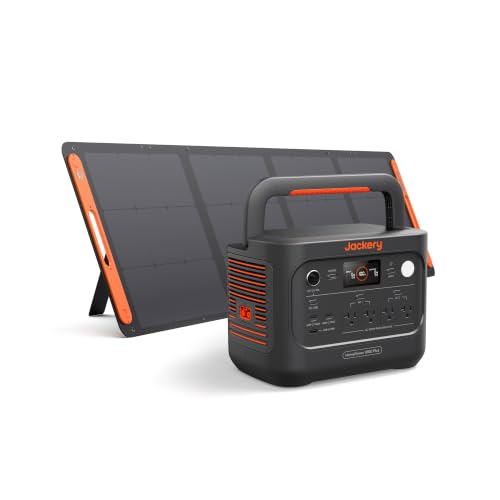
Jackery Solar Generator 1000 Plus v2
- Expandable from 1,024Wh to 11kWh
- 1,800W output with 3,600W surge
- 10ms UPS and LiFePO4 battery
Best For: Remote homes and cabins needing scalable backup power
Best Midrange Portable Kit

- Includes a foldable 60W solar panel
- 300W pure sine wave output
- Multiple AC, USB, and DC ports
Best For: Short trips and charging small electronics
Best Lightweight Emergency Kit

- Includes a 30W solar panel and converter
- Lightweight 3.7-pound design
- Multiple ports and built-in flashlight
Best For: Short outages, camping, and basic emergency charging
Compact Off-Grid Starter

- Includes a foldable 60W solar panel
- Multiple AC, USB, DC, car, and solar charging options
- Built-in safety protections and SOS flashlight
Best For: Small electronics, camping gear, and light emergency charging
Ultra-Light Backup Pick
MARBERO 111Wh Kit with 30W Panel

- Very light power station and folding solar panel
- Four USB-A, USB-C, AC, and DC outputs
- 21.5–23.5% stated panel conversion rate
Best For: Lightweight emergency kits and personal-device charging
Best Built-In Solar Design – BROWEY 1600W Portable Power Station
For remote properties that need quiet, renewable backup, the BROWEY combines a 1,024Wh LiFePO4 battery with built-in solar panels and a 1,600W pure sine wave inverter. Its portable design suits off-grid living, camping, RV use, and emergency power needs.
Best For: Users who want a compact solar generator with integrated panels and enough output for refrigerators, CPAP machines, and tools.
Pros:
- Built-in 40W solar panel with MPPT controller, plus support for additional panels
- 1,600W output with 3,200W peak capacity and eight AC, DC, and USB-C ports
- LiFePO4 battery rated for 3,000-plus cycles to 80% capacity
- Three-year warranty and lifetime customer support
Cons:
- Its 1,024Wh capacity may be limited for running high-wattage appliances for extended periods
- Built-in solar charging is rated at 40W, so additional panels may be useful for faster recharging
The BROWEY is a practical choice when portability and integrated solar collection matter more than large storage capacity. It offers flexible charging and useful appliance support without gasoline, exhaust, or engine noise.
Best High-Output Fuel Backup – Westinghouse 6600W Home Backup Generator
Although it is gasoline-powered rather than solar-powered, the Westinghouse is a useful comparison for remote-property owners evaluating backup capacity. It delivers substantially more power than battery stations and includes 120/240V operation for residential backup applications.
Best For: Larger remote properties that need extended, high-output emergency power and have access to gasoline.
Pros:
- 5,300 running watts and 6,600 peak watts for demanding household loads
- Up to 14.5 hours of runtime from a 4.7-gallon tank
- Electric start, remote key fob, fuel gauge, and 120/240V selector
- CO shutdown, overload protection, and transfer-switch-ready outlet
Cons:
- Gasoline-powered, so it does not provide solar or battery-based energy
- At 136.6 pounds, it is considerably less convenient to move than portable power stations
- Engine operation produces noise, emissions, and fuel-storage requirements
This Westinghouse model makes sense when maximum running power and long runtime take priority over clean, quiet operation. It can complement solar generators for extended outages, but it requires proper outdoor operation and gasoline management.
Best UPS Protection – Jackery HomePower 1000 v2 Solar Generator
The Jackery HomePower 1000 v2 is a strong fit for remote properties that need dependable power for networking equipment, computers, and essential appliances. Its 1,024Wh LiFePO4 battery, included 200W solar panel, and 10ms UPS switching add flexibility during outages.
Best For: Users who want solar backup for sensitive electronics, routers, desktop computers, and everyday essentials.
Pros:
- 1,500W pure sine wave output across three AC outlets
- 10ms UPS response helps keep connected electronics running during grid interruptions
- Included 200W solar panel and support for up to 400W of solar input
- LiFePO4 battery rated for 6,000-plus cycles and more than 16 years of stated use
Cons:
- Its 1,024Wh capacity is better suited to essentials than whole-property loads
- At 23.4 pounds, it is portable but not as lightweight as smaller battery packs
For remote workspaces or homes where connectivity and electronics are priorities, the Jackery offers more specialized protection than a basic battery station. App controls, quiet charging, and surge protection further support routine and emergency use.
Best High-Capacity Inverter Backup – Champion 11,000W Wireless Remote Start Generator
For remote properties with substantial electrical demands, the Champion provides far more output than typical solar generators. This gasoline-powered inverter generator offers 9,000 running watts, remote starting, and multiple 120/240V outlets for serious home backup.
Best For: Large homes, workshops, and remote sites that need high-output backup and can accommodate a heavy gasoline generator.
Pros:
- 11,000 starting watts and 9,000 running watts for demanding loads
- Up to 15 hours of runtime on a full gasoline tank
- Wireless remote start works from up to 80 feet away
- CO Shield, GFCI outlets, Cold Start Technology, and a three-year warranty
Cons:
- Gasoline-powered and not compatible with solar charging
- At 200 pounds, it requires substantial space and effort to position
- Its 64 dBA noise rating is quieter than some conventional generators but still audible
The Champion is best viewed as a high-output alternative or companion to solar generators for remote properties. It can handle heavier loads and longer runtimes, but its fuel, weight, and operating noise make it less convenient for quiet everyday backup.
Best Expandable Backup – Jackery Solar Generator 1000 Plus v2
For remote properties that need dependable, scalable backup power, the Jackery Solar Generator 1000 Plus v2 combines a 1,024Wh LiFePO4 battery with a 200W solar panel. Its 1,800W output, 3,600W surge capacity, UPS function, and expandable storage make it one of the more capable solar generators for remote properties.
Best For: Remote homes, cabins, and property owners who want expandable backup power for appliances, electronics, and higher-draw tools.
Pros:
- Expandable from 1,024Wh to 11kWh with up to five additional battery packs.
- 1,800W rated output and 3,600W surge capacity can handle devices such as coffee makers and power tools.
- 10ms UPS switchover, pure sine wave output, and 3kV/1,000J surge protection support sensitive electronics.
- LiFePO4 cells rated for 6,000 cycles and app control through Wi-Fi and Bluetooth.
Cons:
- Additional battery packs are sold separately.
- The included 200W solar panel may provide slower recharging than a larger panel array.
This is the strongest choice here for long-term property backup and future expansion. It costs more than compact units, but its higher output, UPS capability, and expandable battery design offer greater flexibility for serious off-grid use.
Best Midrange Portable Kit – MARBERO 237Wh Solar Generator
The MARBERO M823 pairs a 237Wh power station with a foldable 60W solar panel, making it a practical lightweight option for basic power needs at remote properties. It provides 300W of pure sine wave AC output and multiple USB and DC ports for small electronics and outdoor equipment.
Best For: Short stays, field work, camping, and emergency charging of phones, tablets, laptops, lights, and other small devices.
Pros:
- Includes a 60W foldable solar panel and 237Wh battery in one kit.
- Pure sine wave AC output with 300W rated and 375W peak capacity.
- Multiple AC, USB-A, USB-C, and DC outputs support several devices.
- Built-in flashlight includes steady, strobe, and SOS modes.
Cons:
- Devices exceeding 300W, especially those with heating elements, may damage the unit.
- Its 237Wh capacity is limited for extended property backup or large appliances.
- Solar charging is dependent on direct sunlight and the relatively small 60W panel.
The M823 is a sensible middle ground when portability and included solar charging matter more than long runtime. It is well suited to small loads, but remote-property owners should choose a larger system for refrigerators, tools, or overnight household backup.
Best Lightweight Emergency Kit – MARBERO 155Wh Solar Generator
For simple emergency charging around a remote property, the MARBERO 155Wh kit includes the power station, a 30W solar panel, and charging accessories. Its compact 3.7-pound design, long 6.5-foot cable, and built-in flashlight make it convenient for basic lighting and small-device power.
Best For: Lightweight emergency kits, roadside use, camping, and keeping phones, lights, and other small electronics available during short outages.
Pros:
- All-in-one package includes a 30W solar panel, power station, converter, and charging cables.
- Compact 3.7-pound design is easy to carry and position.
- Offers AC, USB-A, USB-C, DC, and car-port outputs for varied small devices.
- IP65-rated solar panel and built-in three-mode flashlight add outdoor practicality.
Cons:
- 155Wh capacity and 100W output limit it to small electronics and low-power equipment.
- The included 30W panel may take approximately 6–7 hours to recharge the unit under suitable conditions.
- It is not intended for high-draw appliances or substantial home backup.
This is the most portable and approachable option for basic preparedness. Its modest capacity makes it less suitable for extended off-grid power, but the complete kit and flashlight are useful for short outages and lightweight property trips.
Compact Off-Grid Starter – 300W Generator with 60W Panel
For shoppers comparing solar generators for remote properties, this ZeroKor setup is a compact option for keeping phones, tablets, laptops, and other small electronics charged. Its 300W output, included 60W panel, and multiple recharge methods make it practical for light-duty backup power and occasional off-grid use.
Best For: Small electronics, camping gear, and light emergency charging where portability matters.
Pros:
- Includes a foldable 60W monocrystalline solar panel with 20.5% stated conversion efficiency.
- Offers AC, DC, USB-A, quick-charge USB, car, and solar charging options.
- Built-in BMS protections, cooling fan, and SOS/reading flashlight add practical utility.
Cons:
- The 300W limit is unsuitable for high-draw appliances such as coffee makers, hair dryers, and water pumps.
- The solar panel junction box is not waterproof and must be kept dry.
- Its capacity is positioned for small devices rather than sustained property-wide power.
This is a sensible entry-level choice when your remote-property power needs center on communications, personal electronics, and lighting rather than appliances. Buyers should plan around the 300W ceiling and protect the panel connections from moisture.
Ultra-Light Backup Pick – MARBERO 111Wh Kit with 30W Panel
For solar generators for remote properties where portability is the priority, the MARBERO M82MAX combines a 111Wh battery with a lightweight 30W folding panel. It is designed for charging personal electronics, lights, and other modest loads during trips, outages, or limited off-grid stays.
Best For: Lightweight emergency kits, road trips, camping, and charging phones or small electronics.
Pros:
- The power station weighs 2.3 pounds, while the folding panel weighs 1.8 pounds.
- Provides four USB-A ports, one USB-C port, two AC ports, and a DC port.
- The panel has a stated 21.5–23.5% conversion rate and includes smart charging protections.
Cons:
- The 111Wh capacity and 80W rated AC output limit it to relatively small loads.
- The included 30W panel will recharge more slowly than larger panels.
- It is not intended for running demanding appliances or property equipment.
This kit stands out for easy carrying and straightforward personal-device charging. It can work well as a compact backup layer for a remote property, but its modest battery and output are better suited to essentials than extended or heavy-duty use.
Quiet Higher-Capacity Option – 300W Generator with 40W Panel
For remote properties needing more runtime without moving up to a large power station, this Apowking model pairs a 220Wh battery with a 40W solar panel. Its 300W pure sine wave AC output, seven total ports, and quiet operation make it a versatile choice for electronics, lighting, and selected small backup loads.
Best For: Campers and remote-property users who need quiet, multi-device charging and occasional laptop, CPAP, or small-electronics backup.
Pros:
- The 220Wh battery is rated for up to 15 phone charges, five hours of laptop backup, or six to eight hours for CPAP, according to the supplied notes.
- Provides two 110V pure sine wave AC outlets, USB ports, USB-C, and a DC carport, with all seven ports usable at once.
- The included 40W panel uses 24% high-efficiency monocrystalline cells and includes 10 DC connectors.
- Integrated floodlight and stated zero-fan-noise operation suit tents and quiet indoor spaces.
Cons:
- The 300W rated output and 600W peak limit it to smaller appliances and electronics.
- A 40W panel may require extended sunlight for a full recharge.
- Its compact battery is not designed for whole-property loads or long-term high-wattage operation.
Among these options, the Apowking offers the strongest balance of capacity, quiet operation, and connection flexibility. It is a practical fit for essential electronics and lighting, provided your remote-property setup does not require sustained high-power appliances.
How We Picked the Best Solar Generators for Remote Properties
We evaluated these models by looking at usable battery capacity, continuous and peak output, solar-recharging support, portability, starting features, outlet selection, and suitability for common off-grid tasks. We also considered whether each option is best for small electronics, occasional outages, cabins, workshops, RVs, or broader home backup.
Battery-based solar generators operate quietly and produce no direct exhaust during use, while fuel-powered generators can provide longer runtime and higher output when refueling is practical. Because those are different technologies, compare the specifications and intended use rather than judging every model by wattage alone.
Quick Comparison
| Use case | What to prioritize | Best fit from this roundup |
|---|---|---|
| Phones, lights, and small devices | Compact design, USB ports, and low weight | MARBERO 111Wh or 155Wh models |
| Small appliances and short outages | At least 300W continuous output and pure sine wave power | MARBERO 237Wh or 300W portable stations |
| Cabins and moderate backup | About 1,000Wh or more, fast charging, and expandable capacity | Jackery HomePower 1000 v2 or Solar Generator 1000 Plus v2 |
| High-demand backup | Large output, remote starting, and transfer-switch compatibility | Westinghouse 6600W or Champion 11,000W |
Key Buying Factors for Solar Generators for Remote Properties
Capacity and Output
Watt-hours indicate how much energy a battery can store, while watts indicate how much power it can deliver at once. Add the running wattage of your essential devices and allow extra capacity for startup surges from refrigerators, pumps, and power tools.
Solar Input and Recharge Time
Check the maximum solar input, included panel size, connector type, and whether panels can be added later. A larger battery is not automatically better if the available solar input is too low to recharge it during your usable daylight window.
Safety and Installation
Battery stations can be used indoors when the manufacturer permits it, but fuel generators must remain outdoors and away from doors, windows, and vents because of carbon monoxide. For whole-property circuits, use a properly installed transfer switch and a qualified electrician.
Portability and Weather Exposure
Consider carrying handles, wheel kits, noise, dust protection, and storage conditions. Solar panels need unobstructed sunlight, and battery units should be protected from rain, extreme temperatures, and prolonged dampness.
Who Should Buy Which Solar Generators for Remote Properties?
Choose a compact MARBERO kit for emergency communications, lighting, and personal electronics. Move to a 237Wh or 300W station for modest appliances and short-duration cabin use. Jackery’s roughly 1,000Wh options suit property owners who want quiet, rechargeable backup for several essential devices.
Choose the Westinghouse or Champion fuel-powered models when high continuous output, rapid refueling, or larger equipment matters more than silent, emissions-free operation. For many remote properties, the most resilient setup combines a solar-charged battery station for daily essentials with a larger generator reserved for extended storms or heavy loads.