The best inverter generators for camping balance quiet operation, usable wattage, portability, and dependable runtime. The right choice depends on whether you need to charge small devices, run an RV air conditioner, or power several campsite essentials.
We compared 10 popular options across output, fuel type, noise-conscious features, portability, safety, and camping-friendly design so you can choose a practical power source for your setup.
Best 10 Inverter Generators for Camping Picks for 2026
Best Dual-Fuel Pick

- Gasoline and propane operation
- RV-ready outlet and clean inverter power
- CO sensor and fuel shut-off included
Best For: RV campers seeking flexible, higher-output power
Best Lightweight Power Station

- Weighs about 7.5 pounds
- 300W output with six-device charging
- Optional solar charging support
Best For: Portable charging for phones, laptops, and cameras
Best Long-Run Gas Option

- Up to nine hours at 25% load
- 2,000 running watts and 2,800 peak watts
- Quiet, compact design with versatile ports
Best For: Campers prioritizing gasoline runtime and useful output
Best Battery-Powered Choice

- 2,000W continuous and 3,000W peak output
- Pure sine wave power with AC and USB outlets
- Uses EGO 56V batteries, sold separately
Best For: EGO users wanting quiet, fuel-free camping power
Best Lightweight Pick
AIVOLT 1600W Super Quiet Inverter Generator

- 28-pound portable design with 57 dBA operation
- 1,260 running watts and under 3% THD
- Up to 8 hours at 25% load
Best For: Lightweight camping setups and small electronics
Best High-Output Value
Oxseryn 4400W Portable Open-Frame Inverter Generator

- 4,400 peak and 3,400 running watts
- RV outlet plus AC and 12V DC connections
- Up to 14 hours at 25% load
Best For: RV camping and powering multiple loads
Best Balanced Option
PowerSmart 4000W Portable Inverter Generator

- 4,000 peak and 3,200 rated watts
- Under 3% THD with 59 dBA operation
- 30A outlet, USB ports, and parallel capability
Best For: Higher-output camping with electronics and RV-style connections
Lightweight Quiet Pick
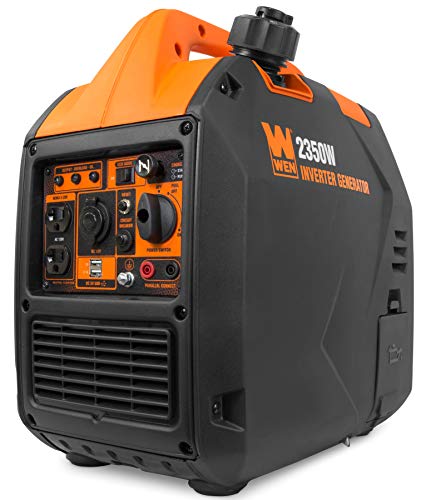
- 39-pound portable design
- 1,900 rated watts of clean power
- Fuel shutoff and USB charging ports
Best For: Campers needing portable power for electronics and smaller appliances
Ultra-Light Budget Option

- Weighs only 25.3 pounds
- 1,000 running watts with clean power
- Eco mode and CO-detection shutdown
Best For: Light-duty campers who value easy carrying over high output
Quiet Long-Run Choice

- 1,800 running watts and 2,400 peak watts
- 52.5 dB stated noise level at 25% load
- Up to 16 hours at 25% load in eco mode
Best For: Campers and RV users needing quiet, sustained light-load power
Best Dual-Fuel Pick – WEN DF360iX
The WEN DF360iX is a flexible choice among inverter generators for camping, especially when you want the option to use either gasoline or propane. Its RV-ready outlet, clean inverter power, quiet operation, and CO shutdown sensor make it well suited to campsites and RV trips.
Best For: RV campers and families who want dual-fuel flexibility with higher output.
Pros:
- Runs on gasoline or propane.
- Provides clean power for sensitive electronics.
- Includes a TT-30R RV receptacle, USB ports, fuel shut-off, and CO Watchdog sensor.
- Quiet operation and a three-year limited warranty.
Cons:
- At 49 pounds, it is heavier than the smaller camping options.
- Gasoline runtime is listed at up to five hours.
- Propane output is lower than gasoline output.
Choose this model if fuel flexibility and RV compatibility matter more than minimizing carrying weight. It offers useful camping-focused features without giving up the clean power expected from an inverter generator.
Best Lightweight Power Station – Jackery Explorer 300
The Jackery Explorer 300 is a compact alternative to fuel-powered inverter generators for camping. At roughly 7.5 pounds, it is easy to pack, and its 300-watt output can handle smaller electronics such as laptops, cameras, and drones without adding much bulk.
Best For: Hikers, campers, and travelers powering small electronics quietly without gasoline.
Pros:
- Lightweight design with an integrated carrying handle.
- Offers AC, USB-A, USB-C, and car-port connections for up to six devices.
- Can recharge from compatible Jackery solar panels.
- LiFePO4 battery chemistry is rated for more than 4,000 charge cycles before reaching 70% capacity.
Cons:
- Its 300-watt rated output is not intended for high-demand appliances.
- Solar panels are optional.
- It cannot be delivered to a PO Box-only address.
This is a strong fit when portability, quiet operation, and device charging are the priorities. It is less suitable for running large camping appliances, but it is convenient for personal electronics and low-power gear.
Best Long-Run Gas Option – Oxseryn 2800W
The Oxseryn 2800W is a practical gas-powered option among inverter generators for camping, offering up to nine hours of runtime at 25% load. Its compact 40-pound design, ECO mode, quiet operation, and multiple charging ports suit campsite use and emergency backup.
Best For: Campers who want extended gasoline runtime and enough output for several everyday devices.
Pros:
- Delivers 2,000 running watts and 2,800 peak watts.
- Runs for up to nine hours at 25% load.
- Includes AC, DC, USB, and Type-C ports plus parallel capability.
- Under 58 dBA from 23 feet and weighs about 40 pounds.
Cons:
- Uses gasoline only.
- A high-altitude kit is recommended above 4,000 feet and is not included.
- Covered by a one-year manufacturer warranty.
The Oxseryn balances useful output and long runtime in a relatively portable package. It is a sensible choice for campers who prefer a conventional fuel generator and do not need dual-fuel operation.
Best Battery-Powered Choice – EGO POWER+ PST3040
The EGO POWER+ PST3040 offers a quiet, gas-free approach to inverter generators for camping. It provides 2,000 watts of continuous power and 3,000 watts peak through pure sine wave output, but remember that EGO 56V ARC Lithium batteries and a charger are not included.
Best For: EGO battery owners who want clean, quiet power for indoor or outdoor use.
Pros:
- Produces pure sine wave power for sensitive electronics.
- Runs quietly without gasoline emissions during operation.
- Includes three 120V AC outlets and four USB ports.
- Has weather-resistant construction, steel handles, and a bright runtime display.
Cons:
- Compatible batteries and charger are sold separately.
- Battery runtime depends on the EGO batteries used and the connected load.
- Its continuous output is 2,000 watts despite the 3,000-watt peak rating.
This power station makes the most sense for campers already invested in EGO’s 56V battery system. It avoids fuel handling and delivers convenient clean power, while the separate-battery requirement can increase the overall cost.
Best Lightweight Pick – AIVOLT 1600W Super Quiet Inverter Generator
For campers who prioritize portability and quiet operation, the AIVOLT is a compact choice among inverter generators for camping. It provides 1,260 running watts, clean power rated below 3% THD, and weighs just 28 pounds.
Best For: Lightweight camping setups, charging small electronics, and quiet overnight use.
Pros:
- Lightweight 28-pound design and 57 dBA noise rating at 23 feet.
- Clean inverter power with less than 3% THD for phones and laptops.
- Runs up to 8 hours at 25% load with Eco mode.
- Includes CO Alert, low-oil shutdown, overload protection, and parallel capability.
Cons:
- Its 1,260 running watts are less than the larger generators in this roundup.
- Parallel kit is not included.
- Engine oil is not included, according to the supplied notes.
The AIVOLT is a practical fit when carrying weight and campsite noise matter more than maximum output. Its clean power and safety features make it well suited to charging devices and running smaller camping equipment.
Best High-Output Value – Oxseryn 4400W Portable Open-Frame Inverter Generator
The Oxseryn delivers substantially more capacity than compact inverter generators for camping, with 3,400 running watts and 4,400 peak watts. Its RV outlet, ECO mode, and 14-hour stated runtime at 25% load make it a versatile option for extended camping or backup use.
Best For: RV camping, powering several devices, and longer low-load operation.
Pros:
- Provides 3,400 running watts and 4,400 peak watts.
- Includes two 120V AC outlets, a 12V DC port, and an RV port.
- Runs up to 14 hours at 25% load in ECO mode.
- Fuel gauge, low-oil shutdown, and overload protection add practical convenience.
Cons:
- At 56 pounds and under 72 dBA, it is heavier and louder than the compact AIVOLT.
- Its open-frame design may be less convenient for quiet, close-to-tent use.
- Warranty coverage is listed as one year.
Choose the Oxseryn when campsite power demands include RV equipment or multiple loads. It offers strong output and an unusually long low-load runtime, though its larger open-frame format is less focused on maximum portability.
Best Balanced Option – PowerSmart 4000W Portable Inverter Generator
The PowerSmart balances campsite-friendly noise with useful capacity, making it a strong all-around choice among inverter generators for camping. It supplies 3,200 rated watts, produces clean power below 3% THD, and operates at a stated 59 dBA from 23 feet at 25% load.
Best For: Campers who want higher output, clean electronics power, and a relatively quiet generator.
Pros:
- Offers 4,000 peak watts and 3,200 rated watts.
- Clean power below 3% THD is suitable for sensitive electronics.
- Includes a 30A twist-lock outlet, household outlet, 12V DC port, and dual USB ports.
- Parallel-ready design and a two-year warranty with lifetime technical support.
Cons:
- At 50.7 pounds, it is considerably heavier than the AIVOLT.
- Parallel kit is not included.
- The supplied notes give differing runtime figures: up to 8 hours at 25% load in the feature bullet and 10 hours in the specifications.
The PowerSmart is a well-rounded choice for campers who need more output than a small portable unit but still want inverter power and lower noise. Its varied outlet selection is especially useful for mixed camping and RV loads.
Lightweight Quiet Pick – WEN 2350W Inverter Generator
For campers who want a portable balance of power and convenience, the WEN 56235i is a practical choice among inverter generators for camping. It delivers 2,350 surge watts and 1,900 rated watts of clean power while weighing just 39 pounds, making it suitable for charging electronics and running smaller campsite essentials.
Best For: Campers who need quiet, lightweight power for sensitive electronics and basic appliances.
Pros:
- 39-pound body is easy to transport and store.
- Produces clean inverter power for phones, computers, televisions, and other sensitive electronics.
- Fuel shutoff helps use remaining carburetor fuel before shutdown.
- Includes two 120V receptacles, a 12V DC receptacle, and two USB ports.
Cons:
- Its 1,900-watt running output is better suited to smaller loads than high-demand equipment.
- Runs on gasoline, so fuel must be transported and stored for trips.
The WEN stands out for combining a useful 2,350-watt starting capacity with a relatively light, quiet design. Its 10-hour stated runtime and two-year limited warranty add practicality for routine camping use.
Ultra-Light Budget Option – GENMAX GM1200i
The GENMAX GM1200i is one of the more compact inverter generators for camping, weighing 25.3 pounds and producing 1,000 running watts. Its clean inverter output, economy mode, and low-oil and overload alerts make it a straightforward fit for light campsite power needs.
Best For: Campers prioritizing minimal weight, quiet operation, and modest power demands.
Pros:
- At 25.3 pounds, it is especially easy to carry over longer distances.
- Provides clean power with less than 3% THD for sensitive electronics.
- Economy mode can improve fuel efficiency and reduce engine operation.
- Includes CO-detection shutdown, warning indicators, and parallel capability.
Cons:
- Its 1,000-watt running output limits the size and number of appliances it can power.
- The stated runtime is up to 6.5 hours at 50% load, shorter than some larger options.
Choose the GM1200i when portability matters more than maximum output. The 57cc engine, 0.66-gallon tank, and 58 dBA stated noise level support light-duty camping, while the three-year warranty and lifetime technical support provide added ownership assistance.
Quiet Long-Run Choice – ERAYAK 2400P
The ERAYAK 2400P offers a useful middle ground for campers seeking inverter generators for camping with more output than compact 1,000-watt models. It provides 2,400 peak watts and 1,800 running watts, along with low-THD power, eco mode, and a stated 52.5 dB noise level at a 25% load.
Best For: Campers and RV users who want quiet, clean power with extended light-load operation.
Pros:
- Supplies 1,800 running watts and 2,400 peak watts for a broader range of campsite loads.
- Low-THD inverter output is designed for laptops, TVs, gaming consoles, and medical devices.
- Eco mode supports fuel efficiency, with a stated runtime of up to 16 hours at 25% load.
- Includes AC outlets, USB ports, a DC output, and a three-year limited warranty.
Cons:
- At 42 pounds, it is heavier than the GENMAX compact model.
- The 0.95-gallon tank and stated runtime vary substantially with power load.
The ERAYAK is a strong option when quiet performance and usable running wattage are both priorities. Its 42-pound frame is still portable, and the included tool kit, oil funnel, and lifetime technical support add convenience for regular outdoor use.
How We Picked the Best Inverter Generators for Camping
We focused on models suited to real campsite needs rather than output alone. Our comparison considers rated and peak wattage, portability, fuel efficiency features, noise-related design, runtime potential, RV readiness, safety features, and overall versatility. The list includes conventional gasoline inverter generators, dual-fuel models, open-frame options, and battery power stations because campers have different priorities.
Inverter generators are generally a strong choice for camping because they produce cleaner, more stable electricity for sensitive electronics and can run more quietly than many conventional generators. However, specifications and included accessories can vary, so confirm the manufacturer’s current details before purchase.
Quick Comparison
| Power category | Best suited for | What to prioritize |
|---|---|---|
| Under 1,500 watts | Phones, lights, cameras, small electronics | Low weight, quiet operation, easy starting |
| 1,500–2,500 watts | General campsite appliances and compact trailers | Runtime, fuel shutoff, portability, outlet selection |
| 2,500–4,000 watts | RVs, larger appliances, and group camping | Starting surge, RV-ready output, wheels, and fuel capacity |
| Battery power stations | Silent use and indoor-adjacent electronic charging | Battery capacity, recharge options, and continuous output |
Key Buying Factors for Inverter Generators for Camping
Wattage and Startup Demand
Add the running wattage of the devices you expect to use at the same time, then account for startup surges from refrigerators, pumps, fans, and air conditioners. Choose a generator with enough rated output—not just a high peak figure—to avoid overloads.
Noise and Campsite Etiquette
Look for published noise ratings, economy modes, enclosed designs, and quiet-operation claims. Even a “quiet” generator should be positioned away from tents and neighboring sites, operated only during permitted hours, and never used inside a tent, vehicle, or enclosed shelter.
Fuel, Runtime, and Portability
Gasoline models typically provide longer continuous use and quick refueling, while dual-fuel generators offer added flexibility. Check runtime at a stated load, tank capacity, dry weight, handle design, and wheel configuration. A heavier high-output model may be worthwhile for an RV but excessive for backpack-style car camping.
Safety and Connectivity
Carbon monoxide protection, automatic shutdown, overload protection, covered outlets, and a fuel shutoff can improve ownership and storage. For RV use, confirm that the generator has the appropriate receptacle and grounding requirements. Battery stations eliminate exhaust at the campsite but still need proper charging and storage practices.
Who Should Buy Which Inverter Generators for Camping?
Choose a compact, lower-wattage model if your main needs are charging phones, running lights, powering camera gear, or keeping small electronics available. Midrange gasoline inverter generators are better for typical car campers who want to operate several appliances without carrying a large unit. RV owners and larger groups should prioritize higher-output models with an RV-ready connection, wheels, and sufficient surge capacity.
A dual-fuel generator is a sensible fit for campers who value fuel flexibility or emergency backup at home. Choose a battery power station when silent operation, zero exhaust, and simple indoor-adjacent charging matter more than extended high-wattage runtime. Whatever you choose, match the generator to your actual load, carry approved fuel safely, and follow local campsite and manufacturer safety rules.