The best inverter generators for RVs balance clean power, manageable noise, useful runtime, and enough output to handle your essential onboard appliances. The right model depends on your RV’s electrical service, starting loads, fuel preferences, and how often you camp without hookups.
Our lineup includes compact camping-friendly units, dual-fuel generators for added flexibility, and larger models suited to demanding RV loads or emergency home backup. Use the guide below to compare the specifications that matter most before you buy.
Best 10 Inverter Generators for RVs Picks for 2026
Best Dual-Fuel Capacity

- 3,900 rated watts with less than 3% THD
- Gasoline or propane operation
- RV-ready 30A outlet and remote start
Best For: Travel trailers needing flexible, higher-output power
Best Premium Compact Option

- 2,600 running watts of clean inverter power
- 65-pound compact design
- CO-MINDER and LED status indicators
Best For: RVers with moderate loads and portability priorities
Best Lightweight Dual-Fuel Value
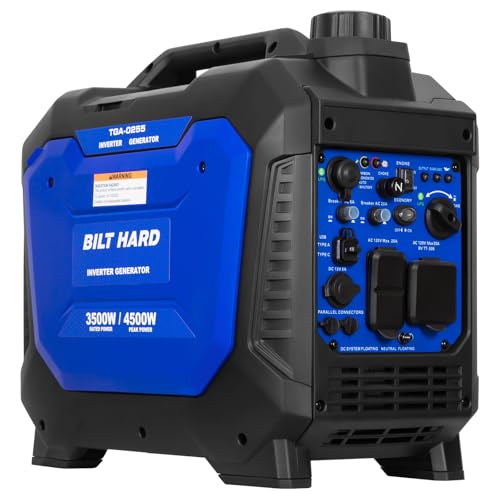
- 3,500 gasoline running watts
- Gasoline and propane operation
- 57.7-pound design with RV-ready outlet
Best For: Portable RV and campsite power with fuel flexibility
Best RV Outlet Layout

- 4,000 rated watts and 4,800 surge watts
- Dedicated TT-30R RV receptacle
- Wheels, pull handle, and multiple outlet types
Best For: RV setups needing outlet variety and easy repositioning
High-Capacity RV Pick
Oxseryn 4400W Open-Frame Inverter Generator

- 4,400 peak and 3,400 running watts
- 30A RV outlet and 14-hour rated runtime
- ECO mode with low-oil and overload protection
Best For: RV owners needing higher gasoline-powered output
Dual-Fuel RV Choice
Champion 4000W Dual Fuel Inverter Generator

- Runs on gasoline or propane
- 4,000 starting and 3,000 running watts
- CO Shield and 64 dBA stated noise level
Best For: RV campers seeking flexible fuel options
Quiet Lightweight Pick
2800W Portable RV Inverter Generator
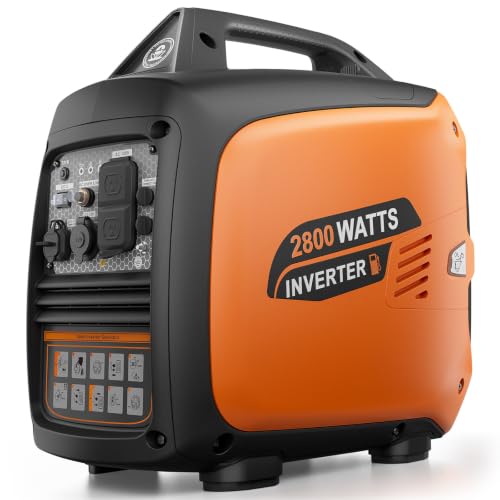
- 40-pound portable design with carrying handle
- 58 dB stated noise level at 23 feet
- USB and Type-C charging with under-3% THD
Best For: RVers prioritizing portability and quiet campsite use
Best Compact Dual-Fuel Pick

- Gasoline and propane operation
- RV-ready TT-30R outlet
- 49-pound portable design
Best For: Compact RV power with dual-fuel flexibility
Best High-Output Tri-Fuel Option

- Up to 8,200 gasoline peak watts
- Gasoline, propane, and natural gas
- 50A 120/240V home-backup outlet
Best For: High-demand RV and backup-power use
Best for Large RV Loads

- Up to 6,800 gasoline surge watts
- Gasoline and propane operation
- Electric start and 240V capability
Best For: Higher-demand RV power and EV backup
Best Dual-Fuel Capacity – Westinghouse iGen5000DF
For RV owners comparing inverter generators for RVs, the Westinghouse iGen5000DF stands out for its combination of 3,900 running watts, dual-fuel flexibility, and RV-ready 30-amp outlet. It also offers remote, electric, and recoil starting for convenient operation.
Best For: Travel trailers and RV users who want substantial capacity, propane compatibility, and long gasoline runtime.
Pros:
- Provides 3,900 rated watts and less than 3% THD for clean power.
- Runs on gasoline or propane and includes a propane hose.
- Offers an RV-ready TT-30R outlet, remote start, and up to 18 hours of runtime on gasoline.
- Rotating data display shows fuel level, output, voltage, and runtime information.
Cons:
- At 104.7 pounds, it is heavier than the other listed options.
- Its larger output comes with a bulkier 24.5-by-16.3-by-20-inch footprint.
The iGen5000DF is a strong choice when RV power demands extend beyond basic appliances. Its dual-fuel design and long runtime add flexibility, while the 30-amp outlet keeps it practical for compatible travel trailers.
Best Premium Compact Option – Honda EU3200i
The Honda EU3200i is a compact gasoline inverter generator for RVs and camping setups that need clean, stable 120-volt power. Its inverter technology, electronic start, and onboard safety indicators make it a straightforward option for sensitive electronics and routine backup use.
Best For: RV campers who prioritize a lightweight, established-brand generator with clean power and safety monitoring.
Pros:
- Honda inverter technology provides clean power for sensitive electronics.
- Weighs 65 pounds and measures 12 by 18 by 22 inches.
- CO-MINDER is designed to shut the generator down when unsafe carbon monoxide levels are detected.
- Front-panel LEDs provide quick visibility into fuel level and Eco Throttle operation.
Cons:
- Its 2,600 running watts are lower than the output of the other generators in this roundup.
- It uses gasoline only rather than offering dual-fuel flexibility.
- The supplied specifications list a three-hour runtime, so extended use may require refueling.
The EU3200i favors portability, clean output, and operating feedback over maximum capacity. It is a sensible fit for RVers with moderate power needs who want a compact generator for electronics and selected appliances.
Best Lightweight Dual-Fuel Value – BILT HARD 4500W
For shoppers seeking inverter generators for RVs with a manageable carry weight, the BILT HARD 4500W combines gasoline and propane operation with an RV-ready TT-30R outlet. Its 3,500 gasoline running watts, clean inverter output, and compact enclosed design cover a broad range of camping needs.
Best For: RV and campsite users wanting dual-fuel capability, useful outlets, and a lighter generator for transport.
Pros:
- Delivers 3,500 rated watts on gasoline and 3,200 rated watts on propane.
- Includes a TT-30R RV outlet, USB ports, and a 12V DC output.
- Weighs 57.7 pounds and includes a built-in handle.
- CO sensor, less than 3% THD, and 58 dBA operation add practical usability.
Cons:
- Uses recoil start rather than electric or remote starting.
- The parallel kit required to connect two units is not included.
- Its warranty is listed as one year.
This BILT HARD model offers a useful balance of output, portability, and fuel choice. It is especially appealing for RVers who can manage recoil starting and want a lighter alternative to larger high-output units.
Best RV Outlet Layout – WEN 56477i
WEN Quiet and Lightweight 4800-Watt RV-Ready Portable Inverter Generator with Fuel Shut Off (56477i)
Check Price On AmazonThe WEN 56477i is a gasoline inverter generator for RVs designed around a useful selection of outlets and easy transport. With 4,000 rated watts, a TT-30R receptacle, wheels, and a telescoping pull handle, it is suited to RV setups that need substantial 120-volt capacity.
Best For: RV owners who want a dedicated 30-amp connection, multiple household outlets, and mobility around a campsite.
Pros:
- Produces 4,000 rated watts and up to 4,800 surge watts.
- Includes a TT-30R RV outlet, four 120V receptacles, USB ports, and a 12V DC outlet.
- Fuel shutoff uses remaining carburetor fuel before shutdown to help support generator longevity.
- CO Watchdog automatically shuts the unit down when dangerous carbon monoxide levels are detected.
Cons:
- Runs on gasoline only and does not offer propane operation.
- The listed runtime is seven hours.
- At 72.7 pounds, it is heavier than the BILT HARD and Honda options.
The WEN 56477i is a practical middle-ground choice for RVers who value outlet variety and easy campsite positioning. Its dedicated RV receptacle and 4,000-watt rated output make it well suited to higher-demand 120-volt use.
High-Capacity RV Pick – Oxseryn 4400W Open-Frame Inverter Generator
For shoppers comparing inverter generators for RVs, the Oxseryn emphasizes higher output and direct RV compatibility. It delivers 4,400 peak watts, 3,400 running watts, and includes a 30A RV outlet, making it suited to larger power demands while camping or during home emergencies.
Best For: RV owners who need strong gasoline-powered output and a 30A RV connection.
Pros:
- Provides 4,400 peak watts and 3,400 running watts.
- Includes a 30A RV outlet, two 120V AC ports, and a 12V DC port.
- Offers up to 14 hours of runtime at 25% load from its 2-gallon tank.
- Features ECO mode, overload protection, low-oil shutdown, and cold-start technology.
Cons:
- Uses gasoline only rather than offering dual-fuel flexibility.
- At approximately 56–57 pounds, it is heavier than the smallest portable options.
- Its open-frame design may be less compact than enclosed inverter generators.
The Oxseryn is a practical choice when RV-ready connectivity and extra capacity matter more than minimum weight. Its 30A outlet and long stated runtime are useful advantages for extended trips or backup use.
Dual-Fuel RV Choice – Champion 4000W Dual Fuel Inverter Generator
The Champion is a versatile option among inverter generators for RVs because it runs on either gasoline or propane. It supplies 4,000 starting watts and 3,000 running watts, includes a 120V 25A TT-30R outlet, and adds CO Shield automatic carbon monoxide shutoff protection.
Best For: RV campers who value fuel flexibility, quiet operation, and built-in safety features.
Pros:
- Runs on gasoline or propane for more fueling flexibility.
- Includes a 120V 25A TT-30R RV outlet and produces clean power under 3% THD.
- Operates at a stated 64 dBA from 23 feet.
- Provides CO Shield, parallel capability, a three-year limited warranty, and lifetime technical support.
Cons:
- Its parallel kit is sold separately.
- Gasoline runtime is rated at up to 10 hours, shorter than its propane rating of up to 25 hours.
- The 25A TT-30R outlet may not match every RV’s preferred connection setup.
The Champion stands out for RVers who do not want to depend on one fuel type. Its quiet technology, RV outlet, and CO protection create a well-rounded package, though buyers should account for the separate parallel kit if they want expandable output.
Quiet Lightweight Pick – 2800W Portable RV Inverter Generator
If portability and campsite-friendly noise levels are priorities, this compact gasoline model is a practical entry among inverter generators for RVs. It produces 2,800 peak watts and 2,000 running watts, runs for up to 10 hours at 25% load, and weighs 40 pounds.
Best For: RV campers who need a lightweight generator for electronics, small appliances, and overnight outdoor use.
Pros:
- Weighs 40 pounds and includes a handle for easier transport.
- Produces clean power with stated THD below 3%.
- Rated at 58 dB from 23 feet for quieter campsite operation.
- Includes two 120V AC ports, a 12V DC port, USB, and Type-C charging.
Cons:
- Its 2,000 running watts are lower than the output of the other listed models.
- Uses gasoline only.
- The supplied notes do not list a dedicated 30A RV outlet.
This generator is best suited to buyers who prioritize easy lifting, quiet operation, and convenient device charging. Its lower running output makes it less appropriate for RV setups with heavier simultaneous loads, but it is a compelling lightweight option for basic camping power.
Best Compact Dual-Fuel Pick – WEN DF360iX
For campers who want flexible fueling without giving up portability, the WEN DF360iX is a practical choice among inverter generators for RVs. It delivers up to 3,600 surge watts on gasoline and includes a TT-30R RV receptacle, while its inverter output is designed to protect sensitive electronics.
Best For: RV owners who prioritize a compact, relatively quiet generator with gasoline and propane capability.
Pros:
- Dual-fuel operation provides gasoline and propane flexibility.
- RV-ready TT-30R outlet and two USB ports support common campsite needs.
- CO Watchdog, fuel shut-off, clean power, and a three-year warranty add convenience and protection.
Cons:
- Its 2,900 rated gasoline watts are less than larger RV-focused models.
- Listed runtime is five hours.
- At 49 pounds, it may still require two-person lifting in some situations.
The DF360iX balances useful RV connectivity, dual-fuel flexibility, and a relatively light design. It is a strong fit for moderate loads, though shoppers running multiple high-demand appliances may want more continuous wattage.
Best High-Output Tri-Fuel Option – Westinghouse iGen8200TFc
The Westinghouse iGen8200TFc stands out among inverter generators for RVs when high output and fuel versatility matter. It supplies up to 8,200 peak watts on gasoline, includes a 50A outlet for transfer-switch or interlock-kit use, and also provides a 30A RV receptacle.
Best For: RV users and homeowners who need substantial power, 240V capability, and access to gasoline, propane, or natural gas.
Pros:
- Tri-fuel operation supports gasoline, propane, and natural gas.
- 50A 120/240V outlet supports home backup applications and high-demand loads.
- Inverter technology, less than 3% THD, remote electric start, and a CO sensor add useful functionality.
Cons:
- At 134.5 pounds, it is considerably heavier than compact portable options.
- Its larger size may be less convenient for frequent campsite repositioning.
- There are only three listed power outlets.
With up to 6,600 running watts on gasoline and a stated 17-hour runtime at 25% load, this Westinghouse is built for extended, demanding use. Its weight and larger footprint make it better suited to users who value capacity over easy lifting.
Best for Large RV Loads – WEN DF680iX
The WEN DF680iX is a capable middle ground for shoppers comparing inverter generators for RVs. Its dual-fuel engine produces up to 6,800 surge watts on gasoline, includes a TT-30R RV outlet, and uses a 240V configuration that can provide low-power Level 2 charging for compatible battery and hybrid electric vehicles.
Best For: RV owners who need more output than compact models and want electric starting plus gasoline or propane operation.
Pros:
- Dual-fuel performance reaches 5,100 rated watts on gasoline and 4,500 on propane.
- Electric start, onboard wheels, and a telescoping handle improve portability.
- Includes an RV outlet, 120/240V receptacle, USB ports, fuel shut-off, and CO Watchdog protection.
Cons:
- At 99.2 pounds, it is heavier than compact RV generators.
- Listed runtime is six hours.
- Its 240V configuration may require attention when matching loads and charging equipment.
The DF680iX offers useful capacity without moving all the way into the largest tri-fuel class. It is a sensible option for RVers with higher electrical demands, provided they are comfortable handling a roughly 100-pound generator.
How We Picked the Best Inverter Generators for RVs
We focused on the features that have the greatest effect on real-world RV use: running and peak wattage, RV-ready 30-amp connections, inverter power quality, fuel flexibility, noise-conscious design, starting method, portability, safety monitoring, and parallel capability. We also considered whether each generator suits occasional camping, frequent travel, or broader emergency-backup needs.
Because published performance can vary with altitude, temperature, fuel, and load, treat wattage and runtime figures as planning numbers rather than guarantees. Always verify the manufacturer’s specifications and your RV’s requirements before connecting a generator.
Quick Comparison
| Priority | Look for | Best fit |
|---|---|---|
| Quiet camping | Enclosed inverter design and economy mode | Smaller 2,800W–3,600W models |
| Air-conditioner startup | Higher surge wattage and adequate running output | Approximately 4,000W or more |
| Fuel flexibility | Dual-fuel or tri-fuel operation | Extended trips and backup use |
| Heavy backup loads | High output, electric start, and transfer-switch readiness | Larger 6,800W–8,200W models |
| Easy transport | Lower weight, wheels, and a folding handle | Compact portable units |
Key Buying Factors for Inverter Generators for RVs
Wattage and RV Compatibility
Check your RV’s shore-power rating and identify the appliances you may run simultaneously. Air conditioners, microwaves, refrigerators, and battery chargers can create substantial starting demand. A 30-amp RV connection is common, but the receptacle alone does not guarantee that a generator can start your air conditioner. Compare both rated and peak watts, and leave a safety margin.
Fuel Type and Runtime
Gasoline is widely available and often delivers stronger output, while propane stores well and burns cleanly. Dual-fuel units offer flexibility when one fuel is inconvenient; tri-fuel models add natural-gas capability for stationary backup. Compare runtime at a stated load rather than relying only on tank size.
Noise, Portability, and Controls
For campgrounds, lower sound levels and an economy mode matter as much as raw power. Consider the generator’s actual weight, wheel kit, handles, remote start, and electric-start battery requirements. A large unit may be powerful but impractical if two people are needed to move it.
Safety and Power Quality
Inverter generators generally provide stable power suitable for sensitive electronics, but confirm the model’s specifications. CO sensors, low-oil shutdown, overload protection, grounding guidance, and proper ventilation are essential. Never operate a generator inside an RV, garage, or enclosed awning area.
Who Should Buy Which Inverter Generators for RVs?
Choose a compact model if you mainly need lights, charging, a refrigerator, and modest camping loads. Step up to a 4,000W–5,000W unit if your RV air conditioner or microwave is a regular priority. Dual-fuel models are especially useful for travelers who want gasoline performance plus propane storage flexibility. High-output dual-fuel or tri-fuel generators make more sense for large RVs, frequent boondocking, or combined RV and home-backup duties. Before purchasing, confirm connector type, starting wattage, operating noise, dimensions, and local campground rules.