The best single-board computer kits for science clubs make it easier to turn coding concepts into practical experiments. This roundup spans beginner-friendly micro:bit and Arduino bundles, Raspberry Pi computers, AI-focused kits, and connected IoT platforms.
Use the guide below to match your club’s age range, teaching goals, available supervision, and project plans with a kit that offers the right balance of hardware, software, expandability, and classroom value.
Best 10 Single-Board Computer Kits for Science Clubs Picks for 2026
Top Pick for Collaborative Coding

- 10 boards with cables, batteries, and guides
- Built-in sensors, LEDs, speaker, and microphone
- Supports MakeCode, Python, Scratch, Bluetooth, and Radio
Best For: Coding clubs and beginner STEM workshops
Best for AI Exploration

- Works with several Raspberry Pi models
- Combines AI, vision, voice, sensors, and motion
- Includes guided videos, code, and technical support
Best For: Raspberry Pi-equipped clubs studying applied AI
Best Structured Electronics Curriculum

- Step-by-step projects with videos and online resources
- Includes sensors, motors, LEDs, and breadboard
- Teaches circuits, programming, and sensor integration
Best For: Beginner electronics lessons and guided STEM projects
Best Full Raspberry Pi Workstation
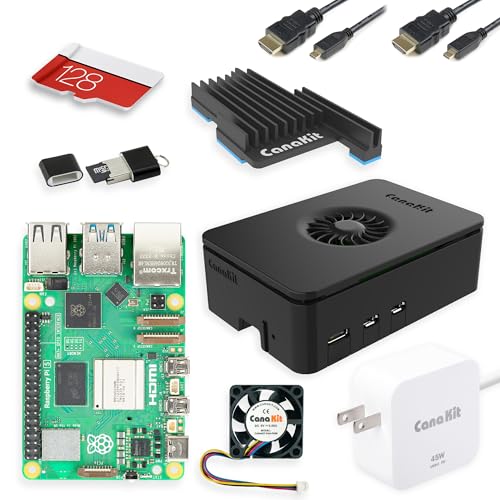
- Raspberry Pi 5 with 8GB RAM and 128GB storage
- Includes Raspberry Pi OS, power, case, and cooling
- Useful base for advanced programming and GPIO projects
Best For: Advanced club projects and shared Raspberry Pi workstations
Best Interactive Python Kit
UNIHIKER M10 Touchscreen Dev Kit

- Pre-installed Debian and Python tools
- Built-in touchscreen and multiple sensors
- Wi-Fi, Bluetooth, and Mind+ support
Best For: Interactive Python, IoT, and sensor projects
Best Electronics Project Variety
ELEGOO UNO R3 Complete Starter Kit

- 200+ components across 63 types
- 30+ guided electronics projects
- Solderless setup with storage and tutorial
Best For: Hands-on Arduino circuits and sensor lessons
Best for Group Coding
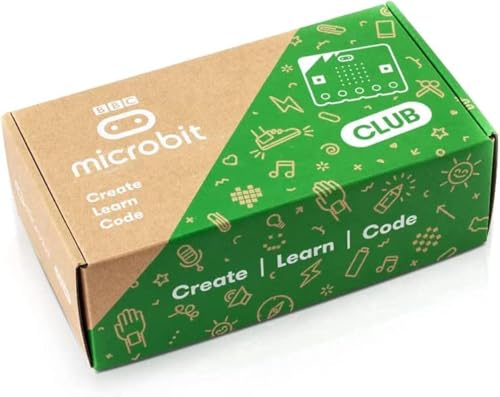
- Includes 10 micro:bit V2 boards
- Cables, holders, and 20 AAA batteries included
- Built-in sensors, audio, LEDs, Bluetooth, and radio
Best For: Multi-student coding and wireless projects
Top All-in-One Pick
SunFounder Arduino UNO R4 WiFi Elite Explorer Kit

- 300+ components and 50+ projects
- Built-in Wi-Fi and Bluetooth
- 100+ video lessons for guided learning
Best For: Arduino, electronics, and beginner IoT club programs
Connected Projects Pick
ELEGOO ESP-32 Super Starter Kit

- Dual-core ESP-32 with Wi-Fi and Bluetooth
- 35+ modules and components
- 30+ guided IoT projects
Best For: Wireless, sensor, and smart-device experiments
Classroom Fundamentals Pick
ELEGOO UNO R3 Project Starter Kit

- 22+ guided hands-on lessons
- Solderless breadboard and pre-soldered LCD
- Sensors, motors, displays, and inputs included
Best For: Beginner STEM classes and Arduino fundamentals
Top Pick for Collaborative Coding – micro:bit v2 Club Pack
The micro:bit v2 club pack is a practical choice for science clubs seeking single-board computer kits for science clubs that support group programming and hands-on STEM activities. With 10 boards, batteries, cables, and guides included, members can begin coding without assembling a separate parts order.
Best For: Coding clubs, classroom workshops, and beginner-friendly group projects for students ages 8 and up.
Pros:
- Includes 10 complete micro:bit v2 sets with battery holders, batteries, cables, and guides.
- Built-in LEDs, buttons, speaker, microphone, and multiple sensors reduce the need for extra hardware.
- Supports MakeCode, Python, Scratch, Bluetooth, and Radio communication.
Cons:
- Designed around micro:bit projects rather than a general-purpose Linux computer.
- The included 20 AAA batteries may require replacement during extended club use.
This is one of the easiest options for getting a whole science club working at the same time. Its compact, no-solder design and built-in features make it especially accessible for introductory programming and collaborative experiments.
Best for AI Exploration – SunFounder AI Fusion Lab Kit
The SunFounder AI Fusion Lab Kit turns a compatible Raspberry Pi into a project-based AI learning station. For science clubs comparing single-board computer kits for science clubs, it offers a broad mix of computer vision, voice, sensor, and motion activities, though the Raspberry Pi itself is not included.
Best For: Clubs with access to Raspberry Pi boards that want guided introductions to Python, computer vision, voice AI, sensors, and robotics.
Pros:
- Supports Raspberry Pi 5, 4B, 3B+, 3B, and Zero 2W platforms.
- Includes a camera, Pan-Tilt HAT, 10-axis module, OLED screen, servo, sensors, and Fusion HAT+.
- Provides video lessons, documentation, sample code, and technical support.
Cons:
- Raspberry Pi is not included.
- Its AI-focused projects may be more advanced than a basic electronics introduction.
This kit is a strong expansion platform for an established club rather than a self-contained starter computer. The combination of guided lessons and vision, voice, and motion hardware gives members room to progress from Python basics to more ambitious AI projects.
Best Structured Electronics Curriculum – Arduino Student Kit
The Arduino Student Kit gives science clubs a structured way to learn electronics and programming through guided builds. It is a useful option among single-board computer kits for science clubs when the goal is to teach circuits, sensors, actuators, and Arduino IDE fundamentals through projects.
Best For: Beginners, educators, and small-group STEM activities focused on circuit design and introductory microcontroller programming.
Pros:
- Includes step-by-step interactive curriculum, video tutorials, and online resources.
- Projects cover traffic lights, light-sensitive lamps, motion alarms, and related fundamentals.
- Provides LEDs, resistors, capacitors, motors, sensors, and a breadboard for experimentation.
Cons:
- Only one kit is included, so larger clubs may need multiple units or shared workstations.
- The curriculum centers on Arduino electronics rather than a full Linux-based computer.
For clubs that value a clear lesson sequence, this kit offers a well-defined starting point. Its component selection supports experimentation, while the curriculum helps instructors move learners from basic circuits toward programmable projects.
Best Full Raspberry Pi Workstation – CanaKit Raspberry Pi 5 PRO
CanaKit Raspberry Pi 5 Starter Kit PRO - Turbine Black (128GB Edition) (8GB RAM)
Check Price On AmazonThe CanaKit Raspberry Pi 5 Starter Kit PRO is a ready-to-use single-board computer package for science clubs that need a powerful shared workstation or advanced project base. It includes an 8GB Raspberry Pi 5, operating-system-loaded storage, cooling, power, a case, and display cables.
Best For: Clubs building more demanding Raspberry Pi projects, desktop-style experiments, programming activities, and GPIO-based prototypes.
Pros:
- Includes the Raspberry Pi 5 with 8GB RAM and a 2.4GHz 64-bit quad-core CPU.
- Comes with a 128GB microSD card preloaded with 64-bit Raspberry Pi OS.
- Includes a 45W power supply, cooling system, case, and two 6-foot display cables.
Cons:
- One kit provides one computer, making it less suited to clubs needing a board for every member.
- It does not include a broad collection of sensors or project components.
This is the most complete general-purpose computer option in the group. Its generous memory, storage, cooling, and included accessories reduce setup work, while the GPIO connection leaves room for adding club-specific electronics and sensors later.
Best Interactive Python Kit – UNIHIKER M10 Touchscreen Dev Kit
For science clubs seeking single-board computer kits for science clubs that minimize setup time, the UNIHIKER M10 combines a pre-installed Debian environment with Python tools, a touchscreen, and built-in sensors. It is ready for interactive data-collection and IoT activities without requiring a separate display or many starter modules.
Best For: STEM groups exploring Python, sensor data, wireless control, and handheld science projects.
Pros:
- Pre-installed Debian, Python, Jupyter Notebook, and VS Code support simplify the initial setup.
- Built-in touchscreen, microphone, motion sensors, light sensor, and buzzer support standalone experiments.
- Mind+ block programming can transition into Python, while Wi-Fi and Bluetooth enable connected projects.
Cons:
- Its 512 MB of RAM and 1.2 GHz ARM processor are modest for demanding computing workloads.
- Clubs may need additional compatible sensors or accessories for projects beyond the integrated hardware.
The UNIHIKER M10 is a strong choice when a club wants quick, visual results and a clear path from block-based activities to Python. Its integrated hardware makes it especially convenient for compact demonstrations and sensor-focused lessons.
Best Electronics Project Variety – ELEGOO UNO R3 Complete Starter Kit
The ELEGOO UNO R3 is one of the most component-rich single-board computer kits for science clubs, with more than 200 parts and over 30 guided projects. Its solderless breadboard, organized storage, and tutorial materials make it practical for clubs teaching circuits, sensors, displays, and motor control.
Best For: Beginner electronics clubs that want many hands-on Arduino-compatible experiments from one kit.
Pros:
- Includes an UNO R3 board, breadboard, sensors, displays, RFID hardware, motors, relays, and other modules.
- Guided projects cover LEDs, environmental monitoring, motion detection, distance sensing, and motor control.
- Pre-soldered modules, a PDF tutorial, storage case, USB cable, and power accessories reduce preparation needs.
Cons:
- The large component assortment may require careful inventory management during group sessions.
- Projects use Arduino IDE and physical wiring, so the setup is less self-contained than an integrated board.
- The included power supply warning specifies not to use voltage higher than 9V.
This kit offers the broadest traditional electronics experience of the three options. It suits clubs that value repeated circuit-building practice and want students to modify guided examples into original Arduino projects.
Best for Group Coding – GeeekPi micro:bit V2 Club Kit
For clubs needing multiple matching workstations, the GeeekPi micro:bit V2 Club Kit provides 10 BBC micro:bit V2 boards with cables, battery holders, and batteries. These single-board computer kits for science clubs support shared coding activities through programmable LEDs, buttons, sensors, audio, Bluetooth, and radio communication.
Best For: School or after-school clubs that need one micro:bit setup for each of 10 participants or teams.
Pros:
- Ten boards support simultaneous individual or team-based programming activities.
- Each board includes a micro USB cable, battery holder, and two AAA batteries for a ready-to-use club package.
- Built-in LEDs, buttons, light and temperature sensors, accelerometer, compass, microphone, speaker, Bluetooth, and radio enable varied projects.
Cons:
- The package includes boards and basic power accessories rather than a broad assortment of external electronics components.
- Ten-board quantity may be more than needed for a small club or individual learner.
The micro:bit V2 Club Kit is the most practical choice when equal access matters more than component variety. Its matched hardware and built-in features let a group begin coding, sensing, and wireless experiments with minimal equipment sharing.
Top All-in-One Pick – SunFounder Arduino UNO R4 WiFi Elite Explorer Kit
For science clubs seeking single-board computer kits for science clubs that can support both introductory electronics and connected experiments, this SunFounder kit offers a broad learning path. It pairs an original Arduino UNO R4 WiFi with 300+ components, 50+ projects, and more than 100 video lessons.
Best For: Clubs teaching Arduino, coding, electronics, and beginner IoT through structured, progressively challenging projects.
Pros:
- Includes 50 projects across basic, fun, and IoT activities.
- UNO R4 WiFi adds built-in Wi-Fi and Bluetooth for connected builds.
- Extensive video instruction, open-source code, and beginner support are included.
- Offers more than 300 components and compatibility with other Arduino boards.
Cons:
- The large number of components may require careful organization during group sessions.
- Its strongest feature set may be more than needed for clubs focused only on basic circuits.
With its substantial parts selection and guided content, this is a versatile choice for clubs that want one kit to serve beginners while leaving room for IoT-focused projects.
Connected Projects Pick – ELEGOO ESP-32 Super Starter Kit
Among single-board computer kits for science clubs, the ELEGOO ESP-32 kit is a practical option for groups ready to explore connected devices. Its dual-core ESP-32 board includes Wi-Fi and Bluetooth, while the kit provides more than 35 modules and components for hands-on builds.
Best For: Clubs progressing from basic electronics into IoT projects, smart devices, sensors, and wireless control.
Pros:
- Dual-core ESP-32 board includes Wi-Fi and Bluetooth 4.2.
- Offers sensors, displays, motors, input devices, and other modules in one kit.
- Includes 30+ guided projects with code, diagrams, and step-by-step instructions.
- Works with the Arduino IDE and supports beginner through advanced activities.
Cons:
- The kit’s connected-project emphasis may be less suitable for clubs wanting only offline circuits.
- Its Linux listing and Arduino IDE compatibility may require instructors to clarify the software setup.
This kit makes a strong bridge between classroom electronics and real-world IoT concepts, especially when club members want to build weather stations, smart controllers, or remote devices.
Classroom Fundamentals Pick – ELEGOO UNO R3 Project Starter Kit
For clubs comparing single-board computer kits for science clubs, this UNO R3 starter kit focuses on approachable, component-based experiments. It includes 22+ guided lessons, a solderless breadboard, pre-soldered LCD header, sensors, motors, and input devices for practicing core electronics and programming concepts.
Best For: STEM classrooms, homeschool groups, coding clubs, and beginners learning circuits without soldering.
Pros:
- Provides 22+ lessons covering sensing, displays, motors, and input controls.
- Includes a broad mix of sensors, motors, LEDs, displays, and controllers.
- Solderless construction and a pre-soldered LCD help simplify setup.
- Example code and setup guidance support first-time Arduino users.
Cons:
- The UNO R3 has less processing capability than newer Wi-Fi-enabled boards.
- It does not provide built-in Wi-Fi or Bluetooth for IoT projects.
- The power module should not be used with input above 9V.
This is a straightforward teaching kit for building foundational skills. Its organized variety and no-solder approach make it especially useful when a club prioritizes repeatable, instructor-led experiments.
How We Picked the Best Single-Board Computer Kits for Science Clubs
We focused on kits that support hands-on group learning rather than simply offering a bare board. The selection includes products with useful accessories, sensors, project instructions, classroom-scale quantities, or strong expansion potential. We also considered programming accessibility, compatibility with common educational tools, connectivity, documentation, and the likelihood that students can move from guided activities to independent projects.
Because science clubs often combine different experience levels, the list includes approachable micro:bit and Arduino options alongside more capable Raspberry Pi, ESP32, and Python-based systems. Before buying, check the exact bundle contents, power requirements, operating-system needs, and whether batteries, displays, storage, or peripherals are included.
Quick Comparison
| Best For | Recommended Kit Type | Why It Stands Out |
|---|---|---|
| Large beginner groups | micro:bit club packs | Multiple boards, simple coding, built-in learning features |
| Structured electronics lessons | Arduino UNO kits | Sensors, components, and guided circuits |
| Advanced computing | Raspberry Pi kits | Desktop-like projects, Linux, cameras, and Python |
| AI and computer vision | AI Fusion or Raspberry Pi systems | Machine learning, image recognition, and automation potential |
| Wireless IoT projects | UNO R4 WiFi or ESP32 kits | Bluetooth, Wi-Fi, and connected-device experiments |
Key Buying Factors for Single-Board Computer Kits for Science Clubs
Age, Coding Level, and Supervision
micro:bit boards are usually the easiest starting point for younger learners and short club sessions. Arduino kits are a strong next step for students learning circuits, sensors, and embedded programming. Raspberry Pi and Python systems offer more flexibility but generally require more setup, troubleshooting, and adult support.
Project Variety and Included Hardware
Prioritize kits with LEDs, motors, sensors, buttons, displays, and clear wiring instructions if students will build several projects. A board-only bundle may look inexpensive but can require substantial extra spending. For repeated group use, spare cables, battery holders, and replacement components are particularly valuable.
Connectivity and Computing Power
Choose Wi-Fi or Bluetooth when clubs will build weather stations, remote controls, dashboards, or IoT devices. Raspberry Pi systems are better suited to full operating systems, media, cameras, and demanding software. ESP32 and UNO R4 WiFi boards are more focused on efficient microcontroller projects.
Classroom Logistics
Count the number of students working simultaneously and decide whether pairs can share a kit. Club packs simplify distribution, while individual starter kits provide more components per workstation. Confirm that the computers used for programming support the required USB connections, apps, drivers, or online platforms.
Who Should Buy Which Single-Board Computer Kits for Science Clubs?
Choose a micro:bit club pack for accessible collaborative lessons and quick results. Pick an Arduino Student or UNO starter kit for structured electronics and sensor experiments. Select a Raspberry Pi starter kit when students need Linux, Python, cameras, or desktop-style computing. Choose an AI-focused Raspberry Pi kit for computer vision and emerging machine-learning activities. For connected prototypes, an UNO R4 WiFi or ESP32 kit offers a practical route into wireless IoT development. The UNIHIKER is a useful middle ground for Python projects that benefit from an integrated touchscreen and portable form factor.