Dry climates make watering deceptively difficult: the surface may look parched while deeper soil still holds moisture, or intense heat may dry a root zone faster than expected. A digital soil tester can provide a more useful snapshot before you water, amend soil, or move a plant.
This roundup compares 10 options ranging from simple moisture meters and pH testers to multifunction tools that also measure temperature, light, fertility, and humidity. Use the buying guide below to match the right tester to your garden, lawn, farm, or indoor plants.
Best 10 Digital Soil Testers for Dry Climates Picks for 2026
Most Comprehensive

- Measures seven soil and environmental conditions
- LCD shows temperature and humidity
- Single probe suits medium to large pots
Best For: Gardeners wanting moisture, pH, fertility, and climate readings in one tool
Best Four-Way Coverage
Rapitest 4-Way Digital Analyzer
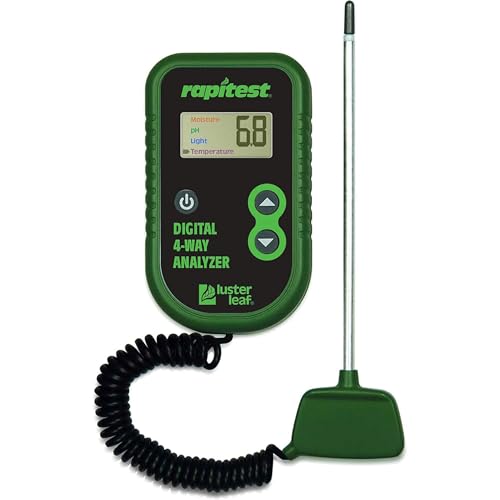
- Measures pH, moisture, temperature, and light
- Corded probe supports easier handling
- Includes guidance for more than 450 plants
Best For: Home gardeners seeking core readings with reference guidance
Simple Digital Option
Rapitest Digital Soil Testing Kit

- Battery-powered digital kit
- Single-kit format is easy to carry
- Lightweight at about 0.21 kilograms
Best For: Gardeners wanting a basic digital soil-testing option
Best Multi-Reading Value
SONKIR MS02 3-in-1 Soil Tester

- Measures moisture, pH, and sunlight
- Battery-free and portable
- Dry soil must be watered before testing
Best For: Basic soil, light, and moisture checks around the garden
Best Simple Moisture Meter
XLUX T10 Plant Soil Moisture Meter

- Reads moisture near the root zone
- Battery-free with a clear 10-scale dial
- Slim probe helps limit root disturbance
Best For: Straightforward watering checks for pots and garden soil
Best Full-Data Tester

- Checks seven soil and environmental conditions
- Dual display shows readings at a glance
- Adjustable head supports comfortable viewing
Best For: Detailed plant care across gardens, lawns, and greenhouses
Simple Dial Pick
Kensizer Moisture and pH Tester
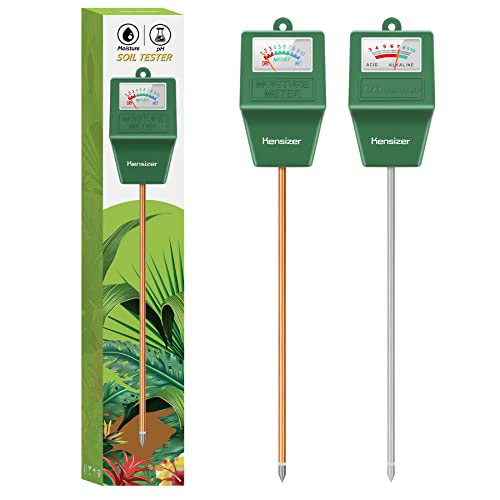
- Battery-free moisture and relative-pH testing
- Single probe with an easy-to-read dashboard
- Compact design for indoor or outdoor soil
Best For: Basic soil checks without batteries
Replaceable-Probe Option

- Tracks seven soil, air, and light conditions
- Removable probe can be replaced
- Rotating head and backlit LCD aid reading
Best For: Ongoing monitoring of plants and garden conditions
Most Comprehensive – 7-in-1 Digital Soil Tester
For gardeners comparing digital soil testers for dry climates, the HSLGOVE offers a broad view of conditions that affect watering and plant health. It measures soil moisture, pH, fertility, soil temperature, light, air temperature, and humidity, with results shown through a dial and LCD screen.
Best For: Gardeners who want one device for soil readings plus basic indoor or outdoor air-condition monitoring.
Pros:
- Measures seven soil, light, and environmental conditions.
- LCD screen displays soil temperature, air temperature, and humidity.
- Single probe is designed to reduce disturbance to plant roots.
- Works with indoor and outdoor gardens, lawns, farms, and potted plants.
Cons:
- It is not designed to test liquid.
- LCD readings can take about three to five minutes.
- All three batteries should be replaced or installed together.
This is the most versatile option in the group, especially when dry-climate gardening calls for more than a simple moisture check. Its multiple measurements may be useful for diagnosing plant stress, provided you follow the operating instructions.
Best Four-Way Coverage – Rapitest 4-Way Digital Analyzer
The Luster Leaf Rapitest 4-Way is a straightforward choice among digital soil testers for dry climates, combining soil moisture, pH, temperature, and light readings. Its corded probe lets you position the display for easier reading while testing.
Best For: Home gardeners who want four core soil and light measurements with guided reference information.
Pros:
- Tests soil pH, moisture, light, and temperature.
- Digital output is designed for easy reading.
- Corded probe allows convenient handling during tests.
- Includes instructions, gardening tips, and a pH list covering more than 450 plants.
Cons:
- It does not include the broader air temperature and humidity measurements offered by some multi-function meters.
- The supplied notes do not specify a battery type or battery life.
Choose this analyzer if you value a focused set of readings and substantial plant-reference material. It is a practical middle ground for monitoring moisture and pH while also checking temperature and light.
Best Dedicated pH Meter – Industrial-Grade Soil pH Tester
For dry-climate growers focused on soil acidity, the LUVCOSY is a dedicated digital soil tester rather than an all-in-one moisture meter. It uses double stainless-steel probes and a calibration-free LCD display for soil pH readings.
Best For: Gardeners, lawn owners, and home or lab researchers who primarily need soil pH information.
Pros:
- Designed for high-precision soil pH measurement.
- Calibration-free LCD display is ready to use.
- Double stainless-steel probes are described as sensitive and corrosion-resistant.
- Includes three AA batteries and a one-year warranty.
Cons:
- Measures soil pH only, not moisture, light, or temperature.
- It cannot be used to measure liquid.
- At 160 grams, it is heavier than some compact soil meters.
This is a targeted pick for users who already have another way to monitor irrigation and want a pH-focused instrument. Its ready-to-use design and included batteries make it convenient for repeated soil checks.
Simple Digital Option – Rapitest Digital Soil Testing Kit
The Luster Leaf Rapitest 1605 is a compact, battery-powered digital soil testing kit for gardeners who want a simpler approach to soil checks. Among digital soil testers for dry climates, it may suit users who prefer a basic kit rather than a multi-reading analyzer.
Best For: Gardeners seeking a straightforward battery-powered digital soil testing kit.
Pros:
- Battery powered for portable use.
- Packaged as a single digital soil test kit.
- Lightweight at approximately 0.21 kilograms.
Cons:
- The supplied notes do not identify the specific measurements it provides.
- Battery type and operating details are not specified.
- Its feature set is less clearly documented than the other testers in this roundup.
The Rapitest 1605 is worth considering when a basic digital kit is your priority, but the limited supplied specifications make it harder to match with a precise dry-climate monitoring routine. Confirm the included functions before buying if you need moisture or pH readings specifically.
Best Multi-Reading Value – SONKIR MS02 3-in-1 Soil Tester
For gardeners comparing digital soil testers for dry climates, the SONKIR MS02 offers three useful readings in one compact, battery-free tool. It measures soil moisture, pH, and sunlight, but dry soil must be watered before testing so the indicator can move.
Best For: Gardeners who want a simple, portable tester for checking moisture, pH, and light in indoor or outdoor soil.
Pros:
- Combines moisture, pH, and sunlight testing.
- Requires no batteries; insert it into the soil and wait for a reading.
- Compact design suits gardens, lawns, farms, and houseplants.
- Sturdy construction is intended for long-term use.
Cons:
- It cannot test the pH of liquids.
- Very dry soil must be watered before testing.
- It provides fewer measurement types than a more advanced multi-function tester.
The MS02 is a practical all-rounder when you want basic soil data without batteries. Its moisture limitation in especially dry soil is important to account for, but pre-moistening makes it more suitable for routine checks.
Best Simple Moisture Meter – XLUX T10 Plant Soil Moisture Meter
For gardeners seeking digital soil testers for dry climates without extra settings, the battery-free XLUX T10 focuses on moisture at the root zone. Its high-sensitivity single probe and color-coded 10-scale dial make it easy to decide when watering is needed.
Best For: Houseplant and garden owners who want a straightforward, immediate moisture reading with minimal root disturbance.
Pros:
- Reaches deeper soil near the roots instead of relying on surface feel.
- Needs no batteries or charging.
- Large dial uses Dry-Moist-Wet ranges for quick interpretation.
- Slim single probe is designed to reduce root disturbance.
Cons:
- Measures soil moisture only, not pH, light, or fertility.
- It should be removed within five minutes after testing.
- The probe must be wiped clean and stored in its protective sleeve.
The XLUX T10 is a focused choice rather than a complete soil-analysis kit. Its simple display and root-zone probe are useful for watering decisions, including in dry conditions, as long as you follow the temporary-use and cleaning guidance.
Best Full-Data Tester – 7-in-1 Digital Soil Test Kit
Among digital soil testers for dry climates, this 7-in-1 model provides the broadest set of readings in the group. Its dual display covers moisture, pH, fertility, light, soil temperature, air temperature, and humidity, helping gardeners evaluate both soil and surrounding conditions.
Best For: Gardeners managing houseplants, raised beds, lawns, greenhouses, or farms who want multiple soil and environmental readings.
Pros:
- Measures seven factors, including moisture, pH, fertility, light, and temperatures.
- Dual screen presents soil and environmental data at a glance.
- 90-degree adjustable head offers six viewing angles.
- Single probe is designed to minimize root disturbance.
Cons:
- It should not be used in water, stones, or very loose soil.
- The probe should be inserted at least five inches into moist soil for optimal accuracy.
- It should not be left in the soil for extended periods.
This is the most comprehensive option for gardeners who want more than a watering indicator. The need for moist soil and careful placement matters in dry climates, but the added temperature and humidity readings can provide useful context for plant care.
Simple Dial Pick – Kensizer Moisture and pH Tester
For gardeners comparing digital soil testers for dry climates, the Kensizer offers a straightforward way to check moisture and relative pH without batteries. Its single probe is designed for quick readings, but dry soil should be lightly watered first so the probe can move safely.
Best For: Gardeners who want a lightweight, battery-free moisture and relative-pH tester for indoor or outdoor soil.
Pros:
- Combines moisture and pH testing in one compact tool.
- Requires no battery and is portable for on-the-go checks.
- Single-probe design helps limit soil disturbance.
- Large numbers and a wide scale make the dashboard easy to read.
Cons:
- It should not be left in soil for extended periods because corrosion may occur.
- Very dry soil must be watered before testing, and the probe should be inserted about 2–4 inches.
- pH readings are relative, with an estimated margin of error of about 1–2 when moisture is within the recommended range.
This is a practical low-maintenance option for basic moisture tracking in dry conditions, provided you follow the insertion and moisture guidelines. It is not intended for testing liquids.
Full-Readout Choice – 7-in-1 Soil Test Kit
When evaluating digital soil testers for dry climates, this 7-in-1 model provides a broader view of conditions that affect watering and plant stress. It measures soil moisture, pH, fertility, light, soil temperature, air humidity, and ambient temperature through a dual-display interface.
Best For: Gardeners managing raised beds, greenhouses, lawns, farms, or mixed indoor and outdoor plantings who want multiple soil and environmental readings.
Pros:
- Monitors seven factors, including moisture, pH, fertility, and temperature.
- Dual display shows selected environmental data alongside dial readings.
- 90-degree adjustable head offers six viewing angles.
- Single probe is designed to reduce root disturbance.
Cons:
- For optimal accuracy, the probe should be inserted at least 5 inches into moist soil.
- It should not be used in water, stones, or very loose soil.
- The probe should be cleaned after each use and not left in soil for extended periods.
This model suits gardeners who need more than a simple moisture reading, especially where heat, humidity, light, and soil temperature influence irrigation decisions. Its accuracy depends on using sufficiently moist, suitable soil.
Replaceable-Probe Option – 7-in-1 Soil Moisture Meter
This 7-in-1 meter is a versatile choice among digital soil testers for dry climates, combining soil readings with air and light information. Its dial handles moisture, fertility, and pH without batteries, while the backlit LCD uses two AAA batteries for temperature, humidity, illuminance, and BGR light data.
Best For: Plant owners who want broad soil and garden-condition tracking with a removable probe and a rotating display.
Pros:
- Measures soil moisture, fertility, pH, air temperature, humidity, illuminance, and BGR light.
- Removable probe design supports replacement and long-term usability.
- Dial readings do not require batteries; the LCD adds backlit environmental data.
- Rotating head offers 0-, 30-, and 75-degree viewing positions.
Cons:
- Two AAA batteries are required for the LCD and are not included.
- Readings require inserting the probe about 4 inches and waiting roughly 10 seconds for stability.
- The supplied notes do not specify a pH accuracy range or calibration process.
The removable probe makes this a compelling option for regular garden monitoring, while the mixed battery-free and battery-powered design adds flexibility. It is particularly useful when light and air conditions matter alongside soil moisture.
How We Picked the Best Digital Soil Testers for Dry Climates
We focused on testers that can help gardeners make better decisions in low-rainfall conditions, where overwatering and underwatering are both common. The selection includes multifunction digital meters, dedicated pH tools, and battery-free moisture meters. We considered measurement range, probe design, display readability, portability, ease of use, and whether each tool provides information beyond basic soil moisture.
Because consumer soil meters vary in accuracy, these tools are best used for comparing areas and tracking changes over time rather than replacing laboratory soil analysis. For the most useful results, test several spots at root depth and follow the manufacturer’s instructions.
Quick Comparison
| Type | Best for | Typical measurements | Key advantage |
|---|---|---|---|
| 7-in-1 digital tester | Detailed garden monitoring | Moisture, pH, light, fertility, temperature, humidity | Broadest snapshot from one device |
| 4-way analyzer | Routine lawn and garden checks | Moisture, pH, temperature, light | Useful balance of features and simplicity |
| Dedicated pH meter | Soil amendment decisions | Soil pH | Focused, portable testing |
| Moisture meter | Houseplants and irrigation checks | Soil moisture | Fast and easy watering guidance |
Key Buying Factors for Digital Soil Testers for Dry Climates
Moisture Depth and Probe Design
Choose a probe long enough to reach the active root zone. A removable or replaceable probe can be useful when testing dense, rocky, or compacted soil. Avoid forcing any probe into hard ground, since bending or damaging the sensor can produce unreliable readings.
Measurement Coverage
Moisture is the most immediately useful measurement in an arid climate, but pH can reveal whether nutrients are available to plants. Temperature and humidity readings add context during heat waves, while light measurements can help diagnose stressed indoor plants or exposed garden beds. Fertility readings may be helpful for comparison, but treat them as estimates rather than a complete nutrient analysis.
Display, Power, and Durability
A large dual display is easier to read outdoors, especially in bright sunlight. Battery-powered models typically offer more functions, while battery-free meters are convenient for quick moisture checks. Look for a sturdy housing, clear controls, and care instructions for cleaning the probe between tests.
Testing Technique
Take readings at consistent depths and locations, then wait briefly for the display to stabilize. Test before watering and again later if you are learning how quickly a bed dries. Do not leave electronic probes outdoors permanently unless the product is specifically designed for continuous exposure.
Who Should Buy Which Digital Soil Testers for Dry Climates?
- Choose a 7-in-1 tester if you manage multiple beds, grow a wide variety of plants, or want moisture, pH, climate, and light information in one tool.
- Choose a 4-way analyzer if you want practical measurements without the extra complexity of a larger feature set.
- Choose a dedicated pH meter if soil acidity or alkalinity is your main concern before adding amendments or selecting plants.
- Choose a simple moisture meter if your priority is avoiding unnecessary watering for houseplants, containers, lawns, or raised beds.
- Choose a battery-free option if you value low maintenance and only need quick, occasional moisture checks.
For most dry-climate gardeners, the best choice is the model that matches how often you test and which decisions you need to make. A reliable moisture reading used consistently is usually more valuable than a long list of measurements you rarely consult.