The best cargo electric bikes for commuting combine practical carrying capacity with the range, comfort, and control needed for everyday travel. The models in this roundup span compact folders, fat-tire bikes, family-oriented designs, and long-range dual-battery options.
Before choosing, compare battery capacity, realistic range, payload limits, frame size, tire design, and local e-bike regulations. A bike that looks powerful on paper may not be the best fit for hills, storage, passenger use, or a consistent daily route.
Best 10 Cargo Electric Bikes for Commuting Picks for 2026
Best Everyday City Value
1500W Peak Step-Through E-Bike

- Front basket plus rear cargo rack
- Up to 45 miles in assist mode
- Low-step frame with seven speeds
Best For: City commuting, shopping, and moderate loads
Best Family Transport Pick
SISIGAD Child-Seat Cargo E-Bike

- Integrated child seat with rear guardrail
- Up to 60 miles of stated range
- 20-by-3-inch fat tires and suspension
Best For: School runs, family errands, and child transport
Practical Cargo Commuter
Gotrax R1 20" Folding Electric Bike

- Front and rear cargo racks
- Up to 55 miles in pedal-assist mode
- Folding fat-tire design with front suspension
Best For: Everyday commuters carrying groceries or personal items
Long-Range Heavy-Duty Pick
1500W Foldable Fat-Tire E-Bike

- 960Wh battery with up to 80 miles claimed
- 330-pound total payload capacity
- Full suspension and 20-by-4-inch tires
Best For: Long-distance riders carrying heavier loads
Best Folding Cargo Commuter
Folding Fat-Tire Electric Bike

- Folds quickly for apartment, office, or trunk storage
- 300-pound total payload with a steel rear rack
- Up to 25 miles of pedal-assist range and 20 mph speed
Best For: Compact urban commuting, errands, and light cargo hauling
Best Long-Range Cargo Powerhouse
Dual-Battery Fat-Tire Cargo E-Bike

- Up to 200 miles claimed with pedal assist
- Dual motors provide peak 3000W and 120N·m torque
- Rack, basket, bag, and extended saddle support utility
Best For: Long commutes, heavy gear, hills, and mixed terrain
Best Basket-Ready Commuter
1500W-Peak Fat-Tire Cargo E-Bike
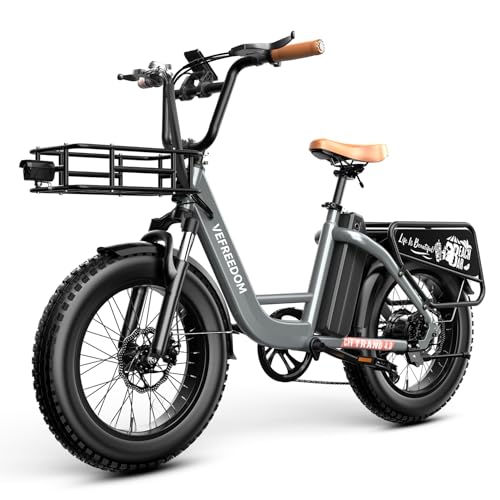
- Front basket adds convenient everyday cargo space
- Up to 80 miles claimed with a removable 48V 20Ah battery
- Seven speeds, front suspension, and disc brakes
Best For: Paved-road commuting, shopping, and daily errands
Best Long-Range Fat-Tire Pick – EUYBIKE 2-Seater Cargo E-Bike
For commuters who need cargo flexibility, hill-climbing power, and extra traction, this EUYBIKE is a well-equipped option among cargo electric bikes for commuting. Its removable 960Wh battery, two-seat design, suspension, and fat tires make it suited to varied daily routes.
Best For: Riders who want long assisted range, passenger capacity, and all-terrain versatility.
Pros:
- 48V 20Ah battery provides up to 70–80 miles in PAS mode, according to the manufacturer.
- 750W motor with 1,450W peak output and 82N.m torque is designed for steep hills.
- 20-by-4-inch fat tires, front and seat suspension, and dual disc brakes add comfort and control.
- Removable battery, seven speeds, lights, and three riding modes support practical commuting.
Cons:
- The large fat-tire, two-seater format may be less nimble than a conventional city e-bike.
- Pure electric range is listed at about 35 miles, substantially below the PAS estimate.
This is a strong choice when range and versatility matter more than a compact footprint. The included basket and 90% pre-assembly also support everyday utility, while the 12-month warranty adds some ownership reassurance.
Best Maximum-Range Utility Pick – Jasion Kago Dual-Battery Cargo E-Bike
The Jasion Kago stands out among cargo electric bikes for commuting when charging frequency is the primary concern. Its dual-battery system, 400-pound payload rating, extended rear rack, and suspension are aimed at long-distance utility riding.
Best For: High-mileage commuters, delivery-style errands, and riders carrying substantial cargo.
Pros:
- Combined 52V 40Ah capacity is rated at 2,080Wh and up to 150 miles of range.
- 400-pound maximum payload and extended rear rack support hauling groceries, gear, or deliveries.
- Front and seat suspension are paired with front and rear hydraulic disc brakes.
- Five riding modes and a UL 2849 certification add flexibility and safety-oriented design.
Cons:
- The dual-battery configuration likely adds weight and makes the bike less convenient to maneuver or store.
- It arrives 80% pre-assembled, so some setup is still required.
For riders who regularly cover long distances or carry heavy loads, the Kago offers unusually high stated capacity. Its utility-focused design is less about minimalism and more about reducing charging stops and expanding what a commute can include.
Best Everyday City Value – 1500W Peak Step-Through E-Bike
This step-through model is a practical entry point for cargo electric bikes for commuting, especially for riders who need built-in storage without a larger fat-tire cargo frame. Its front basket, rear rack, removable battery, and seven-speed drivetrain suit routine city errands.
Best For: Beginner to intermediate commuters carrying groceries and personal items on paved or lightly rough routes.
Pros:
- 1,500W peak motor is designed to handle hills up to a stated 20-degree incline.
- Detachable front basket and heavy-duty rear rack provide flexible cargo space.
- 48V 10.4Ah removable battery offers up to 45 miles in assist mode and supports indoor charging.
- Low-step frame, adjustable seat, front suspension, and dual disc brakes promote accessible daily riding.
Cons:
- The 230-pound maximum load is lower than the capacity of dedicated utility cargo models.
- Its 26-by-1.95-inch tires provide less flotation than fat tires on sand, snow, or very loose terrain.
With a conventional city-bike layout and useful front-and-rear storage, this model is easier to position as an everyday commuter than a heavy-duty hauler. It makes the most sense for moderate loads, shorter commutes, and riders who value step-through access.
Best Family Transport Pick – SISIGAD Child-Seat Cargo E-Bike
Families looking at cargo electric bikes for commuting will appreciate the SISIGAD’s integrated child seat and protective rear guardrail. Its wide tires, front suspension, removable battery, and turn signals make it oriented toward school runs, errands, and family outings.
Best For: Family transportation with a child, pet, or extra everyday cargo.
Pros:
- Built-in rear child seat and high guardrail are designed for protected family transport.
- 48V 15Ah battery is rated for up to 60 miles per charge.
- 1,500W peak motor is intended to help carry heavier loads and climb hills.
- 20-by-3-inch fat tires, front suspension, disc brakes, and turn signals support stable utility riding.
Cons:
- The six-month warranty is shorter than the one-year coverage listed for some alternatives.
- The product is described as advanced-skill level, which may not suit every first-time rider.
- The integrated family-oriented design may be less suitable for riders seeking a lightweight commuter.
The SISIGAD is a purpose-built family hauler rather than a minimalist city bike. Its child-seat setup and all-terrain features make it compelling for short daily transport, provided the rider is comfortable handling a larger cargo-oriented e-bike.
Practical Cargo Commuter – Gotrax R1 20" Folding Electric Bike
The Gotrax R1 is a practical choice among cargo electric bikes for commuting, especially if you want rack space, a folding design, and stable fat-tire handling. Its 500W motor, 7-speed drivetrain, and pedal-assist options suit everyday urban trips and mixed pavement.
Best For: Commuters carrying groceries or personal items who want a versatile, fat-tire e-bike.
Pros:
- Front and rear cargo racks provide flexible storage.
- Detachable 499.2Wh battery offers up to 55 miles in pedal-assist mode.
- Front suspension, 20-by-3-inch tires, and lights support comfortable, visible riding.
- UL2849 certification and 365-day parts support add reassurance.
Cons:
- At 61 pounds, it may be heavy to lift or carry.
- Pure-electric range is listed at up to 22 miles, shorter than the pedal-assist estimate.
With useful racks and multiple riding modes, the Gotrax balances commuting practicality with light off-road capability. It is a strong fit when cargo flexibility matters more than minimizing bike weight.
Long-Range Heavy-Duty Pick – 1500W Foldable Fat-Tire E-Bike
This foldable e-bike is built for riders who need substantial power and battery capacity from cargo electric bikes for commuting. Its 48V 20Ah battery, 330-pound total payload capacity, step-through frame, and rack-ready design make it suitable for demanding daily travel.
Best For: Long-distance commuters and riders who need high payload capacity, strong hill performance, and all-terrain tires.
Pros:
- 960Wh removable, lockable battery is rated for up to 80 miles of performance.
- 1500W peak motor and 110Nm torque support hills and challenging terrain.
- Step-through frame, full suspension, and 20-by-4-inch tires improve versatility.
- Front and rear racks can carry cargo or an extra rider, with a 330-pound total payload rating.
Cons:
- Large 4-inch tires and heavy-duty components may make it less nimble in tight urban spaces.
- The supplied notes do not specify the bike’s total weight.
This model stands out for range, payload capacity, and terrain flexibility. Its foldable frame helps with storage, but the broad tires and powerful setup favor capability over a lightweight commuter feel.
Comfort-Focused Range Pick – TST 48V Fat-Tire Electric Bike
The TST electric bike is a comfort-oriented option among cargo electric bikes for commuting, with dual suspension, puncture-proof 20-by-4-inch tires, and a removable battery. Its 750W rated motor and pedal-assist or throttle modes provide flexibility for city streets, trails, and longer rides.
Best For: Riders who prioritize suspension comfort, fat-tire stability, and extended pedal-assist range.
Pros:
- Removable 48V 15Ah battery is rated for up to 60 miles in pedal-assist mode.
- Front and rear suspension help absorb bumps and reduce fatigue.
- Puncture-proof fat tires provide grip across urban and off-road terrain.
- Seven gears, LCD ride data, and both pedal-assist and throttle assistance add control.
Cons:
- The bike weighs 66 pounds, which can be cumbersome to transport.
- Its 180-day warranty is shorter than some competing coverage periods.
- Mechanical brake setup requires inspection and adjustment before riding.
The TST is a sensible choice for commuters facing rough pavement or mixed terrain. Its suspension and range are appealing, though the substantial weight and shorter warranty are worth considering before purchase.
Best Folding Cargo Commuter – Folding Fat-Tire Electric Bike
For riders seeking cargo electric bikes for commuting in smaller living spaces, this folding model combines a step-through frame, all-terrain tires, and a rear rack. Its 20 mph regulated top speed, removable 374.4Wh battery, and compact folding design suit shorter urban trips, errands, and campus riding.
Best For: Apartment dwellers, grocery shoppers, campus riders, and commuters who need compact storage and light cargo capacity.
Pros:
- Folds for storage under a desk, in a closet, or in a car trunk.
- Heavy-duty rear rack and 300-pound total payload capacity support groceries and work gear.
- Step-through frame, front suspension, six speeds, and three riding modes offer practical flexibility.
- UL2849 and UL2271 certifications address electrical and battery safety.
Cons:
- Pedal-assist range is listed at up to 25 miles, making it better suited to shorter commutes.
- Its 20-inch fat tires and folding hardware may be less streamlined than a conventional city bike.
This is a practical pick when easy storage and everyday cargo utility matter more than maximum range. The included rack and approachable step-through design make it especially commuter-friendly, while the fat tires add versatility for gravel and light snow.
Best Long-Range Cargo Powerhouse – Dual-Battery Fat-Tire Cargo E-Bike
Among cargo electric bikes for commuting, this dual-motor model is aimed at riders who cover long distances or face demanding terrain. Its dual-battery system, extended saddle, rear rack, basket, and 20-by-4-inch fat tires provide substantial range, carrying utility, and off-road capability.
Best For: Long-distance commuters, outdoor adventurers, and riders carrying groceries, camping gear, or a passenger.
Pros:
- Dual 52V 50Ah batteries are listed for up to 80–100 miles in electric mode and up to 200 miles with pedal assist.
- Peak 3000W dual motors and 120N·m of torque support hills and rugged terrain.
- Rear rack, removable basket, riding bag, and extended saddle add everyday utility.
- Four-piston hydraulic brakes and fat tires support control on pavement, gravel, snow, and trails.
Cons:
- The dual-motor, dual-battery configuration is likely less compact and more cumbersome than a folding commuter bike.
- A listed top speed of 31 mph may exceed limits for some roads, bike paths, or local regulations.
- Its adventure-focused equipment may be more capability than needed for short city commutes.
This is the strongest fit for riders who prioritize range, power, and cargo flexibility over portability. It can handle commuting and shopping, but its size and high-performance specifications make it better suited to open routes and longer journeys.
Best Basket-Ready Commuter – 1500W-Peak Fat-Tire Cargo E-Bike
This basket-equipped option gives shoppers a straightforward choice among cargo electric bikes for commuting. The CityRang 4.0 pairs a removable 48V 20Ah battery with 20-by-4-inch fat tires, seven speeds, front suspension, and a front basket for practical paved-road trips.
Best For: Paved-road commuters and shoppers who want a front basket for everyday carrying.
Pros:
- Front basket provides ready-to-use space for groceries and daily essentials.
- Removable 48V 20Ah battery is listed with up to 80 miles of maximum range.
- Seven speeds, front suspension, disc brakes, and 4-inch fat tires support varied rides.
- UL certified and backed by a one-year warranty.
Cons:
- The supplied details identify paved roads as the intended terrain, so it is less clearly suited to rugged off-road use.
- At 71 pounds, it may be difficult to lift onto stairs or into a vehicle.
- The supplied information does not specify a rear rack or total payload capacity.
The front basket makes this a convenient errands-and-commuting bike, particularly for riders who stay primarily on paved roads. Its listed range and removable battery are useful on paper, though the weight and lack of stated rear cargo capacity are worth considering before purchase.
How We Picked These Cargo Electric Bikes for Commuting
We selected these 10 models based on the features that matter most for practical commuting: battery capacity, claimed range, motor output, tire stability, carrying potential, portability, comfort, and everyday versatility. The list includes several power and price categories rather than treating maximum wattage as the only measure of quality.
Manufacturer range figures are best-case estimates and can change substantially with rider weight, cargo, hills, temperature, tire pressure, assist level, and wind. Treat them as comparison points, not guaranteed distances.
Quick Comparison
- Best for compact storage: Folding models such as the Gotrax R1 and 20-inch fat-tire folders are easier to store in apartments, offices, and vehicles.
- Best for long distances: Dual-battery options and higher-capacity 52V or 48V systems offer more potential range between charges.
- Best for family use: Two-seater and family-oriented designs may provide more practical seating, but verify the rated payload and passenger requirements.
- Best for mixed terrain: Fat tires can improve comfort and traction on rough pavement, gravel, and compact trails, though they add weight and rolling resistance.
- Best for straightforward city riding: A lighter seven-speed or folding commuter may be easier to maneuver, carry, and park than a high-powered cargo bike.
Key Buying Factors for Cargo Electric Bikes for Commuting
Battery and Realistic Range
Battery watt-hours provide a more useful comparison than voltage alone. A larger battery may support longer rides, but it also adds weight and cost. Choose enough capacity for your round trip with reserve for weather, hills, and battery aging.
Motor Performance and Legal Limits
Peak wattage describes short-term output and does not tell the whole story. Check sustained performance, hill ability, pedal-assist settings, throttle availability, and whether the bike complies with regulations where you ride. Extremely fast models may require additional safety equipment or may not qualify as ordinary e-bikes locally.
Payload, Fit, and Cargo Equipment
Confirm the combined rider-and-cargo limit before carrying groceries, work equipment, or a passenger. Look for sturdy racks, compatible baskets, footboards, passenger pads, and secure mounting points. A step-through frame can make frequent stops easier, while a larger frame may better suit taller riders.
Comfort, Control, and Maintenance
Consider tire width, suspension, saddle shape, handlebar position, hydraulic or mechanical brakes, lighting, fenders, and display readability. Also check replacement battery availability, warranty coverage, charger support, assembly requirements, and the availability of local service.
Who Should Buy Which Cargo Electric Bikes for Commuting?
Choose a folding model if storage, public-transit connections, or car transport matter most. Choose a fat-tire cargo bike if you regularly ride on uneven streets or want added stability while carrying loads. Choose a dual-battery model for long commutes, limited charging access, or frequent high-assist riding. Choose a family-style or two-seater bike when passenger capability is central, provided the frame, seat, footrests, and payload rating meet your needs.
For most commuters, the best choice is not the fastest bike. Prioritize a comfortable fit, dependable braking, sufficient real-world range, secure cargo support, and a weight you can safely maneuver when the motor is off.