Recording voiceover in a home studio, event space, or mobile setup often requires more than a good microphone. The right press box, splitter, or vocal-isolation accessory can help distribute a signal cleanly, reduce unwanted room sound, and make production easier.
We’ve selected 10 practical options for different workflows, from dedicated passive press boxes and line splitters to portable vocal booths and recording shields. Use the guide below to match the equipment to your signal-routing needs, recording environment, and budget.
Best 10 Audio Press Boxes for Voiceover Picks for 2026
Best Multi-Channel Pick

- One line input to 12 XLR outputs
- Transformer isolation on every output
- 20 Hz–20 kHz frequency range
Best For: Large press events and multi-recipient voiceover distribution
Best Portable Recording Bundle
PreSonus AudioBox Go Creator Bundle

- 24-bit/96 kHz USB-C interface
- Includes condenser mic and headphones
- Studio One 6 Artist Edition included
Best For: Portable voiceover recording and beginner studio setups
Best Compact Press Box

- One XLR input to eight outputs
- Isolated XLR male outputs
- 3.5-pound compact design
Best For: Smaller events needing eight distribution channels
Best Expandable Splitter
Radial Exo-Pod Line-Level Splitter

- One input with 14 passive outputs
- Trim pots and XLR through connections
- Supports daisy-chaining
Best For: Large line-level distribution systems and expandable setups
Portable Voice Booth

- Absorbs up to 90% of reverberation and room noise
- Sets up in about 60 seconds
- Includes holder and travel bag
Best For: Mobile voiceover and podcast recording in untreated rooms
Broadcast Press Box
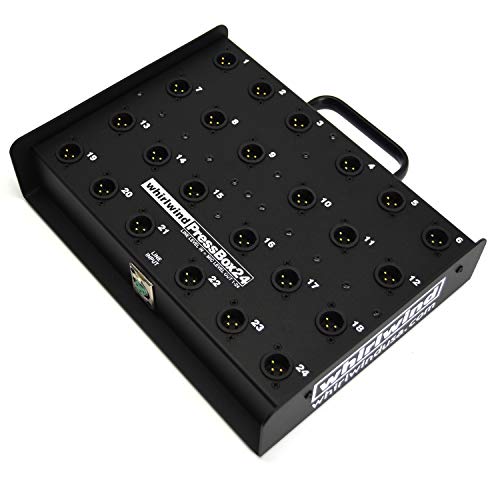
- Distributes one line input to 24 mic outputs
- Transformer-isolated and ground-lifted outputs
- Specified at 65dB channel isolation
Best For: Press conferences and multi-recipient broadcast feeds
Vocal Warm-Up Dampener

- Reduces sound by up to 30dB
- Leaves the nose exposed for easier breathing
- Waterproof with removable adjustable strap
Best For: Quiet, portable vocal warm-ups for performers
Best Signal Splitter
1-in/8-Out XLR Distribution Box

- Routes one source to up to eight XLR outputs
- Accepts XLR and 1/4-inch TS/TRS input
- Compact aluminum-alloy portable enclosure
Best For: Multi-output voiceover and audio routing
Best Foldable Voice Booth
Portable Microphone Isolation Shield

- 2-inch dense foam helps reduce reflections
- Works on a desk or compatible microphone stand
- Folds compactly for storage and travel
Best For: Portable voiceover, podcast, and audiobook recording
Best Compact Vocal Shield
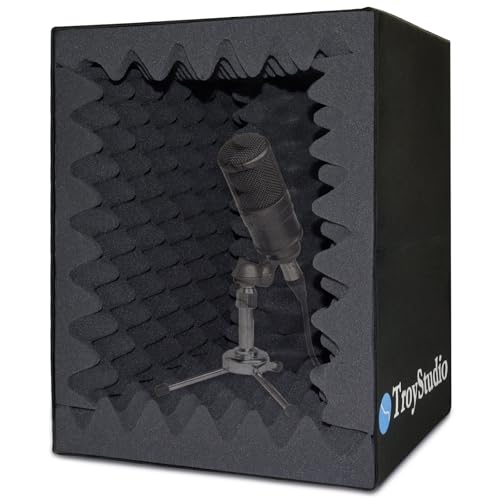
- Surrounds the mic with 2-inch acoustic foam
- Supports desk and compatible stand mounting
- Folds for convenient storage and travel
Best For: Home voiceover, vocal, podcast, and streaming recording
Best Multi-Channel Pick – Whirlwind PB12 Press Box
For venues or production teams needing audio press boxes for voiceover, the Whirlwind PB12 provides one line input and 12 microphone outputs. Its transformer-isolated outputs are designed to help reduce crosstalk, ground noise, and interference between channels.
Best For: Press conferences, media distribution, and voiceover setups requiring up to 12 isolated outputs.
Pros:
- Provides 12 XLR microphone outputs from one line input.
- Each output has its own transformer for isolation.
- 20 Hz–20 kHz frequency range and 150-ohm output impedance.
Cons:
- Passive design requires an external signal source.
- At 6.1 pounds, it is less portable than compact interfaces.
The PB12 is a strong choice when output count and channel isolation matter more than minimal size or a built-in recording workflow.
Best Portable Recording Bundle – PreSonus AudioBox Go Creator Bundle
The PreSonus AudioBox Go Creator Complete Studio Bundle is a practical alternative for voiceover work that involves recording rather than distributing a live feed. It combines a compact USB-C interface, condenser microphone, headphones, and Studio One 6 Artist Edition software.
Best For: Beginner voiceover recording, podcasting, and portable home-studio sessions.
Pros:
- Includes a 24-bit/96 kHz USB-C audio interface.
- Bundle includes a cardioid condenser microphone and monitoring headphones.
- Studio One 6 Artist Edition software is included.
Cons:
- It has two channels rather than the multiple outputs typical of a press box.
- The supplied notes identify a microphone and headphones but do not specify a dedicated press-box output layout.
This bundle suits creators who need an accessible voiceover recording setup, but it is not the direct choice for sending one source to many press or broadcast recipients.
Best Compact Press Box – PB-8 8-Output Press Box
The PB-8 is a straightforward option among audio press boxes for voiceover, offering one XLR female input and eight isolated XLR male outputs. Its compact 8 x 4 x 8-inch form factor keeps the distribution setup relatively manageable.
Best For: Smaller press conferences and voiceover distribution setups needing eight isolated outputs.
Pros:
- Offers one XLR input and eight XLR male outputs.
- Isolated outputs help support separate recipient connections.
- Weighs 3.5 pounds and has a compact listed footprint.
Cons:
- Provides fewer outputs than 12-output press boxes.
- The supplied notes do not specify frequency response or impedance.
The PB-8 is a sensible fit when eight destinations are sufficient and you want a dedicated, relatively compact press-box format.
Best Expandable Splitter – Radial Exo-Pod Line-Level Splitter
The Radial Exo-Pod is a passive line-level splitter for voiceover and press distribution workflows that need multiple feeds. It provides one input, 14 outputs, XLR through connections, trim pots, and daisy-chaining capability.
Best For: Larger line-level distribution systems requiring many outputs or future expansion.
Pros:
- Provides 14 passive line-level outputs.
- Includes trim pots and XLR through connections.
- Supports daisy-chaining for expanded distribution.
Cons:
- It is a line-level splitter rather than a microphone-output press box.
- Passive operation requires an appropriate external source.
- Its 4.07-pound weight and larger 13.35-inch length may not suit every portable setup.
Choose the Exo-Pod when output count and expansion are priorities, while confirming that your source and receiving equipment are compatible with line-level distribution.
Portable Voice Booth – Echo-Free Voiceover Recording
If you need audio press boxes for voiceover work but primarily record in untreated rooms, this portable vocal booth can help reduce reverberation and room noise around the microphone. Its pop-up design suits home studios, offices, dorms, and mobile recording setups.
Best For: Voiceover artists, podcasters, singers, and traveling creators who need a floor-standing, one-person recording space.
Pros:
- Multi-layer acoustic pads and Oxford fabric help absorb up to 90% of reverberation and room noise.
- Roomy 31.5-by-31.5-inch footprint and reinforced frame support stable mic placement.
- Sets up in about 60 seconds and includes a phone/tablet holder and travel bag.
Cons:
- Its 6.88-square-foot footprint requires dedicated floor space.
- Designed for one person rather than group recording.
This is a practical choice when portability and room treatment matter more than a permanent studio installation. The included storage and setup accessories make it especially convenient for creators who record in multiple locations.
Broadcast Press Box – 24-Output Passive Press Box
For broadcast teams specifically comparing audio press boxes for voiceover and media feeds, the Whirlwind PB24 distributes one line-level input to 24 mic-level outputs. Transformer isolation and ground lifting are designed to help limit interference between connected outputs.
Best For: Broadcast, press, and event setups that need to send one audio feed to many microphones or recording destinations.
Pros:
- Provides 24 mic-level outputs from one line-level input.
- Transformer-isolated, ground-lifted outputs help reduce interference.
- Offers 65dB channel-to-channel isolation and -103dB output noise.
Cons:
- At nearly 9.77 pounds, it is less convenient for lightweight mobile kits.
- Its passive press-box design is intended for distribution rather than recording-room sound treatment.
The PB24 is the most purpose-built option here for multi-recipient press feeds. Its 24-output capacity is useful when several reporters, cameras, or recorders need the same clean source simultaneously.
Vocal Warm-Up Dampener – Wearable Vocal Sound Dampener
BELTBOX 3.0: Vocal Dampener for Singers, Actors, Performers, Stress Relief. A Portable Warm-Up Room.
Check Price On AmazonUnlike conventional audio press boxes for voiceover, the BELTBOX 3.0 is a wearable vocal dampener for singers, actors, and performers. It is designed for portable vocal warm-ups, reducing sound by up to 30dB while leaving the nose exposed for easier breathing.
Best For: Performers who need a compact, hands-free vocal warm-up tool at home, backstage, while traveling, or in shared spaces.
Pros:
- Sound-dampening materials provide up to 30dB of sound reduction.
- Improved design leaves the nose exposed and fits a wider range of faces.
- Removable adjustable strap enables hands-free use, and the waterproof body is easy to clean.
Cons:
- It is a vocal warm-up device, not a microphone signal-distribution press box.
- Its compact dimensions make it unsuitable for enclosing a microphone or recording space.
The BELTBOX 3.0 makes sense for performers prioritizing personal portability and reduced vocal volume. Choose it for warm-ups rather than for routing audio to reporters, recorders, or broadcast equipment.
Best Signal Splitter – 1-in/8-Out XLR Distribution Box
For installations that need to distribute one source across several destinations, this SIUNIMAS box is a practical option among audio press boxes for voiceover. It accepts XLR or 1/4-inch TS/TRS input and sends the signal to up to eight XLR outputs, making it useful for routing a microphone, mixer, or other line-level source to multiple powered speakers or amplifiers.
Best For: Voiceover and audio setups that need one source routed to multiple outputs.
Pros:
- Provides one female XLR input and eight male XLR outputs.
- Supports XLR, 1/4-inch TS, and TRS input connections.
- Compact aluminum-alloy enclosure with a portable 12.16-ounce design.
- Includes one loop output and a one-year warranty.
Cons:
- It is a signal splitter rather than a microphone isolation booth or acoustic treatment product.
- Actual usable split count depends on the source level, impedance, and setup.
This is best viewed as a routing solution for a multi-output voiceover or audio system. Choose it when connectivity and distribution matter more than room-noise reduction.
Best Foldable Voice Booth – Portable Microphone Isolation Shield
For recording voiceovers in untreated rooms, this TroyStudio booth is a more direct fit for audio press boxes for voiceover. Its five pieces of 2-inch dense acoustic foam surround the microphone area to reduce echoes and reflections, while the foldable design makes it practical for home, office, apartment, or travel use.
Best For: Voiceover artists, podcasters, and audiobook narrators recording without a dedicated studio.
Pros:
- Uses 2-inch thick egg-crate foam on the interior surfaces.
- Fits on a desk or a compatible microphone stand.
- Folds to 12 x 12 x 6 inches and weighs about 2 pounds.
- Sets up in about one minute and includes cable and stand openings.
Cons:
- Stand mounting is limited to stands under 0.86 inches in diameter.
- Incorrect installation can cause stability issues.
- Its compact enclosure is intended for microphone-area treatment, not full-room isolation.
The strengthened backing panel and dense foam make this a convenient portable treatment option. It is a sensible choice when you need a drier recording sound but cannot build a permanent booth.
Best Compact Vocal Shield – Portable Foam Recording Booth
This TroyStudio isolation ball is designed for close microphone recording, making it useful when comparing audio press boxes for voiceover. The foldable shield uses five pieces of 2-inch sound-dampening foam to help limit room reflections and ambient noise around the microphone, with desk and stand mounting for flexible home-studio placement.
Best For: Vocal recording, streaming, podcasting, and voiceover work in small or untreated spaces.
Pros:
- Provides a 12 x 10 x 8-inch interior recording space.
- Compatible with vocal, condenser, USB, phone, and recorder microphones.
- Can be used on a table or with a compatible stand.
- Folds to 12 x 12 x 6 inches and installs in about one minute.
Cons:
- Stand compatibility is limited to diameters below 0.86 inches.
- It does not replace treatment for an entire room.
- The instructions should be followed carefully to avoid an unstable setup.
Its compact footprint and broad microphone compatibility make this a flexible choice for mobile or bedroom recording. It is most useful for improving microphone-area clarity rather than eliminating every source of room noise.
How We Picked These Audio Press Boxes for Voiceover
We evaluated this list by looking at signal-routing function, connection flexibility, portability, construction, and usefulness in real voiceover workflows. Dedicated press boxes and passive splitters are assessed for their ability to distribute one source to multiple outputs, while vocal booths and shields are included for users whose main challenge is room reflection or background noise.
Because these products serve different roles, they should not be treated as interchangeable. A press box solves output distribution; a portable booth or reflection shield primarily shapes the recording environment. The best choice depends on which problem is limiting your setup.
Quick Comparison
- Dedicated multi-output press boxes: Best for sending one microphone or line-level source to several receivers, recorders, or monitoring destinations.
- Compact splitters: Useful for smaller rigs, live production, interviews, and setups that need flexible input or output connections.
- Audio interfaces and bundles: Better for solo voiceover recording when you need microphone preamps, conversion, and computer connectivity.
- Portable vocal booths and shields: Better for reducing reflections and improving vocal consistency in untreated rooms.
Key Buying Factors for Audio Press Boxes for Voiceover
Output Count and Routing Needs
Choose enough outputs for every recorder, camera, mixer, or monitoring destination you expect to connect. A 1-in/8-out unit may be more portable, while a 1-in/12 or 1-in/24 design gives larger productions more room to grow.
Signal Type and Impedance
Confirm whether the device is intended for microphone-level, line-level, balanced, or unbalanced signals. Passive units are convenient because they need no power, but impedance and gain staging still matter. Keep cable runs appropriate and verify compatibility with the connected equipment.
Connectors and Flexibility
Check the number and type of XLR, TRS, TS, or loop connections. A unit with flexible input options can fit more workflows, but simpler designs may be easier to troubleshoot during a session.
Portability and Build Quality
For field voiceover, interviews, and event work, prioritize a compact enclosure, durable connectors, and manageable cable requirements. For a permanent studio, output capacity and dependable operation may matter more than minimum size.
Room Control
If recordings sound boxy, hollow, or echoey, a splitter alone will not fix the problem. Pair a suitable interface or press box with acoustic treatment, a portable booth, or a reflection shield when the room is the weak point.
Who Should Buy Which Audio Press Boxes for Voiceover?
Choose a multi-output press box if you regularly distribute one microphone feed to several cameras, recorders, or production consoles. These are the most direct choices for press conferences, interviews, and live voiceover capture.
Choose a compact passive splitter if you need a lightweight backup or a flexible solution for smaller productions. Make sure its level and connector configuration match your equipment.
Choose an audio interface bundle if you are building a computer-based voiceover station and need an all-in-one starting point for recording, monitoring, and software integration.
Choose a portable booth or microphone shield if your priority is reducing room reflections in a home, hotel, or temporary recording space. These accessories work best when positioned carefully around the microphone and used in a reasonably quiet room.