Audio press boxes make it easier to distribute one clean source to multiple cameras, recorders, reporters, or broadcast systems without relying on improvised splitters. The right model can reduce hum, preserve signal integrity, and simplify event audio.
This roundup compares ten press boxes, line splitters, isolators, and DI-style alternatives. Use the buying guide below to match output count, connectivity, isolation, and power requirements to your production setup.
Best 10 Audio Press Boxes Picks for 2026
High-Capacity Press Box

- One line input feeds 12 XLR microphone outputs
- Transformer-isolated outputs help reduce interference
- 20Hz–20kHz range with 150-ohm outputs
Best For: Large press events and speech distribution
Flexible Signal Routing
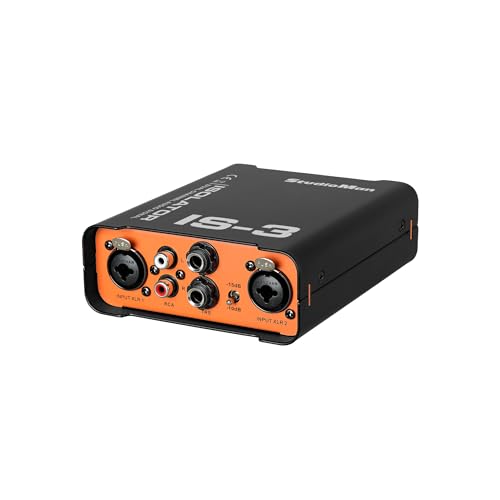
- Dual channels accept XLR, TRS, and RCA inputs
- 10dB/15dB pads handle hotter sources
- Ground lift helps reduce ground-loop hum
Best For: Small audio systems needing isolation and routing
High-Output Line Splitter

- Splits one line-level input to 14 outputs
- Trim pots provide output-level adjustment
- XLR through supports daisy chaining
Best For: Large line-level distribution systems
Compact Eight-Output Press Box

- One female XLR input with eight male XLR outputs
- Isolated outputs support separated feeds
- 3.5-pound design for smaller setups
Best For: Small press events needing eight microphone feeds
Portable Stereo DI Solution
Mackie MDB-2P Passive Stereo DI Box

- Dual high-impedance 1/4-inch stereo inputs
- Ground lift and 15 dB pads
- Passive design needs no power
Best For: Stereo keyboards, DJ rigs, and backing-track setups
Multi-Outlet Broadcast Distribution
Whirlwind PB24 Passive Press Box
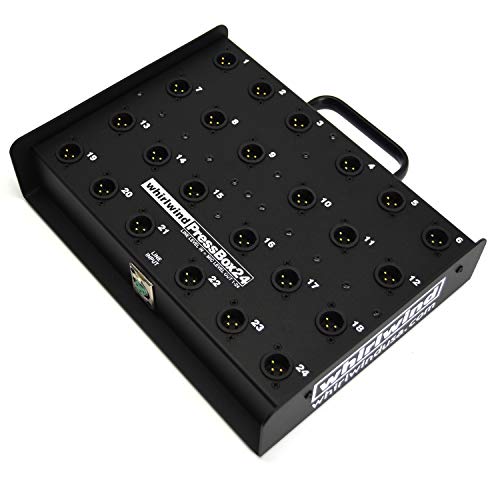
- One line-level input to 24 mic outputs
- Transformer isolation on every output
- Ground-lifted outputs reduce interference
Best For: Press conferences and large broadcast media feeds
Flexible Active DI Connectivity

- Stereo or mono operation via dual 1/4-inch inputs
- XLR and 1/4-inch through outputs
- Type-C or 9V battery power options
Best For: Instruments and unbalanced sources feeding mixers or PAs
Rack-Ready Splitter
ART PDB4 Four-Channel Passive Direct Box

- Four fully isolated passive channels
- 0dB, -20dB, and -40dB attenuation
- Feeds an amp and mixer simultaneously
Best For: Multi-channel live and studio signal splitting
Flexible Stereo Power
Bolanle J22 Active Stereo DI Box

- 48V, 9V battery, or 5V USB power
- Dual channels with stereo XLR outputs
- Ground lift and polarity reversal controls
Best For: Stereo keyboards and mobile performance rigs
Compact Hum Control
Bolanle DB2 Passive 2-Channel DI Box

- Two passive channels with balanced XLR output
- Ground lift for hum reduction
- Three selectable attenuation levels
Best For: Guitar, bass, stereo instruments, and reamp setups
High-Capacity Press Box – Whirlwind PB12
The Whirlwind PB12 is a practical choice for audio press boxes when one line-level source needs to feed many microphones. Its passive design provides 12 XLR microphone outputs, with transformer isolation on each channel to help reduce crosstalk, ground noise, and interference.
Best For: Press events, speech applications, video conferences, and other setups requiring up to 12 isolated microphone feeds.
Pros:
- Routes one line input to 12 microphone outputs.
- Individual transformer-isolated outputs help limit noise and crosstalk.
- Offers a 20Hz–20kHz frequency range and 150-ohm output impedance.
- Compact, sturdy 6.1-pound enclosure with XLR connectivity.
Cons:
- Passive operation may require an appropriate incoming line-level signal.
- Provides a single input rather than multiple source channels.
Choose the PB12 when output count and channel isolation are more important than portability or powered features. It is especially well suited to distributing one speech or media feed across a large press area.
Flexible Signal Routing – StudioMan IS-3 Audio Isolator
The StudioMan IS-3 is a dual-channel audio isolator rather than a conventional multi-output press box, but it can support audio press boxes by cleaning up and routing source signals before they reach other equipment. It combines flexible inputs, balanced XLR outputs, attenuation pads, and ground lift controls.
Best For: Small podcast, studio, live-sound, and media setups needing two-channel isolation, level control, and hum reduction.
Pros:
- Two independent channels accept XLR, 1/4-inch TRS, and RCA inputs.
- 10dB/15dB pad settings help manage high-output sources.
- Ground lift can address unwanted ground-loop hum.
- THRU outputs support parallel routing to an amplifier or other equipment.
Cons:
- It is a two-channel isolator, not a dedicated press box with multiple microphone outputs.
- The supplied notes do not specify the unit’s dimensions or weight.
The IS-3 makes the most sense upstream of a press or recording system when source compatibility and noise control are priorities. For distributing one feed to many reporters, pair it with a dedicated multi-output press box.
High-Output Line Splitter – Radial Exo-Pod
The Radial Exo-Pod is designed for audio press boxes and distribution systems that need many line-level outputs from one source. Its passive architecture provides 14 outputs, while trim pots and XLR through connections support level adjustment and daisy chaining.
Best For: Large-scale line-level distribution where one input must feed multiple destinations.
Pros:
- Provides 14 passive line-level outputs.
- Trim pots allow output-level adjustment.
- XLR through connections support daisy chaining.
- Stainless-steel construction and a compact 4.07-pound form factor.
Cons:
- It is intended for line-level splitting, not direct microphone-output distribution.
- Passive operation does not provide an onboard power source.
The Exo-Pod is a strong fit when your workflow calls for numerous line-level feeds rather than conventional reporter microphone outputs. Its trim controls add useful flexibility for balancing connected destinations.
Compact Eight-Output Press Box – PB-8 Press Box
The PB-8 is a straightforward option for audio press boxes when you need to distribute one source to eight microphone outputs. It uses a female XLR input and isolated male XLR outputs, making it suitable for connecting multiple press or recording feeds.
Best For: Smaller press events and speech setups needing eight isolated XLR microphone outputs.
Pros:
- One female XLR input feeds eight male XLR outputs.
- Isolated outputs are designed to help separate connected channels.
- Its eight-output layout is simpler than larger press boxes.
- Listed weight is 3.5 pounds.
Cons:
- Offers fewer outputs than 12- or 14-output distribution units.
- The supplied notes do not provide frequency response, impedance, or isolation specifications.
The PB-8 is a sensible choice when eight feeds cover the event and you want a simple XLR-based configuration. Consider a higher-output model if the press line regularly serves more than eight destinations.
Portable Stereo DI Solution – Mackie MDB-2P Passive Stereo DI Box
For audio press boxes and live sound rigs that need clean stereo signal handling, the Mackie MDB-2P offers two high-impedance 1/4-inch inputs in a passive, power-free design. Its ground lift and 15 dB pads address common hum and hot-signal problems before they reach the mixer.
Best For: Stereo keyboards, DJ controllers, and backing-track rigs that need a roadworthy passive DI solution.
Pros:
- Dual 1/4-inch inputs support stereo sources.
- Ground lift helps reduce ground-loop buzz.
- 15 dB pads accommodate hot signals without distortion.
- Passive design requires no power.
Cons:
- It is a DI box rather than a multi-output press distribution unit.
- Its listed inputs are 1/4-inch, so additional cabling may be needed for other source connections.
The MDB-2P is a practical choice when portability, simple operation, and stereo signal protection matter more than distributing one feed to many outputs.
Multi-Outlet Broadcast Distribution – Whirlwind PB24 Passive Press Box
For audio press boxes used in broadcast or media environments, the Whirlwind PB24 is designed to distribute one line-level input to 24 mic-level outputs. Transformer isolation and ground lifting on each output help limit interference between connected feeds.
Best For: Press conferences, broadcast media feeds, and other setups requiring many isolated microphone-level outputs.
Pros:
- Distributes one line-level input to 24 mic-level outputs.
- Transformer-isolated, ground-lifted outputs help reduce interference.
- TRSP-2 transformers are used throughout.
- Specified channel-to-channel isolation is 65 dB.
Cons:
- At 9.77 pounds, it is less portable than compact DI boxes.
- Its 24-output format may be excessive for smaller events.
- It is intended for line-to-mic distribution rather than stereo instrument DI use.
The PB24 is the most purpose-built option here for professional press distribution, especially when numerous media outlets need separate, interference-resistant feeds.
Flexible Active DI Connectivity – Dual-Input Active Direct Box
For audio press boxes and live sound systems that need flexible source connections, this active DI box accepts dual 1/4-inch inputs and provides stereo XLR and 1/4-inch through outputs. It also includes ground-lift functionality and two power options for recording and performance setups.
Best For: Guitar, bass, keyboard, submixer, and other unbalanced sources feeding a PA or audio mixer.
Pros:
- Dual 1/4-inch inputs support stereo or mixed-mono operation.
- Provides both stereo XLR outputs and 1/4-inch through outputs.
- Offers Type-C charging or an optional 9V GF22 battery supply.
- Ground-lift functionality helps address hum and buzz.
Cons:
- The required 9V GF22 battery is not included.
- It needs power for its active design.
- It is not a multi-output press box for distributing one feed to many media outlets.
This unit suits users who want more routing flexibility than a basic passive DI, particularly when stereo sources, through connections, and portable power options are useful.
Rack-Ready Splitter – ART PDB4 Four-Channel Passive Direct Box
For audio press boxes and larger signal-splitting setups, the ART PDB4 provides four fully isolated passive channels in a rack-friendly format. Switchable 0dB, -20dB, and -40dB attenuation helps accommodate different source levels.
Best For: Performers, studios, and live-sound setups needing four isolated DI channels.
Pros:
- Four fully isolated channels in one unit
- Three-position input attenuation for flexible signal handling
- Can feed an instrument amplifier and mixer simultaneously
Cons:
- Passive design may not suit setups requiring active DI features
- Rack-style dimensions are less compact than a small pedal-format box
The PDB4 is a practical choice when channel count and isolation matter more than ultra-portable sizing. Its simultaneous amplifier and mixer connection option adds flexibility for live rigs.
Flexible Stereo Power – Bolanle J22 Active Stereo DI Box
For audio press boxes that need stereo operation and flexible power, the Bolanle J22 offers two channels with three powering options: 48V phantom power, a 9V battery, or 5V USB. Its dual balanced XLR outputs preserve left/right separation.
Best For: Keyboardists, synth players, and mobile setups needing stereo DI performance with adaptable power.
Pros:
- Runs from phantom power, a 9V battery, or 5V USB
- Dual channels maintain stereo separation
- Ground lift and polarity reversal help with signal control
- Metal housing is designed for regular touring use
Cons:
- Batteries are not included
- Active operation requires access to one of its supported power sources
The J22 stands out for portability and power flexibility. It is especially useful when a setup may move between stages, rehearsal rooms, studios, and other locations with different power arrangements.
Compact Hum Control – Bolanle DB2 Passive 2-Channel DI Box
The Bolanle DB2 is a compact option for audio press boxes, offering two passive channels for converting high-impedance instrument signals to balanced XLR outputs. Ground lift and three attenuation settings support cleaner, more adaptable connections.
Best For: Guitarists, bassists, keyboard players, and engineers needing two-channel passive DI or reamp functionality.
Pros:
- Two channels support stereo instruments and dual sources
- Ground lift helps reduce ground-loop hum
- 0dB, -20dB, and -40dB attenuation settings
- Road-ready scratch-resistant housing
Cons:
- Passive design does not provide the J22’s multiple power options
- Two channels offer less capacity than a four-channel unit
The DB2 is a straightforward choice when you want passive two-channel conversion, balanced XLR connectivity, and basic hum control without a larger rack-style enclosure.
How We Picked the Best Audio Press Boxes
We focused on the features that matter most in press conferences, news coverage, public events, and live production: input and output capacity, balanced connectivity, passive or active operation, impedance compatibility, isolation, grounding controls, and portability. Dedicated press boxes were prioritized for multi-recorder distribution, while DI boxes and splitters were included where they can solve similar routing or signal-management needs.
Because product configurations vary, verify the manufacturer’s specifications before purchase. Pay particular attention to whether outputs are microphone-level or line-level, whether phantom power is supported or blocked, and whether the unit is intended for stereo or mono operation.
Quick Comparison
| Best For | Look For | Potential Trade-Off |
|---|---|---|
| Large press conferences | 12–24 isolated microphone outputs | Larger size and higher cost |
| Small media events | Four to eight balanced outputs | Limited expansion |
| Instrument or playback feeds | DI inputs, ground lift, and appropriate output level | May not provide enough press outputs |
| Hum-prone installations | Transformer isolation or ground-lift controls | Passive models can have level limitations |
Key Buying Factors for Audio Press Boxes
Output Count and Format
Choose output capacity based on the number of reporters, cameras, recorders, and house systems you expect to connect. Leave a few spare outputs if your events may grow. Confirm that the outputs match the receiving equipment; a microphone-level press feed is not interchangeable with a line-level distribution output.
Balanced Connections and Isolation
Balanced XLR connections help reject interference over long cable runs. Transformer-isolated outputs can further reduce ground-loop hum when several devices use different power sources. Ground lifts are useful, but they should be treated as a troubleshooting feature rather than a substitute for proper wiring and power distribution.
Passive Versus Active Design
Passive boxes generally require no batteries or external power and are convenient for straightforward source distribution. Active DI-style units may offer more gain flexibility, input options, or stronger compatibility with high-impedance instruments, but they introduce power requirements and additional setup considerations.
Source Compatibility
Check whether your source is a microphone, mixer output, phone, laptop, instrument, or stereo playback device. Confirm supported connectors, impedance, pad settings, and mono or stereo routing. A model designed for guitar or bass may not be the best choice for splitting a console’s balanced program feed.
Who Should Buy Which Audio Press Boxes?
Choose a high-output dedicated press box when one microphone or mixer feed must reach many media outlets at once. A smaller press box is better for local meetings, school events, and compact broadcast kits. Select a line splitter or isolator when your main goal is distributing a line-level signal or eliminating hum between connected systems.
DI boxes are most suitable for instruments, playback devices, and setups requiring impedance conversion, ground lifting, or stereo handling. For frequent professional production, prioritize rugged construction, clearly labeled connectors, dependable isolation, and enough headroom for your source. For occasional use, a simpler passive model may deliver the best value with fewer points of failure.