Compact single-board computers make it easier to build home servers, coding stations, robotics projects, media systems, and IoT prototypes without giving up valuable desk space. The right kit can also reduce setup friction by bundling a case, cooling, storage, power supply, or useful accessories.
This roundup compares 10 options across Raspberry Pi, Orange Pi, LattePanda, UNIHIKER, Phidget, Arduino, and other platforms. Use the guide below to match processing power, operating-system support, connectivity, and included hardware to your workspace and project goals.
Best 10 Single-Board Computer Kits for Compact Workspaces Picks for 2026
Best Complete Kit
Raspberry Pi 4 4GB Starter PRO

- 4GB Raspberry Pi 4 with 32GB microSD storage
- Includes case, fan, heat sinks, power supply, and cables
- USB-C PiSwitch simplifies power control
Best For: Beginners and compact Raspberry Pi workstations
Best Compact Linux Alternative

- Allwinner H618 quad-core processor up to 1.5GHz
- Android 12 and Ubuntu 22.04 support
- Gigabit Ethernet, dual-band Wi-Fi, Bluetooth, and 20-pin expansion
Best For: Custom embedded and multimedia projects
Best High-Memory Board

- 8GB RAM for multitasking and workstation projects
- USB 3.0, Gigabit Ethernet, Bluetooth 5.0, and USB-C power
- Supports dual displays and 4K video features
Best For: Memory-intensive compact PCs and media centers
Best Arduino-Style Starter Bundle
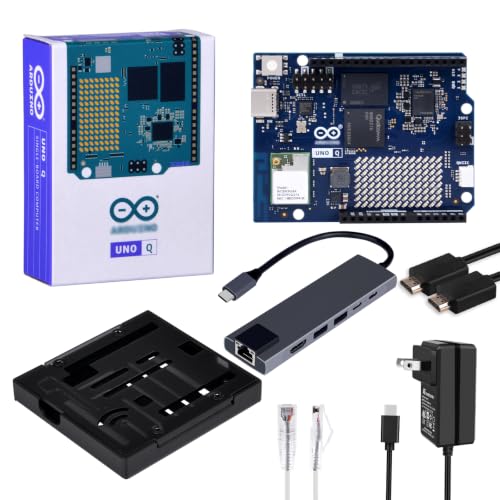
- 2GB RAM and 16GB eMMC storage
- Includes aluminum case, USB-C hub, power supply, and HDMI cable
- Works standalone or connected to a PC via USB-C
Best For: Arduino-oriented AI and embedded development
Sensor-Ready Workhorse

- Debian and Phidgets drivers pre-installed
- Six VINT ports for sensors and digital I/O
- Ethernet, HDMI, and three USB ports
Best For: Phidgets-based automation and sensor projects
Ready-to-Use Favorite
Raspberry Pi 5 4GB Starter Kit

- Includes board, active cooler, ABS case, and screwdriver
- 4K output with Wi-Fi, Bluetooth, GPIO, HDMI, and USB
- Suitable for IoT, robotics, gaming, and media projects
Best For: Beginners and versatile Raspberry Pi project builds
Pocket Windows Powerhouse
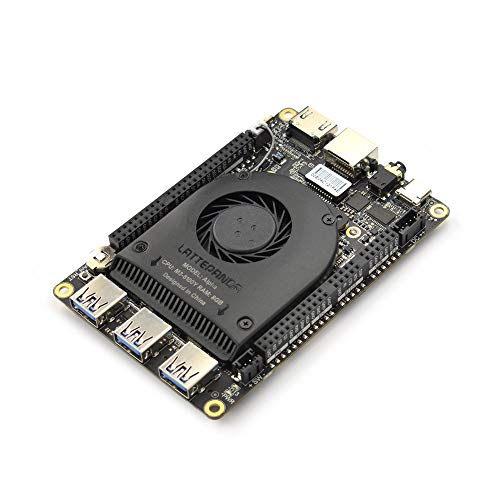
- Activated Windows 11 Pro with Linux support
- 8GB RAM and 64GB eMMC storage
- Includes cooling fan and 45W PD adapter
Best For: Compact Windows workstations and edge-computing projects
Best Beginner Kit
UNIHIKER M10 Touchscreen Python SBC

- Pre-installed Debian and Python reduce setup time
- Integrated touchscreen and sensors support interactive builds
- Wi-Fi, Bluetooth, and expansion interfaces included
Best For: Beginners, STEM education, and compact IoT prototypes
Best RISC-V Expansion
Orange Pi RV2 8GB Development Board
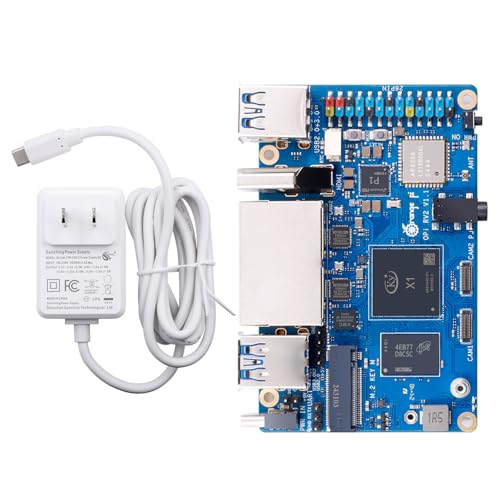
- Octa-core RISC-V platform with 2.0 TOPS AI acceleration
- M.2 expansion, Gigabit Ethernet, HDMI, and GPIO
- Supports Linux, Ubuntu, Debian, Android, and OpenHarmony
Best For: RISC-V development, edge computing, NAS, and robotics
Best Compact Performance

- 50 × 55mm board with octa-core processing
- 3 TOPS NPU supports AI inference workloads
- 4K60 output, Wi-Fi 6, Bluetooth 5.4, and rich I/O
Best For: Compact AI, robotics, multimedia, and edge-computing projects
Best Complete Kit – Raspberry Pi 4 4GB Starter PRO
For shoppers comparing single-board computer kits for compact workspaces, the CanaKit Raspberry Pi 4 Starter PRO Kit is a convenient all-in-one option. It combines a 4GB Raspberry Pi 4 Model B with storage, cooling, power, a case, and display accessories, reducing the need to source compatible parts separately.
Best For: Beginners, compact desktop projects, media setups, and general-purpose Raspberry Pi development.
Pros:
- Includes 4GB RAM, a 32GB EVO+ microSD card, and a card reader.
- Comes with a case, low-noise fan, heat sinks, and a 3.5A USB-C power supply.
- Includes a micro-HDMI-to-HDMI cable and USB-C PiSwitch.
- Supports up to 4K60p display output through the included cable.
Cons:
- The bundled accessories make this kit larger and heavier than a board-only purchase.
- Its included operating system is Raspbian or a similar lightweight Linux distribution, rather than a broader preconfigured software setup.
This is the most convenient choice when you want a ready-to-assemble Raspberry Pi workstation in a small footprint. Its included cooling and power components also make it a practical starting point for sustained projects.
Best Compact Linux Alternative – KICKPI K2B 2GB SBC
The KICKPI K2B is a small board for shoppers seeking single-board computer kits for compact workspaces and custom embedded projects. Its Allwinner H618 processor, 16GB eMMC storage, dual-band wireless connectivity, and support for Android 12 and Ubuntu 22.04 give it flexibility without requiring a large desktop setup.
Best For: IoT gateways, multimedia devices, Linux development, and projects needing a compact board with built-in storage.
Pros:
- Quad-core ARM Cortex-A53 processor runs at up to 1.5GHz.
- Supports Android 12 and Ubuntu 22.04 for flexible software development.
- Offers Gigabit Ethernet, dual-band Wi-Fi, Bluetooth, HDMI, and a 20-pin expansion interface.
- Hardware decoding supports 4K at 60Hz for compatible H.264 and H.265 video.
Cons:
- The supplied package includes the board and manual, so accessories such as power and display cables may need to be purchased separately.
- It has two USB ports, which may require a hub for larger peripheral setups.
With its small 3.16-by-2.2-inch footprint and eMMC storage, the K2B fits neatly into space-conscious builds. It is especially appealing when Android compatibility, Ubuntu support, and integrated wireless networking matter more than a complete starter bundle.
Best High-Memory Board – Raspberry Pi 4 Model B 8GB
This Raspberry Pi 4 Model B is a board-only option for compact workspaces where extra memory is useful. Its 8GB RAM, quad-core 1.5GHz-class Raspberry Pi 4 platform, USB 3.0, Gigabit Ethernet, Bluetooth 5.0, and dual micro-HDMI support make it suitable for a range of small computer and development builds.
Best For: Multitasking, mini PCs, workstations, media centers, and projects that benefit from 8GB of RAM.
Pros:
- Provides 8GB of RAM for demanding multitasking and development workloads.
- Supports dual-screen output and 4K video features through its micro-HDMI connections.
- Includes USB 3.0, Gigabit Ethernet, Bluetooth 5.0, and USB-C power input.
- The compact board format suits mini PCs, robots, game consoles, and media centers.
Cons:
- The listing is for the computer board, so power, storage, case, and display cables are not identified as included.
- The listed warranty is 30 days.
This model is a strong fit when memory capacity is the priority and you already have compatible accessories. Plan for a separate 5V 3.0A USB-C power source and other essentials before assembling a complete system.
Best Arduino-Style Starter Bundle – UNO Q AI Development Kit
The GeeekPi UNO Q Starter Kit is a polished choice for compact workspaces that need both embedded development and standalone computer capability. It includes the official UNO Q with 2GB RAM and 16GB eMMC storage, plus an aluminum case, USB-C hub, power supply, HDMI cable, Ethernet cable, and basic assembly tools.
Best For: AI and embedded development, Arduino users, compact standalone systems, and projects needing expanded USB-C connectivity.
Pros:
- Supports standalone use with a monitor and keyboard or connection to a PC through USB-C.
- Includes 2GB RAM and 16GB eMMC storage for embedded and AI projects.
- Aluminum case helps protect the board and dissipate heat.
- Bundled USB-C hub, Ethernet, power supply, HDMI cable, and tools make setup easier.
Cons:
- The included kit is designed specifically for the Arduino UNO Q, limiting compatibility with other boards.
- The listed RAM and storage are more modest than the 8GB Raspberry Pi option in this roundup.
This bundle stands out for its accessories and dual operating modes rather than raw memory capacity. It is a practical pick for users who want an organized, protected UNO Q setup without assembling a separate collection of cables and adapters.
Sensor-Ready Workhorse – PhidgetSBC4 Dual Core 8GB
For single-board computer kits for compact workspaces, the PhidgetSBC4 is a practical choice when sensor control and a straightforward Linux setup matter more than maximum processing speed. Debian GNU/Linux and Phidgets drivers come pre-installed, helping reduce setup time.
Best For: Compact automation, sensor, and digital I/O projects that use Phidgets VINT devices.
Pros:
- Includes Debian GNU/Linux and Phidgets drivers.
- Six VINT ports support sensors, VINT devices, or digital I/O.
- Three USB ports, Ethernet, HDMI, and an 8GB SD card provide useful connectivity and storage.
Cons:
- The 960MHz dual-core processor is modest compared with newer SBC platforms.
- Wireless networking requires a separately sold USB Wi-Fi adapter.
- Listed storage capacity is limited to 536MB, despite the included 8GB SD card specification.
This board is especially compelling for compact workspaces built around Phidgets hardware. Its preconfigured software and dedicated VINT connectivity can simplify specialized projects, though it is less suited to demanding general-purpose computing.
Ready-to-Use Favorite – Raspberry Pi 5 4GB Starter Kit
This Raspberry Pi 5 bundle suits shoppers seeking single-board computer kits for compact workspaces without assembling a parts list. It includes the 4GB board, active cooler, ABS case, and screwdriver, making it a convenient starting point for projects and everyday experimentation.
Best For: Beginners, IoT and robotics makers, retro-gaming builds, and compact media or computing projects.
Pros:
- Includes the Raspberry Pi 5 4GB board, active cooler, case, and screwdriver.
- Supports 4K output, gigabit Ethernet, Wi-Fi, Bluetooth 5.0, GPIO, HDMI, and USB.
- Active cooling is designed to help maintain performance during sustained workloads.
Cons:
- The case cannot accommodate an M.2 HAT add-on board and solid-state drive.
- The kit is centered on the 4GB configuration and does not include every possible accessory.
- Active cooling adds a fan to an otherwise compact setup.
With broad Pi OS compatibility and a large maker community, this kit offers a balanced entry point for a small desk or project enclosure. The case limitation is worth checking before planning an M.2-based build.
Pocket Windows Powerhouse – LattePanda 2 Alpha 864s
For single-board computer kits for compact workspaces that need a desktop-class operating system, the LattePanda 2 Alpha 864s combines activated Windows 11 Pro, 8GB RAM, and 64GB eMMC storage in a pocket-sized board. It also supports Linux for development and embedded projects.
Best For: Compact Windows/Linux workstations, edge-computing projects, industrial automation, and demanding maker applications.
Pros:
- Includes activated Windows 11 Pro while supporting Linux.
- Intel Core i5-8200Y performance reaches up to 3.9GHz and supports 4K UHD video.
- Ships with an active cooling fan and 45W USB-C PD power adapter.
- Provides 8GB RAM, 64GB eMMC storage, and four USB ports.
Cons:
- Its dual-core processor is older than many current desktop-oriented platforms.
- Only HDMI connectivity is listed, so display expansion may require additional equipment.
- Bluetooth is listed, but built-in Wi-Fi is not specified in the supplied details.
This is the strongest fit of the three for users who want familiar Windows software in a very small footprint. Its included cooling and power adapter make it more complete, while the compact design suits concealed controllers and space-constrained workstations.
Best Beginner Kit – UNIHIKER M10 Touchscreen Python SBC
For compact workspaces, the UNIHIKER M10 stands out as an approachable all-in-one option. It includes pre-installed Debian, a Python environment, a 2.8-inch touchscreen, and several built-in sensors, reducing the need for extra boards, wiring, and setup.
Best For: Beginners, STEM learners, and compact IoT projects that benefit from an integrated display and sensors.
Pros:
- Pre-installed Debian and Python support help minimize initial setup.
- Built-in touchscreen, microphone, motion sensors, light sensor, and buzzer support interactive projects.
- Wi-Fi, Bluetooth, micro:bit compatibility, and Gravity interfaces provide room for expansion.
Cons:
- Its 512MB of RAM and 1.2GHz ARM processor are more suited to learning and lightweight projects than demanding workloads.
- Only two USB ports are listed.
The UNIHIKER M10 is a strong space-saving choice when ease of use matters more than maximum processing power. Its integrated hardware and educational software make it especially convenient for learning Python and building sensor-based prototypes.
Best RISC-V Expansion – Orange Pi RV2 8GB Development Board
The Orange Pi RV2 is a flexible option for single-board computer kits for compact workspaces when connectivity and expansion are priorities. Its octa-core RISC-V processor, optional memory configurations, wireless networking, and M.2 slots support projects ranging from edge computing to home servers.
Best For: Developers exploring RISC-V, edge AI, NAS builds, robotics, and connected home projects.
Pros:
- Octa-core 64-bit RISC-V processor includes integrated AI acceleration rated at 2.0 TOPS.
- Supports Linux, Ubuntu, Debian, Android 12, and OpenHarmony according to the listing.
- Offers HDMI, GPIO, USB 2.0 and 3.0, Gigabit Ethernet, Wi-Fi 5, Bluetooth 5, and dual M.2 M-Key slots.
Cons:
- The supplied specifications list 2GB of installed RAM, while the title references 2GB, 4GB, and 8GB configurations; verify the selected version.
- Optional eMMC storage modules may be needed for expanded onboard storage.
With broad I/O and storage expansion, the RV2 is better suited to hands-on development than a minimal starter board. Its compact footprint can work well in a small desk setup, provided you are comfortable choosing an operating system and configuring a more developer-oriented platform.
Best Compact Performance – OrangePi Zero4 4GB SBC
The OrangePi Zero4 packs substantial computing and connectivity into a board measuring 50 by 55mm, making it a practical candidate for single-board computer kits for compact workspaces. Its octa-core processor, 3 TOPS NPU, 4K display support, and modern wireless connectivity suit demanding embedded and multimedia projects.
Best For: Space-constrained AI, robotics, smart-home, edge-computing, and 4K display projects.
Pros:
- Octa-core processor and 3 TOPS NPU provide strong capability for multitasking and AI inference.
- Supports up to 4K at 60Hz through Mini HDMI 2.0, with USB-C DisplayPort support.
- Wi-Fi 6, Bluetooth 5.4, Gigabit Ethernet, camera interfaces, USB ports, and 26-pin GPIO offer versatile connectivity.
Cons:
- The compact board may require additional accessories for a complete project setup.
- The listing contains inconsistent processor and model details, so confirm the exact configuration before ordering.
The Zero4 is the strongest performance-focused choice of these three for a tight workspace. Its small footprint and extensive I/O are appealing for advanced builds, while the AI accelerator and 4K output add flexibility beyond basic Linux experimentation.
How We Picked the Best Single-Board Computer Kits for Compact Workspaces
We selected kits and boards that suit space-constrained desks, benches, classrooms, and mobile project setups. Evaluation focused on physical footprint, included accessories, memory and storage, processor capability, operating-system flexibility, connectivity, cooling requirements, and the likely amount of extra hardware needed to begin.
The list includes beginner-friendly Raspberry Pi starter bundles, specialized development platforms, compact Linux boards, and higher-performance options. Because specifications and bundle contents can vary by seller, confirm the current listing before purchase, especially for power adapters, storage, cases, and operating-system licenses.
Quick Comparison
| Best For | What to Prioritize | Typical Choice |
|---|---|---|
| First-time makers | Simple setup, documentation, and included accessories | Raspberry Pi starter kit |
| Compact desktop computing | RAM, storage, display output, and cooling | Raspberry Pi 5 or LattePanda |
| IoT and robotics | GPIO, wireless connectivity, and sensor support | Raspberry Pi, UNIHIKER, or Arduino UNO Q kit |
| Linux development | Processor performance, image support, and community resources | Orange Pi or PhidgetSBC |
| Portable STEM projects | Built-in display, rugged enclosure, and easy programming | UNIHIKER M10 |
Key Buying Factors for Single-Board Computer Kits for Compact Workspaces
Footprint, Case, and Cooling
Measure the available desk area and check the board’s port orientation before buying. A bundled case protects exposed circuitry and makes cable management easier. Faster boards may need an active cooler or ventilation, particularly during sustained compilation, emulation, or media workloads.
Memory, Storage, and Operating System
For basic scripting and lightweight services, 2GB to 4GB of RAM can be sufficient. Choose 8GB for heavier multitasking, development environments, or desktop use. eMMC or onboard flash can provide a cleaner compact installation than removable media, while microSD support offers easier swapping. Also verify whether the board supports your preferred Linux distribution, Android, Windows, or vendor image.
Connectivity and Expansion
Gigabit Ethernet, dual-band Wi-Fi, Bluetooth, USB ports, HDMI, and USB-C affect how easily the kit fits your existing peripherals. Makers should also confirm GPIO, camera, display, serial, and expansion-header compatibility. A board with excellent specifications may be a poor choice if documentation or compatible accessories are limited.
Power and Accessories
Check the required voltage, current, connector, and included adapter. Underpowered boards can become unstable under load. A complete kit is often worth the premium when it includes a reliable supply, cooling, case, storage, and cables that would otherwise take up additional workspace and require separate purchases.
Who Should Buy Which Single-Board Computer Kits for Compact Workspaces?
Choose a Raspberry Pi starter kit if you want broad tutorials, strong community support, and a straightforward path into Linux, home automation, robotics, or media projects. Choose a Raspberry Pi 5 kit when you need more responsive desktop performance and are comfortable managing cooling.
Choose LattePanda for a compact Windows/Linux computer with more PC-like capabilities. Choose UNIHIKER or Arduino UNO Q for guided STEM, Python, embedded development, sensors, and classroom-friendly experimentation. Choose PhidgetSBC4 when dependable hardware control and Phidget ecosystem integration matter.
Choose an Orange Pi or other Allwinner/RISC-V board when you want alternative hardware, modern wireless features, or specialized development flexibility. Before committing, confirm software maturity, image availability, and accessory compatibility. For most buyers prioritizing the smoothest experience, documentation and community support should outweigh raw specifications.