The best beginner-friendly single-board computer kits make it easier to move from curiosity to working projects. Instead of buying a board, accessories, sensors, and learning materials separately, these bundles combine the essentials for coding, electronics, robotics, or IoT experimentation.
This roundup includes complete Raspberry Pi, Arduino-compatible, ESP32, Pico, and UNIHIKER options. The right choice depends on whether you want guided lessons, a general electronics platform, Python development, wireless connectivity, or the simplest possible starting point.
Best 10 Beginner-Friendly Single-Board Computer Kits Picks for 2026
Best Complete Kit
Raspberry Pi 5 8GB Starter Kit

- Preloaded Raspberry Pi OS simplifies setup
- Includes 128GB storage, case, power, and cooling
- Suitable for coding, gaming, and IoT projects
Best For: Beginners wanting a ready-to-use Raspberry Pi system
Best for IoT Learning
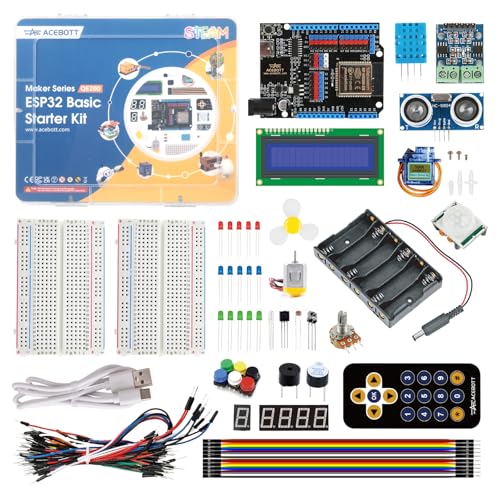
- Includes Wi-Fi and Bluetooth ESP32 board
- Offers 40+ guided projects and 96 components
- Supports graphical coding, Arduino IDE, and Python
Best For: Guided STEM and wireless electronics projects
Best Hands-On Starter

- Includes 22+ guided Arduino projects
- Broad selection of sensors, motors, and displays
- Solderless breadboard supports easy first builds
Best For: Families and classrooms learning practical electronics
Best for Python Beginners
UNIHIKER M10 Touchscreen Board

- Pre-installed Debian and Python simplify startup
- Built-in touchscreen and sensors support interactive projects
- Bridges block coding and Python programming
Best For: STEM learners transitioning into Python and IoT
Best Hands-On Starter Kit

- 30+ guided Arduino electronics projects
- 200+ components across 63 types
- Solderless setup with organized storage
Best For: Classrooms, coding clubs, and first Arduino experiments
Best Plug-and-Play Python Kit

- Built-in 2.8-inch touch screen and Linux
- 15 guided Python and AIoT lessons
- Color-coded solderless Gravity connections
Best For: Python beginners exploring AI and IoT
Best Arduino Wi-Fi Learning Bundle

- Original Arduino UNO R4 WiFi included
- 300+ components and 50 guided projects
- 100+ video lessons plus technical support
Best For: Learners progressing from circuits to Arduino IoT
Python Learning Pick
MicroPython Pico Programming Kit
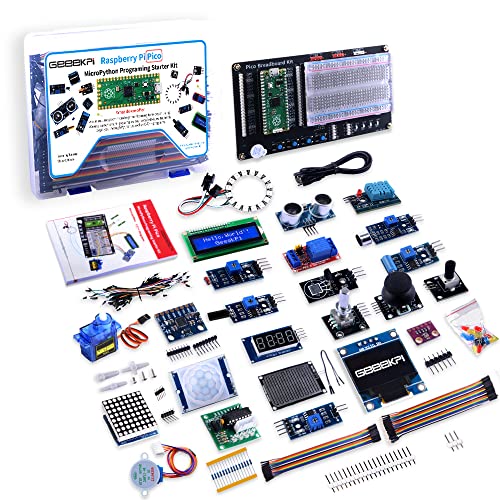
- Includes Pico, breadboard, LCD, sensors, and modules
- Manual, tutorials, and demo code included
- Designed for expandable MicroPython experiments
Best For: Raspberry Pi Pico beginners learning MicroPython
Wireless IoT Starter

- ESP32 board supports Wi-Fi and Bluetooth
- Includes OLED, sensors, relay, LEDs, and breadboard
- Tutorial provides lessons, code, and assembly guidance
Best For: Beginners exploring Arduino-compatible IoT projects
Robotics Project Value
Arduino-Compatible R3 Starter Kit

- Includes 44 components for varied projects
- 23-lesson tutorial includes source code
- Adds motors, servo, LCD, ultrasonic, and relay parts
Best For: Beginners learning robotics and Arduino-compatible electronics
Best Complete Kit – Raspberry Pi 5 8GB Starter Kit
The Vilros Raspberry Pi 5 Starter Kit MAX is a strong choice for anyone seeking beginner-friendly single-board computer kits with most of the setup handled. It includes an 8GB Raspberry Pi 5, a 128GB microSD card preloaded with Raspberry Pi OS, a case, cooling hardware, power supply, cables, and a quickstart guide.
Best For: Beginners who want a ready-to-use Raspberry Pi for coding, retro gaming, smart-home projects, or robotics.
Pros:
- Raspberry Pi OS is already installed on the 128GB microSD card.
- Includes essential accessories such as the case, power supply, HDMI cables, reader, and cooling components.
- 8GB RAM and four USB ports provide room for demanding projects and peripherals.
- Cooling fan and heat sinks help support reliable operation during intensive tasks.
Cons:
- The larger kit may include more hardware than a learner needs for simple introductory exercises.
- It is designed for Raspberry Pi 5, so accessories and projects should be checked for compatibility.
This is the most convenient option of the four for getting a full Linux-based computer running quickly. Its generous storage, included cables, and cooling make it suitable for both first projects and more advanced experimentation.
Best for IoT Learning – ESP32 STEM Electronics Kit
The ACEBOTT ESP32 kit is among the more structured beginner-friendly single-board computer kits for learning electronics and connected projects. It combines an ESP32 board with Wi-Fi and Bluetooth, 96 labeled components, and more than 40 tutorials that progress from basic circuits to IoT applications.
Best For: Students, STEM clubs, and new makers who want guided sensor, coding, and wireless-control projects.
Pros:
- Supports graphical coding, Arduino IDE programming, and Python.
- Includes sensors, motors, RGB LEDs, buttons, and a breadboard for varied hands-on builds.
- More than 40 step-by-step lessons provide a clear learning progression.
- Labeled, individually protected components help reduce confusion during assembly.
Cons:
- The kit focuses on electronics projects rather than serving as a general-purpose desktop computer.
- Its broad project range may require learners to organize and track many small components.
With built-in wireless connectivity and multiple programming paths, this kit can grow with a learner from drag-and-drop exercises to Python and IoT development. The organized parts and tutorial sequence are particularly useful for classroom or home STEM learning.
Best Hands-On Starter – ELEGOO UNO R3 Project Kit
The ELEGOO UNO R3 Project Super Starter Kit is a practical entry point for beginner-friendly single-board computer kits centered on wiring and basic electronics. Its solderless breadboard, pre-soldered LCD module, UNO R3 board, and 22-plus guided lessons let learners focus on code, circuits, sensors, and motors.
Best For: Families, homeschoolers, coding clubs, and classrooms introducing Arduino-compatible electronics without soldering.
Pros:
- 22-plus lessons cover LEDs, sensors, displays, motors, servos, and input controls.
- Includes a broad range of components, including an LCD, ultrasonic sensor, DHT11, joystick, relay, and motors.
- Solderless construction and a pre-soldered LCD make initial assembly more approachable.
- Example code and setup guidance help first-time builders begin with Arduino IDE.
Cons:
- The UNO R3 has modest hardware specifications, including 2KB of installed RAM and a 16MHz processor.
- The power-module input should not exceed 9V, so power instructions require careful attention.
- Some younger learners may need adult supervision during setup and experiments.
This kit is less about running a full operating system and more about seeing code produce immediate physical results. It offers an extensive component selection and a gentle route into digital and analog electronics, provided learners follow the power and wiring guidance.
Best for Python Beginners – UNIHIKER M10 Touchscreen Board
The UNIHIKER M10 is a compact option for learners looking for beginner-friendly single-board computer kits with minimal setup. It comes with Debian Linux, a Python environment, a 2.8-inch touchscreen, and built-in sensors, so users can connect it to a PC and begin with Jupyter Notebook, VS Code, or block-based programming.
Best For: STEM learners who want to move from visual programming into Python, IoT, and sensor-based projects.
Pros:
- Pre-installed Debian and Python reduce the usual operating-system setup work.
- Built-in touchscreen, microphone, motion sensors, light sensor, and buzzer enable interactive projects without extra modules.
- Supports Mind+ block programming alongside standard Python 3.
- Wi-Fi, Bluetooth, Gravity interfaces, and micro:bit accessory compatibility offer expansion options.
Cons:
- Its 512MB RAM and 16GB flash capacity are more limited than those of larger general-purpose boards.
- The integrated design is convenient, but it provides less of a traditional breadboard-first electronics experience.
- The product’s stated replacement or repair coverage is 90 days from delivery.
This board is especially appealing when the goal is to start coding rather than assemble a computer from separate parts. Its touchscreen and integrated sensors create quick feedback, while the transition from blocks to Python gives beginners a clear path toward more advanced projects.
Best Hands-On Starter Kit – ELEGOO UNO R3 Project Kit
For learners seeking beginner-friendly single-board computer kits, the ELEGOO UNO R3 Project Kit offers a broad, practical introduction to Arduino electronics. Its guided projects move from basic LEDs to displays, sensors, RFID, motors, and environmental monitoring, while the solderless setup keeps early experiments approachable.
Best For: STEM learners, classrooms, coding clubs, and hobbyists who want many traditional Arduino components and structured projects.
Pros:
- Includes 30+ guided projects and a PDF tutorial with example code.
- Provides 200+ components across 63 types, including displays, sensors, motors, and input modules.
- Solderless breadboard, pre-soldered modules, storage case, power supplies, and USB cable simplify setup.
Cons:
- Uses an UNO R3 controller without the built-in Wi-Fi and Bluetooth found on newer boards.
- The large component assortment may feel overwhelming before learners establish a project routine.
This is a strong value for learning core circuits and Arduino programming through increasingly varied experiments. Choose it when breadth, guided practice, and traditional hands-on wiring matter more than standalone computing or wireless connectivity.
Best Plug-and-Play Python Kit – UNIHIKER M10 Python IoT Kit
Among beginner-friendly single-board computer kits, the UNIHIKER M10 stands out for reducing setup and wiring friction. The Linux-based board includes a 2.8-inch touch screen, Wi-Fi, Bluetooth, and browser-accessible Jupyter support, letting beginners start Python projects without a separate monitor or keyboard.
Best For: Beginners, coding camps, and classrooms that want Python, IoT, AI, and interactive projects with minimal hardware setup.
Pros:
- Built-in display, Wi-Fi, Bluetooth, and Linux support create a self-contained computing hub.
- Single-USB setup and wireless Jupyter Notebook access are designed for quick starts.
- Includes 15 structured lessons covering Python, AIoT, camera projects, and smart systems.
- Color-coded Gravity connectors support solderless plug-and-play connections.
Cons:
- Its included hardware pack is centered on the UNIHIKER and Gravity ecosystem rather than a broad traditional component assortment.
- Advanced projects involving AI, MQTT, or data science may require more guidance than introductory lessons.
The M10 is the most streamlined choice here for learners who want to code in Python and see results on the device itself. It trades the expansive loose-component variety of an Arduino kit for convenience, integrated computing, and modern IoT-focused lessons.
Best Arduino Wi-Fi Learning Bundle – SunFounder Elite Explorer Kit
The SunFounder Elite Explorer Kit is a feature-rich option among beginner-friendly single-board computer kits, pairing an original Arduino UNO R4 WiFi with more than 300 components and 50 projects. Its combination of basic electronics, IoT activities, video courses, and support resources gives learners a guided path from first circuits to connected builds.
Best For: Beginners, students, teachers, and engineers who want Arduino fundamentals plus Wi-Fi, Bluetooth, and IoT projects.
Pros:
- Includes the original Arduino UNO R4 WiFi with a 32-bit processor, Wi-Fi, and Bluetooth.
- Offers 300+ components and 50 projects spanning basic, fun, and IoT activities.
- Provides 100+ free video lessons, open-source code, and beginner-focused technical support.
- RoHS compliance and compatibility with boards such as the UNO R3 and Nano add flexibility.
Cons:
- The extensive component and course library may require time to navigate.
- IoT projects depend on working through Arduino IDE and app or cloud integrations rather than a fully standalone setup.
This kit is a compelling middle ground for learners who want the familiar Arduino ecosystem but do not want to outgrow basic wired projects quickly. The UNO R4 WiFi and substantial video curriculum make it especially suitable for a staged progression into connected electronics.
Python Learning Pick – MicroPython Pico Programming Kit
For beginners comparing beginner-friendly single-board computer kits, this Raspberry Pi Pico bundle offers a practical way to start with MicroPython, breadboard projects, sensors, and display modules. Its included manual, tutorials, and experiment code provide structure while leaving room for customization.
Best For: Raspberry Pi beginners and software learners who want hands-on MicroPython and embedded programming practice.
Pros:
- Includes a Raspberry Pi Pico, breadboard, I2C 1602 LCD display, sensors, and additional modules.
- Uses MicroPython and supports I2C-based display projects.
- Includes a detailed manual, tutorials, and demo code.
- Experiments provide room for learners to extend and modify projects.
Cons:
- The kit is centered on Raspberry Pi Pico and MicroPython rather than Arduino IDE projects.
- The LCD display may require learners to understand I2C connections.
This is a focused learning kit for users who want guided Python-based experiments with a compact Pico board. It is especially appealing if display modules and embedded programming are higher priorities than wireless IoT features.
Wireless IoT Starter – ESP32 Basic Starter Kit
This ESP32 bundle is a strong option for shoppers seeking beginner-friendly single-board computer kits with wireless capabilities. It combines an ESP32 development board with an OLED, sensors, switches, relays, and a breadboard for introductory electronics and Arduino IDE projects.
Best For: Beginners learning electronics, Arduino-compatible programming, and basic Wi-Fi or Bluetooth IoT projects.
Pros:
- Includes an ESP32 development board with Wi-Fi and Bluetooth connectivity.
- Provides a broad selection of components, including OLED, DHT11, PIR, relay, buzzer, and obstacle-avoidance modules.
- Includes an 830-point breadboard, jumper wires, resistors, LEDs, and a Micro USB cable.
- Tutorials include lessons, code, and assembly guidance.
Cons:
- The tutorial must be downloaded after receiving the kit.
- The wide component selection may feel less focused for learners seeking a single project path.
With its wireless ESP32 platform and varied sensor lineup, this kit gives beginners plenty of ways to explore practical input, output, and automation projects. It is a particularly versatile choice for an introductory IoT workbench.
Robotics Project Value – Arduino-Compatible R3 Starter Kit
For learners evaluating beginner-friendly single-board computer kits for robotics and electronics, this Arduino-compatible R3 package offers a large assortment of components and a structured 23-lesson tutorial. Motors, an LCD, ultrasonic sensing, a servo, relay, and breadboard supplies support a broad range of starter projects.
Best For: Beginners who want guided Arduino-compatible robotics, coding, and electronics projects.
Pros:
- Includes 44 components in a packaged starter set.
- Offers a 23-lesson PDF tutorial with project introductions and source code.
- Includes robotics-oriented parts such as an ultrasonic sensor, servo motor, DC motor, and relay.
- Adds LED, thermistor, and touch sensor modules compared with the older version.
Cons:
- The 1602 LCD pin header needs to be soldered by the buyer.
- The large component assortment may require careful sorting and following the tutorial sequence.
- Detailed tutorial documents may need to be requested by email.
This kit stands out for project variety and its emphasis on robotics-style builds. The included tutorial structure can help beginners progress from basic circuits toward sensor, motor, display, and control experiments.
How We Picked These Beginner-Friendly Single-Board Computer Kits
We focused on kits that reduce setup friction for first-time builders. Selection factors included the board platform, included accessories, documentation, programming support, project variety, and the amount of hardware provided for the price. We also considered whether each kit suits a clear beginner pathway, such as Python, Arduino IDE, Scratch, robotics, sensors, or IoT.
A complete kit is not automatically the best kit. Some bundles emphasize a powerful computer and storage, while others provide dozens of components for learning circuits. We separated those use cases so you can choose based on the projects you actually want to build.
Quick Comparison
- Raspberry Pi 5 kit: Best for a more capable Linux computer, desktop projects, media, and advanced maker work.
- Arduino UNO kits: Best for learning electronics, sensors, motors, and simple automation through guided projects.
- ESP32 kits: Best for affordable Wi-Fi, Bluetooth, and IoT experiments.
- UNIHIKER M10 kits: Best for Python learners who want a built-in touchscreen and more self-contained development experience.
- Raspberry Pi Pico kit: Best for compact MicroPython projects and hands-on breadboard experimentation.
Key Buying Factors for Beginner-Friendly Single-Board Computer Kits
Board Type and Learning Curve
Choose the programming environment you are most likely to use. Raspberry Pi boards run a full operating system, while Arduino-compatible boards typically offer a simpler, direct route into electronics. ESP32 boards add wireless capabilities, and UNIHIKER kits can make Python projects more approachable through their integrated display and software.
Included Hardware
Check whether the package includes a power supply, case, storage, USB cable, breadboard, jumper wires, sensors, motors, and display modules. A kit with fewer but better-matched parts may be more useful than a larger bundle with components you will not use.
Documentation and Projects
Beginner-focused tutorials matter as much as the board. Look for clear wiring diagrams, example code, troubleshooting help, and projects that progress from basic outputs to sensors, displays, motors, or connected devices.
Future Expandability
Consider available GPIO pins, accessory compatibility, community support, and programming languages. Popular Arduino, Raspberry Pi, ESP32, and Pico platforms offer many follow-on projects and replacement components.
Who Should Buy Which Beginner-Friendly Single-Board Computer Kits?
Choose the Vilros Raspberry Pi 5 kit if you want the closest option to a small general-purpose computer and value included storage, cooling, and power accessories.
Choose an ELEGOO, Kuman, or SunFounder Arduino kit if your priority is learning circuits, sensors, displays, motors, and robotics through structured experiments.
Choose an ESP32 bundle if Wi-Fi, Bluetooth, home automation, or Internet-connected projects are your main goals. The UNIHIKER M10 kits are particularly appealing for Python learners who want a touchscreen and guided lessons.
Choose the GeeekPi Pico kit for compact MicroPython builds and breadboard practice. Before ordering, verify the exact board revision, included accessories, power requirements, and tutorial language so the kit matches your computer and learning setup.