When you’re out in the field, capturing audio that truly resonates requires the right tools. The best stereo microphones can elevate your recordings, providing clarity and depth that simple devices just can’t match. Whether you’re a musician, journalist, or content creator, selecting the ideal mic can be a game changer. Explore the top options available, and discover which models stand out for their performance and reliability in various environments.
TASCAM DR-40X Portable Handheld Field Recorder
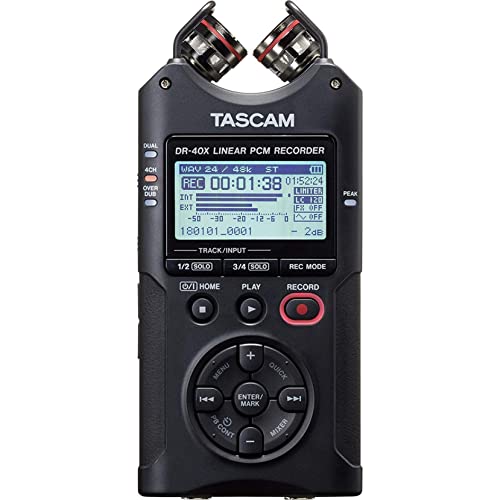
If you’re looking for a versatile and reliable solution for field recording, the TASCAM DR-40X Portable Handheld Field Recorder is an excellent choice. This compact device offers 4-track recording with dual adjustable microphones and high-quality unidirectional stereo condenser mics for various setups. It records in WAV and MP3 formats, ensuring excellent sound quality for music, podcasts, and more. With features like dual recording and phantom power for external mics, it meets diverse needs. Users rave about its user-friendly interface and long battery life, making it perfect for everything from interviews to outdoor events. It’s lightweight and portable, too!
Best For: The TASCAM DR-40X is best for hobbyists and professionals seeking a portable and versatile field recorder for various audio applications.
Pros:
- User-friendly interface makes it easy for both beginners and experienced users to navigate.
- Long battery life and versatile power options allow for extended recording sessions.
- High-quality sound with adjustable microphones suitable for different recording environments.
Cons:
- Some users have reported freezing issues during audio file preview.
- Requires balanced cables for external microphones to avoid potential sound issues.
- Battery consumption may necessitate the purchase of a battery charger for frequent use.
Zoom H1essential Stereo Handy Recorder for Musicians and Podcasters

The Zoom H1essential Stereo Handy Recorder stands out as an ideal choice for musicians and podcasters seeking high-quality audio capture on the go. With its stereo 32-bit float recording, you won’t need to worry about setting gain levels. The high-quality X/Y microphones deliver clear audio even at 120 dB SPL, and it records at a sample rate of up to 96 kHz directly to an SD card. Plus, it doubles as a USB microphone, compatible with PC, Mac, iOS, or Android via USB-C. Its compact design makes it perfect for portability, and it even includes audio guidance for visually impaired users.
Best For: Musicians, podcasters, filmmakers, and content creators seeking portable and high-quality audio recording solutions.
Pros:
- High-quality audio capture with stereo 32-bit float recording and X/Y microphones.
- Versatile connectivity as a USB microphone compatible with various devices including PC, Mac, iOS, and Android.
- Compact and portable design makes it easy to carry for on-the-go recording needs.
Cons:
- Limited battery life may require frequent recharging during extended use.
- Lacks advanced features that some professional recorders offer, such as multiple input options.
- Audio guidance feature may not be necessary for all users, potentially complicating the interface for some.
Tascam DR-07X Stereo Handheld Digital Audio Recorder

For those seeking a reliable companion in field recording, the Tascam DR-07X Stereo Handheld Digital Audio Recorder stands out with its dual internal condenser microphones. You’ll appreciate its adjustable unidirectional mics, allowing you to capture sound in A-B and X-Y positions. The user-friendly design makes it easy to record, adjust levels, and delete takes on the fly. With a remarkable battery life of 17.5 hours on just two AA batteries, you won’t miss a moment. Plus, its USB connectivity lets you use it as an audio interface for voiceovers, live streaming, or songwriting, ensuring studio-quality sound every time.
Best For: The Tascam DR-07X is best for musicians, podcasters, and field recorders looking for a versatile and portable audio solution.
Pros:
- Dual internal condenser microphones provide high-quality sound capture in various recording positions.
- User-friendly design allows for quick adjustments and easy operation during recording sessions.
- Long battery life of 17.5 hours ensures extended recording time without frequent battery changes.
Cons:
- Limited onboard editing features may require additional software for advanced audio manipulation.
- Build quality might feel less robust compared to professional studio equipment.
- No wireless connectivity options may limit flexibility in certain recording scenarios.
Shure MoveMic 88+ Wireless Microphone for iOS/Android
Designed for mobile content creators, the Shure MoveMic 88+ Wireless Microphone offers a seamless connection to your iOS or Android device, making it an ideal choice for filmmakers and interviewers on the go. With four selectable polar patterns and five preset modes, you can customize your audio settings for any situation. Enjoy real-time feedback through built-in headphone monitoring, while the long-lasting battery provides up to 8 hours of recording time. Weighing just 0.39 kg, this compact microphone is easy to carry. Though reviews vary, its professional audio quality and user-friendly features make it a solid option for field recording.
Best For: Mobile content creators, filmmakers, and interviewers looking for a professional quality microphone that connects directly to iOS and Android devices.
Pros:
- Customizable audio settings with four selectable polar patterns and five preset modes.
- Real-time audio feedback through built-in headphone monitoring for optimal recording.
- Long-lasting battery life of up to 8 hours, making it suitable for extended recording sessions.
Cons:
- Mixed user reviews regarding directional sound performance and overall reliability.
- Average rating of 3.8 out of 5 stars, indicating some customer dissatisfaction.
- Weight of 0.39 kg may be considered heavy for some users seeking ultra-portable options.
Logitech for Creators Blue Microphones Yeti USB Microphone (Blackout)

With its versatile pickup patterns and premium audio quality, the Logitech for Creators Blue Microphones Yeti USB Microphone (Blackout) stands out as a top choice for content creators and field recorders alike. Weighing just 3.51 pounds, it’s portable and easy to set up. You’ll love the four pickup patterns—cardioid, stereo, bidirectional, and omnidirectional—allowing you to capture sound tailored to your needs. Plus, the real-time monitoring through a 3.5mm headphone jack guarantees your recordings sound great. Whether you’re podcasting or field recording, this mic’s broadcast-quality sound will elevate your projects, making it a must-have in your gear.
Best For: The Logitech for Creators Blue Microphones Yeti USB Microphone (Blackout) is best for podcasters, musicians, streamers, and anyone seeking high-quality audio recording.
Pros:
- Versatile Pickup Patterns: Offers four different recording modes (cardioid, stereo, bidirectional, omnidirectional) to suit various applications.
- Real-Time Monitoring: Features a 3.5mm headphone jack for latency-free audio monitoring while recording.
- High Audio Quality: Delivers clear, broadcast-quality sound, significantly outperforming lower-priced microphones.
Cons:
- Power Source Required: Operates only on corded electric power, limiting mobility compared to battery-operated options.
- Weight: At 3.51 pounds, it may be less portable for users needing a lightweight solution.
- Software Dependency: Requires Logitech G HUB for full functionality, which may not appeal to all users.
Audio-Technica BP4025 X/Y Stereo Field Recording Microphone
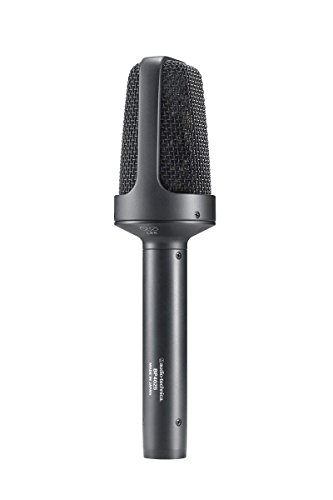
The Audio-Technica BP4025 X/Y Stereo Field Recording Microphone stands out as an exceptional choice for broadcast professionals and serious audio enthusiasts. Its large-diaphragm capsules deliver pristine sound quality with a frequency response of 20Hz to 17kHz. Weighing just 9.50oz, its compact design makes it perfect for camera-mount use. You’ll appreciate the excellent channel separation and low noise, thanks to a dynamic range of 131dB. With features like phantom power operation and a switchable low-frequency roll-off, this microphone guarantees versatility in any recording environment. Plus, its durable, RoHS-compliant construction assures reliability for years to come.
Best For: Broadcast professionals and serious audio enthusiasts seeking high-quality stereo field recording.
Pros:
- Excellent sound quality with a wide frequency response (20Hz to 17kHz) and low noise.
- Compact and lightweight design, making it ideal for camera-mount applications.
- Versatile features such as phantom power operation and switchable low-frequency roll-off.
Cons:
- Requires phantom power, which may not be available on all devices.
- Larger size compared to some portable microphones, potentially less convenient for handheld use.
- Higher price point may not be suitable for casual users.
Zoom Am7 Stereo Microphone for Android

For content creators who want high-quality audio on the go, the Zoom Am7 Stereo Microphone for Android stands out as an excellent choice. This microphone is perfect for recording music, videos, and interviews, thanks to its rotatable capsule that helps align with your camera. It’s compatible with any Android device featuring a USB-C connector and supports various recording modes like 90, 120, and Mid-Side. The analog-style gain wheel allows you to adjust audio levels easily, while the 3-position LED clip meter gives you visual feedback on your recordings. Plus, you can enhance your experience with the free Handy Recorder App available on the Google Store.
Best For: Content creators seeking high-quality audio recording on their Android devices.
Pros:
- Versatile recording modes including 90, 120, and Mid-Side for various audio needs.
- Rotatable capsule for easy camera alignment, enhancing video quality.
- Analog-style gain wheel and LED clip meter for intuitive audio level management.
Cons:
- Limited to Android devices with USB-C connectors, excluding other platforms.
- May require additional apps for advanced features beyond basic recording.
- Portability may be impacted by the need for additional equipment or accessories.
Zoom iQ6 Stereo X/Y Microphone for iPhone/iPad
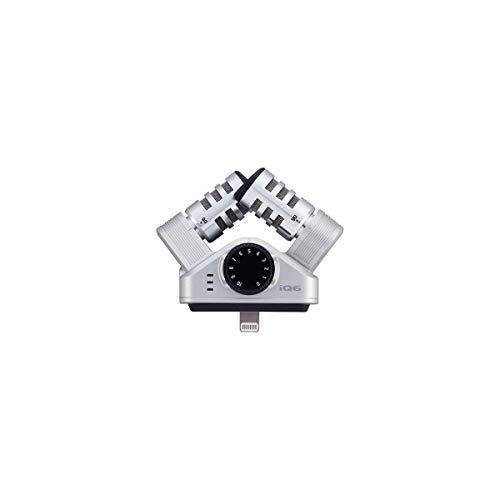
Ideal for musicians and podcasters on the go, the Zoom iQ6 Stereo X/Y Microphone transforms your iPhone or iPad into a powerful recording tool. With its compact design and impressive audio quality at 44.1kHz/16bit and 48kHz/16bit, you’ll capture clear sound effortlessly. The microphone boasts a maximum SPL of 130dB and a signal-to-noise ratio of 78 dB, ensuring your recordings are pristine. Weighing just 0.4 pounds, it’s highly portable. However, be mindful of potential interference; using it in airplane mode is recommended. Overall, it’s a solid choice for field recordings, though some users noted concerns about build quality.
Best For: Musicians and podcasters seeking a portable and high-quality recording solution for their iPhone or iPad.
Pros:
- Excellent audio quality at 44.1kHz/16bit and 48kHz/16bit.
- Compact and lightweight design makes it easy to carry for on-the-go recordings.
- High maximum SPL of 130dB suitable for capturing loud sound sources.
Cons:
- Some users report poor sound quality in certain conditions.
- Build quality may feel “plasticky” and less durable compared to dedicated field recorders.
- Companion app lacks modern features, complicating file sharing.
Zoom H2essential Multi-Mic Handy Recorder

Capturing high-quality audio on the go becomes effortless with the Zoom H2essential Multi-Mic Handy Recorder, making it a top choice for musicians, podcasters, and sound designers alike. This compact device boasts superior sound quality, recording in 32-bit float, which prevents clipping and eliminates gain adjustments. Weighing just 6.7 ounces, it’s portable and perfect for field recording. With a user-friendly interface and a flexible microphone array, you can easily capture stereo or surround sound. Plus, it operates on batteries or USB, providing versatility for any project. Users rave about its sensitivity and ease of use for diverse audio applications.
Best For: Musicians, podcasters, and sound designers looking for a portable and high-quality audio recording solution.
Pros:
- Superior Sound Quality: 32-bit float recording ensures professional-grade audio without clipping or gain adjustments.
- User-Friendly Interface: 1.3 full-color LCD makes navigation easy for both beginners and professionals.
- Versatile Power Options: Operates on batteries or USB, allowing for flexibility during long recording sessions.
Cons:
- Cumbersome File Format: Some users find the WAV format challenging for managing large files.
- Handling Noise: A few users have reported issues with handling noise during recordings.
- Limited Built-in Storage: Requires an SD card for recording, which may be an additional cost for some users.
Sony Compact Stereo Lavalier Microphone ECMLV1,Black, Small

The Sony Compact Stereo Lavalier Microphone ECMLV1 is a standout choice for content creators and journalists who need a reliable audio solution on the go. Weighing just 2.39 ounces and measuring a mere 0.43 inches, its compact design makes it easy to clip onto clothing. With an omnidirectional pickup pattern, you’ll capture clear, stereo sound in any environment. It plugs directly into devices like cameras and smartphones, eliminating the need for batteries. Users love its versatility and sound quality, especially in dynamic settings. For around $30, it delivers impressive performance and durability, making it a smart investment for your audio needs.
Best For: Content creators, vloggers, educators, and journalists seeking a portable and high-quality audio solution.
Pros:
- Omnidirectional pickup captures clear sound from all directions, enhancing audio quality.
- Compact design allows for easy attachment to clothing and portability during use.
- Plug-in power system eliminates the need for batteries, ensuring convenience and reliability.
Cons:
- Short cable length may require an extension for optimal use in certain setups.
- Additional adapters may be needed for compatibility with some devices.
- Limited range compared to more advanced microphone systems, which may affect performance in larger spaces.
Factors to Consider When Choosing Stereo Microphones for Field Recording
When you’re picking stereo microphones for field recording, several key factors can make all the difference. You’ll want to focus on audio quality standards, microphone types, and how portable the gear is. Plus, consider the power source flexibility and connectivity features to guarantee you get the best setup for your needs.
Audio Quality Standards
Choosing the right stereo microphone for field recording involves understanding various audio quality standards that can greatly impact your results. Aim for a frequency response range of 20Hz to 20kHz to capture the full spectrum of sound, ensuring clarity and depth. A signal-to-noise ratio of at least 70 dB is ideal to minimize background noise and enhance audio quality. For professional applications, recording resolutions of 24-bit/96kHz or higher allow for greater dynamic range and detail. Look for high-quality condenser microphones with a maximum sound pressure level (SPL) above 130 dB to capture loud sounds without distortion. Finally, choose microphones that offer multiple pickup patterns, like cardioid and omnidirectional, to adapt to various recording environments effectively.
Microphone Type Options
While selecting the right stereo microphone for field recording, you’ll encounter various types that significantly influence your audio capture. Configurations like X/Y and A-B offer distinct sound capture techniques and stereo imaging effects. For high-quality sound reproduction, large-diaphragm condensers are often the go-to choice, thanks to their wide dynamic range. If you want to capture ambient sounds in natural environments, consider omnidirectional microphones, which pick up sound from all directions. Some stereo microphones even feature adjustable polar patterns, allowing you to tailor your settings based on the recording scenario. These options help guarantee you get the best sound possible for your field recordings, making the right choice essential for achieving stunning results.
Portability and Design
Portability and design play an essential role in selecting the ideal stereo microphone for field recording. You’ll want to choose a microphone that’s lightweight and compact, ideally under 1 pound, so it’s easy to carry on outdoor shoots. Look for robust construction; a durable design guarantees your gear can withstand various environments. Many portable microphones also offer versatile power options, like battery and USB power, allowing for longer recording sessions without needing an external power source. User-friendly designs with intuitive controls can make a significant difference, especially in dynamic situations. Additionally, consider models with adjustable configurations, such as rotatable capsules or collapsible designs, to enhance adaptability for different recording angles and environments.
Power Source Flexibility
When you’re out in the field, having a microphone that accommodates various power sources can considerably enhance your recording experience. Look for models that offer options like batteries and USB. Battery-powered microphones can provide impressive recording times, with some lasting up to 20.5 hours on AA batteries. USB-powered mics add convenience, allowing you to connect directly to devices and even charge while recording—perfect for long sessions. If sound quality is a priority, consider microphones that support phantom power for external sources. Additionally, rechargeable battery options can save you money and minimize your environmental impact, making them a smart choice for frequent field recording. Choose wisely to maximize your versatility and reliability.
Connectivity Features
As you choose a stereo microphone for field recording, it’s crucial to contemplate the connectivity features that can make or break your setup. Look for microphones with USB-C compatibility, allowing direct connections to mobile devices and computers for easy audio transfer. Consider models that support phantom power, enabling the use of high-quality condenser mics for peak performance. Some microphones come with analog gain wheels for real-time audio adjustments, giving you greater control during recordings. Verify compatibility with your devices, as some are tailored for iOS or Android, while others may need adapters. Finally, check if the microphone supports multiple audio formats and sample rates to enhance versatility with various recording software.
Usability in Field
Choosing the right stereo microphone for field recording goes beyond connectivity features; usability in real-world settings plays a significant role in your overall experience. Consider the weight and dimensions of your microphone; lighter, compact designs are easier to carry and set up on the go. Battery life is another vital factor—opt for models that can run for extended periods, like 17.5 hours on two AA batteries, to minimize interruptions during long sessions. Look for user-friendly interfaces with intuitive controls for quick adjustments. Compatibility with various devices guarantees flexibility, allowing seamless integration into your recording setup. Finally, adjustable configurations like X-Y and A-B patterns let you tailor recordings to different environments, making sure you capture sound accurately wherever you are.