A kick drum mic can make the difference between a punchy, defined low end and a muddy mix. The right choice depends on your drum, where you can place the mic, and whether you’re recording or playing live.
These 10 bass drum microphones cover familiar dynamic designs, a boundary condenser, and options for different budgets. Use the comparisons below to narrow down the sound and setup that suit you.
Best 10 Bass Drum Microphones Picks for 2026
Lightweight Boom Pick

- Large diaphragm enhances bass
- Handles over 155 dB SPL
- Lightweight aluminum housing
Best For: Boom-mounted kick-drum setups
Low-Profile Kick Pick

- Half-cardioid off-axis rejection
- Flat or low-mid-scoop contour
- No external mount required
Best For: Low-profile kick placement with selectable voicing
Rugged Stage Pick

- Tuned for low-pitched instruments
- Hum-compensation coil
- Die-cast metal construction
Best For: Rugged live kick-drum setups
Fast-Attack Kick Pick

- Kick-optimized response
- Very fast attack
- Hum-compensating coil
Best For: Kick drums needing fast attack and deep bass
Flexible Studio Pick

- Punchy bass resonance chamber
- Flexible integrated swivel mount
- Hum-compensation coil
Best For: Live and studio kick recording with flexible placement
Quick-Positioning Pick

- Quick-release swivel mount
- Low-frequency-focused cartridge
- Cardioid noise rejection
Best For: Fast kick-mic positioning when an XLR cable is available
Supercardioid Pick
- Kick-shaped frequency response
- Supercardioid pickup
- Locking adapter with integral XLR
Best For: Focused pickup and mounting inside a kick drum
Attack-Focused Pick

- Fast VLM diaphragm response
- Cardioid pickup limits nearby sound
- Handles up to 144 dB SPL
Best For: Punchy kick sounds with deep lows and clear attack
Isolation Pick
Electro-Voice ND68 Bass Drum Microphone

- Supercardioid acoustic isolation
- Handles up to 144 dB SPL
- Humbucking coil guards against hum
Best For: Close-miked kicks near other instruments or hum sources
Multi-Instrument Pick

- Hypercardioid focused pickup
- Handles up to 140 dB SPL
- Also suited to toms and bass cabinets
Best For: Kick, floor tom, tympani, and bass-cabinet duties
Lightweight Boom Pick – Sennheiser e602 II
Among bass drum microphones, the Sennheiser e602 II is a practical choice when you need strong low-end response without putting unnecessary weight on a long boom arm. Its large-diaphragm capsule is designed for bass-heavy instruments, including kick drums and bass guitar cabinets.
Best For: Kick-drum setups that need a boom-mounted dynamic mic.
Pros:
- Large-diaphragm capsule enhances bass response and delivers a fast attack.
- Handles sound pressure levels above 155 dB SPL.
- Lightweight aluminum housing and integrated stand mount aid stable positioning.
- Includes a 10-year warranty.
Cons:
- Requires a mic stand or boom for positioning.
- No onboard sound-shaping switch is listed.
If your priority is a conventional kick mic that is easier to position on an extended boom, the e602 II offers a focused combination of low-end response and manageable weight.
The Shure BETA 91A stands apart from stand-mounted bass drum microphones with a low-profile condenser design that requires no external mounting accessories. Its half-cardioid pattern helps reject off-axis sound, while the integrated preamp and XLR connector keep setup straightforward.
Best For: Kick-drum setups needing a low-profile mic with selectable attack and low-end character.
Pros:
- Half-cardioid pattern supports off-axis rejection and gain before feedback.
- Two-position contour switch offers flat and low-mid-scoop settings.
- Low-profile design requires no external mount.
- Built-in preamp and XLR connector reduce setup clutter.
Cons:
- Requires phantom power.
- Its boundary-style placement may not suit buyers seeking a stand-mounted kick mic.
Choose the BETA 91A when quick placement and an onboard choice between natural response and a punchier attack matter more than traditional mic-stand positioning.
For players comparing bass drum microphones for regular stage use, the AKG P2 pairs a low-frequency-tuned dynamic capsule with a die-cast metal body and wire-mesh cap. It is built to handle extreme sound pressure levels and includes an integrated stand adapter.
Best For: Live kick-drum or other low-pitched instrument setups where rugged construction matters.
Pros:
- Capsule is tuned for low-pitched instruments and withstands extreme SPLs.
- Hum-compensation coil helps reject electromagnetic noise.
- Die-cast body and wire-mesh cap are suited to day-to-day stage use.
- Integrated adapter simplifies stand mounting.
Cons:
- Requires a mic stand for positioning.
- No onboard contour switch is listed.
The P2 is a straightforward pick if you value durable hardware and hum rejection over adjustable voicing controls.
The Sennheiser e902 is one of the bass drum microphones here designed expressly for deep-bass instruments. Its kick-optimized frequency response and very fast attack make it worth considering when you want a dynamic mic intended to capture both low frequencies and the initial hit.
Best For: Kick drums and other deep-bass sources needing a fast-attack dynamic mic.
Pros:
- Frequency response is optimized for kick drum.
- Very fast attack helps capture the initial impact.
- Hum-compensating coil helps reduce electromagnetic interference.
- Integrated stand mount and 10-year warranty.
Cons:
- Requires a stand or boom for placement.
- No onboard tone switch is listed.
If a fixed, kick-focused sound and fast response fit your setup, the e902 keeps the controls simple while adding practical hum compensation.
Flexible Studio Pick – AKG D112 MkII
Among bass drum microphones, the AKG D112 MkII is a practical choice if you want a punchy kick sound and flexible placement. Its large-diaphragm dynamic design targets accurate low frequencies, while a bass resonance volume chamber shapes the sound.
Best For: Drummers and engineers who want a kick mic for live performance or studio recording with easy positioning.
Pros:
- Integrated flexible swivel mount helps with placement.
- Bass resonance volume chamber produces a punchy sound.
- Hum-compensation coil helps keep noise low.
Cons:
- Its 0.6 kg weight may call for a sturdy stand.
- Requires an XLR connection to a compatible interface or mixer.
The D112 MkII combines low-frequency focus with mounting flexibility; check your stand and XLR setup before buying.
The Shure PGA52-LC suits shoppers comparing bass drum microphones who prioritize fast setup. Its low-frequency-focused cartridge and cardioid pickup aim to capture the kick while rejecting unwanted sound.
Best For: Drummers who frequently reposition a kick mic and already have an XLR cable.
Pros:
- Swivel joint and quick-release latch make positioning straightforward.
- Cartridge is tailored for low-frequency clarity.
- Cardioid pattern helps reject unwanted noise.
Cons:
- This PGA52-LC option does not include a cable.
- Requires an XLR connection.
Its mounting hardware is the standout convenience. Budget for a cable if you do not already have one.
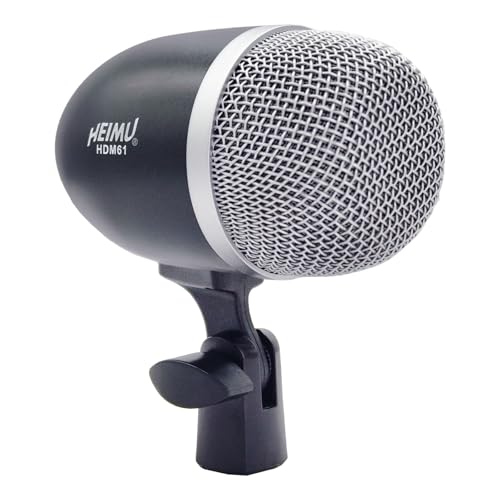
The HEIMU Big Drum Mic is worth considering among bass drum microphones if you want a supercardioid pickup pattern and a setup designed for use inside a kick drum. Its frequency response is shaped for kick drums and bass instruments.
Best For: Players seeking focused pickup and straightforward in-drum mounting.
Pros:
- Supercardioid pattern is designed for unwanted-noise rejection and high gain before feedback.
- Locking stand adapter with integral XLR connector simplifies setup.
- Designed to perform at high sound pressure levels.
Cons:
- Requires a wired XLR connection.
- Its supercardioid pickup calls for deliberate placement.
This model’s focused pattern and built-in adapter are its main draws; plan your mic position to make the most of them.
Attack-Focused Pick – AUDIX D6 Kick Drum Microphone
AUDIX D6 Cardioid Dynamic Kick Drum Microphone for Kick Drums and Bass Instruments
Check Price On AmazonAmong bass drum microphones, the AUDIX D6 suits players who want a pronounced beater attack and deep lows. Its cardioid pickup pattern helps limit sound from nearby sources, while its dynamic design handles kick-drum levels up to 144 dB SPL.
Best For: Stage or studio kick drums where a focused, punchy sound is the priority.
Pros:
- VLM diaphragm responds quickly to beater attack.
- 30 Hz–15 kHz stated frequency range supports low-end capture.
- Also suited to bass and other low-frequency instruments.
Cons:
- Its emphasized lows and attack may not suit a more neutral kick sound.
- Cardioid pattern provides less narrowly focused pickup than the supercardioid and hypercardioid options here.
The D6 is a strong fit if you want the mic itself to contribute weight and attack; choose a different voicing if you prefer to shape those qualities from a more restrained starting point.
Isolation Pick – Electro-Voice ND68 Bass Drum Microphone
The Electro-Voice ND68 stands out among bass drum microphones when nearby instruments make isolation important. Its supercardioid pattern targets the kick, and its voicing pairs a deep low end with a relaxed midrange and pronounced high-frequency attack.
Best For: Close-miking kick drums or low-frequency instruments in busy stage setups.
Pros:
- Supercardioid pickup helps isolate nearby instruments.
- Handles close-miked transients and wave fronts up to 144 dB SPL.
- Humbucking coil guards against line hum; dent-resistant Memraflex grille adds durability.
Cons:
- Its aggressive high-frequency punctuation may not fit a softer kick sound.
- Supercardioid pickup calls for deliberate aiming to get the intended balance.
Choose the ND68 when bleed control, hum resistance, and a hard-wearing grille matter as much as its deep, attack-forward kick voicing.
Multi-Instrument Pick – AUDIX f6 Kick Drum Microphone
AUDIX f6 Hypercardioid Dynamic Kick Drum Microphone for Kick Drums and Bass Instruments
Check Price On AmazonIf your bass drum microphones also need to cover other low-frequency sources, the AUDIX f6 is a practical option. This hypercardioid dynamic mic is specified to handle 140 dB SPL and is described for kick drum, floor tom, tympani, and bass cabinets.
Best For: Players and engineers who need one mic for kick and other low-frequency instruments.
Pros:
- Hypercardioid pickup supports focused placement and click adjustment.
- 140 dB SPL capability suits hard-hitting drums.
- Precision-cast zinc alloy body is built for stage and studio use.
Cons:
- Its 140 dB SPL rating is lower than the 144 dB SPL ratings listed for the D6 and ND68.
- Focused hypercardioid pickup makes positioning important when dialing in beater click.
The f6 is worth considering when versatility matters more than choosing a mic solely for kick: it offers focused pickup and stated uses across several punchy low-frequency sources.
How We Picked These Bass Drum Microphones
We focused on microphones designed or commonly used for kick drum, then compared their pickup patterns, mounting and placement needs, power requirements, and likely use in live or studio setups. The selection spans dynamic mics at different price points and one boundary condenser, so you can compare practical approaches rather than just specifications. No single mic is universally best: drum tuning, placement, the room, and any EQ or processing will affect the result.
Quick Comparison
For a familiar all-round dynamic: Start with the AKG D112 MkII, Sennheiser e602 II, or e902. These are sensible choices when you want one dedicated kick mic for both stage and studio.
For a more shaped, punch-forward sound: Consider the AUDIX D6 or f6. If you prefer to build the sound yourself with mic position and EQ, compare them against the other dynamics before deciding.
For simple in-drum placement: The Shure BETA 91A is a boundary condenser that can rest inside a suitable kick drum. It requires phantom power. For a lower-cost starting point: Compare the Shure PGA52, AKG P2, and HEIMU; check the included accessories and return policy before ordering. The Electro-Voice ND68 is another option if its supercardioid pickup pattern suits your setup.
Key Buying Factors for Bass Drum Microphones
Sound and Placement
Decide whether you want strong attack and a mix-ready character or a sound you can shape more heavily later. Placement matters just as much as the model: moving a mic toward the beater generally emphasizes attack, while a position nearer the resonant head can capture more body. Port size and drum depth may limit where you can put a conventional mic.
Pickup Pattern and Bleed
Cardioid, supercardioid, and hypercardioid patterns reject sound differently, but no pattern eliminates spill from cymbals or nearby instruments. On a crowded stage, consider where the mic points and what sits behind it. A boundary mic’s placement inside the drum can also help keep the setup consistent.
Power, Mounting, and Total Cost
Dynamic mics generally do not need phantom power; the BETA 91A does. Check your mixer or interface before buying. Also confirm whether you need a short stand, clamp, XLR cable, or a suitable surface inside the drum. Those extras can change the real cost of a seemingly cheaper mic.
Who Should Buy Which Bass Drum Microphones?
First dedicated kick mic: Compare the PGA52 and P2 with the e602 II and D112 MkII, balancing upfront cost against how often you’ll use it. Regular live player: Prioritize a sturdy dynamic mic that fits your placement and delivers a sound you can mix quickly. Studio user: Choose by the tone and flexibility you want; auditioning on your own drum is more useful than choosing by frequency-response figures alone. Need fast, repeatable in-drum setup: Consider the BETA 91A if you have phantom power and room to place it securely.