Choosing the right mesh network can make the difference between constant buffering and a stable, high-speed connection in every room. The best systems balance coverage, speed, device capacity, and easy management.
Below, we focus on professional mesh Wi-Fi systems built for larger homes, demanding households, and users who want stronger whole-home performance without the complexity of a traditional networking setup.
Best 10 Professional Mesh Wi-Fi Systems Picks for 2026
Premium Pick
NETGEAR Orbi 770 Series Wi‑Fi 7 Mesh System

- Up to 8,000 sq. ft. coverage
- Wi‑Fi 7 speeds up to 11 Gbps
- Supports up to 100 devices
Best For: Large homes needing premium Wi‑Fi 7 performance
Best Value
TP-Link Deco X55 Wi‑Fi 6 Mesh System

- Covers up to 6,500 sq. ft.
- Supports up to 150 devices
- 3 Gigabit ports per unit with Ethernet backhaul
Best For: Households wanting reliable Wi‑Fi 6 mesh on a budget
Budget Wi‑Fi 7
Amazon eero 7 Dual-Band Wi‑Fi 7 Mesh

- Covers up to 6,000 sq. ft.
- Supports 120+ devices
- Up to 2.5 Gbps internet plans
Best For: Buyers wanting the cheapest path to Wi‑Fi 7 mesh
6E Performance Pick
TP-Link Deco XE75 Tri-Band Wi‑Fi 6E Mesh

- Covers up to 7,200 sq. ft.
- Supports up to 200 devices
- Dedicated 6 GHz band for backhaul
Best For: Large homes wanting tri-band 6E mesh and capacity
Editor’s Pick
NETGEAR Orbi 370 WiFi 7 Mesh System, 3-Pack

- Wi-Fi 7 mesh coverage up to 6,000 sq. ft.
- Supports up to 70 devices with Enhanced Backhaul
- Easy setup and app-based management
Best For: Large homes needing simple, high-speed whole-home Wi-Fi
Premium Powerhouse
Deco 7 Pro Tri-Band WiFi 7 Mesh

- Covers up to 7,600 sq. ft. and over 200 devices
- Tri-band Wi-Fi 7 with 10G and 2.5G ports
- AI-Roaming and unified mesh networking
Best For: High-demand homes needing top-tier capacity and wired flexibility
Best for Comfort
TP-Link Deco XE75 WiFi 6E Mesh System
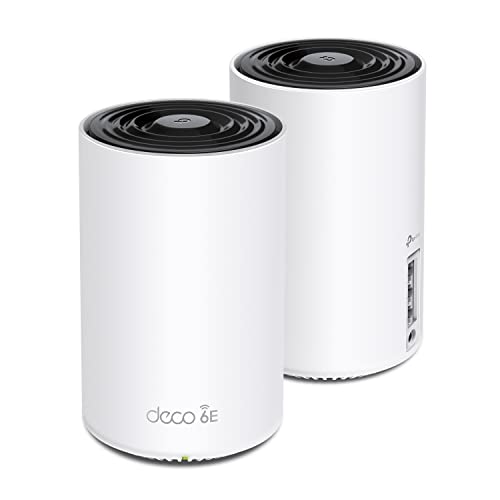
- Wi-Fi 6E tri-band coverage up to 5,500 sq. ft.
- 6 GHz band improves backhaul and reduces interference
- Supports up to 200 devices with app-based setup
Best For: Dependable whole-home mesh on a more affordable Wi-Fi 6E platform
Premium Tri-Band Pick
TP-Link Deco XE70 Pro WiFi 6E Mesh System

- Wi‑Fi 6E tri-band with a 6 GHz band
- Up to 4.9 Gbps and support for 200 devices
- 2.5 Gbps port plus wired backhaul support
Best For: Large homes and high-demand networks
Value Wi-Fi 6 Mesh
TP-Link Deco X15 3-Pack Wi‑Fi 6 Mesh
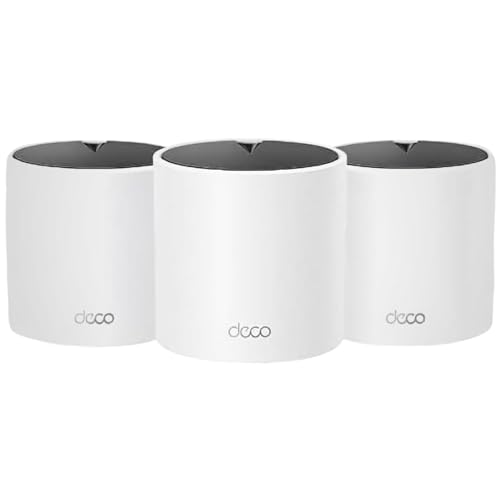
- Wi‑Fi 6 AX1500 dual-band mesh system
- Covers up to 5,600 sq. ft. and 120 devices
- Two Gigabit ports per unit with wired backhaul
Best For: Practical whole-home coverage on Wi‑Fi 6
Budget Mesh Classic
TP-Link Deco M5 3-Pack Mesh Wi‑Fi System

- Up to 5,500 sq. ft. of coverage
- Free lifetime HomeCare security tools
- 2 Gigabit ports per unit with wired backhaul
Best For: Simple, secure mesh coverage on a budget
Premium Pick – NETGEAR Orbi 770 Series Wi‑Fi 7 Mesh System
If you want one of the most capable professional mesh Wi-Fi systems for a large home, the NETGEAR Orbi 770 Series is built for speed, scale, and simplicity. This Wi‑Fi 7 mesh kit is designed to blanket up to 8,000 sq. ft. and support up to 100 devices, with tri-band architecture and enhanced backhaul to help keep performance steady across the house.
Best For: Large households that want cutting-edge Wi‑Fi 7 speeds, wide coverage, and easy app-based management.
Pros:
- Up to 8,000 sq. ft. of coverage with a 3-pack system
- Wi‑Fi 7 speeds up to 11 Gbps for demanding streaming, gaming, and video calls
- Tri-band design with enhanced backhaul for better performance across multiple devices
- Easy setup and remote management through the Orbi app
Cons:
- Coverage and speed can vary based on home layout and internet plan
- Netgear Armor security requires a separate subscription after the trial
- Made for use in the US only
The Orbi 770 is a strong pick if you want a premium mesh upgrade that is ready for Wi‑Fi 7 now and designed to stay relevant as your device count grows. It is especially appealing for buyers who value high-capacity networking with straightforward setup.
Best Value – TP-Link Deco X55 Wi‑Fi 6 Mesh System
The TP-Link Deco X55 is a practical choice for professional mesh Wi-Fi systems when you want strong whole-home coverage without jumping to the newest standard. This Wi‑Fi 6 mesh kit covers up to 6,500 sq. ft., supports up to 150 devices, and uses AI-driven mesh to help adapt performance to your home environment.
Best For: Busy households that need reliable Wi‑Fi 6 coverage, wired backhaul support, and easy app control.
Pros:
- Covers up to 6,500 sq. ft. with a 3-pack system
- Supports up to 150 devices for heavier household demand
- Each unit includes 3 Gigabit Ethernet ports and supports Ethernet backhaul
- Deco app setup and management keeps installation simple
Cons:
- Dual-band design is less advanced than tri-band and Wi‑Fi 7 options
- Top wireless speed is lower than newer premium mesh systems
- Modem is required for most internet providers
For buyers who want dependable mesh coverage with a strong mix of features and simplicity, the Deco X55 remains an easy system to recommend. It is a solid fit if wired backhaul, broad compatibility, and a lower-friction setup matter more than chasing the latest wireless standard.
Budget Wi‑Fi 7 – Amazon eero 7 Dual-Band Wi‑Fi 7 Mesh
The Amazon eero 7 is a streamlined option among professional mesh Wi-Fi systems for shoppers who want Wi‑Fi 7 without paying for a top-tier flagship. This dual-band 3-pack supports internet plans up to 2.5 Gbps, covers up to 6,000 sq. ft., and is built to keep multiple rooms connected with fewer dead spots.
Best For: Homes that want an affordable Wi‑Fi 7 mesh system with easy expansion and strong app-free simplicity.
Pros:
- Wi‑Fi 7 support in a more affordable package
- Three units cover up to 6,000 sq. ft. and support 120+ devices
- Two auto-sensing 2.5 GbE ports help match faster internet plans
- Backward compatible with previous eero generations and eero Built-in devices
Cons:
- Dual-band design offers less bandwidth separation than tri-band systems
- Advanced security and extras require an optional eero Plus subscription
- Wireless speeds top out below the fastest Wi‑Fi 7 systems
If you want a future-facing mesh upgrade but do not need maximum throughput, eero 7 hits a useful middle ground. It is especially attractive for households that value stable coverage, good device support, and a relatively accessible entry into Wi‑Fi 7.
6E Performance Pick – TP-Link Deco XE75 Tri-Band Wi‑Fi 6E Mesh
The TP-Link Deco XE75 is a strong option for professional mesh Wi-Fi systems if you want the extra headroom of Wi‑Fi 6E without moving to Wi‑Fi 7 pricing. Its tri-band design covers up to 7,200 sq. ft., supports up to 200 devices, and adds a dedicated 6 GHz band that can help stabilize node-to-node connections.
Best For: Larger homes that want tri-band mesh performance, 6 GHz support, and broad device capacity.
Pros:
- Tri-band Wi‑Fi 6E coverage up to 7,200 sq. ft.
- Dedicated 6 GHz band can be used as backhaul for stable node links
- Supports up to 200 devices for dense home networks
- AI-driven mesh and app setup make it easier to deploy and manage
Cons:
- Not a Wi‑Fi 7 system, so it lacks the newest standard’s features
- 5 GHz and 2.4 GHz speeds are lower than the 6 GHz band total
- Some premium security and reporting features are only basic or part of HomeShield
For shoppers who want a high-capacity mesh system with modern 6E benefits, the XE75 is still very compelling. It stands out for balancing coverage, device support, and a cleaner 6 GHz experience in a way many households can actually use.
Editor’s Pick – NETGEAR Orbi 370 WiFi 7 Mesh System, 3-Pack
If you want professional mesh Wi-Fi systems that focus on easy whole-home coverage and fast everyday performance, the NETGEAR Orbi 370 is built for that job. This Wi-Fi 7 3-pack covers up to 6,000 sq. ft., supports up to 70 devices, and uses Enhanced Backhaul to help keep speeds steady across the home.
Best For: Larger homes that want simple setup, Wi-Fi 7 speeds, and reliable coverage across many devices.
Pros:
- Up to 6,000 sq. ft. of mesh coverage with router plus satellites
- Supports up to 70 devices on one network
- Wi-Fi 7 speeds up to 5 Gbps for streaming, gaming, and video calls
- Orbi app setup and remote management make it easy to get started
Cons:
- Dual-band design may be less robust than tri-band systems for heavier traffic
- Best performance depends on your internet plan and home layout
- Armor security requires a separate subscription after the trial
Overall, this Orbi kit is a strong practical choice if you want a straightforward mesh upgrade with modern Wi-Fi 7 support and easy expansion for bigger or multi-storey homes.
Premium Powerhouse – Deco 7 Pro Tri-Band WiFi 7 Mesh
For buyers comparing professional mesh Wi-Fi systems, the Deco 7 Pro stands out with high-capacity tri-band Wi-Fi 7 and a future-ready wired side. It covers up to 7,600 sq. ft., supports over 200 devices, and includes 10G WAN/LAN ports for homes that need both speed and expansion headroom.
Best For: Performance-focused households that want high device capacity, tri-band Wi-Fi 7, and advanced wired connectivity.
Pros:
- Tri-band Wi-Fi 7 with speeds up to 5,188 Mbps on 6 GHz
- Covers up to 7,600 sq. ft. and supports over 200 devices
- Includes four 2.5G WAN/LAN ports plus a USB 3.0 port
- AI-Roaming and unified mesh help keep connections seamless
Cons:
- Backhaul requires at least two Deco units
- Advanced features may be more than casual users need
- Real-world speeds vary with distance, walls, and conditions
This is the most feature-rich option in the group, especially if you care about network growth, fast wired ports, and a mesh system that can handle a busy smart home.
Best for Comfort – TP-Link Deco XE75 WiFi 6E Mesh System
If you want professional mesh Wi-Fi systems without jumping to the newest generation, the TP-Link Deco XE75 offers a solid Wi-Fi 6E step-up. It covers up to 5,500 sq. ft., uses a 6 GHz band for less interference, and is designed to keep coverage stable for up to 200 devices.
Best For: Homeowners who want dependable tri-band mesh coverage, Wi-Fi 6E performance, and easy setup.
Pros:
- Tri-band Wi-Fi 6E covers up to 5,500 sq. ft.
- 6 GHz band helps reduce interference and can serve as backhaul
- Supports up to 200 devices with up to 5,400 Mbps total speed
- Deco app setup is simple, with Alexa voice support for guest Wi-Fi
Cons:
- Not as fast or future-ready as Wi-Fi 7 systems
- 2-pack coverage is smaller than the largest mesh kits
- Requires a modem for most internet service providers
For most homes, this model hits a practical sweet spot: strong coverage, a clean tri-band layout, and Wi-Fi 6E features that still feel modern without the premium cost of Wi-Fi 7.
Premium Tri-Band Pick – TP-Link Deco XE70 Pro WiFi 6E Mesh System
If you want a strong fit for professional mesh Wi-Fi systems, the TP-Link Deco XE70 Pro stands out with Wi‑Fi 6E, a congestion-free 6 GHz band, and tri-band coverage built for busy homes. It’s designed to handle lots of devices, higher-speed wired gear, and smooth roaming without forcing you to micromanage the network.
Best For: Large homes, heavy device loads, and users who want 6E speeds with wired backhaul support.
Pros:
- Wi‑Fi 6E tri-band design adds a 6 GHz band for less interference
- Up to 4.9 Gbps data rate and support for up to 200 devices
- Each unit includes a 2.5 Gbps port plus two Gigabit ports
- Supports wireless and wired backhaul for stronger overall performance
Cons:
- Coverage and device capacity are best realized in larger, busier setups
- Some advanced security features are tied to TP-Link’s premium service
Overall, this is the most future-facing option here for buyers who care about faster wireless bands and more flexible wired connectivity. It’s a practical mesh pick when stability, capacity, and 6E performance matter more than keeping costs minimal.
Value Wi-Fi 6 Mesh – TP-Link Deco X15 3-Pack Wi‑Fi 6 Mesh
The TP-Link Deco X15 is a straightforward choice in professional mesh Wi-Fi systems if you want broad coverage, Wi‑Fi 6 performance, and easy expansion without overcomplicating the setup. It focuses on whole-home reliability with dual-band mesh, wired backhaul support, and enough ports to wire in key devices.
Best For: Medium to large homes that want solid Wi‑Fi 6 mesh coverage at a practical price point.
Pros:
- Wi‑Fi 6 AX1500 dual-band mesh system
- Covers up to 5,600 sq. ft. and supports up to 120 devices
- Two Gigabit Ethernet ports per unit with wired backhaul support
- Works with the Deco app, Alexa, and Google Assistant
Cons:
- Dual-band design is less advanced than tri-band or 6E systems
- Top wireless speeds are more modest than premium mesh kits
For buyers who want a dependable mesh network without moving into premium territory, the X15 is the balanced option. It delivers the core mesh features most homes need: easy setup, wide coverage, and flexible Ethernet support.
Budget Mesh Classic – TP-Link Deco M5 3-Pack Mesh Wi‑Fi System
The TP-Link Deco M5 remains a solid entry in professional mesh Wi-Fi systems for users who want simple whole-home coverage and security features without chasing the latest wireless standard. Its focus is on stable roaming, easy app setup, and dependable mesh behavior across a typical home.
Best For: Homeowners who want a proven mesh system with built-in security and easy setup.
Pros:
- Up to 5,500 sq. ft. of whole-home mesh coverage
- Single network name with seamless roaming
- Free lifetime HomeCare with antivirus, parental controls, and QoS
- Each unit has 2 Gigabit ports and supports wired backhaul
Cons:
- Older dual-band Wi‑Fi and AC-class hardware
- Lower 1,300 Mbps data rate than newer mesh systems
If you prioritize a proven mesh experience over cutting-edge specs, the Deco M5 still makes sense. It is especially appealing for buyers who value built-in security tools, simple installation, and reliable coverage across a mid-sized home.
How We Picked These Professional Mesh Wi-Fi Systems
We prioritized systems that offer strong real-world coverage, modern Wi-Fi standards, and enough bandwidth for streaming, gaming, remote work, and smart home traffic. We also looked at backhaul options, multi-gig ports, ease of setup, and whether the system is suited to replacing both a router and extender setup.
For Professional Mesh Wi-Fi Systems, consistency matters as much as raw speed. That means paying attention to band design, node count, and how well each kit should perform under heavier device loads.
Quick Comparison: Which Type Fits Your Home?
Wi-Fi 7 systems are the best fit for future-proofing and top-end throughput, especially if you have gigabit-plus internet or many connected devices. Wi-Fi 6E models add the 6 GHz band, which can help reduce congestion in busy neighborhoods. Wi-Fi 6 options remain a smart value choice for users who mainly want reliable whole-home coverage at a lower price.
Key Buying Factors for Professional Mesh Wi-Fi Systems
Coverage and Node Count
Match the kit size to your floor plan, wall materials, and square footage. A three-pack often suits medium to large homes, while smaller spaces may not need that much hardware.
Wi-Fi Standard and Band Design
Wi-Fi 7 is the most capable choice for speed and capacity, but Wi-Fi 6 and 6E can still deliver excellent performance. Tri-band systems are often preferable when you want stronger wireless backhaul and better support for many devices.
Ports and Internet Speed Support
If you have multi-gig internet or wired devices like desktop PCs, consoles, or NAS units, look for 2.5G or faster Ethernet ports. This can matter as much as wireless specs in Professional Mesh Wi-Fi Systems.
Ease of Expansion and App Control
Check whether the ecosystem allows easy expansion later and offers clear app-based management for guest networks, parental controls, and device prioritization.
Who Should Buy Which Professional Mesh Wi-Fi Systems?
Choose Wi-Fi 7 if you want the strongest long-term platform and have fast internet or heavy household usage. Choose Wi-Fi 6E if you want a strong balance of price, performance, and reduced congestion. Choose Wi-Fi 6 if you mainly need dependable coverage, simple setup, and better value.
For larger homes with many users, the best choice is usually the system that combines the right coverage footprint with the most stable backhaul and the ports you actually need.