The best OLED televisions for 4K viewing combine deep black levels, precise contrast, wide viewing angles, and detailed image processing in a variety of screen sizes and price ranges. This lineup includes current LG, Sony, and Samsung models for movie fans, gamers, small rooms, and large home theaters.
Before choosing, consider more than panel quality. Refresh rate, HDR format support, smart-TV software, HDMI features, room brightness, and viewing distance can all affect which OLED offers the best fit for your setup.
Best 10 OLED Televisions for 4K Viewing Picks for 2026
Bright-Room Performance Pick

- Self-lit pixels with Brightness Booster
- Dolby Vision and FILMMAKER MODE
- 144Hz gaming with four HDMI 2.1 inputs
Best For: Bright-room viewing, streaming, and gaming
Color and Cinema Pick

- QD-OLED panel with Quantum Dot color
- XR AI processing and clear upscaling
- Studio-calibrated modes for streaming
Best For: Cinematic movie and streaming presentation
Flexible Gaming Value

- 55-inch self-lit OLED display
- 144Hz gaming with 0.1ms response time
- Dolby Vision and AI Super Upscaling
Best For: Gaming and streaming in a mid-size room
Compact Cinema Pick

- Compact 48-inch 4K OLED display
- XR processing with deep OLED contrast
- 4K/120, VRR, and ALLM for gaming
Best For: Small rooms and PlayStation 5 setups
Cinematic Large-Screen Pick
Sony BRAVIA 8 65-Inch OLED 4K TV

- 65-inch OLED with deep blacks and bright highlights
- Dolby Vision, Atmos, IMAX Enhanced, and DTS:X support
- Google TV and Sony Pictures Core benefits included
Best For: Movie-focused viewers building a large-screen home theater
Feature-Rich Gaming Bundle

- OLED evo picture with Brightness Booster and AI upscaling
- Up to 165Hz gaming with 0.1ms response time and VRR
- Includes protection plan, HDMI cables, and setup guidebook
Best For: Gamers and buyers wanting a bundled OLED setup
Large-Screen AI Upgrade
- AI-enhanced 4K upscaling
- OLED HDR with Pantone-validated color
- 4K 120Hz motion for sports and games
Best For: Large-room movie, sports, and gaming setups
Film and Gaming Balance

- Dolby Vision and Filmmaker Mode
- AI Super Upscaling 4K
- Up to 165Hz gaming with 0.1ms response
Best For: Movie lovers and gamers in mid-size rooms
Reflection-Resistant Performance

- Glare-free screen for brighter rooms
- Bright OLED contrast with pitch blacks
- 4K 165Hz motion for sports and gaming
Best For: Bright-room viewing and high-refresh-rate gaming
Bright-Room Performance Pick – LG C5 OLED evo 4K
For shoppers comparing OLED televisions for 4K viewing, the 65-inch LG C5 OLED evo stands out with self-lit pixels, Dolby Vision, and brightness-focused processing. Its Brightness Booster and UL-verified Discomfort Glare Free performance make it a practical choice for brighter rooms, while the 144Hz gaming support adds flexibility.
Best For: Bright-room movie watching, streaming, and high-refresh-rate gaming.
Pros:
- Self-lit OLED pixels deliver deep blacks and detailed 4K images.
- Brightness Booster and glare-focused room performance suit varied lighting.
- Four HDMI 2.1 inputs, VRR, G-Sync, and FreeSync support gaming setups.
- Dolby Vision, Dolby Atmos, FILMMAKER MODE, and webOS 25 support entertainment.
Cons:
- Its 65-inch size may require substantial wall or stand space.
- Advanced gaming and AI features may be more than casual viewers need.
The C5 is a versatile premium OLED for buyers who want strong 4K movie performance, smart features, and serious gaming capability in one large screen.
Color and Cinema Pick – Sony BRAVIA 8 II QD OLED
The Sony BRAVIA 8 II is a compelling option among OLED televisions for 4K viewing, pairing a QD-OLED panel with Sony’s XR processing. Its Quantum Dot color system, studio-calibrated modes, and Dolby Vision support target viewers who want a cinematic presentation from streaming and disc-quality content.
Best For: Movie-focused viewers who value accurate color, cinematic modes, and Google TV.
Pros:
- QD-OLED technology combines self-lit pixels with Quantum Dot color.
- XR processing enhances color, contrast, clarity, and upscaling.
- Studio-calibrated modes support Netflix, Prime Video, and SONY PICTURES CORE.
- Acoustic Surface Audio+ provides screen-based sound with 50 watts of output.
Cons:
- The 65-inch screen requires considerable room and furniture space.
- Its cinema-oriented feature set may be excessive for basic TV viewing.
Choose the BRAVIA 8 II if accurate color, advanced processing, and a movie-first smart-TV experience matter more than keeping the setup simple.
Flexible Gaming Value – LG C4 OLED evo 4K
The 55-inch LG C4 OLED evo delivers the core strengths shoppers expect from OLED televisions for 4K viewing, including self-lit pixels, Dolby Vision, and AI-enhanced upscaling. Its 144Hz refresh rate, 0.1ms response time, and broad gaming support make it especially appealing for mixed entertainment and play.
Best For: Gamers and streamers seeking a feature-rich 55-inch OLED.
Pros:
- Self-lit pixels provide rich contrast and accurate color coverage.
- 144Hz refresh rate and 0.1ms response time support fast gameplay.
- VRR, NVIDIA G-Sync, AMD FreeSync Premium, and four HDMI 2.1 inputs add flexibility.
- Dolby Vision, Dolby Atmos, FILMMAKER MODE, and AI Super Upscaling support movies and TV.
Cons:
- The 55-inch screen is less immersive than larger options for big rooms.
- The listed display specifications include both 144Hz and 120Hz references, so buyers should verify the intended mode.
The C4 is a balanced choice for a smaller viewing area, offering strong 4K picture features and unusually comprehensive gaming support without moving to a larger screen.
Compact Cinema Pick – Sony A90K 48-Inch OLED
For smaller spaces, the Sony A90K offers a compact way to enjoy OLED televisions for 4K viewing. Its 48-inch OLED panel uses Cognitive Processor XR, XR OLED Contrast Pro, and XR Triluminos Pro to target deep contrast, natural color, and detailed entertainment.
Best For: Bedrooms, offices, compact living rooms, and PlayStation 5 gaming.
Pros:
- 48-inch OLED size fits spaces where larger televisions may not.
- OLED Contrast Pro and Cognitive Processor XR support deep blacks and lifelike brightness.
- HDMI 2.1 features include 4K/120, VRR, and ALLM.
- Google TV, AirPlay 2, Dolby Vision, IMAX Enhanced, and Acoustic Surface Audio+ add versatility.
Cons:
- The smaller screen is less suitable for a large shared viewing area.
- Its listed HDR support specifically identifies Dolby Vision, so format preferences should be checked.
The A90K makes the most sense when space is limited but you still want Sony processing, OLED contrast, smart streaming, and modern console features.
Bright-Action OLED Pick – Samsung S90H 48-Inch OLED 4K TV
For shoppers comparing OLED televisions for 4K viewing, the Samsung S90H combines a glare-reducing matte screen with AI-enhanced picture processing. Its 48-inch size, OLED contrast, and gaming-focused features make it a practical choice for smaller entertainment spaces and fast-moving content.
Best For: Gamers and viewers who want a compact OLED with glare reduction, strong upscaling, and high-refresh-rate gameplay.
Pros:
- OLED HDR+ delivers deep contrast and up to 2,000 nits of listed brightness.
- Glare Free technology helps reduce distracting reflections.
- Motion Xcelerator 165Hz with NVIDIA G-SYNC or AMD FreeSync Premium Pro supports smooth, responsive gaming.
- NQ4 AI Gen3 processing upscales content to 4K and smooths fast-moving action.
Cons:
- The 48-inch screen may feel small for viewers seeking a large-room cinematic experience.
- Its listed 120Hz display refresh rate is separate from the advertised 165Hz motion-enhancement feature, so buyers should confirm how their preferred sources use each specification.
The S90H stands out when reflection control and gaming performance matter as much as OLED picture quality. Its AI tools also make lower-resolution and non-HDR content more polished.
Cinematic Large-Screen Pick – Sony BRAVIA 8 65-Inch OLED 4K TV
The Sony BRAVIA 8 is a strong option among OLED televisions for 4K viewing when a larger screen and movie-focused features are priorities. Its 65-inch OLED panel, Dolby Vision support, studio-calibrated modes, and Google TV platform suit dedicated home entertainment setups.
Best For: Movie and streaming enthusiasts who want a large OLED with cinematic HDR support and integrated Google TV.
Pros:
- Self-lit OLED pixels provide pure blacks, while XR Contrast Booster 15 enhances highlights.
- Supports Dolby Vision, HDR10, HLG, Dolby Atmos, IMAX Enhanced, and DTS:X.
- XR Processor, XR Triluminos Pro, and XR Clear Image enhance color, contrast, clarity, and upscaling.
- Includes Google TV access and Sony Pictures Core movie credits and a 12-month subscription.
Cons:
- The 65-inch format and listed 51.2-pound weight require more room and careful installation.
- Its listed 120Hz refresh rate is less gaming-focused than models advertising higher refresh rates.
Choose the BRAVIA 8 if your viewing leans toward films, prestige series, and streaming. Studio-calibrated picture modes and broad format support help it deliver a more cinema-oriented experience.
Feature-Rich Gaming Bundle – LG C6 48-Inch OLED evo 4K TV
For buyers seeking OLED televisions for 4K viewing with gaming and setup extras, this LG C6 bundle pairs a 48-inch OLED evo display with Dolby Vision, Dolby Atmos, and advanced AI processing. The included protection plan, HDMI cables, and guidebook add practical value for a new entertainment setup.
Best For: Gamers and first-time home-theater buyers who want high-refresh-rate features plus bundled setup accessories.
Pros:
- OLED self-lit pixels, Brightness Booster, and Perfect Black technology target vivid contrast in bright rooms.
- Supports Dolby Vision, Dolby Atmos, HDR10, HLG, and FILMMAKER MODE.
- Up to 165Hz gaming, 0.1ms response time, VRR, NVIDIA G-SYNC, and AMD FreeSync Premium support fast gameplay.
- Bundle includes an additional one-year protection plan, two 6-foot HDMI cables, and a setup guidebook.
Cons:
- The 48-inch screen may not provide the immersive scale some home-theater buyers expect.
- The listed panel refresh rate is 120Hz, while 165Hz is presented as the maximum gaming refresh rate.
This LG bundle is especially appealing when you want gaming performance without sourcing accessories separately. Its AI picture tools, cinematic formats, and included coverage make it a convenient all-in-one package.
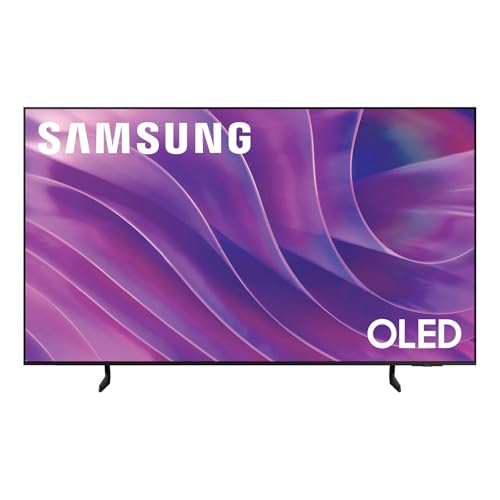
Large-Screen AI Upgrade – 77-Inch Samsung S84F OLED
For shoppers comparing OLED televisions for 4K viewing, the 77-inch Samsung S84F emphasizes a large, immersive picture with AI-assisted upscaling, OLED HDR, and self-illuminating pixels. Its 120Hz refresh rate also suits sports and console gaming.
Best For: Viewers who want a spacious OLED screen for movies, sports, streaming, and gaming.
Pros:
- AI-enhanced 4K upscaling helps improve lower-resolution content.
- OLED pixels provide optimized brightness and improved contrast.
- 4K 120Hz motion support is well suited to fast-moving content.
- Pantone-validated color and skin tones support a realistic picture.
Cons:
- The 77-inch size requires substantial room and viewing distance.
- Built-in speaker output is listed at 20 watts, so a soundbar may appeal to home-theater users.
The S84F is a practical pick when screen size matters most. Samsung’s AI picture and sound processing, 120Hz performance, and broad smart-TV access make it a versatile centerpiece, while its larger footprint is the main consideration.
Film and Gaming Balance – 55-Inch LG C6 OLED evo
The LG C6 OLED evo is a well-rounded option among OLED televisions for 4K viewing, combining self-lit pixels with Brightness Booster technology, Dolby Vision, and Filmmaker Mode. Its compact 55-inch size also fits more easily into typical living rooms.
Best For: Movie fans and gamers seeking advanced picture modes and high-refresh-rate performance in a mid-size TV.
Pros:
- Over 8.3 million self-lit pixels deliver Perfect Black and Perfect Color.
- Dolby Vision, Dolby Atmos, and Filmmaker Mode support a cinema-focused experience.
- Up to 165Hz gaming, 0.1ms response time, NVIDIA G-Sync, and AMD FreeSync Premium provide strong gaming specifications.
- AI Super Upscaling 4K and the a11 AI Processor Gen3 enhance compatible content.
Cons:
- The 55-inch screen is smaller than the other TVs in this roundup.
- The supplied listing specifies a 120Hz display refresh rate, while its gaming feature list cites up to 165Hz; check compatibility and input requirements.
The C6 is especially appealing if films and gaming share equal priority. Its Dolby and filmmaker features support movie watching, while its gaming specifications add flexibility for PC and console setups.
Reflection-Resistant Performance – 65-Inch Samsung S95F OLED
For OLED televisions for 4K viewing in brighter rooms, the 65-inch Samsung S95F stands out with a glare-free design, HDR Pro, and Samsung’s NQ4 AI Gen3 processor. Its 165Hz motion support also targets fast sports and responsive gaming.
Best For: Bright-room viewers and gamers who want reduced reflections, strong contrast, and fast motion handling.
Pros:
- Glare-free viewing helps reduce distracting reflections from windows and lamps.
- Pixel-level pitch blacks and high brightness support dramatic contrast.
- 4K 165Hz support is designed for smooth sports and VRR gaming.
- The processor upscales content to 4K and can give SDR content an HDR-like presentation.
Cons:
- The supplied HDR format listing specifies HDR10+, without listing Dolby Vision.
- At 65 inches and nearly 64 pounds with the stand, installation requires appropriate space and support.
The S95F is the strongest fit here for rooms where reflections interfere with viewing. Its glare-free screen, bright OLED presentation, AI upscaling, and high refresh rate make it a particularly versatile choice for daytime viewing and gaming.
How We Picked These OLED Televisions for 4K Viewing
We selected these models by comparing their panel technology, picture-processing features, HDR support, gaming capabilities, screen sizes, smart platforms, and intended use. The list includes premium QD-OLED sets, mainstream OLED televisions, compact 48-inch options, and large screens suited to dedicated viewing spaces.
We also considered practical differences between brands. LG models commonly emphasize gaming tools, Dolby Vision, and flexible picture controls. Sony sets are known for image processing, motion handling, and Google TV integration. Samsung OLED televisions often focus on high brightness, gaming performance, glare reduction, and the company’s Tizen smart-TV platform.
Quick Comparison
- Best all-around choice: The LG C-series models offer a balanced combination of picture quality, gaming features, smart functions, and broad HDR support.
- Best for movie processing: Sony’s BRAVIA OLED models are compelling for viewers who prioritize natural detail, motion, and cinematic image presentation.
- Best for bright rooms: Samsung’s premium OLED options, particularly models with glare-reducing screens, can be easier to view when ambient light is a concern.
- Best for gaming: Look for a high refresh rate, HDMI 2.1 inputs, variable refresh rate support, and low input lag. The newer LG C6 and Samsung S95F are especially feature-focused.
- Best for smaller spaces: The 48-inch Sony, Samsung, and LG models provide OLED contrast without requiring a large entertainment room.
- Best for home theaters: A 65-inch or 77-inch model creates a more immersive 4K experience when seating distance and wall space allow it.
Key Buying Factors for OLED Televisions for 4K Viewing
Screen Size and Viewing Distance
Choose a screen that suits both your room and seating position. A 48- or 55-inch display works well in bedrooms, apartments, and smaller living rooms, while 65 inches is a versatile choice for many main viewing spaces. A 77-inch television is best when you have sufficient wall width and sit far enough away to appreciate the larger image.
HDR Formats and Picture Processing
OLED’s pixel-level control produces excellent contrast, but processing still affects upscaling, motion, and low-quality streaming content. Check whether the set supports Dolby Vision, HDR10, or competing HDR formats used by your preferred services and devices. Strong processing is particularly valuable for broadcast television and older films.
Gaming Features
For console and PC gaming, prioritize HDMI 2.1, 4K at high refresh rates, variable refresh rate support, automatic low-latency mode, and a responsive game interface. A 120Hz or higher panel can improve motion clarity, while newer models offering 144Hz or more may benefit compatible gaming PCs.
Room Lighting and Long-Term Use
OLED televisions deliver their strongest advantage in contrast and dark-room viewing, but premium models can also perform well in brighter spaces. Consider glare control and peak brightness if windows or lamps face the screen. As with any OLED, vary content when practical and use the built-in panel-care features to reduce the risk of image retention.
Who Should Buy Which OLED Televisions for 4K Viewing?
Movie and series enthusiasts should prioritize Sony’s BRAVIA models or an LG C-series television with Dolby Vision and Filmmaker Mode. Competitive gamers should focus on the newest high-refresh-rate LG and Samsung options, along with the number and placement of HDMI 2.1 ports. Bright-room viewers may prefer a Samsung model with glare-reducing technology. Apartment dwellers and bedroom viewers should consider the 48-inch choices, while families and home-theater owners will likely benefit from a 65- or 77-inch screen. Finally, buyers seeking the safest overall balance should start with a current LG C-series or Sony BRAVIA OLED and compare pricing, size, and connectivity before ordering.