As you explore the evolving landscape of video technology, you’ll find that H.265 video encoders are setting new standards for high-quality compression in 2025. These encoders enhance streaming experiences with their advanced features and user-friendly designs. But what makes these top models stand out? Let’s take a closer look at the best options available and the essential factors to evaluate when choosing the right encoder for your needs.
HEVC H.265 H.264 Live HDMI Video Encoder for IPTV and Live Broadcast
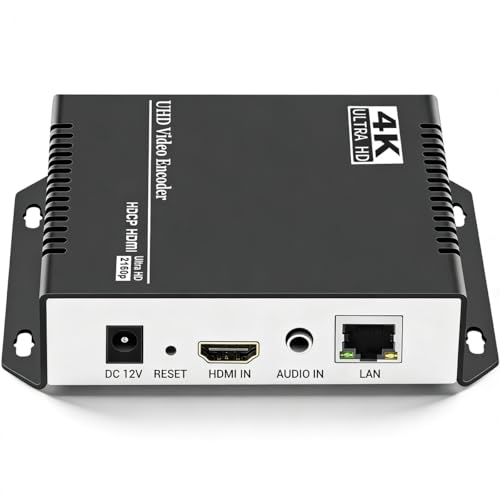
If you’re looking to elevate your live broadcasting to the next level, the HEVC H.265 H.264 Live HDMI Video Encoder is the perfect choice for you. This powerful encoder supports major platforms like YouTube and Twitch, ensuring your streams reach a wide audience. It allows simultaneous output of four video streams, enhancing your flexibility in bandwidth management. You can customize your broadcasts with static or scrolling text, logos, and adjust parameters like resolution and bitrate. Plus, with free lifetime technical support and development resources, you can easily tailor the encoder to meet your specific needs in IPTV and live broadcasting.
Best For: Content creators and professionals seeking high-quality live streaming solutions for platforms like YouTube, Facebook, and Twitch.
Pros:
- Supports simultaneous output of four video streams, providing flexibility in broadcasting.
- Offers extensive customization options for video display, including text and logo overlays.
- Includes free lifetime technical support and development resources for tailored use.
Cons:
- May require a learning curve for new users unfamiliar with video encoding technologies.
- Higher initial investment compared to basic streaming solutions.
- Limited compatibility with certain older streaming protocols or equipment.
H265 HDMI Video Encoder for Streaming

A standout feature of the URayCoder H.265 HDMI Video Encoder is its ability to support simultaneous output of four video streams across various protocols, making it an excellent choice for content creators and live broadcasters. You can easily stream to platforms like YouTube, Facebook, and Twitch, enhancing your reach. The encoder lets you customize streams with static or scrolling text, logos, and more. You can adjust resolution, bitrate, and even optimize bandwidth based on your needs. Plus, with free lifetime technical support and development options, you’re set for seamless streaming experiences. This encoder truly elevates your broadcasting game!
Best For: Content creators and live broadcasters looking for a versatile and customizable streaming solution.
Pros:
- Supports simultaneous output of four video streams across various protocols, enhancing broadcasting capabilities.
- Offers extensive customization options for video streams, including text, logos, and adjustable parameters.
- Includes free lifetime technical support and development resources, ensuring long-term usability.
Cons:
- May require a learning curve for users unfamiliar with video encoding and streaming technologies.
- High-quality streaming may demand significant bandwidth, which could be a limitation for some users.
- Initial setup and configuration might be complex for those who are not technically inclined.
H.265 H.264 HD Video Audio Decoder for IP Cameras
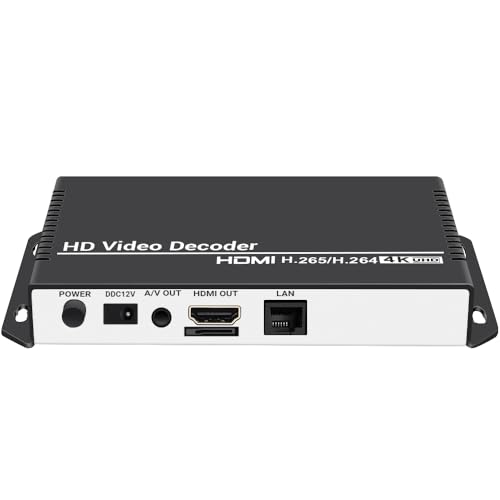
For those looking to enhance their IP camera setups, the H.265 H.264 HD Video Audio Decoder stands out as an ideal choice. It supports various protocols like HTTP, RTSP, and RTP, making it versatile for multi-brand video encoders. You can easily decode up to 30 channels, switching between them using an IR remote or a web panel. Setup is simple—just enter your video stream link, and you’re good to go. Plus, with a five-year warranty and lifetime support, you can count on its reliability. Just keep in mind it doesn’t support HTTPS streams, which could limit some uses.
Best For: Those seeking a reliable and easy-to-use video decoder for IP camera setups that require multi-channel support and diverse protocol compatibility.
Pros:
- Excellent video quality and reliable performance as reported by users.
- Simple setup process that allows for quick configuration and use.
- Strong customer support with prompt responses and helpful assistance.
Cons:
- Initial setup challenges may arise, particularly with RTSP syntax.
- Lacks support for decoding streams via HTTPS, which may limit certain applications.
- Some users may require additional customization that isn’t out-of-the-box.
TBS2604v2 HD 4K HDMI Encoder for IPTV

The TBS2604v2 HD 4K HDMI Encoder stands out as an exceptional choice for IPTV enthusiasts thanks to its ability to support resolutions up to 3840 x 2160P at 30fps. With H.264 and H.265 encoding options, it offers flexibility for various streaming needs. You’ll appreciate its compact size and lightweight design, making it easy to integrate into any setup. Plus, with power consumption under 5 watts and a wide operating temperature range, it’s efficient and reliable. The user-friendly web interface and remote access features simplify management, while dual code stream support enhances your streaming capabilities.
Best For: IPTV enthusiasts looking for a compact, efficient, and high-resolution encoding solution.
Pros:
- Supports up to 4K resolution at 30fps, providing high-quality streaming experiences.
- User-friendly web interface and remote access features make management easy and convenient.
- Low power consumption of under 5 watts, ensuring energy efficiency during operation.
Cons:
- Limited to HDMI inputs, which may not accommodate users with other video input types.
- Only supports H.264 and H.265 codecs, potentially limiting compatibility with some older systems.
- Requires internet access for remote management features, which may not be suitable for all setups.
H.265 H.264 IP Video Decoder
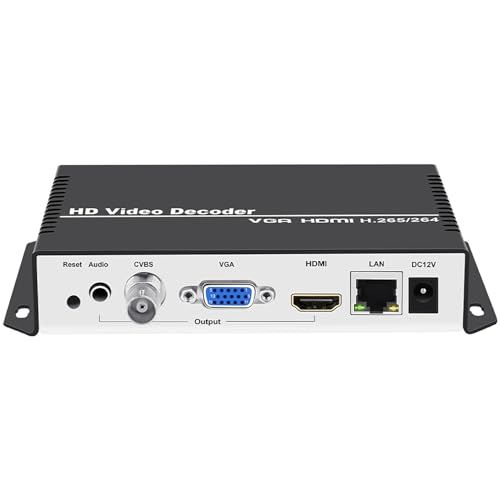
Need a reliable solution for decoding high-quality video streams? The H.265 H.264 IP Video Decoder has got you covered. It supports up to four channels simultaneously, delivering stunning 4K UHD video at resolutions up to 3840x2160P@30fps. You can easily connect it to various encoders, set-top boxes, and IP cameras using multiple streaming protocols like RTSP, HLS, and UDP. Setup is a breeze—just enter your video stream link, and you’re good to go. Plus, you’ll benefit from lifetime tech support and customization options to tailor the decoder to your specific needs. Enjoy seamless video playback with innovative technology!
Best For: Users looking for a reliable and high-performance video decoder for multi-channel, high-resolution video streaming applications.
Pros:
- Supports up to 4 channels of 4K UHD video decoding simultaneously, enhancing multi-tasking capabilities.
- Compatible with a wide range of streaming protocols, ensuring flexibility in connecting to various video sources.
- Includes lifetime technical support and customization options for tailored user experience.
Cons:
- May require technical knowledge for setup, despite the simple configuration process.
- Limited to a maximum resolution of 3840x2160P@30fps, which may not meet the needs of users requiring higher frame rates.
- Customization might involve additional costs or complexity for certain firmware/hardware developments.
ZowieBox NDI|HX3 Video Streaming Encoder Decoder

With its ability to seamlessly convert SDI signals to NDI** and vice versa, the ZowieBox NDI|HX3 Video Streaming Encoder Decoder stands out as an ideal choice for content creators looking to enhance their live streaming capabilities. Weighing just 6 ounces and measuring 4.84 x 2.68 x 0.87 inches, this compact device offers impressive functionality. You can stream in high-quality 1080p while enjoying support for multiple NDI formats. Although some users report latency issues, its standalone streaming capability guarantees your computer’s performance remains unaffected. The ZowieUI interface** allows easy control, making it a versatile tool for any NDI-compatible workflow.
Best For: Content creators and live streamers looking for a compact and versatile solution to convert SDI signals to NDI and enhance their streaming capabilities.
Pros:
- High-quality 1080p streaming with support for multiple NDI formats.
- Compact and lightweight design, making it easy to integrate into various setups.
- Standalone streaming capability, preserving computer performance during broadcasts.
Cons:
- Reports of latency issues, particularly when decoding RTMP streams.
- Some users experience audio-video sync problems due to frame rate conversion.
- Mixed customer support experiences, with delays and inadequate troubleshooting documentation reported.
Ultra Mini HDMI 1080P Video Encoder for Live Streaming

For those seeking a compact and powerful solution for live streaming, the Ultra Mini HDMI 1080P Video Encoder stands out with its ultra-portable design, weighing just 200g. With dimensions of 125x72x25mm, it’s perfect for tight spaces. This encoder features USB and TF card ports to record RTSP streams or HDMI sources while allowing customizable cropping and encoding. You can output video in 1080P@30Hz and enjoy simultaneous streaming across multiple protocols, including RTMP and SRT. Plus, add personal touches like overlays for branding. With a three-year warranty and remote support, you’re well-equipped for any streaming adventure.
Best For: Streamers and content creators looking for a portable and versatile video encoder that supports multiple streaming protocols.
Pros:
- Compact and lightweight design makes it easy to transport and set up in various locations.
- Supports high-quality 1080P@30Hz output for clear and professional live streaming.
- Customizable features like cropping and overlays enhance the streaming experience and allow for branding.
Cons:
- Limited to one 1080P output channel at a time, restricting simultaneous high-resolution streams.
- EH1201 model cannot be upgraded to the newer EH1211 version, limiting future enhancements.
- Compatibility may vary with certain streaming platforms and software, requiring additional setup.
4 Channel 4K Video Encoder for Live Streaming

The ORIVISION 4 Channel 4K H.265 Video Encoder stands out as an ideal choice for live streamers seeking high-quality output and versatility. With support for H.265, H.264, and MJPEG formats, you can easily broadcast to up to 16 platforms simultaneously. Its 4 HDMI inputs and external audio jacks guarantee seamless integration. You’ll appreciate the maximum resolution of 4K@30Hz on two channels, meeting professional streaming needs. The built-in RTMP server and compatibility with OBS and VLC offer diverse options, while the LCD screen allows real-time monitoring. Plus, you’ll enjoy a 3-year warranty and dedicated technical support for peace of mind.
Best For: Live streamers and professionals seeking high-quality video output and multi-platform broadcasting capabilities.
Pros:
- Supports multiple video formats (H.265, H.264, MJPEG) for versatile streaming options.
- Capable of streaming to up to 16 platforms simultaneously with 4 HDMI inputs for seamless integration.
- Comes with a 3-year warranty and remote technical support, ensuring reliability and peace of mind.
Cons:
- Some users may experience challenges with initial language settings and documentation.
- Limited maximum resolution of 4K@30Hz on only two channels, which may not meet all streaming needs.
- The device may require a learning curve for optimal setup and usage, especially for beginners.
HDMI H.265 H.264 Video Encoder for Live Broadcast

Live streaming enthusiasts and professionals will find the HDMI H.265 H.264 Video Encoder an invaluable tool, especially since it supports direct broadcasting to popular platforms like YouTube and Facebook without needing a computer. This encoder delivers a maximum output of 1080P at 30FPS, ensuring high-quality streaming. It supports multiple encoding formats, including H.265 and H.264, and various protocols like RTMP and SRT. You can enjoy multi-client viewing in LAN, making it perfect for events. With a 2-year warranty and lifelong technical support, you can rest assured that help is just a call away should you need it.
Best For: Live streaming enthusiasts and professionals who want a reliable and high-quality solution for direct broadcasting to popular platforms.
Pros:
- Supports high-resolution output up to 1080P@30FPS for superior video quality.
- Enables live broadcasting without the need for a computer, simplifying setup and usage.
- Offers extensive protocol support, making it compatible with various streaming services and platforms.
Cons:
- Requires network configuration for optimal use, which may be challenging for some users.
- Limited to a maximum output of 1080P@30FPS, which may not meet the needs of those requiring higher resolutions.
- May have a learning curve for those unfamiliar with live streaming technology and settings.
HEVC H.265 H.264 SD HD Video Audio Live Streaming Encoder

If you’re seeking a reliable solution for high-quality live streaming, the URayCoder HEVC H.265 H.264 encoder stands out as an excellent choice. Weighing just 1.1 pounds and measuring 6.69 x 5.12 x 1.18 inches, it’s compact yet powerful. You can stream up to four video feeds simultaneously on platforms like YouTube and Twitch. With support for multiple protocols, plus customizable features like text and logos, it fits various applications. Users rave about its ease of setup and high-quality output, making it perfect for professional settings. Plus, you’ll enjoy lifetime technical support for peace of mind.
Best For: The URayCoder HEVC H.265 H.264 encoder is best for professionals and organizations looking for a reliable and high-quality solution for live streaming on multiple platforms.
Pros:
- Supports simultaneous streaming of four video feeds with various protocols.
- Highly customizable features, including text overlays and logos, enhance the streaming experience.
- Users report easy setup and excellent video quality, making it suitable for professional environments.
Cons:
- Limited to streaming capabilities; may not be suitable for users seeking extensive post-production features.
- Some users may find the range of supported protocols overwhelming without prior experience.
- Warranty and support details may require inquiry for specific information.
Factors to Consider When Choosing H.265 Video Encoders
When you’re choosing an H.265 video encoder, it’s essential to take into account several key factors. You’ll want to guarantee compatibility with streaming protocols, support for multiple channels, and the ability to customize settings. Don’t forget to check the resolution and bitrate options, as well as the availability of technical support.
Streaming Protocol Compatibility
Choosing an H.265 video encoder requires careful consideration of the streaming protocols it supports, as these can greatly impact your compatibility with various platforms and devices. You’ll want to look for encoders that support a variety of protocols like RTMP, RTSP, HLS, SRT, and UDP to guarantee seamless streaming experiences. The ability to output multiple streams using different protocols can enhance your broadcasting flexibility. Additionally, check if the encoder supports both unicast and multicast streaming, as this can help manage bandwidth based on your audience size. Don’t overlook compatibility with HTTP and HTTPS for secure streaming, especially when dealing with sensitive content. Advanced protocols like ONVIF or FLV can also offer extra functionality and integration options.
Multi-Channel Support
While evaluating H.265 video encoders, multi-channel support should be high on your list of priorities. This feature allows your encoder to handle multiple video streams simultaneously, which enhances efficiency in live streaming and broadcasting scenarios. Many H.265 encoders can decode four channels or more at once, giving you the flexibility to broadcast across different platforms concurrently. By managing multiple channels, you can reach a broader audience, streaming to various destinations at the same time. Additionally, some encoders offer customizable settings for each channel, such as resolution and bitrate, allowing for a tailored streaming experience. This capability is especially beneficial for applications needing extensive coverage, like live events, surveillance, and IPTV services.
Customization Options
Customization options play an essential role in selecting the right H.265 video encoder, as they allow you to tailor the output to meet your specific needs. Many encoders let you adjust key parameters like frame rate, cropping, and rotation, so you can optimize your video for various platforms. You can also add static or scrolling text, logos, and time overlays, enhancing branding and content presentation. Some encoders offer SDKs and APIs for secondary development, allowing for custom applications and functionalities. If aesthetics matter, look for options like shell pattern printing and control panel logo addition. Plus, guarantee flexibility with extensive audio output customization to match sound quality and compatibility with different formats.
Resolution and Bitrate
When considering H.265 video encoders, resolution and bitrate are key factors that can make or break your video quality. H.265 supports resolutions up to 4K (3840 x 2160) at 30fps, providing a significant enhancement over older codecs like H.264. Bitrate control is vital; you can achieve similar visual quality to H.264 at about 50% of the bitrate, which means lower bandwidth usage. You’ll find adjustable output bitrates ranging from 500kbps to 20Mbps, allowing you to customize based on network conditions and content type. Additionally, multiple streaming resolutions can be configured for various devices, ensuring your audience gets the best experience, whether they’re watching in HD or SD. This flexibility is essential for diverse applications.
Technical Support Availability
Selecting the right H.265 video encoder isn’t just about resolution and bitrate; technical support availability plays a significant role in your overall experience. When making your choice, look for encoders that offer free lifetime technical support to help with troubleshooting and setup. Extensive documentation, including SDK and API guides, is essential for customization and development. Evaluate the warranty period, as a longer warranty often signals the manufacturer’s confidence in their product. Check user reviews to gauge the quality of technical support—prompt assistance can make a world of difference. Finally, verify the manufacturer provides timely firmware upgrades and remote technical service to keep your encoder current with the latest features and fixes, enhancing your overall satisfaction.
Ease of Setup
While choosing an H.265 video encoder, ease of setup is essential for a smooth user experience. Look for encoders with simple configuration processes, like entering a video stream link that automatically displays output. This can save you valuable time. Consider options with user-friendly web interfaces or remote access capabilities, allowing easy management without complex software installations. It’s also vital that the encoder supports multiple streaming protocols, providing flexibility and compatibility with different broadcasting platforms. Make sure to select encoders that come with clear user documentation and instructional materials to ease the installation process. Finally, products offering lifetime technical support can be invaluable for troubleshooting any setup issues that might arise after your purchase.
Device Portability
After ensuring an easy setup, you’ll want to contemplate the portability of your H.265 video encoder, especially if you’re frequently on the move. Portability is essential for transporting encoders easily; many models weigh less than 1 pound and have compact dimensions that fit into small spaces. Lightweight materials and streamlined designs make these encoders perfect for on-the-go live streaming applications. The size of your encoder can greatly impact usability, particularly in field operations where space is limited. Additionally, look for models with multiple input/output ports for versatile connectivity without sacrificing portability. Efficient power consumption under 5 watts is also critical, enabling longer usage without the hassle of frequent recharging. Choose wisely for your mobile needs!
Price and Warranty
When you’re choosing an H.265 video encoder, the price and warranty can greatly influence your decision. Price ranges can vary considerably based on features, performance, and brand reputation, so it’s crucial to find an encoder that fits your budget while meeting your requirements. Pay attention to warranty periods; longer warranties often signal the manufacturer’s confidence in their product’s reliability. Additionally, check if the warranty includes lifetime technical support, which can save you money on long-term maintenance. Don’t forget to compare warranty terms among different products, as some may cover parts and labor while others might have restrictions. Weighing the benefits of extra features against the price can also help you make the best choice.