When it comes to capturing vocals with clarity and depth, choosing the right condenser microphone can make all the difference. You might think that all microphones are the same, but the nuances in sound quality, durability, and features can greatly impact your recordings. In this guide, we’ll explore the top 10 condenser microphones that cater to various needs and budgets, setting the stage for your best vocal performances yet.
Neumann Vocal Condenser Microphone, Black (008627)

If you’re a vocalist seeking high-quality clarity in your recordings, the Neumann Vocal Condenser Microphone, Black (008627) is an excellent choice. This large-diaphragm microphone delivers a compact design without sacrificing performance. With its cardioid directional characteristic, it effectively minimizes background noise, ensuring your vocals stand out. You’ll appreciate its impressive maximum sound pressure level of 144 dB, perfect for capturing powerful performances. Plus, the slight presence boost above 6 kHz enhances vocal clarity in the mix, making your sound crisp and professional. Investing in this microphone can elevate your recordings and help you achieve the sound quality you’ve always wanted.
Best For: Vocalists looking for high-quality clarity and professional sound in their recordings.
Pros:
- Excellent sound quality with a slight presence boost for enhanced vocal clarity.
- High maximum sound pressure level of 144 dB, suitable for powerful performances.
- Compact design that does not compromise on performance, ideal for studio and live environments.
Cons:
- May be more expensive compared to other microphones on the market.
- Requires phantom power, which may not be available on all recording equipment.
- Cardioid pattern may not be suitable for all recording situations, especially in multi-source environments.
MAONO XLR Condenser Microphone for Streaming and Podcasting

The MAONO XLR Condenser Microphone (PM320S) is an excellent choice for streamers and podcasters seeking professional-quality audio. With its built-in 16 mm condenser capsule and custom low-mass diaphragm, it delivers impressive sound clarity and wide dynamic range. You’ll love the cardioid pattern, which effectively reduces background noise, creating an immersive recording experience. Plus, it includes essential accessories like a shock absorber and pop filter to minimize unwanted interference. Its durable metal construction guarantees longevity, while the adjustable boom arm makes setup a breeze. Just remember, it requires 48V phantom power for peak performance. Elevate your audio today!
Best For: Streamers and podcasters seeking professional-quality audio for their recordings.
Pros:
- High-quality sound with extended frequency response and superior transient response.
- Cardioid pattern effectively minimizes background noise for clearer recordings.
- Durable metal construction and included accessories enhance usability and longevity.
Cons:
- Requires 48V phantom power, which may necessitate additional equipment.
- May be less portable due to its full metal construction and boom arm design.
- Initial setup may be complicated for beginners unfamiliar with microphones and audio interfaces.
RØDE NT1 Signature Series Large-Diaphragm Condenser Microphone for Music Production

Ideal for musicians, podcasters, and streamers, the RØDE NT1 Signature Series Large-Diaphragm Condenser Microphone delivers exceptional sound quality that elevates any vocal performance. With its HF6 1-inch true condenser capsule, you’ll enjoy a smooth frequency response and high sensitivity, capturing every nuance in your vocals. The microphone’s low noise level at just 4dBA guarantees clarity, making it perfect for studio recordings. Included accessories like a shock mount and pop filter enhance versatility. Constructed from premium materials, it’s lightweight yet durable. Backed by a 10-year warranty, the NT1 is a reliable choice for achieving professional sound without breaking the bank.
Best For: Musicians, podcasters, and streamers seeking high-quality sound for vocal performances.
Pros:
- Exceptional sound quality with a smooth frequency response and high sensitivity.
- Extremely low noise level at just 4dBA, ensuring clarity in recordings.
- Comes with essential accessories like a shock mount and pop filter for added versatility.
Cons:
- Requires a treated room to minimize background noise for optimal performance.
- Some users reported missing accessories upon delivery.
- XLR connection only; phantom power is required for operation.
Shure SM4 Studio Recording Microphone Kit

Designed for vocalists and recording engineers who demand exceptional sound quality, the Shure SM4 Studio Recording Microphone Kit excels in delivering pristine audio reproduction. Its brass 1-inch dual-diaphragm capsule captures clean low-end frequencies and detailed highs, ensuring natural sound. With a capability of handling up to 140dB, you’ll enjoy clear audio even with loud instruments. The uniform cardioid polar pattern effectively rejects unwanted noise, while the integrated pop filter minimizes plosives. Plus, the woven mesh Faraday cage protects against RF interference, making your recordings mix-ready right from the start. Elevate your sound quality with the Shure SM4 today!
Best For: Vocalists and recording engineers seeking high-quality audio reproduction for studio recordings.
Pros:
- Exceptional audio quality with a brass 1-inch dual-diaphragm capsule for natural sound reproduction.
- Effective noise rejection due to the uniform cardioid polar pattern, ensuring clarity in recordings.
- Integrated features like a pop filter and woven mesh Faraday cage for cleaner audio capture and protection against interference.
Cons:
- Higher price point compared to entry-level microphones, which may not suit all budgets.
- Limited versatility for capturing sounds beyond vocals and loud instruments due to its design focus.
- Requires proper setup and positioning to maximize audio quality and noise rejection benefits.
FIFINE Studio Condenser USB Microphone Kit (T669)

If you’re looking for an affordable yet high-quality microphone for vocal recording, the FIFINE Studio Condenser USB Microphone Kit (T669) stands out with its cardioid condenser capsule that captures crystal-clear audio. Weighing just 700 grams, this sturdy metal mic comes with an adjustable boom arm, shock mount, and pop filter, making it perfect for podcasts and voiceovers. Setup is a breeze thanks to its plug-and-play USB connection. While some users report background noise issues, its impressive sound quality and 4.6-star rating make it an excellent choice for anyone wanting to elevate their recording game.
Best For: Beginners and casual users looking for an affordable yet high-quality microphone for podcasting, voiceovers, and music recording.
Pros:
- Excellent sound quality with crystal-clear audio capture.
- Easy plug-and-play setup with USB connectivity.
- Versatile applications suitable for various recording needs.
Cons:
- May pick up background noise in uncontrolled environments.
- The boom arm is considered flimsy by some users.
- Some users report echoing issues in certain setups.
AKG P220 High-Performance Condenser Microphone

The AKG P220 High-Performance Condenser Microphone stands out as an excellent choice for vocalists and musicians seeking studio-grade sound in both recording and live settings. Its true condenser design guarantees exceptional clarity, making it perfect for vocals, acoustic instruments, and high SPL sources. Weighing just 1.13 lbs, this durable microphone is built to withstand rigorous use. The included spider-type shock mount and aluminum carrying case enhance its portability. With dimensions of 6.5” in length and 2.13” in diameter, the P220 is compact yet powerful. Trust its robust construction and professional quality to elevate your sound experience effortlessly.
Best For: Vocalists and musicians seeking studio-grade sound for both recording and live performances.
Pros:
- Exceptional clarity due to its true condenser design, ideal for vocals and acoustic instruments.
- Durable construction ensures long-lasting performance in both studio and live environments.
- Includes a spider-type shock mount and carrying case for enhanced portability and protection.
Cons:
- XLR wired connection may require additional equipment for those using USB interfaces.
- Weight may be slightly heavier compared to other condenser microphones, potentially affecting portability for some users.
- Limited warranty coverage only applicable when purchased from authorized dealers, which may limit buyer options.
Pyle Audio Condenser Microphone Kit for Vocal Recording

For those seeking a professional audio experience at an accessible price, the Pyle Audio Condenser Microphone Kit stands out as an excellent choice for vocal recording. Its large diaphragm captures frequencies from 50Hz to 20kHz, ensuring depth in your vocals. The cardioid pickup pattern effectively minimizes background noise, while the adjustable shock mount reduces handling noise. Setup is straightforward, making it user-friendly for beginners and pros alike. With a durable aluminum alloy housing and included XLR cable, the kit offers great value, earning an average rating of 4.4 stars. Elevate your sound quality with this versatile microphone kit today!
Best For: The Pyle Audio Condenser Microphone Kit is best for beginners and experienced users looking for professional-quality audio for vocal recording, podcasting, and streaming.
Pros:
- High-quality sound: Captures a wide frequency range with clarity and depth.
- User-friendly setup: Easy to install and compatible with various audio devices.
- Durable design: Rugged aluminum alloy housing ensures long-lasting use.
Cons:
- Compatibility issues: Some users report problems with certain mic stands and sound card settings.
- Minor handling noise: Although effective, some ambient noise can still be picked up in non-soundproof environments.
- Limited advanced features: May lack some high-end features found in more expensive microphones.
Mackie EM-Series, Large-Diaphragm Condenser Microphone (EM-91C)

Affordable yet professional, the Mackie EM-91C is perfect for budding voiceover artists and content creators looking to elevate their audio quality without breaking the bank. This large-diaphragm condenser microphone features a cardioid polar pattern, ensuring clarity and focus on your voice. Its rugged construction makes it suitable for both home and studio use, while the included shock mount and XLR cable enhance usability. With an impressive sensitivity and signal-to-noise ratio of 78 dB, it’s ideal for long-form spoken word projects. Users appreciate its performance, praising its handling of sibilance, making it a great choice for podcasts and teaching videos.
Best For: Budding voiceover artists and content creators looking for an affordable, high-quality microphone for spoken word projects.
Pros:
- Rugged and reliable construction suitable for home and studio use.
- Excellent handling of sibilance, making it ideal for podcasts and teaching videos.
- High sensitivity and signal-to-noise ratio ensure clear audio quality for long-form spoken word.
Cons:
- Not ideal for music recording or singers seeking a wider sound.
- Users may need to make EQ adjustments for optimal performance.
- Some complaints about design aesthetics, though performance is generally praised.
RØDE NT1 Signature Series Condenser Microphone with SM6 Shockmount and Pop Filter
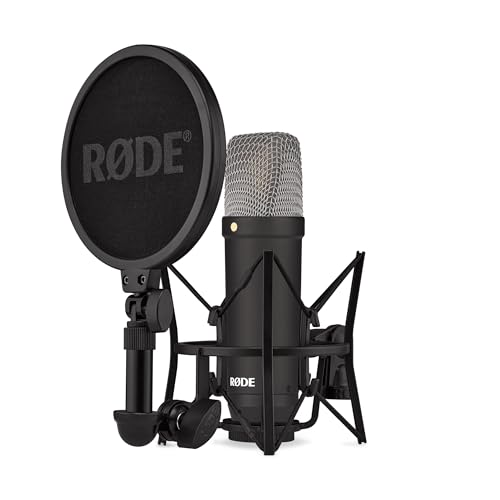
RØDE NT1 Signature Series Condenser Microphone stands out as an exceptional choice for vocalists, podcasters, and content creators who demand professional audio quality. With its large-diaphragm cardioid design, this microphone captures rich bass, detailed midrange, and sparkling highs, making it perfect for a range of applications. Its incredibly low noise level of 4dBA guarantees pristine recordings. Included are a studio-grade shock mount, pop filter, and premium XLR cable, enhancing your setup. Rated highly by users, it’s praised for its lifelike sound and easy integration with existing equipment, making it a smart investment for elevating your audio experience.
Best For: This microphone is best for vocalists, podcasters, and content creators seeking professional audio quality for their recordings.
Pros:
- Exceptional sound quality with rich bass and clear highs.
- Low noise level of 4dBA, ideal for pristine recordings.
- Includes essential accessories like a shock mount, pop filter, and premium XLR cable.
Cons:
- Requires a quiet environment for optimal performance.
- May be more expensive than entry-level microphones.
- Some users may need additional equipment for best results, such as an audio interface.
Shure BETA 87A Studio Grade Vocal Microphone

The Shure BETA 87A Studio Grade Vocal Microphone is an ideal choice for vocalists who demand studio-quality performance on stage. This supercardioid condenser mic offers a smooth frequency response with a gradual presence rise, ensuring your voice sounds rich and clear. With a dynamic range of 117 dB and low distortion, you’ll capture every nuance of your performance. Its superior gain-before-feedback performance and built-in pop filter effectively reduce unwanted noise. Plus, the advanced shock-mount system minimizes handling noise, while its resistance to RFI keeps your sound clean. Upgrade your vocal setup with the reliable Shure BETA 87A and elevate your sound.
Best For: Vocalists seeking a professional-grade microphone that delivers studio-quality sound and performance on stage.
Pros:
- Exceptional sound clarity with a smooth frequency response and low distortion.
- Superior gain-before-feedback performance, making it ideal for live settings.
- Effective noise reduction features, including a built-in pop filter and shock-mount system.
Cons:
- May be more expensive compared to entry-level microphones.
- Requires phantom power to operate, which may limit compatibility with some audio equipment.
- The supercardioid pattern may not pick up sound from all angles, potentially missing background vocals or instruments.
Factors to Consider When Choosing Condenser Microphones for Vocals
When choosing a condenser microphone for vocals, you need to contemplate several key factors. The type of microphone, its frequency response range, and polar pattern can all impact your sound quality. Additionally, don’t overlook build quality and the required power source, as these elements can affect your overall recording experience.
Microphone Type Selection
Choosing the right condenser microphone for your vocal recordings can greatly impact the quality of your sound. Start by considering large-diaphragm models; they excel in sensitivity and detail, capturing the richness of your voice. Opt for microphones with a cardioid polar pattern, as they focus on your vocals while minimizing background noise, leading to clearer recordings. Don’t overlook the maximum sound pressure level (SPL); a higher SPL rating means your mic can handle loud performances without distortion. Finally, check the noise level specifications, especially the signal-to-noise ratio—lower noise levels guarantee cleaner recordings and enhance your overall sound quality. By keeping these factors in mind, you’ll find the perfect condenser microphone for your vocal needs.
Frequency Response Range
Understanding the frequency response range of a condenser microphone is essential for achieving the best vocal recordings. Typically, high-quality models span from 20 Hz to 20 kHz, which captures a wide spectrum of sound. A broader frequency response allows you to pick up nuanced vocal details, especially with microphones that boost higher frequencies above 6 kHz for added clarity.
When choosing a microphone, consider its tailored frequency response for your specific application. For instance, if you’re doing voice-over work, aim for models that emphasize clarity in mid to high frequencies. Additionally, be mindful of how the microphone interacts with your acoustic environment; untreated spaces can color the sound and impact audio quality. Choose wisely!
Polar Pattern Importance
The polar pattern of a condenser microphone plays an essential role in determining how well it captures your vocals. Choosing the right pattern can greatly affect your recording quality. Cardioid microphones are perfect for vocal recording, as they focus on sound from the front while minimizing background noise from the sides and rear. If you need even more directionality, consider a supercardioid mic, which narrows the pickup area but still captures some rear sound. On the other hand, omnidirectional microphones pick up sound equally from all directions, making them great for group vocals or ambient recordings. However, be cautious, as they may also capture unwanted noise. The polar pattern you select directly impacts clarity, noise rejection, and overall audio quality.
Build Quality Considerations
When considering the right condenser microphone for vocals, build quality is just as important as the polar pattern. Look for microphones with durable construction materials like metal housing, ensuring they can withstand rigorous use in studios and live settings. Microphones that include shock mounts and pop filters help isolate vibrations and reduce handling noise, enhancing your recordings. Pay attention to the weight and dimensions; a solid yet lightweight design makes it easier to transport and use in various locations. Additionally, check for protective features such as woven mesh or Faraday cage designs that minimize unwanted noise interference. Finally, consider the warranty offered by the manufacturer—longer warranties often indicate greater confidence in the microphone’s build quality and durability.
Required Power Source
Selecting the right power source is essential for getting the best performance from your condenser microphone. Most condenser mics require 48V phantom power, typically supplied by audio interfaces, mixers, or preamps. If you’re opting for a USB condenser microphone, you can power it directly from your computer, simplifying your setup. Keep in mind that the type of power source can greatly affect audio quality, sensitivity, and dynamic range. Make sure your recording environment includes compatible power supply options, especially if you’re using traditional XLR models. Also, consider your intended use—whether in a studio or on the go—as this can influence your choice of power source and enhance your microphone’s functionality and performance.
Included Accessories Value
Choosing a condenser microphone isn’t just about sound quality; the included accessories can greatly impact your recording experience. Many microphones come with essential items like shock mounts and pop filters, which help reduce handling noise and plosive sounds for clearer vocals. High-quality XLR cables guarantee ideal signal transmission, minimizing interference and maintaining audio clarity. Some kits even include adjustable boom arms, making setup in your home studio a breeze. Accessories like carrying cases and windscreens protect your microphone during transport and enhance performance in various conditions. Additionally, integrated features like built-in pop filters can improve usability and audio quality, saving you from extra purchases and making your recording sessions smoother.