Older vehicles can be reliable and inexpensive to maintain, but diagnosing a check-engine light is easier when you have the right scan tool. The best car diagnostic scanners for older vehicles help identify fault codes before you pay for unnecessary parts or shop time.
This roundup includes basic code readers, live-data scanners, Bluetooth options, and an OBD1 tool for select older GM vehicles. Use the guide below to match scanner coverage and features to your car, skill level, and repair needs.
Best 10 Car Diagnostic Scanners for Older Vehicles Picks for 2026
Best Basic Code Reader
ANCEL AD310 Classic OBD2 Scanner

- Reads and clears emission-related codes
- Supports major OBD2 protocols
- Compact, corded, and easy to use
Best For: Basic check-engine diagnosis on compatible OBD2 vehicles
Best Wireless Upgrade
BlueDriver Pro Bluetooth OBD2 Scanner
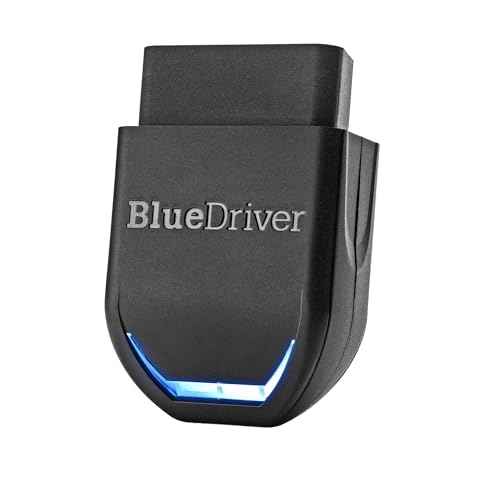
- Wireless iOS and Android operation
- Offers enhanced diagnostics on supported vehicles
- Includes verified repair reports and live data
Best For: Phone-based diagnostics with broader supported-system coverage
Best Pre-OBD2 GM Tool
INNOVA 3123 GM OBD1 Code Reader
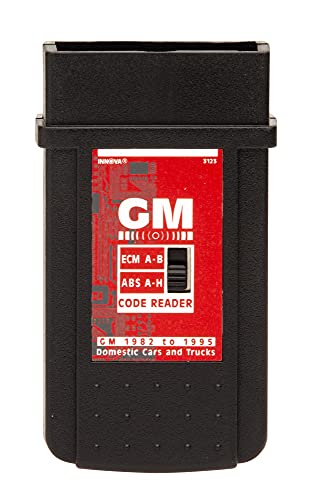
- Built for most 1982–1995 GM vehicles
- Reads ECM and ABS codes
- Connects to the GM self-test connector
Best For: Compatible older GM cars and trucks with pre-OBD2 systems
Best Live-Data Value

- Graphs live engine sensor data
- Checks readiness and selected EVAP functions
- Includes a color screen and free updates
Best For: DIY check-engine troubleshooting on compatible OBD2 vehicles
Best Basic Coverage

- Supports 1996+ OBD II/EOBD vehicles
- Reads, clears, and identifies multiple code types
- Offers I/M readiness and live-data tools
Best For: DIY owners needing straightforward older-vehicle diagnostics
Best for Data Reporting
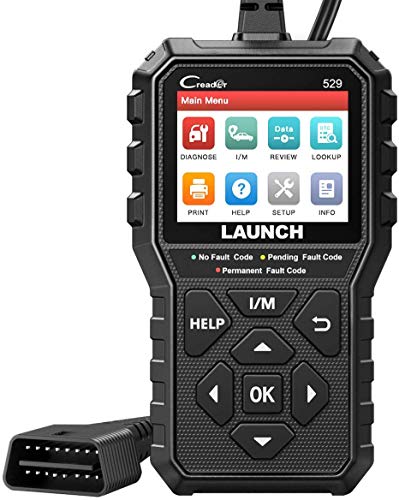
- Supports 1996+ OBD2 vehicles and major protocols
- Graphs, records, prints, and shares diagnostic reports
- Includes lifetime updates and one-click smog checks
Best For: DIYers who want reportable scan data and broad functions
Best for Beginners

- Offers 42,000+ built-in DTC lookups
- Provides key engine and emissions tests
- Plug-and-play design needs no app or battery
Best For: Beginners troubleshooting check-engine lights on older vehicles
Best DIY Basic Scanner
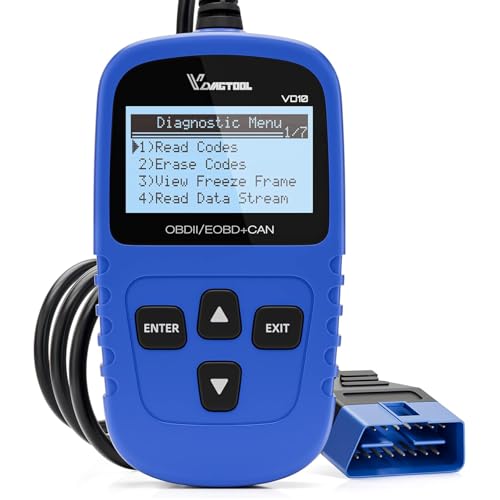
- Reads, clears, and defines engine trouble codes
- Offers live data, freeze frame, and I/M readiness
- Plug-and-play design with no battery required
Best For: DIY owners diagnosing basic engine issues on older OBDII vehicles
Best Color-Screen Value

- Uses a bright 2.8-inch color display
- Graphs live engine data and shows freeze frames
- Adds battery-voltage and I/M readiness tests
Best For: DIY users wanting clearer visual feedback from a basic scanner
Best Code-Library Coverage
ZM201 Professional OBD2 Scanner

- Includes a stated 50,000-plus DTC database
- Adds O2, EVAP, monitoring, live-data, and freeze-frame tests
- Provides lifetime updates and a three-year warranty
Best For: DIY users needing broader engine diagnostics without full-system scanning
Best Basic Code Reader – ANCEL AD310 Classic OBD2 Scanner
For drivers looking at car diagnostic scanners for older vehicles, the ANCEL AD310 is a straightforward choice for emission-related check-engine problems. It supports OBD2 vehicles from 1996 onward in the U.S. and uses vehicle power, so there is no battery or charger to manage.
Best For: Owners who want a compact, corded scanner for reading and clearing engine-emissions codes.
Pros:
- Supports major OBD2 protocols, including CAN, ISO9141, and J1850.
- Reads and clears codes, displays live data and freeze-frame information, and checks I/M readiness.
- Compact design, clearly labeled buttons, large screen, and a durable 2.5-foot cable.
Cons:
- Only diagnoses emission-related issues through an OBD2 interface.
- Does not provide ABS, SRS, or transmission diagnostics.
- Compatibility should be confirmed for the specific vehicle.
The AD310 is a practical, no-frills option for basic check-engine diagnosis on compatible older OBD2 vehicles. It is less suitable when you need module-specific or pre-OBD2 coverage.
Best Wireless Upgrade – BlueDriver Pro Bluetooth OBD2 Scanner
Among car diagnostic scanners for older vehicles, BlueDriver stands out when you want phone-based access to more than basic engine codes. It works with gas-powered vehicles from 1996 onward and can provide enhanced diagnostics for supported ABS, SRS, TPMS, transmission, and other systems.
Best For: Drivers who want wireless diagnostics, repair guidance, and broader module coverage from a phone or tablet.
Pros:
- Connects wirelessly to iOS or Android devices with no subscription fee.
- Provides technician-verified repair reports, live data, freeze frames, smog readiness, and Mode 6 information.
- Supports enhanced diagnostics on supported vehicles from many major manufacturers.
Cons:
- Enhanced system coverage varies by vehicle, year, make, and model.
- Requires a compatible phone or tablet and the BlueDriver app.
- Diesel and light-truck compatibility is limited to select vehicles.
BlueDriver is a strong choice for owners who want more context than a basic handheld code reader provides. Check the compatibility information first, particularly if ABS or other enhanced modules are essential.
Best Pre-OBD2 GM Tool – INNOVA 3123 GM OBD1 Code Reader
For genuinely older vehicles, the INNOVA 3123 fills a gap that modern OBD2 scanners cannot: it is designed for most General Motors domestic cars and trucks from 1982 to 1995. It connects to the vehicle’s computer self-test connector to read ECM and ABS codes.
Best For: Owners of compatible 1982–1995 GM domestic cars and trucks with a pre-OBD2 diagnostic connector.
Pros:
- Designed specifically for most GM domestic vehicles from 1982 through 1995.
- Reads both ECM and ABS codes.
- Connects safely to the vehicle’s self-test connector and includes multilingual instructions.
Cons:
- Does not cover all GM vehicles, including diesel, Cadillac, Geo, Nova, and Sprint models.
- It is vehicle-specific rather than a universal OBD2 scanner.
- Its listed operating-system detail is Windows XP.
This is the most targeted option here for compatible pre-OBD2 GM vehicles. Verify the exact model and engine before buying, since coverage exclusions are significant.
Best Live-Data Value – FOXWELL NT301 OBD2 Scanner
The FOXWELL NT301 is a useful middle ground for car diagnostic scanners for older vehicles when you want more than simple code clearing. It supports most compatible 1996-and-newer gasoline vehicles and adds live-data graphing, I/M readiness checks, and selected EVAP and O2-sensor testing.
Best For: DIY owners who want a dedicated screen and live engine data for check-engine troubleshooting.
Pros:
- Reads and clears engine fault codes quickly through a 16-pin diagnostic port.
- Graphs live data such as oxygen sensors, fuel trims, coolant temperature, and RPM.
- Includes I/M readiness controls, a color screen, lifetime free updates, and no subscription.
Cons:
- Does not provide dedicated ABS, SRS, TPMS, full-system, service-reset, or key-programming functions.
- Functionality varies by vehicle year, make, model, and VIN.
- Requires a compatible OBD2-equipped vehicle rather than an older OBD1 system.
The NT301 makes sense for hands-on owners who want clearer data than a basic reader offers without moving to a full professional scanner. Its limitations are mainly in non-engine modules and older non-OBD2 vehicles.
Best Basic Coverage – Autel AutoLink AL329
The Autel AutoLink AL329 is a practical choice for drivers comparing car diagnostic scanners for older vehicles. It supports OBD II/EOBD vehicles from 1996 onward and provides straightforward code reading, emissions checks, and live-data functions without an overly complicated setup.
Best For: DIY owners who want broad vehicle coverage, basic check-engine diagnostics, and a compact color-screen scanner.
Pros:
- Works with domestic, Asian, and European 1996-and-newer OBD II/EOBD vehicles.
- Reads and clears generic, manufacturer-specific, and pending codes.
- Includes I/M readiness, freeze-frame, Mode 6, and live-data graphing, recording, and playback.
- Displays VIN, CALID, and CVN information and supports English, Spanish, and French.
Cons:
- Its 2.8-inch display has a modest 220×176 resolution.
- The supplied notes describe engine and OBD II functions rather than advanced module-specific diagnostics.
With its simple plug-in operation and useful emissions-monitor tools, the AL329 is well suited to routine troubleshooting on older OBD II vehicles. Its 12-month warranty adds a measure of ownership support.
Best for Data Reporting – Launch CR529 OBD2 Scanner
The Launch CR529 stands out among car diagnostic scanners for older vehicles when you want more than simple code clearing. Designed for OBD2 vehicles from 1996 onward, it adds graphing, recording, playback, reporting, printing, and a lifetime update option for ongoing DIY use.
Best For: DIYers who want detailed scan records, broad language support, and convenient smog-readiness checks.
Pros:
- Supports 1996-and-newer OBD2 vehicles and major protocols including CAN, ISO9141, KWP2000, and J1850.
- Provides code reading and clearing, freeze frame, live data, O2 sensor, EVAP, and Mode 6 functions.
- Can graph, record, play back, print, and share diagnostic reports through a PC.
- Includes one-click smog checking, seven language options, and lifetime free updates.
Cons:
- Updates require a PC and the product is not compatible with iOS.
- The supplied notes do not indicate coverage for advanced non-engine modules.
The CR529 is a strong fit if you want to document diagnostics or review data after a repair. Its color display, shortcut keys, and visual readiness indicators also make routine checks approachable for less experienced users.
Best for Beginners – ANCEL AD410 OBD2 Scanner
The ANCEL AD410 is a user-friendly option for shoppers seeking car diagnostic scanners for older vehicles. It works with most 1996-and-newer U.S. OBD2 vehicles and many 2000-and-newer European and Asian vehicles, while its built-in code lookup helps explain common check-engine faults.
Best For: New drivers and home mechanics who want simple, on-screen engine and emissions diagnostics without an app or separate battery.
Pros:
- Includes more than 42,000 built-in DTC lookups for easier code interpretation.
- Supports codes, live data, freeze frame, I/M readiness, O2 sensor, EVAP, and vehicle-information functions.
- Uses vehicle-powered plug-and-play operation with a 2.4-inch color display.
- Supports major protocols and offers multilingual operation plus free software updates.
Cons:
- Reads engine and emissions-related codes only.
- Does not support ABS, SRS, transmission, bidirectional control, or service-reset functions.
- Compatibility should be checked for specific European or Asian vehicles.
The AD410 keeps basic diagnostics accessible by combining direct vehicle power, clear code definitions, and common emissions tests. It is a sensible everyday scanner, provided you do not need module-level or service-reset capabilities.
Best DIY Basic Scanner – VD10 OBD2 Code Reader
For drivers comparing car diagnostic scanners for older vehicles, the VDIAGTOOL VD10 offers straightforward engine-code checking through a built-in display. It reads and clears trouble codes, shows definitions from its onboard library, and provides useful data for basic troubleshooting without batteries or an app.
Best For: DIY owners who want an affordable, plug-and-play scanner for OBDII-compliant cars, SUVs, and light trucks.
Pros:
- Reads and clears generic, pending, and manufacturer-specific engine codes.
- Provides live data, freeze-frame information, I/M readiness, and vehicle information.
- Supports major OBDII protocols and post-1996 U.S. vehicles, with additional regional compatibility noted by the manufacturer.
- Built-in database of more than 3,000 code definitions and no battery required.
Cons:
- Engine-focused diagnostics do not indicate coverage for ABS, SRS, transmission, or other advanced systems.
- Uses a simple two-line LCD rather than a larger color display.
The VD10 is a practical choice for checking a warning light, preparing for an emissions inspection, or investigating basic engine issues on an older compatible vehicle. Its simple interface favors ease of use over advanced system coverage.
Best Color-Screen Value – CGSULIT SC103 OBD2 Scanner
The CGSULIT SC103 is a useful option for shoppers seeking car diagnostic scanners for older vehicles with a clearer visual interface. Its 2.8-inch color screen displays codes, live engine data, graphical readings, freeze-frame information, battery voltage, and emissions-readiness status.
Best For: Beginners and home mechanics who prefer a color display for checking engine faults and preparing for smog tests.
Pros:
- Reads and clears diagnostic trouble codes and turns off the check-engine light.
- Shows live data such as RPM, vehicle speed, coolant temperature, calculated load, and fuel status.
- Includes I/M readiness, freeze-frame data, and a battery-voltage test.
- Supports major OBDII protocols and listed U.S. vehicles since 1996, with regional compatibility for many European and Asian vehicles.
Cons:
- Coverage is described around OBDII engine diagnostics rather than full-system vehicle scanning.
- Compatibility varies by vehicle market and model, so buyers should verify coverage before purchase.
With its larger color screen and graphical data presentation, the SC103 can make basic diagnosis easier to interpret than a monochrome reader. The included two-year warranty, return policy, and customer support add reassurance for regular DIY use.
Best Code-Library Coverage – ZM201 Professional OBD2 Scanner
For those comparing car diagnostic scanners for older vehicles, the ZM201 combines a color interface with a large stated DTC database and several engine-focused test functions. It can read and clear codes, display live data and freeze frames, check I/M readiness, and perform selected O2, EVAP, and onboard-monitoring tests.
Best For: DIY owners who want more engine-diagnostic functions than a basic code reader while staying with a standalone, corded tool.
Pros:
- Includes a stated database of more than 50,000 diagnostic trouble codes.
- Offers live-data graphs, freeze-frame information, O2 sensor testing, EVAP checks, and onboard monitoring.
- Features a 2.8-inch color screen, adjustable brightness, shortcut keys, and visual status indicators.
- Provides lifetime software updates, optional Windows PC review and printing, and a three-year warranty.
Cons:
- Designed for engine diagnostics only and does not support ABS, SRS, transmission, or other advanced systems.
- PC software supports specified Windows versions but not Mac.
- Permanent fault codes require the underlying repair before they can be reset.
The ZM201 is a strong fit when code definitions and additional engine tests matter more than whole-vehicle module coverage. Its plug-and-play operation and color display keep the tool approachable, while the added functions give experienced DIY users more information to work with.
How We Picked the Best Car Diagnostic Scanners for Older Vehicles
We focused on compatibility, diagnostic usefulness, ease of operation, and value. The selection includes affordable OBD2 code readers for vehicles built from the mid-1990s onward, as well as an OBD1 reader for certain older GM models. We also considered whether each scanner can clear codes, display live data, support additional systems, perform readiness checks, or connect wirelessly to a phone.
Because older vehicles vary significantly by year and manufacturer, compatibility is more important than price alone. Always confirm the vehicle protocol and connector before buying.
Quick Comparison
| Scanner type | Best for | Typical capabilities |
|---|---|---|
| Basic wired OBD2 reader | Simple check-engine diagnosis | Read and clear powertrain codes, emissions checks |
| Live-data OBD2 scanner | DIY troubleshooting | Sensor readings, freeze-frame data, code definitions |
| Bluetooth scanner | Phone-based diagnostics | App-driven reports, broader system access on supported vehicles |
| OBD1 scanner | Older pre-OBD2 vehicles | Manufacturer-specific code retrieval |
Key Buying Factors for Car Diagnostic Scanners for Older Vehicles
Vehicle Compatibility
OBD2 became broadly required for U.S. cars and light trucks beginning with the 1996 model year, but exact coverage can vary. Vehicles from before that period may use OBD1 connectors and manufacturer-specific procedures. A standard OBD2 scanner will not automatically work with an OBD1 vehicle, even if an adapter is available.
Diagnostic Coverage
Basic readers generally handle check-engine and emissions-related powertrain codes. More advanced scanners may access ABS, SRS, TPMS, transmission, or body modules, but coverage depends on the vehicle and software. Do not assume that an OBD2 label means all systems are supported.
Live Data and Testing Features
Live data can show readings from oxygen sensors, coolant temperature, fuel trim, engine speed, and other components while the vehicle runs. This is more useful for troubleshooting intermittent problems than a code definition alone. Readiness monitors and voltage tests are also helpful before emissions inspections.
Ease of Use and Connectivity
Wired scanners are usually quick to connect and do not require charging or pairing. Bluetooth models can provide richer app-based information, but they depend on phone compatibility, app quality, and sometimes optional subscriptions. Choose the format you are most likely to use correctly.
Who Should Buy Which Car Diagnostic Scanners for Older Vehicles?
Choose a basic wired reader if you mainly want to check or clear a check-engine code and perform occasional maintenance. Choose a live-data scanner if you diagnose repairs yourself and need sensor information or readiness status. Choose a Bluetooth model if you prefer phone-based reports and broader app features. Choose an OBD1 reader only when its connector and vehicle coverage match your older GM application.
For any scanner, treat the displayed code as a starting point rather than a guaranteed diagnosis. Verify the underlying cause with service information, visual checks, and appropriate testing before replacing parts.