A check-engine light does not always require an immediate trip to the repair shop. The right OBD2 scanner can help beginners read trouble codes, understand likely causes, and decide what to do next.
This roundup compares 10 beginner-friendly car diagnostic scanners, from straightforward handheld readers to Bluetooth tools with app-based explanations and expanded system coverage.
Best 10 Car Diagnostic Scanners for Beginners Picks for 2026
Best Budget Code Reader

- Simple wired design for beginners
- Reads and clears engine codes
- Compact, sturdy, and battery-free
Best For: Basic check-engine-light and emissions diagnostics
Best App-Based Upgrade
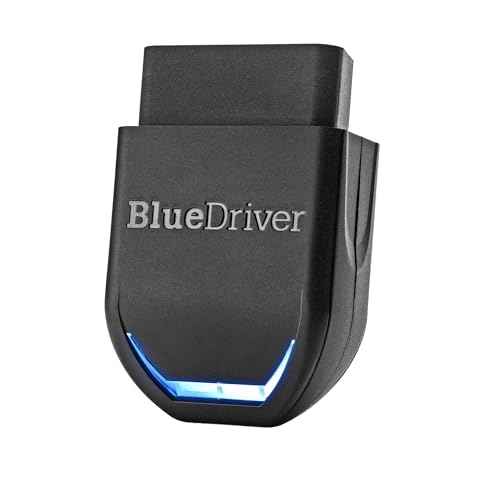
- Guided repair reports for easier code interpretation
- Supports multiple vehicle systems on supported cars
- Wireless operation with no subscription
Best For: Beginners wanting guided, phone-based diagnostics
Best Simple Handheld Reader

- Built-in code lookup aids beginners
- Shows live data and freeze frames
- Large LCD with six language options
Best For: Handheld engine-code and basic live-data checks
Best Visual Bluetooth Scanner
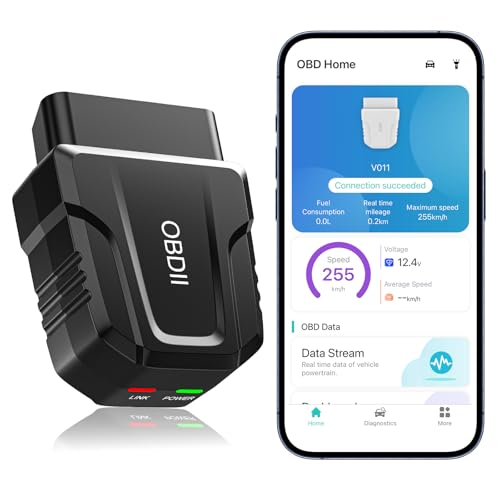
- Charts make live data easier to understand
- Includes app guides and video tutorials
- Bluetooth 5.4 supports iOS and Android
Best For: Beginners who want visual, app-guided diagnostics
Best Simple Code Reader
ANCEL AD410 Enhanced OBD2 Scanner

- 42,000+ built-in code lookups
- Live data, I/M readiness, O2, and EVAP tests
- No app or battery required
Best For: Beginners focused on engine codes and emissions checks
Best Multifunction Option
T300PRO OBD2 Scanner and Battery Tester

- Combines OBD2 scanning with 12V battery tests
- Records and replays live sensor data
- Includes breakout-circuit diagnosis
Best For: DIYers wanting engine and battery testing in one tool
Best Live-Data Interface

- Graphs and logs real-time engine data
- One-click I/M readiness checks
- Lifetime free updates and plug-and-play use
Best For: Beginners who want visual live-data feedback
Best Phone-Based Pick

- Wireless iPhone and Android diagnostics
- Explains 39,000+ potential issues
- Tracks multiple vehicles and maintenance
Best For: App-guided scanning and family vehicle management
Best Plug-and-Play Value

- Dedicated 2.8-inch color display
- Reads live data and engine codes
- No battery or app setup required
Best For: Simple handheld engine diagnostics and emissions checks
Best Feature-Rich Handheld

- Tests codes, batteries, and alternators
- Provides live data and oil reset
- Includes free repair guidance app
Best For: DIY maintenance and broader everyday vehicle checks
Best Budget Code Reader – ANCEL AD310 Classic
For beginners seeking car diagnostic scanners for beginners, the ANCEL AD310 is a straightforward wired option for checking emission-related engine faults. It reads and clears trouble codes, displays freeze-frame data, checks I/M readiness, and requires no battery or charger because it draws power from the vehicle.
Best For: Drivers who want a compact, easy-to-use check-engine-light reader for compatible OBDII vehicles.
Pros:
- Supports major OBDII protocols and many 1996-and-newer vehicles.
- Reads and clears emission-related codes, live data, freeze frames, and readiness monitors.
- Compact design, clearly labeled buttons, large display, and sturdy 2.5-foot cable.
Cons:
- Only supports emission-related diagnostics.
- Does not diagnose ABS, SRS, transmission, or other non-OBDII systems.
- Vehicle compatibility should be confirmed before purchase.
The AD310 keeps the learning curve low and covers the essentials without an app or subscription. Choose it when your main goal is basic engine and emissions troubleshooting.
Best App-Based Upgrade – BlueDriver Pro OBD2 Scanner
BlueDriver Pro is a strong choice among car diagnostic scanners for beginners who want clearer explanations through a phone or tablet. Its app can read and clear supported check-engine, ABS, SRS, TPMS, transmission, and other codes, while also providing repair reports and live data.
Best For: New users who want guided diagnostics, broader system coverage, and wireless phone-based operation.
Pros:
- Provides technician-verified repair reports with definitions, causes, and confirmed fixes.
- Supports enhanced diagnostics for several systems on supported vehicles.
- Wireless iOS and Android operation with no subscription fees or required account.
- Includes live data, freeze frames, smog readiness, and Mode 6 information.
Cons:
- Enhanced system coverage varies by vehicle.
- Requires a compatible phone or tablet and the BlueDriver app.
- Some compatibility details, especially for newer models, should be checked in the coverage chart.
BlueDriver is more capable than a basic code reader while remaining approachable for first-time users. Its strongest advantage is pairing broader diagnostics with explanations that can reduce guesswork.
Best Simple Handheld Reader – MOTOPOWER MP69033
The MOTOPOWER MP69033 is one of the more approachable car diagnostic scanners for beginners who prefer a dedicated handheld device. It reads and erases engine codes, offers a built-in code library, shows live data and freeze frames, and supports many OBDII vehicles without requiring a separate charger.
Best For: Beginners who want a color-coded, handheld engine-code reader with basic live-data functions and multiple language options.
Pros:
- Includes a built-in DTC lookup library to help explain engine codes.
- Offers live data, real-time curves, freeze frames, readiness checks, and vehicle information.
- Supports nine protocols and six languages for broad basic compatibility.
- Uses a clear 2.8-inch LCD and draws power through the vehicle connection.
Cons:
- Does not support ABS, airbag, oil-service, or other non-OBDII systems.
- Connection requires the ignition to be on, and live data requires the engine to run.
- Coverage is focused on engine and emissions diagnostics.
This scanner combines simple controls with more data functions than a bare-bones code reader. It is a practical pick for users who want explanations on the device itself rather than through a phone app.
Best Visual Bluetooth Scanner – V011 OBD2 Scanner
The V011 is a useful option for car diagnostic scanners for beginners who prefer an app with charts and tutorials. It reads diagnostic trouble codes, monitors live data, retrieves VIN and freeze-frame information, checks readiness, and connects to iOS or Android devices through Bluetooth 5.4.
Best For: New DIY users who want visual data displays, app guidance, and broad stated compatibility across common vehicle makes.
Pros:
- Displays readings such as coolant temperature, engine speed, vehicle speed, and voltage in clear charts.
- Offers tutorials, how-to guidance, diagnostic reports, live streaming, and performance tests.
- Supports nine protocols and vehicles from 1996 to the present across many listed brands.
- Uses upgraded Bluetooth 5.4 connectivity with iOS and Android support.
Cons:
- Requires a phone, the appropriate app, and Bluetooth-enabled operation.
- The supplied notes do not specify enhanced ABS, SRS, or transmission diagnostics.
- Codes should only be cleared after the underlying vehicle problem is repaired.
The V011 emphasizes accessibility through visual charts and in-app learning resources. It suits beginners who are comfortable using a smartphone and want more context than a simple handheld display provides.
Best Simple Code Reader – ANCEL AD410 Enhanced OBD2 Scanner
For beginners comparing car diagnostic scanners for beginners, the ANCEL AD410 is a straightforward wired option for checking engine and emissions problems. Its color screen, built-in code definitions, and broad OBD2 compatibility make it practical for understanding a check-engine light without a phone app.
Best For: Everyday drivers and DIY users who need basic engine-code diagnosis and emissions-readiness checks.
Pros:
- Includes more than 42,000 built-in DTC lookups to help explain fault codes.
- Supports live data, freeze frame, I/M readiness, O2 sensor, and EVAP tests.
- Plug-and-play design requires no battery, charger, Bluetooth, or app.
- Works with most 1996-and-newer U.S. OBD2 vehicles and many newer European and Asian models.
Cons:
- Limited to engine and emissions-related codes.
- Does not support ABS, SRS, transmission, bidirectional control, or service-reset functions.
The AD410 is a sensible entry-level scanner when you want clear code information and useful OBD2 tests without advanced module coverage. Check vehicle compatibility before purchase.
Best Multifunction Option – T300PRO OBD2 Scanner and Battery Tester
The T300PRO stands out among car diagnostic scanners for beginners who also want battery and charging-system information. Along with standard engine-code functions, it adds dedicated 12V battery testing, live-data recording, and an OBD breakout diagnosis feature for troubleshooting communication or port-power issues.
Best For: DIY users who want one tool for engine diagnostics, 12V battery testing, and basic charging-system checks.
Pros:
- Reads and clears codes, displays definitions, and supports key OBD2 modes.
- Provides six battery and charging tests, including SOH, SOC, CCA, cranking, and alternator voltage.
- Offers live-data graphs plus record-and-playback functionality.
- Works with supported OBD2 vehicles and 12V motorcycles.
Cons:
- Battery testing is for 12V lead-acid battery types and 12V systems.
- Its additional diagnosis features may be more than a beginner needs for occasional check-engine-light scans.
This is the most versatile choice of the three if you want to investigate both warning lights and common battery or starting concerns. Confirm the vehicle and battery compatibility details before buying.
Best Live-Data Interface – FOXWELL NT301 OBD2 Scanner
For beginners looking for car diagnostic scanners for beginners with more visual feedback, the FOXWELL NT301 combines one-click code functions with live-data graphing. Its dedicated readiness hotkey, red-yellow-green indicator, and bright display make routine check-engine and smog-preparation tasks easier to follow.
Best For: New DIYers who want graph-based live data and a simple way to check emissions readiness.
Pros:
- Reads and clears engine fault codes with a plug-and-play interface.
- Graphs and logs live data such as RPM, coolant temperature, oxygen sensors, and fuel trims.
- Includes I/M readiness controls with a red-yellow-green status indicator.
- Offers lifetime free updates and supports a wide range of OBD2 protocols.
Cons:
- Does not provide dedicated ABS, SRS, TPMS, full-system, service-reset, key-programming, or battery-health functions.
- EVAP test availability varies by vehicle.
The NT301 is a good fit when readable live graphs and straightforward readiness checks matter more than advanced module coverage. Compatibility and available functions vary by year, make, model, and VIN.
Best Phone-Based Pick – FIXD Bluetooth OBD2 Scanner
For beginners comparing car diagnostic scanners for beginners, the FIXD Bluetooth OBD2 Scanner is a convenient phone-based option. It connects wirelessly to iPhone or Android devices, translates codes into simpler explanations, and supports gasoline and hybrid vehicles from 1996 onward, plus diesel vehicles from 2006.
Best For: Drivers who want app-guided diagnostics, maintenance alerts, and the ability to manage multiple family vehicles from one phone.
Pros:
- Scans and explains more than 39,000 issues across many vehicles.
- Offers unlimited scans through the free app and can save vehicle history.
- Provides maintenance reminders and alerts for potentially severe issues.
- Compact wireless sensor stays under the dashboard.
Cons:
- Requires a compatible iPhone or Android device and Bluetooth connection.
- Features vary by vehicle make and model.
- Advanced insights, repair recommendations, and mechanic support are tied to the optional premium upgrade.
FIXD is a strong beginner choice when simple explanations and phone convenience matter more than a built-in display. Its broad vehicle support and multi-car management are useful, though buyers should check which enhanced features apply to their vehicle.
Best Plug-and-Play Value – ZM201 OBD2 Scanner
The ZM201 is a straightforward choice for beginners shopping for car diagnostic scanners for beginners without wanting an app or separate battery. Plug it into a compatible OBD2 port, turn the ignition on, and use its color display to read engine codes, view live data, and check emissions readiness.
Best For: DIY owners who want a dedicated handheld scanner for engine diagnostics, code clearing, live data, and smog-readiness checks.
Pros:
- Works with many vehicles after 1996 in the US and supports common OBDII protocols.
- Requires no charging because it draws power from the vehicle.
- Includes live data, freeze-frame information, O2 testing, onboard monitoring, and EVAP checks.
- Has a 2.8-inch color screen, shortcut keys, and lifetime software updates.
Cons:
- Designed for engine diagnostics only; it does not support ABS, SRS, transmission, or other advanced systems.
- Optional PC software supports Windows XP/7/8/10 but not Mac.
- Permanent fault codes require the underlying repair before they can be reset.
With its built-in screen and simple plug-in operation, the ZM201 avoids smartphone setup and recurring software costs. It is best suited to engine-related troubleshooting, so buyers needing broad module coverage should consider a more advanced tool.
Best Feature-Rich Handheld – Innova 5210 OBD2 Scanner
The Innova 5210 gives beginners a broader set of tools than a basic code reader, making it a practical contender among car diagnostic scanners for beginners. Along with engine diagnostics, it can test battery and alternator health, display live data, check emissions readiness, and reset the oil light.
Best For: DIY owners who want one handheld device for engine checks, battery testing, maintenance resets, and app-based repair guidance.
Pros:
- Combines OBD2 diagnostics with battery and alternator testing.
- Displays live readings such as RPM, engine temperature, fuel trims, and oxygen-sensor data.
- Includes oil reset and I/M readiness functions for maintenance and emissions preparation.
- Works with the free RepairSolutions2 app for repair guidance, suggested parts, and cost estimates.
Cons:
- ABS coverage varies by vehicle and should be verified with Innova’s coverage checker.
- Compatibility and available features vary across makes, models, and years.
- Readiness monitors need a complete drive cycle after a battery disconnect or code clearing.
The 5210 is a versatile beginner-friendly choice for drivers who want more than check-engine-code reading. Its combination of vehicle tests and free repair guidance is useful, but checking coverage first is important, especially for ABS functions.
How We Picked the Best Car Diagnostic Scanners for Beginners
We selected these Car Diagnostic Scanners for Beginners based on ease of setup, code-reading clarity, vehicle compatibility, useful diagnostic features, and overall practicality for home use. We also considered whether each scanner provides live data, code-clearing capability, battery testing, app support, or access to systems beyond the engine.
Compatibility still varies by vehicle year, make, model, and diagnostic protocol. Verify the manufacturer’s coverage details before buying, especially if you need ABS, SRS, TPMS, oil-reset, or other manufacturer-specific functions.
Quick Comparison
| Scanner type | Best for | What to look for |
|---|---|---|
| Basic handheld reader | Simple check-engine diagnostics | Clear display, code definitions, and easy controls |
| Advanced handheld scanner | DIY troubleshooting | Live data, readiness checks, and code-reset functions |
| Bluetooth scanner | Phone-based diagnostics | Reliable app support, data privacy, and subscription terms |
| Scanner with battery testing | Starting and charging concerns | Voltage, cranking, and charging-system tests |
Key Buying Factors for Car Diagnostic Scanners for Beginners
Compatibility
Most U.S. vehicles from 1996 onward support standard OBD2 engine diagnostics, but advanced modules may require brand-specific coverage. Check compatibility before relying on a scanner for ABS, airbags, transmission, or service resets.
Ease of Use
A large screen, physical buttons, plain-language menus, and built-in code definitions are helpful if you do not already understand diagnostic terminology. Bluetooth models can be convenient, but they depend on a compatible phone and app.
Features That Matter
Code reading and clearing are the essentials. Live data can reveal sensor readings while the engine runs, while readiness monitors help determine whether a vehicle is prepared for emissions testing. Battery and cranking tests are useful extras for starting problems, but they do not replace a dedicated electrical diagnostic meter.
Subscriptions and Updates
Review app costs, account requirements, update policies, and supported operating systems. A no-subscription tool may cost more initially but can be simpler for occasional use. Firmware updates and current vehicle databases are particularly important for advanced functions.
Who Should Buy Which Car Diagnostic Scanners for Beginners?
Choose a basic handheld reader if you mainly want to identify a check-engine code before deciding whether professional service is needed. Select an advanced handheld model if you want live data, readiness information, or more guided DIY troubleshooting without using a phone.
A Bluetooth scanner is a good fit for drivers who prefer app-based explanations, automatic trip data, or a compact tool that stays in the glove box. If your main concern is a weak battery, slow cranking, or charging performance, prioritize a model with battery-testing functions.
Finally, remember that a scanner identifies electronic fault information; it does not automatically confirm the failed part. Treat the displayed code as a starting point, inspect related wiring and components, and seek professional diagnosis when the problem involves safety systems, drivability, or symptoms you cannot confidently evaluate.