As a content creator or broadcaster, finding the right HDMI video encoder is essential for delivering quality streams. With the advancements in technology, the encoders of 2025 promise enhanced features like 4K support and low-latency transmission. You’ll want to explore which options best suit your needs and keep your audience engaged. Let’s take a closer look at the top contenders that can elevate your streaming experience.
H265 MPEG4 HDMI Video Encoder for Live Streaming

If you’re a content creator looking to elevate your live broadcasts, the H265 MPEG4 HDMI Video Encoder is a top choice for you. This powerful encoder supports HD 1080P and offers simultaneous output of four video streams using various protocols like RTMP and HLS. You can customize your streams with static text, logos, and adjustable parameters to suit your needs. Plus, it comes with free lifetime technical support and development resources for seamless integration. With optimized performance for bandwidth and image quality, this encoder guarantees your content stands out on platforms like YouTube and Twitch.
Best For: Content creators and live streamers looking for a high-quality, customizable video encoding solution for multiple platforms.
Pros:
- Supports simultaneous output of four video streams, enhancing broadcasting capabilities.
- Customizable features allow for tailored video streams with logos, text, and adjustable parameters.
- Includes free lifetime technical support and development resources for easy integration.
Cons:
- May require a learning curve for users unfamiliar with video encoding technology.
- Higher initial investment compared to simpler encoding solutions.
- Potential for complex setup depending on specific streaming needs and configurations.
ZowieBox 4K HDMI Video Encoder/Decoder

The ZowieBox 4K HDMI Video Encoder/Decoder stands out for streamers seeking a compact solution without sacrificing quality. Weighing just 5.9 ounces and measuring smaller than most phones, it’s designed for easy portability. You can stream live gameplay without a PC, enjoying zero-lag passthrough. With the ability to decode up to 4K@30fps and 1080p@60fps, it offers impressive streaming quality. The web UI control allows you to adjust settings effortlessly. While some users report latency issues, its versatility for NDI workflows and cost-effective performance make the ZowieBox a reliable choice for live streaming and e-sports broadcasting.
Best For: Streamers and e-sports broadcasters looking for a compact, high-quality solution for live streaming and NDI workflows.
Pros:
- Compact design makes it highly portable and easy to integrate into various setups.
- Supports high-resolution streaming up to 4K@30fps with zero-lag passthrough for seamless gameplay.
- Versatile web UI control for easy configuration of settings and connected devices.
Cons:
- Cannot function as both an encoder and decoder simultaneously, limiting its versatility.
- Some users have reported latency issues, particularly with audio-video sync during RTMP streams.
- Customer support has been noted as unresponsive, leading to difficulties in troubleshooting.
Mini HDMI Encoder for Live Streaming

For streamers seeking portability and high-quality video output, the UNISHEEN mini HDMI encoder (model BM1000) stands out with its compact design and impressive support for 1080P P60 resolution. Weighing just 3.52 ounces and measuring 3.54 x 2.13 x 1.14 inches, it’s perfect for on-the-go streaming. You’ll appreciate its support for multiple protocols like RTMP and HLS, making it compatible with platforms like YouTube and Twitch. Plus, it can output two simultaneous streams without a computer. With advanced decoding and smooth playback features, this encoder guarantees your live content looks fantastic, all backed by a solid customer support system.
Best For: Streamers looking for a lightweight and portable solution for high-quality live streaming.
Pros:
- Compact Design: Weighs only 3.52 ounces and measures 3.54 x 2.13 x 1.14 inches, making it easy to transport.
- Dual Streaming Capability: Can output two video streams simultaneously without the need for a computer.
- Wide Compatibility: Supports multiple streaming protocols and platforms such as YouTube, Facebook, and Twitch.
Cons:
- Mixed Compatibility Feedback: Some users report issues with compatibility with various camera models.
- Customer Ratings: Holds a moderate rating of 4.2 out of 5 stars based on 24 reviews, indicating varied customer satisfaction.
- Learning Curve: Users may need time to familiarize themselves with the web-based configuration interface.
H.265/264/MJPEG Ultra Mini HDMI Video Encoder

With its ultra-compact design and versatile features, the H.265/264/MJPEG Ultra Mini HDMI Video Encoder is perfect for content creators who need high-quality streaming in tight spaces. Measuring just 125x72x25mm and weighing only 200g, it’s incredibly portable. The upgraded EH1211 model offers USB and TF card ports, allowing you to record RTSP streaming or HDMI video sources easily. You can also customize cropping and encoding for your video input. Supporting 1080P@30Hz, it outputs two channels simultaneously and integrates seamlessly with popular streaming platforms like YouTube and Twitch. Plus, you get remote technical support and a 3-year warranty.
Best For: Content creators and live streamers who require a compact and high-quality video encoding solution for tight spaces.
Pros:
- Ultra-portable design: Compact size and lightweight make it easy to transport and set up.
- Versatile recording options: USB and TF card ports allow for convenient recording of video sources.
- Broad compatibility: Works with various streaming platforms and software, enhancing usability.
Cons:
- Limited resolution output: Only one channel can achieve 1080P@30Hz output at a time.
- No firmware upgrade for EH1201: Users of the older model cannot upgrade to the new features of EH1211.
- Simultaneous streaming restrictions: Multiple streaming protocols supported, but cannot output 1080P@30 on more than one channel at once.
MPEG4 H.264 Live HDMI Video Encoder for IPTV and Live Streaming

Designed for content creators and broadcasters, the MPEG4 H.264 Live HDMI Video Encoder stands out as the best choice for seamless IPTV and live streaming in 2025. It supports multiple streaming protocols like RTSP, RTP, and RTMP, allowing you to broadcast to platforms such as YouTube and Twitch effortlessly. You can output four simultaneous video streams with customizable settings, including logos, resolution, and frame rate. Plus, you’ll enjoy lifetime technical support and access to SDK and API documentation for further development. Optimize your streaming experience with this versatile encoder that adjusts to your specific needs.
Best For: Content creators and broadcasters looking for a versatile and reliable solution for IPTV and live streaming.
Pros:
- Supports multiple streaming protocols for flexibility in broadcasting.
- Allows simultaneous output of four video streams with customizable settings.
- Includes lifetime technical support and comprehensive documentation for development.
Cons:
- May require technical knowledge for full utilization of customization options.
- Higher initial investment compared to simpler streaming solutions.
- Potentially complex setup process for users unfamiliar with video encoding technology.
ZowieBox 4K Video Encoder/Decoder

The ZowieBox 4K Video Encoder/Decoder stands out as an exceptional choice for content creators and educators seeking high-quality, low-latency streaming solutions. It effortlessly converts HDMI signals to SRT, RTMP, or RTSP formats, making it perfect for live events and streaming to platforms like YouTube and Twitch. Plus, its UVC conversion allows you to connect HDMI cameras for video calls or educational purposes. With secure video transmission over unstable networks, you’ll enjoy smooth broadcasts. Its HDMI extender functionality also enhances signal distribution, while 4K signal handling guarantees you get the best visual quality, looping out 4K while streaming seamlessly.
Best For: Content creators and educators looking for high-quality, low-latency streaming solutions for live events and interactive sessions.
Pros:
- High-quality streaming: Supports 4K video input and outputs while streaming at 1080p or 4K, ensuring excellent visual quality.
- Versatile connectivity: Converts HDMI signals to various streaming formats (SRT, RTMP, RTSP) and supports UVC conversion for easy connections to computers and displays.
- Secure transmission: Facilitates low-latency video transmission over unstable networks, ensuring smooth broadcasts.
Cons:
- Cost: May be relatively expensive compared to basic HDMI encoders/decoders.
- Complexity: Potentially requires technical knowledge for optimal setup and configuration.
- Limited compatibility: Some older devices may not support the latest streaming formats or UVC functionality.
4 Channel 4K HDMI Video Encoder for Live Streaming

If you’re looking for a reliable solution for live streaming, the ORIVISION 4 Channel 4K HDMI Video Encoder stands out with its ability to simultaneously stream to up to 16 platforms. With four HDMI inputs and external audio jacks, it supports H.265, H.264, and MJPEG formats. You can expect crisp quality, with two channels at 4K@30Hz and two at 1080P@60Hz. Plus, it’s compatible with popular software like OBS and VLC. The built-in RTMP server and real-time monitoring via an LCD screen make it easy to manage streams. Backed by a 3-year warranty, it’s a top choice for professionals.
Best For: Professionals in live streaming or broadcasting who need a high-quality, multi-platform streaming solution.
Pros:
- Supports simultaneous streaming to up to 16 platforms with multiple protocol options.
- High-quality output with 4K@30Hz and 1080P@60Hz resolutions.
- Built-in RTMP server and LCD screen for easy real-time monitoring and management.
Cons:
- Some users may experience challenges with initial language settings.
- Documentation can be lacking, leading to potential setup difficulties.
- Requires familiarity with streaming software for optimal use.
HEVC H.265 H.264 Live HDMI Video Encoder for IPTV and Live Broadcast
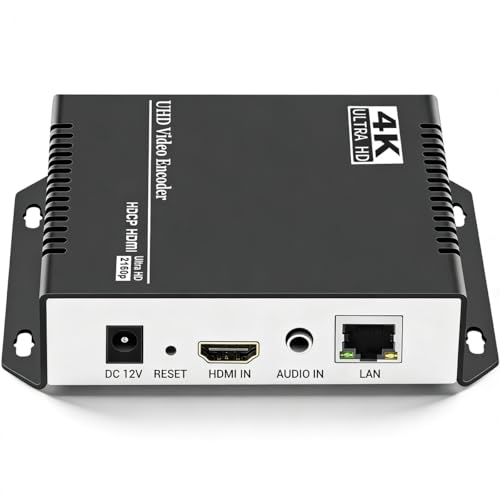
For content creators looking to elevate their live broadcasts, the HEVC H.265 H.264 Live HDMI Video Encoder stands out as a top choice in 2025. This encoder supports live streaming on platforms like YouTube, Facebook, and Twitch, delivering high-definition video and audio. You can output up to four simultaneous video streams using various protocols like RTMP and HLS, ensuring flexibility in bandwidth management. With customizable features, you can add logos and adjust parameters such as resolution and bitrate. Plus, you’ll benefit from free lifetime technical support, making it perfect for IPTV and live broadcasting across diverse applications.
Best For: Content creators and broadcasters seeking high-quality live streaming solutions for platforms like YouTube, Facebook, and Twitch.
Pros:
- Supports simultaneous output of 4 video streams with various streaming protocols for flexibility.
- Customizable features allow for logos, text overlays, and adjustments in resolution and bitrate.
- Includes free lifetime technical support and warranty, ensuring ongoing assistance.
Cons:
- May require technical knowledge for optimal setup and customization.
- Initial investment can be high for budget-conscious content creators.
- Limited compatibility with certain niche streaming platforms compared to industry-standard solutions.
H265 H264 4K HDMI Video Streaming Encoder for Live Broadcast
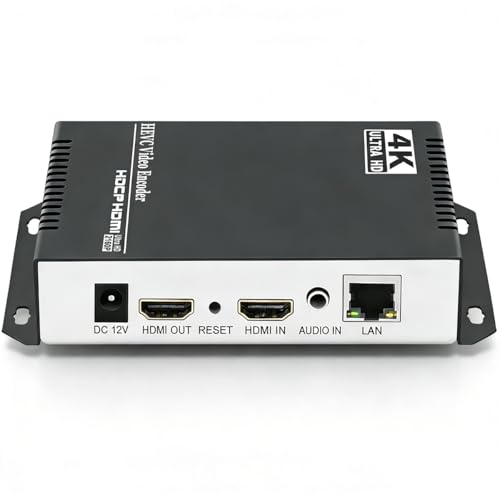
Offering exceptional streaming capabilities, the H265 H264 4K HDMI Video Streaming Encoder is perfect for content creators looking to broadcast live across platforms like YouTube, Facebook, and Twitch. It supports multiple streaming protocols, ensuring versatility for your projects. With the ability to output four simultaneous video streams, you can customize each one with static text, logos, and various settings like resolution and bitrate. Users love its reliability and minimal latency, typically under five seconds. Plus, you’ll benefit from lifetime technical support and firmware updates, ensuring your setup remains outstanding for future broadcasts.
Best For: Content creators and live broadcasters seeking a versatile and reliable streaming solution for platforms like YouTube, Facebook, and Twitch.
Pros:
- Supports multiple streaming protocols, enhancing versatility for various projects.
- Outputs four simultaneous video streams, allowing for customization with text and logos.
- Offers lifetime technical support and firmware updates for ongoing assistance.
Cons:
- HDMI signal re-sync issues may occur when turning devices on/off.
- Latency can increase with higher quality settings, especially with H.265 encoding.
- Users may need to adjust network settings during initial setup if IP ranges differ.
EXVIST H.265 1080P HDMI Video Encoder for Live Streaming
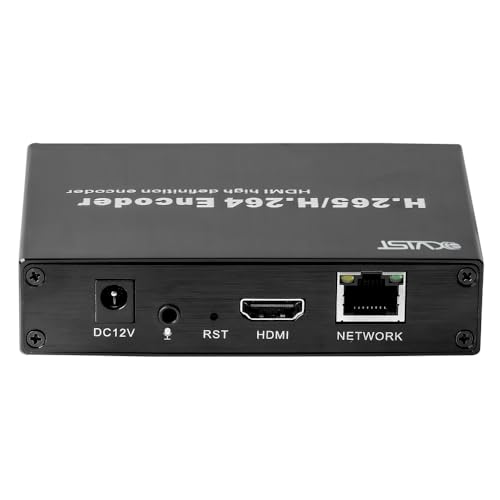
The EXVIST H.265 1080P HDMI Video Encoder stands out as an ideal choice for live streamers who need robust broadcasting capabilities without sacrificing ease of use. With support for multiple protocols like RTMP and HLS, you can effortlessly push streams to platforms like YouTube and Twitch. The user-friendly admin interface makes navigation a breeze, and you can easily record to an SD card in MP4 format. While some users have noted latency issues and UI challenges, the overall video quality at 1080p and responsive customer support make it a solid option for your live streaming needs.
Best For: Live streamers seeking a versatile and user-friendly encoder for platforms like YouTube and Twitch.
Pros:
- Multi-platform streaming capabilities.
- Direct recording to SD card in MP4 format.
- User-friendly admin interface.
Cons:
- Limited image format support (JPEG only).
- Manual firmware updates required.
- Setup complexity and potential UI navigation challenges.
Factors to Consider When Choosing HDMI Video Encoders
When you’re choosing an HDMI video encoder, several key factors can make a big difference. You’ll want to take into account compatibility with streaming protocols, the resolution and frame rate it supports, and how portable the design is. Customization options and the level of support and warranty services are also essential for ensuring you get the best value.
Streaming Protocol Compatibility
Choosing the right HDMI video encoder hinges on its streaming protocol compatibility, as this directly impacts how well it can connect with various platforms and services. Look for encoders that support protocols like RTMP, RTSP, HTTP, and SRT. A versatile encoder enables you to broadcast to multiple platforms, like YouTube, Facebook, and Twitch, simultaneously. It’s also wise to take into account those that accommodate both unicast and multicast protocols, enhancing your distribution options. Be aware that some encoders may have limitations on protocol handling, affecting usability in specific scenarios. Finally, verify the encoder can switch between protocols without causing latency or quality loss, guaranteeing a smooth viewing experience during live broadcasts.
Resolution and Frame Rate
Streaming protocol compatibility sets the stage for effective broadcasting, but resolution and frame rate play a pivotal role in delivering high-quality content. When choosing an HDMI video encoder, consider the maximum resolution it supports, ranging from 1080P to 4K UHD. For smooth playback, especially with fast-moving subjects like sports or gaming, opt for encoders that handle 1080P at 60fps. Some encoders allow you to customize resolution and frame rate settings, letting you optimize based on your bandwidth. Plus, the ability to output multiple streams at different resolutions enhances your versatility. However, remember that higher settings can increase latency and demand a more robust network to manage data transmission effectively. Balance is essential for the best streaming experience.
Portability and Design
Portability and design are essential factors to take into account in HDMI video encoders, especially if you’re often on the move. Look for compact models that measure under 5 inches and weigh between 3 to 6 ounces, making transport a breeze. Many portable encoders allow for standalone operation, so you can stream live content without needing a connected computer. Built-in LCD screens enhance usability by providing real-time monitoring of your streaming status. Consider features like tally lights and web UI control, which offer remote management without bulky equipment. Additionally, encoders designed with multiple input and output ports maintain a compact form factor while providing flexible connection options, ensuring you’re ready for on-the-go streaming.
Customization Options Available
When considering HDMI video encoders, customization options play a significant role in tailoring your streaming experience. Many encoders let you add static text, logos, and scrolling messages, enhancing your branding and providing important information. You can adjust key parameters like resolution, frame rate, and bitrate, ensuring your output meets specific needs or bandwidth constraints. Features for cropping, rotating, flipping, and mirroring video offer flexibility in how your content is presented. Additionally, you’ll find options to customize audio settings, including selecting input sources and output formats for ideal sound quality. Some devices even provide advanced overlay settings, allowing you to add custom graphics and timestamps to engage viewers and give context during your broadcasts.
Support and Warranty Services
Choosing the right HDMI video encoder involves more than just features and performance; support and warranty services are essential factors that can make or break your experience. Look for encoders that offer free lifetime technical support and a thorough warranty, ideally around three years. This guarantees you have assistance for troubleshooting throughout the device’s lifespan. It’s also wise to choose manufacturers that provide remote technical service and free firmware upgrades to keep your encoder current with the latest features. Check customer reviews focusing on support responsiveness, as helpful service can greatly enhance your experience. Finally, consider products with extensive documentation for secondary development, enhancing usability and seamless integration into your existing systems.