When your monitor mix disappears or arrives late, it is harder to stay locked in with the band. Wireless in-ear monitoring can give musicians more freedom to move while keeping a consistent mix in their ears.
These five options include a wireless-capable earphone and several transmitter-and-receiver systems. The right choice depends on what gear you already own, where you play, and how you connect to your monitor mix.
Best 5 Wireless Earbuds for Musicians Picks for 2026
Hybrid Monitoring Pick
Sennheiser IE 100 Pro Wireless

- Bluetooth module and 3.5 mm cable included
- Silicone and foam fit options
- Up to 10 hours of wireless use
Best For: Wired monitoring plus Bluetooth listening
5.8 GHz Stage Pick

- 5.8 GHz True Diversity reception
- Channel scan and up to six channels
- 24-bit/48 kHz audio; under 5 ms latency
Best For: Mixer-fed stage monitoring on 5.8 GHz
Compact 2.4 GHz Pick
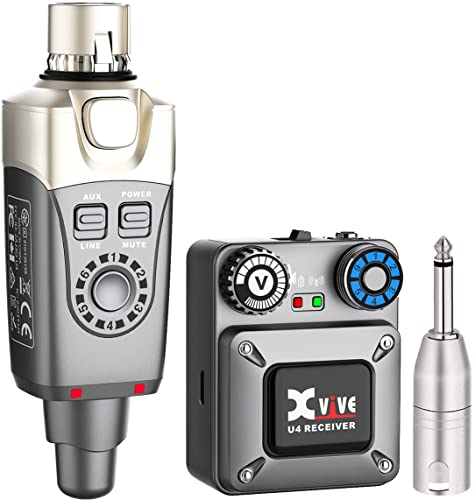
- 2.4 GHz transmitter-and-receiver set
- Over 90 feet of stated range
- Up to five hours of battery life
Best For: Compact wireless monitoring at small venues
Best for Group Monitoring
LEKATO MS-02 Wireless IEM System

- One transmitter supports multiple receivers
- Claimed mono latency under 4.5 ms
- Earbuds sold separately
Best For: Small bands sharing a monitor feed
Best Ready-to-Use Kit

- Earphone and six sets of tips included
- 16 adjustable UHF channels
- Rated for five hours per charge
Best For: Solo performers wanting an included earphone
Hybrid Monitoring Pick – Sennheiser IE 100 Pro Wireless
Among wireless earbuds for musicians, the Sennheiser IE 100 Pro Wireless offers a useful choice: connect its Bluetooth module for mobile listening or switch to the included 3.5 mm cable for a wired monitoring setup. Its ergonomic earpieces and silicone and foam adapters are designed for sound isolation.
Best For: Musicians who want one in-ear monitor for wired stage or studio use and Bluetooth listening between sessions.
Pros:
- Includes both a Bluetooth module and a detachable 3.5 mm cable.
- Silicone and foam fit options help provide sound isolation.
- Rated for up to 10 hours of continuous wireless use.
Cons:
- Fit matters: poorly sized tips can compromise sound quality.
- Not water resistant.
The wired option makes this a flexible monitoring choice, while Bluetooth is handy away from the stage. Take time to find a snug tip fit before judging its sound.
5.8 GHz Stage Pick – Xvive U45 Wireless IEM System
For musicians seeking a wireless in-ear monitoring link, the Xvive U45 uses 5.8 GHz transmission and a True Diversity receiver. Its stated latency is under 5 ms, and its transmitter can connect to compatible mixer or audio-interface outputs.
Best For: Performers building a stage monitor setup around a mixer who want channel scanning and 5.8 GHz wireless.
Pros:
- True Diversity reception and a dual-antenna receiver are designed to help maintain the RF connection.
- Channel scan helps identify a suitable channel at a venue.
- Supports balanced XLR and 1/4-inch TS output connections, with selectable line and aux modes.
- Specified for 24-bit/48 kHz audio and under 5 ms latency.
Cons:
- This is a transmitter-and-bodypack monitoring system, not standalone Bluetooth earbuds.
- Not water resistant.
The U45 makes sense when the priority is getting a monitor feed from your mixer to a performer. Plan for compatible in-ear earphones to plug into the receiver’s 3.5 mm jack.
Compact 2.4 GHz Pick – Xvive U4 Wireless IEM System
If you’re comparing wireless earbuds for musicians, note that the Xvive U4 is a wireless monitor link rather than a pair of earbuds: the set includes a transmitter and receiver for sending an audio feed to a performer. It operates on 2.4 GHz and is specified for more than 90 feet of working range.
Best For: Small-venue performers who need a compact wireless link for an existing in-ear monitoring setup.
Pros:
- Specified for under 5 ms latency.
- Offers six channels for monitor-system setup.
- Both transmitter and receiver have rechargeable batteries rated for up to five hours.
- Includes a 1/4-inch-to-XLR adapter and carrying bag.
Cons:
- The listed set includes a transmitter and receiver, not earphones.
- Not water resistant.
The U4 is a practical fit for a small stage when you already have in-ear earphones and an audio source. Check that its stated range and five-hour battery rating cover your venue and set length.
Best for Group Monitoring – LEKATO MS-02 Wireless IEM System
For musicians shopping for wireless earbuds for musicians, the LEKATO MS-02 is a wireless monitoring system to pair with your own earbuds—not a set of earbuds. Its transmitter and clip-on receiver support mono or stereo monitoring, with a claimed mono latency under 4.5 ms.
Best For: Small bands or rehearsal groups that want to send one monitor feed to multiple receivers.
Pros:
- One transmitter can connect to multiple receivers, up to four pairs of devices.
- Claimed 100-foot range in an open area and 6–8 hours of operation.
- Receiver offers five volume levels; transmitter has a one-touch mute function.
Cons:
- Earbuds are not included and must be purchased separately.
- The 100-foot range is specified for open areas, not crowded stages.
The MS-02 is the more flexible choice here if several performers need the same monitoring feed. Budget for compatible earbuds and any additional receivers your group needs.
Best Ready-to-Use Kit – Be-10 UHF Wireless IEM System
If your search for wireless earbuds for musicians calls for an included earphone, the Be-10 UHF system is a practical starting point. It bundles an in-ear earphone, six sets of ear tips, a transmitter and bodypack receiver, and a carry bag.
Best For: Singers or solo performers who want an IEM kit with an earphone included.
Pros:
- Includes an earphone and S/M/L ear tips for fit options.
- Offers 16 adjustable channels to help avoid frequency conflicts.
- Rechargeable system is rated for five hours of use after a two-hour charge.
Cons:
- Rated battery life is five hours, so longer sessions may require recharging.
- The supplied notes do not specify wireless range or latency.
The included earphone makes this a convenient kit compared with systems that require a separate purchase. Its adjustable UHF channels are useful when nearby wireless devices compete for frequencies, though range and latency remain worth checking for your setup.
How We Picked the Best Wireless Earbuds for Musicians
We focused on the parts of a setup that matter during rehearsals and performances: how audio reaches your ears, the wireless connection, fit, portability, and compatibility with a mixer or existing monitoring rig. The five picks are not interchangeable. Some are complete wireless in-ear monitor (IEM) systems, while the Sennheiser IE 100 Pro Wireless is an earphone with a wireless listening option. Check what comes in the box before assuming a product includes both a transmitter and earpieces.
Quick Comparison: Which Type Fits Your Setup?
If you already have an IEM system and need comfortable earphones, start by considering the Sennheiser. If you need a transmitter and bodypack receiver for a monitor feed, compare the Xvive U45, Xvive U4, LEKATO MS-02, and the 16-channel UHF system. The U45 uses the 5.8 GHz band; the LEKATO is a 2.4 GHz stereo option. The U4 and the UHF kit offer different approaches to connecting a monitor mix, so verify each system’s inputs, outputs, and supplied accessories against your mixer.
Key Buying Factors for Wireless Earbuds for Musicians
Latency and Wireless Reliability
Timing matters more for live playing than for casual listening. Look for a system intended for real-time monitoring, and confirm its stated latency if you play to a click or backing tracks. Wireless performance also depends on the venue: crowded radio environments, obstacles, and transmitter placement can affect stability. Check the frequencies permitted where you perform.
Mono, Stereo, and Mixer Connections
Decide whether you need a stereo mix or can work with mono, then confirm the system supports it end to end. Check the transmitter’s input connector against your mixer’s monitor output, including whether you will need an adapter or cable. If multiple performers need separate mixes, make sure your mixer has enough outputs and that each wireless setup can be configured appropriately.
Earphone Fit, Isolation, and Volume
A secure seal helps you hear detail without turning up the level to compete with stage sound. Try the included ear tips, and budget for different tips or earpieces if the fit is poor. An IEM system is not hearing protection by itself: set a safe monitor level and be cautious with sudden level changes.
Power and Portability
For gigs, check battery runtime, charging method, and whether you can recharge between sets. Consider how the receiver attaches to clothing or an instrument strap, and pack spare cables and a charging plan.
Who Should Buy Which Wireless Earbuds for Musicians?
Choose the Sennheiser if you mainly need earphones and can pair them with a suitable monitoring setup. Compare the Xvive U45 and U4 if you want a compact transmitter-and-receiver system; pay particular attention to band selection and connections. Consider the LEKATO MS-02 if stereo monitoring is a priority and its inputs fit your rig. The UHF kit may appeal if you want a package that includes earphones, but confirm channel availability and local frequency rules first. For any of these Wireless Earbuds for Musicians, start with your mixer output and intended use—not the wireless specification alone.